

28 percent of Americans skip sunscreen entirely. Those who do apply it use only 25 to 50 percent of the recommended amount. The protection gap is real. Chemical concerns, greasy textures, constant reapplication needs, and frequent breakouts have pushed millions to search for something better.
This guide evaluates every popular sunscreen alternative with actual UV block percentages and costs, replacing marketing claims with hard data. Every top-ranking guide for a sunscreen alternative comes from a clothing brand, leaving out crucial physical protection tools. This guide fills that gap to show the full picture of sun protection.

Why Are So Many People Looking for a Sunscreen Alternative?
Growing concerns about chemical absorption, skin reactions, environmental damage, and the burden of reapplying every two hours have driven millions to seek better sun protection options.
Only two of the 16 available sunscreen ingredients are recognized by the FDA as safe and effective. Zinc oxide and titanium dioxide hold this GRASE classification, while the remaining 12 lack sufficient safety data for the same designation. A 2020 FDA study detected oxybenzone in the bloodstream at levels 188 times higher than the safety threshold after a single application. Octinoxate has been linked to coral reef bleaching, and Hawaii banned the sale of both ingredients in 2021.
Skin reactions add another layer of frustration. Breakouts, allergic contact dermatitis, and irritation happen frequently — especially on the face. These issues drive a constant search for a "sunscreen alternative for face" as consumers try to keep harsh chemicals off sensitive areas.
The compliance gap represents the biggest failure of liquid sunblock. A 2025 CivicScience survey shows 28 percent of Americans don't use sun protection at all. More than one in three never reapply throughout the day. Even regular users apply less than half the recommended thickness, leaving skin largely unprotected.
Public sentiment is shifting, too. Currently, 24 percent of Americans express concern that traditional formulas could be toxic — up from 17 percent in 2021.
Can Natural Oils Really Replace Sunscreen?
No. Rigorous in-vivo testing shows coconut oil provides SPF 1.2, raspberry seed oil SPF 2.6, and olive oil SPF 7.8 — far below the SPF 30 minimum dermatologists recommend.
A 2021 in-vivo study evaluating the five most promoted natural oils measured coconut oil at an SPF of 1.2. That's roughly 20 percent of incoming UV light blocked — contradicting the SPF 4 to 6 claims from outdated in-vitro tests.
Raspberry seed oil? SPF 2.6 in human testing. The viral claim that it provides SPF 28 to 50 traces back to a single flawed study from 2000. That test used hexane-extracted oil, not the cold-pressed versions consumers actually buy. The myth keeps spreading on social media, putting misinformed users at risk.
Other kitchen staples fare no better. Shea butter hovers in the SPF 3 to 4 range. Olive oil sits at SPF 7.8. Carrot seed oil measures SPF 2.5 in vivo.
Most homemade recipes are just as ineffective. A 2020 JAAD study tested 15 home-formulated sunscreen recipes. Every single one provided an SPF under 6, well below the minimum threshold for adequate protection. Three of the 15 contained zero UV-filtering ingredients. Natural oils provide antioxidant skin benefits, but they aren't viable as standalone sunscreen alternatives.
Is UPF Clothing Better Than Sunscreen?
UPF 50+ clothing blocks 98 percent of UV rays without chemicals or reapplication, but can't cover the face, neck, or hands.
UPF 50+ fabric blocks 98 percent of incoming UV radiation. No reapplication needed, and no chemicals touching skin. Sun protection clothing offers reliable defense for every covered area.
The trade-offs? Cost and limited coverage. A full UPF wardrobe runs $200 to $500, with individual shirts at $50 to $150. Heavy technical fabrics feel stifling in summer heat. And shirts and pants don't stretch over the face, ears, neck, or hands.
Sun hats help bridge the gap, but most only cover the crown of the head. Wide-brim styles still leave the lower ears and neck partially exposed to scattered UV bouncing off pavement, sand, or water.
UPF garments work well as one layer in a multi-method approach — a strong foundation for torso and limb defense. But clothing alone can't replace sunscreen for whole-body coverage.
What Makes UV Umbrellas the Most Overlooked Sunscreen Alternative?
UV-blocking umbrellas block 99 percent of UVA and UVB rays over the face, neck, chest, and hands instantly.
A 2013 JAMA Dermatology study evaluated 23 handheld umbrellas for sun protection. Silver UV-specific umbrellas blocked 99 percent of incoming UV radiation. Even standard black rain umbrellas hit 90 percent, proving the value of portable physical shade. For a deeper look at the physics, explore Do Umbrellas Protect Against UV Rays?.
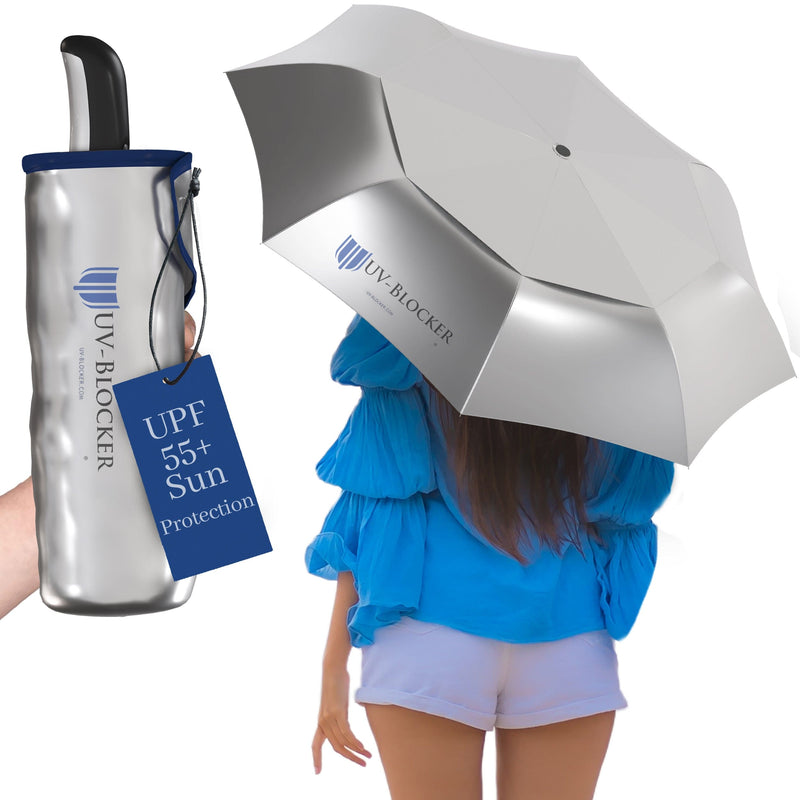
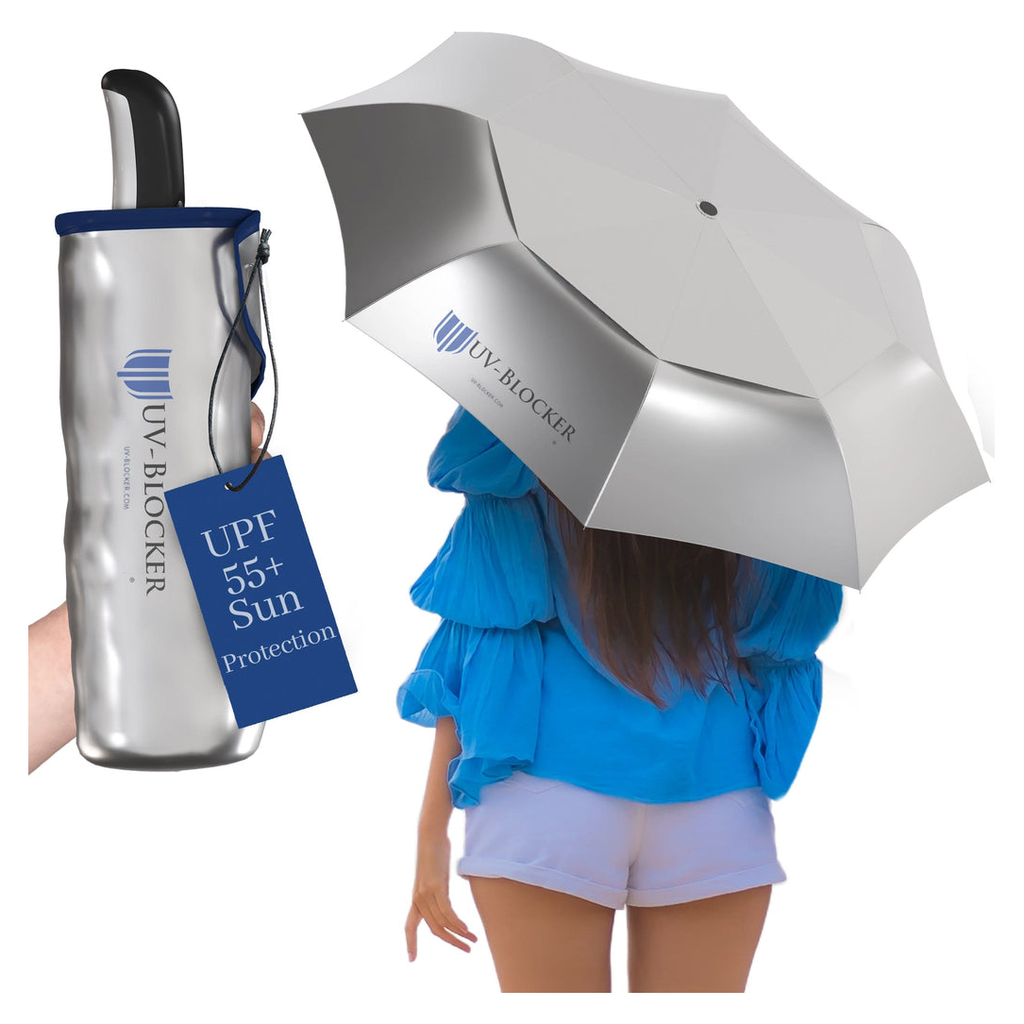
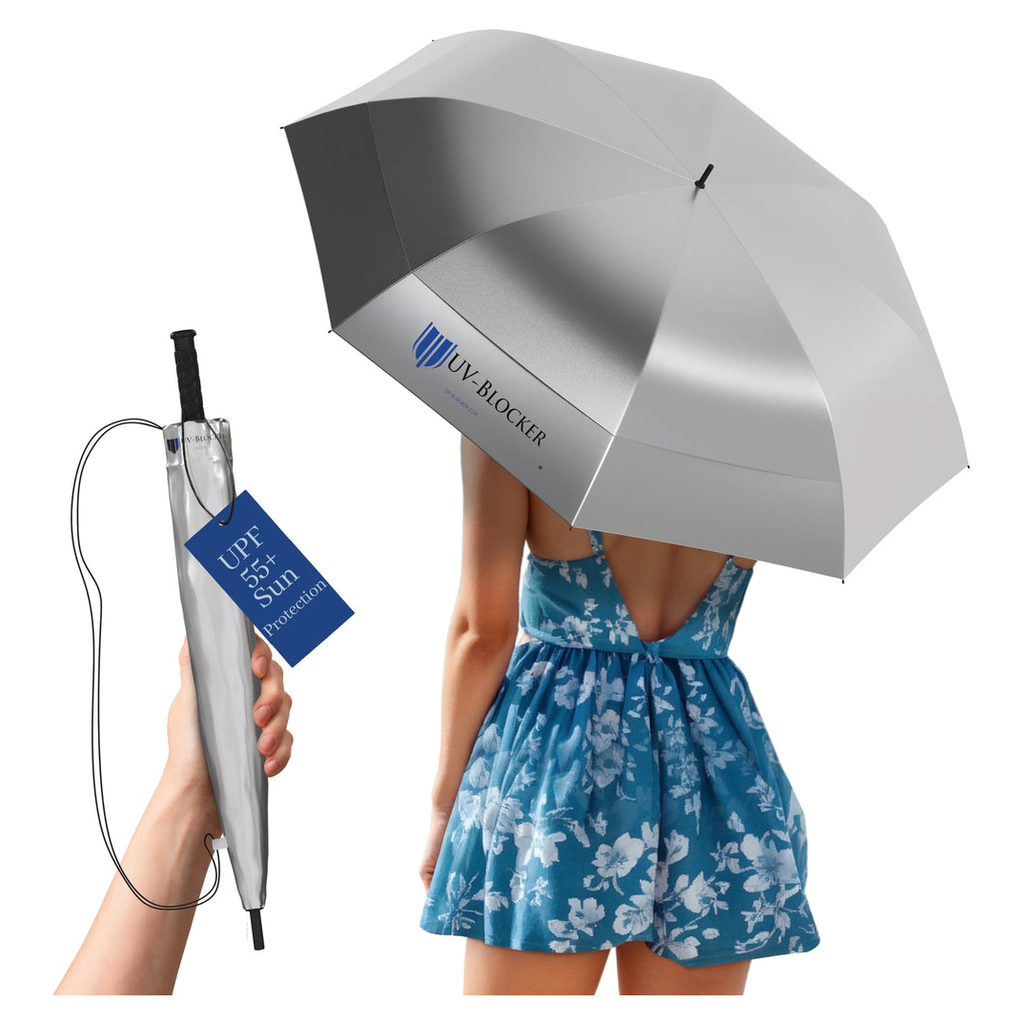
UV-Blocker umbrellas use Solarteck® fabric rated at UPF 50+. They're independently tested to the AATCC TM183-2020 standard, achieving 100 percent UV-B block and 99.97 percent UV-A block. Read more about the UV-Blocker testing methodology.
Coverage Where Clothing Can't Reach
Unlike shirts or pants, a UV umbrella shades the face, neck, décolletage, and hands all at once — the areas most prone to photoaging and skin cancer. The Compact UV Umbrella extends protection exactly where typical clothing stops.
Built-In Cooling
The silver reflective Solarteck® coating creates a comfortable microclimate underneath the canopy. This patented technology keeps users 15 degrees Fahrenheit cooler in direct sunlight by reflecting infrared heat waves. No other sunscreen alternative provides active cooling.
One-Time Cost vs. Ongoing Expense
A Travel UV Umbrella costs $59.95 and lasts three to five years. Annual sunscreen costs generally run $200 to $400 per person. Over five years, that's roughly $12/year for the umbrella vs. $1,000+ for sunscreen. For a full scientific and financial breakdown, see UV Umbrellas vs Sunscreen (What the Research Shows).
The canopy protection stays at full strength every time. No chemicals, no reapplication every two hours, no compliance gap.
Sunscreen Alternative Comparison: Which Option Blocks the Most UV?
UV umbrellas block 99 percent of UV rays at roughly $12/year effective cost — more protection per dollar than any other sunscreen alternative, including UPF clothing and mineral sunscreen.

| Alternative | UV Block Rate | Reapply Needed | Chemical-Free | Coverage Area | Annual Cost | Best For |
|---|---|---|---|---|---|---|
| Coconut oil | ~20% (SPF 1-7) | Yes, frequently | Yes | Applied areas | $50-100/yr | Not recommended as sun protection |
| Shea butter | ~15% (SPF 3-4) | Yes, frequently | Yes | Applied areas | $50-100/yr | Not recommended as sun protection |
| Sun hat | Varies (50-90%) | No | Yes | Head and partial face | $20-50 one-time | Supplemental head coverage |
| UPF 50+ clothing | 98% | No | Yes | Body (not face/hands) | $200-500 wardrobe | Body coverage layer |
| UV umbrella (UPF 50+) | 99% | No | Yes | Face, neck, chest, hands | $60 one-time | Primary shade layer |
| Mineral sunscreen | 93-97% (SPF 30-50) | Every 2 hours | Mostly (zinc/titanium) | Applied areas | $200-400/yr | Gap coverage for exposed skin |
| Chemical sunscreen | 93-97% (SPF 30-50) | Every 2 hours | No | Applied areas | $200-400/yr | Broad coverage (with chemical concerns) |
No single product beats sunscreen for whole-body coverage on paper. But in the real world, the compliance gap undermines that advantage. People don't apply enough, don't reapply on time, and skip it on "cloudy" days.
UV umbrellas deliver the highest verified UV block rate (99 percent) paired with the lowest annual cost (~$12/year over five years). The data makes the case for layering: each method covers the areas the others miss.
What Is the Best Way to Layer Sun Protection Without Relying on Sunscreen?
Combine a UV umbrella for shade, UPF clothing for coverage, and mineral sunscreen on remaining gaps to match the CDC's shade-first hierarchy.

Both the CDC and the American Academy of Dermatology recommend seeking physical shade as the first line of defense. Sunscreen sits last on their official guidelines. Most people do the opposite — chemicals first, shade as an afterthought.
Layer 1: UV umbrella. Covers the face, neck, chest, and hands instantly. Zero effort, zero chemicals. This fulfills the CDC's primary recommendation for physical shade.
Layer 2: UPF clothing. Shirts and pants cover the torso, arms, and legs. No reapplication needed during the day. The fabric blocks UV photons before they reach the skin.
Layer 3: Mineral sunscreen on gaps. The ears, back of the hands, or bare feet get targeted coverage. Only a small fraction of skin now needs any chemical or mineral protection.
This approach makes the compliance gap nearly irrelevant. Physical barriers do the heavy lifting. Even imperfect sunscreen application on 10 percent of the body provides better real-world protection than imperfect application across 100 percent of bare skin.
Frequently Asked Questions About Sunscreen Alternatives
These are the most common questions about finding a sunscreen alternative, answered with data from dermatology research and UV testing standards.
What is the best sunscreen alternative?
A UV-blocking umbrella rated at UPF 50+ provides the highest UV protection at 99 percent, with the lowest cost of any non-sunscreen option — especially for the face and neck. For full-body coverage, combine it with UPF clothing and a mineral formula on any exposed gaps. No single product replaces sunscreen entirely.
Can coconut oil replace sunscreen?
No. In-vivo testing measures coconut oil at SPF 1.2, blocking roughly 20 percent of UV radiation. That falls far below the SPF 30 minimum dermatologists recommend. Coconut oil provides moisturizing and antioxidant benefits, but it should never serve as primary sun protection.
Is UPF clothing better than sunscreen?
UPF 50+ clothing blocks 98 percent of UV without chemicals or reapplication. It's more reliable than sunscreen for covered areas, but it can't protect the face or hands. The strongest approach combines both — clothing for the body, shade and sunscreen for everything else.
Do UV umbrellas really block UV rays?
Yes. A 2013 JAMA Dermatology study found UV-specific umbrellas block up to 99 percent of UVB and 95 percent of UVA radiation. UV-Blocker umbrellas are independently tested to AATCC TM183-2020 standards, blocking 100 percent of UV-B and 99.97 percent of UV-A.
Can I stop wearing sunscreen if I use a UV umbrella?
Not entirely. A UV umbrella eliminates the need for sunscreen on shaded skin, but exposed areas like ears, forearms, and feet still benefit from a targeted mineral formula. The layered approach — canopy, clothing, and sunscreen on gaps — matches the CDC's shade-first recommendation and cuts reliance on chemicals significantly.
Are sunscreen chemicals really harmful?
The FDA classifies only two of 16 active sunscreen ingredients as GRASE (generally recognized as safe and effective). The remaining 12 need more safety data, though the FDA hasn't declared them unsafe. Oxybenzone was detected in the bloodstream at 188 times the FDA safety threshold. The concern is real but nuanced — mineral options like zinc oxide and titanium dioxide remain in the GRASE category.
Conclusion
- Natural oils are skin-health tools, not sun shields — they max out at SPF 1 to 7 in real-world testing.
- UPF clothing covers the torso and limbs well but leaves the face, neck, and hands exposed.
- UV umbrellas fill that gap: 99 percent UV block on the most vulnerable areas, zero chemicals, roughly $12/year over a five-year lifespan.
- The smartest sunscreen alternative strategy isn't replacing sunscreen — it's reducing how much skin depends on it.
Start with one UV umbrella for daily outdoor use. That single change covers the face, neck, and hands — the areas most affected by photoaging — without any sunscreen at all. Try the shade-first approach with a Compact UV Umbrella or browse the full UV protection umbrella collection.