

TLDR: The UV index dictates how fast unprotected skin burns, not just how bright the sun looks. At UV 1-2, most people need minimal protection. UV 3-5 requires sunscreen and a hat. Once the UV index hits 6, a UV umbrella becomes a critical tool for portable shade, as fair skin burns in under 20 minutes. At UV 8-10, this protection is essential for safety. Cloud cover and winter temperatures often mislead people, as up to 80% of UV rays penetrate clouds and reflect off snow.
At UV index 7, a person with fair skin burns in approximately 15 minutes without protection, yet most UV index charts offer nothing more specific than "wear a hat."
Standard guidance often stops at vague labels like "moderate" or "high." No mainstream resource maps UV levels to specific gear decisions, leaving individuals guessing whether they need sunscreen, a hat, or a portable shade solution. This information gap leads to preventable sun damage, as people often underestimate UV radiation intensity based on visible light or temperature. This guide provides a tier-by-tier action framework, clarifying what to wear, what to apply, and at what UV level a UV index umbrella transitions from optional to essential.
What Does the UV Index Actually Measure?
The UV index measures the intensity of ultraviolet radiation reaching the ground on a scale from 1 to 11+, directly predicting how quickly unprotected skin will burn.
The UV index is a standardized scale from the World Health Organization (WHO) that quantifies the risk of solar UV radiation. It calculates the strength of sunburning UV radiation at a specific time and place. The scale is linear: a UV index of 10 is twice as intense as a UV index of 5.
This linearity means that as the number doubles, the time it takes for skin to burn is cut in half. A person who burns in 60 minutes at UV 5 will burn in approximately 30 minutes at UV 10. This direct correlation makes the index a critical tool for planning outdoor activities, far more reliable than judging by brightness or heat.
The index varies based on several factors:
- Time of day: UV radiation peaks between 10 a.m. and 4 p.m.
- Season: Stronger during summer months when the sun is higher in the sky.
- Latitude: Closer to the equator means stronger UV radiation.
- Altitude: UV intensity increases by about 10-12% for every 1,000 meters of elevation.
- Cloud cover: Clouds can block some UV, but not all; scattered clouds can even intensify it.
The number on a weather app represents a specific physical intensity that dictates safety margins. For a more comprehensive breakdown, readers can review understanding the UV index.

How Fast Will You Burn at Each UV Index Level?
At UV index 1-2, fair skin burns in roughly 60 minutes. At UV index 10, that drops to approximately 10 minutes, making unprotected time outdoors a calculated risk.
The time to burn varies drastically depending on skin type, classified by the Fitzpatrick scale. Fair skin (Types I and II) has little natural melanin protection, while darker skin (Types IV-VI) has more but is still susceptible to DNA damage from UV exposure.
The following table estimates the approximate time until sunburn occurs for unprotected skin at various UV levels.
DATA TABLE: UV Index Burn Time Estimates
| UV Index | Risk Level | Fair Skin (Type I-II) | Medium Skin (Type III) | Dark Skin (Type IV-VI) |
|---|---|---|---|---|
| 1-2 | Low | ~60 min | ~90+ min | ~120+ min |
| 3-5 | Moderate | ~25-45 min | ~45-75 min | ~75-120 min |
| 6-7 | High | ~15-20 min | ~25-35 min | ~45-60 min |
| 8-10 | Very High | ~10-15 min | ~15-25 min | ~30-45 min |
| 11+ | Extreme | <10 min | ~10-20 min | ~20-35 min |
Note: These are approximate estimates. Individual factors such as medications, recent skin procedures, and altitude will affect actual burn times.
For fair skin, the window of safety shrinks rapidly. By UV 10, that margin evaporates to roughly 10 minutes. These burn times explain why a UV index umbrella becomes critical at higher levels.
Darker skin types have higher intrinsic protection, estimated to be equivalent to SPF 13.4 compared to SPF 3.4 for fair skin. This does not grant immunity. UV damage accumulates over time, leading to premature aging and hyperpigmentation. Skin cancer in individuals with darker skin is often diagnosed at later, more dangerous stages due to the misconception that protection is unnecessary.
Environmental factors also act as multipliers. Snow reflects up to 80% of UV radiation, effectively hitting the skin from two directions. Water reflects roughly 25%, and sand reflects about 15%. In these environments, the effective UV exposure is significantly higher than the forecasted index suggests.
What UV Index Umbrella Protection Do You Need at Each Level?
UV 1-2 needs minimal protection. UV 3-5 adds sunscreen and hat. UV 6-7 introduces a UV umbrella. UV 8-10 makes it essential. UV 11+ requires limiting outdoor time.
Matching gear to the UV intensity allows individuals to maintain safety without unnecessary restrictions.
Tier 1: UV Index 1-2 (Low) At this level, the risk is low. Minimal protection is needed for brief exposures. Sunglasses are recommended, as eyes remain vulnerable to UV damage even at lower levels. Sunscreen is optional but should be considered if staying outside for more than an hour.
Tier 2: UV Index 3-5 (Moderate) The risk increases. EPA guidelines recommend applying broad-spectrum SPF 30+ sunscreen to all exposed skin. A wide-brimmed hat and UV-blocking sunglasses should be worn. Seeking shade during midday hours (10 a.m. to 4 p.m.) is advisable.
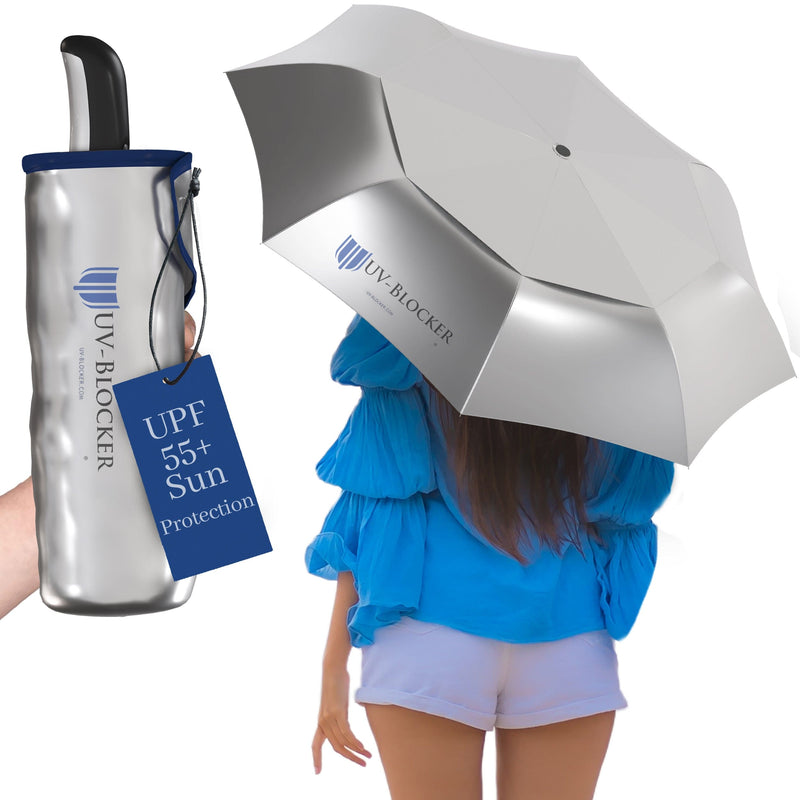
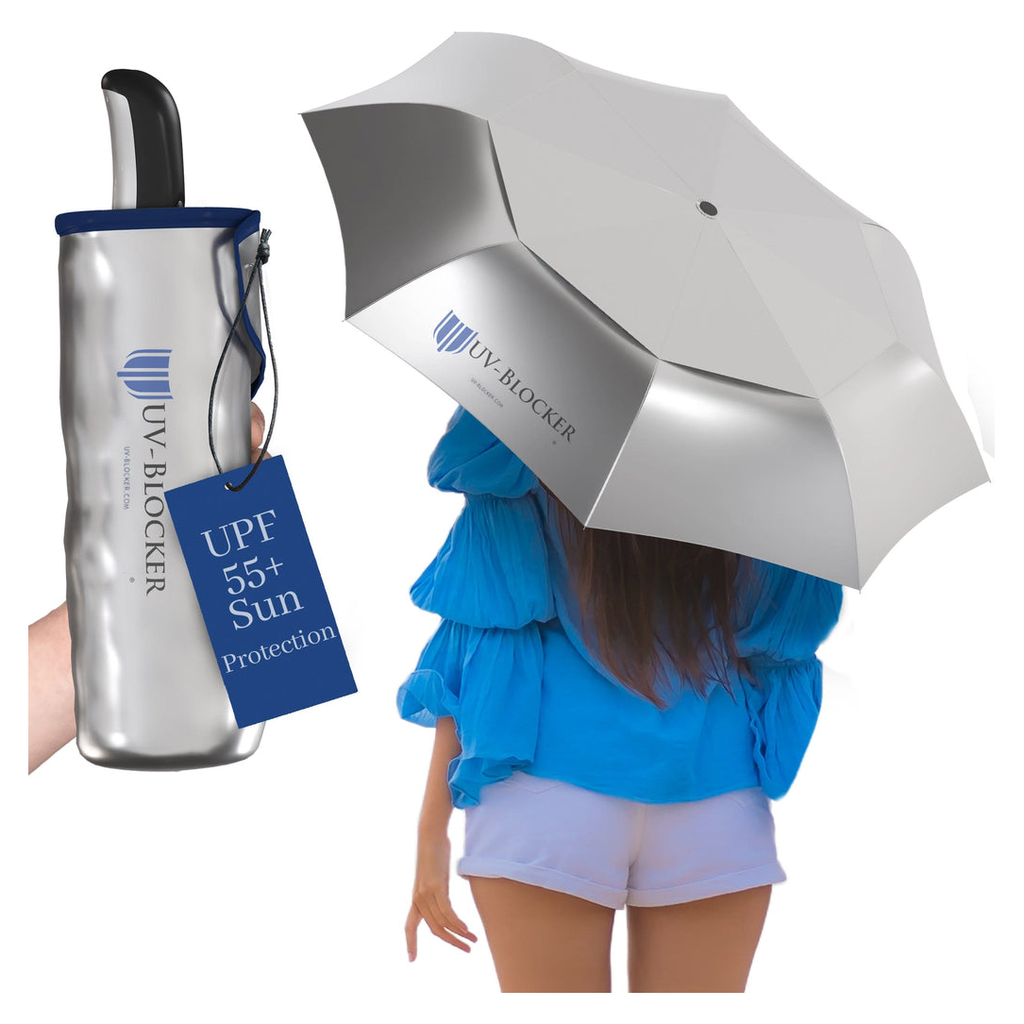
Tier 3: UV Index 6-7 (High), ADD UV UMBRELLA At UV 6, fair skin burns in under 20 minutes. This is the threshold where portable shade becomes a necessary addition to sunscreen and clothing. While sunscreen can degrade or be applied too thinly, a UV index umbrella with a UPF 50+ rating offers a verifiable block against 99% of UVA and UVB rays. For daily activities, a compact UV umbrella fits easily into a bag, allowing you to bring your own shade. As research discussed in Do UV umbrellas work? highlights, specialized UV-blocking fabrics provide superior defense over standard umbrellas.
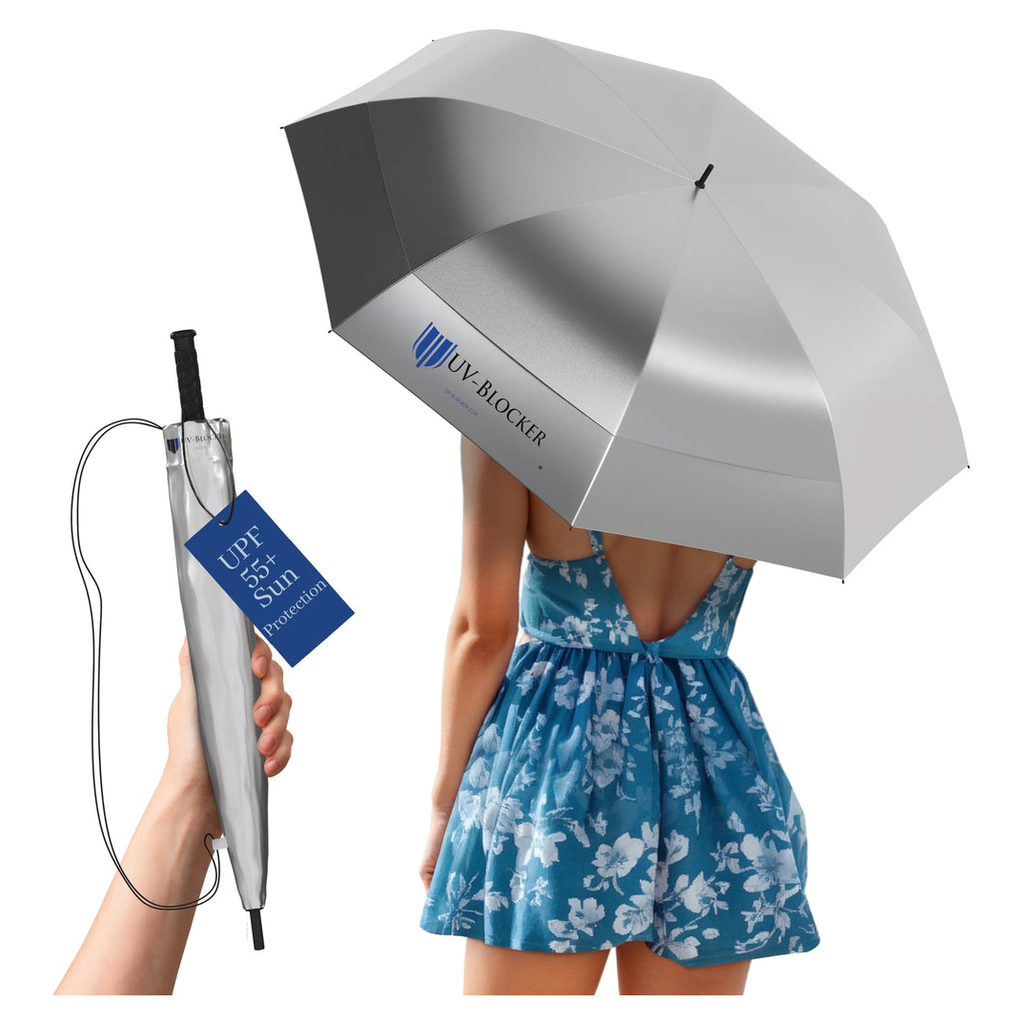
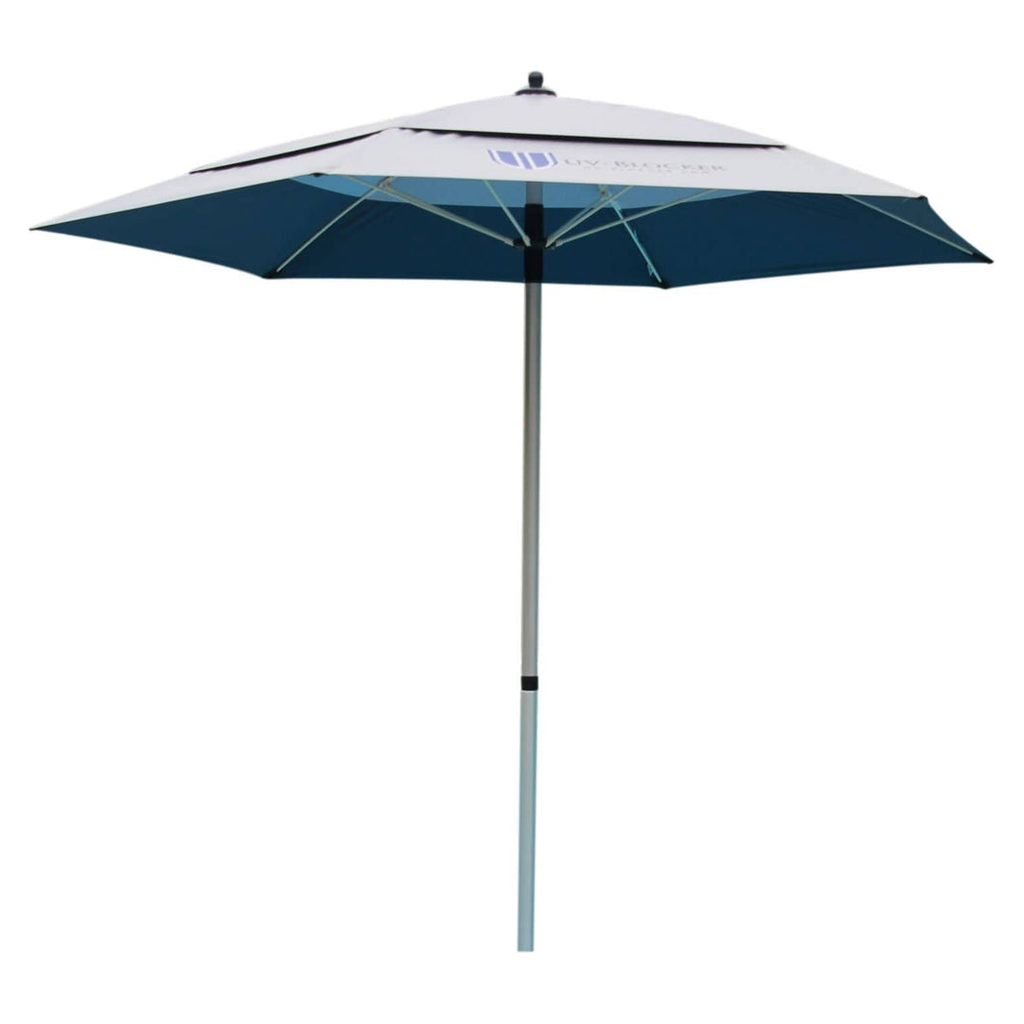
Tier 4: UV Index 8-10 (Very High), UV UMBRELLA ESSENTIAL When the index reaches 8, protection is about safety. A UV index umbrella is essential at this level, as unprotected skin can burn in 10-15 minutes. Minimizing outdoor time during peak hours is critical. If being outdoors is necessary, the combination of high-SPF sunscreen, protective clothing, and a UV umbrella is required. For extended outdoor time, like watching sports, a travel UV umbrella offers expanded coverage.
Tier 5: UV Index 11+ (Extreme) This is the extreme danger zone. Avoid outdoor exposure during peak hours. If you must be outside, use every available protective measure: a UV umbrella, SPF 50+ applied liberally, a wide-brimmed hat, and long sleeves. Sunscreen should be reapplied every 60 minutes.
ACTION FRAMEWORK TABLE:
| UV Index | Risk | Sunscreen | Hat | Sunglasses | UV Umbrella | Limit Time |
|---|---|---|---|---|---|---|
| 1-2 | Low | Optional | Optional | Yes | No | No |
| 3-5 | Moderate | SPF 30+ | Yes | Yes | Optional | Peak hours |
| 6-7 | High | SPF 30+ | Yes | Yes | Recommended | Peak hours |
| 8-10 | Very High | SPF 50+ | Yes | Yes | Essential | Minimize |
| 11+ | Extreme | SPF 50+ | Yes | Yes | Essential | Avoid peak |

What UV Index Myths Lead to Sunburn?
Cloudy skies, cool temperatures, and winter months create a false sense of UV safety. Up to 80% of UV radiation penetrates clouds, and snow reflects 80% back at skin.
The most pervasive myth is that clouds block UV rays. In reality, up to 80% of UV radiation penetrates light cloud cover. The "broken cloud effect," where sunlight reflects off scattered clouds, can increase surface UV levels by 25% compared to a clear sky. A cool, overcast day often masks a high UV index.
Winter presents another fallacy: that the sun is weak in cold weather. While the sun's angle is lower, snow reflects up to 80% of UV rays, nearly doubling a person's exposure. For skiers and mountaineers, this is compounded by altitude. UV intensity increases by approximately 10-12% for every 1,000 meters of elevation gained.
Another common error is assuming dark skin requires no protection. While higher melanin content provides an estimated SPF of 13.4, this natural barrier is not impenetrable. UV radiation still causes DNA damage and contributes to skin aging. Skin cancer diagnoses in populations with darker skin are frequently delayed, leading to poorer prognoses.
Finally, many believe any umbrella offers sufficient shade. A standard rain umbrella is designed to block water, not radiation. Research shows that standard umbrellas block only 50-77% of UV rays. In contrast, a dedicated UV index umbrella uses specially treated fabric to block 99% of rays. Understanding what color umbrella is best for sun protection shows how fabric density and coating matter more than simple shade.

Who Needs to Adjust UV Index Thresholds?
Fair-skinned individuals, people on photosensitizing medications, melanoma survivors, lupus patients, and children under 6 months all require stricter UV index thresholds for protection.
Standard UV guidelines are for average sensitivities, but many groups need a more conservative approach.
Fair Skin (Fitzpatrick I-II): Individuals with very fair skin, red or blonde hair, and blue or green eyes should shift all recommendations down by one level. For this group, a UV umbrella is recommended starting at UV 5 instead of UV 6.
Photosensitizing Medications: Many common prescriptions (doxycycline, retinoids, certain blood pressure medications, NSAIDs) increase the skin's sensitivity to light, causing rapid burning even at lower UV levels. Those on these regimens should consider using a UV umbrella at UV index 3+. Consult a physician for specific guidance.
Post-Procedure Skin: Skin recovering from chemical peels or laser treatments is highly vulnerable to hyperpigmentation and scarring from UV exposure. A UV umbrella provides the necessary physical block to ensure proper healing.
Children Under 6 Months: The FDA recommends infants under 6 months do not wear sunscreen. Physical shade is the only option. A UV umbrella or a stroller canopy with a high UPF rating is the primary method of defense.
Melanoma Survivors and Lupus Patients: For those with a history of skin cancer or autoimmune conditions like lupus, UV protection is a medical necessity. Photosensitivity is often a symptom of lupus. For these individuals, year-round protection is required regardless of the UV index.
How Do You Check the UV Index Before Going Outside?
Check the UV index through any smartphone weather app, the EPA's UV Index forecast at epa.gov, or dedicated UV tracking apps that send alerts when levels reach dangerous thresholds.
Checking the UV index is as simple as checking the temperature. Most smartphone weather apps, including iOS Weather and Google Weather, display the UV index. Users should look at the "hourly forecast" to identify the peak reading for the day.
For detailed planning, the EPA's UV Index forecast at epa.gov/sunsafety offers next-day predictions by ZIP code.
Dedicated UV tracking apps like UVLens or the EPA's SunWise tool provide a more proactive approach. Users can set personal skin profiles and receive push notifications when the UV index reaches a specific threshold.
Always check the UV index for the peak hours of the day (10 a.m. to 2 p.m.), not just the current moment.
Frequently Asked Questions About UV Index and Sun Protection
Conclusion
The UV index is a powerful tool, but only when paired with specific actions. The numbers 1 through 11+ correspond to real minutes of safety for human skin.
- Action is required: Knowing the number is not enough; applying the correct protection tier is what prevents damage.
- The umbrella threshold: UV 6+ is the definitive point where a UV umbrella should enter the protection system.
- Speed of burn: At UV 10, fair skin burns in approximately 10 minutes.
- Hidden dangers: Clouds, winter reflection, and altitude often increase exposure when people feel safest.
- Personal adjustment: Those with fair skin or medical conditions should shift their protection thresholds down by one level for safety.
The immediate next step is to open a weather app and check today's peak UV reading. If that number crosses 6, portable shade is a smart addition to your daily carry. To complete your sun safety system, browse the UV protection umbrella collection to find options from compact models to full-coverage travel gear.