

Between 1.9 and 2.8 million American adults have vitiligo. Every unprotected minute in the sun puts their depigmented patches at risk — not just for sunburn, but for growing the condition itself.
Those patches have zero melanin left. None. That's the pigment your skin uses as its own UV filter, and without it, there's nothing between sunlight and bare cellular damage. Doctors say "wear sunscreen," but let's be honest — most people don't reapply. Only 38.9% of vitiligo patients actually put sunscreen back on every two hours like they're supposed to. And the formulas? They can sting sensitive patches and leave a chalky white residue on already-pale skin.
So what actually works? A layered system that puts physical shade barriers first, with sunscreen as backup — not the other way around. That's what dermatologists are now recommending, and it's the approach this guide breaks down step by step.
Why Does Vitiligo Make Sun Protection Non-Negotiable?
Depigmented vitiligo patches contain zero melanin and have no natural UV defense, making them burn faster and more severely than surrounding skin.
Think of melanin as a built-in sunscreen that lives inside your skin cells. It catches UV rays before they can scramble your DNA. When vitiligo wipes out the melanocytes in a patch, that protection vanishes. Normal skin might handle 20 minutes of midday sun before going pink. A depigmented patch? It can blister in half that time — or less.
The AAD recommends SPF 50 minimum — on everything, not just the white patches. Covering the surrounding skin matters too, because that "normal" skin tans in the sun while the patches don't. More tanning means more contrast, and more contrast means the vitiligo becomes more visible.
But here's what catches people off guard: the pain is the least of it. A bad sunburn on a depigmented patch can kick-start an immune reaction that spreads vitiligo to skin that was fine before the burn happened.
How Does Sunburn Trigger New Vitiligo Patches?
Sunburn triggers the Koebner phenomenon, causing new depigmented patches to form at skin trauma sites in 21% to 62% of vitiligo patients.
It's called the Koebner phenomenon, and it works like this: when skin gets damaged — from a cut, a scrape, or a sunburn — the immune system sometimes reads that damage as a signal to go after the melanocytes in that specific area. A bad burn on an arm that had normal pigmentation last week? It can turn into a brand-new vitiligo patch. That's why this isn't about comfort. It's about keeping the condition from spreading.
At the molecular level, UV damage cranks up production of a stress protein called HSP70i. That protein wakes up the skin's immune sentinels (dendritic cells), and they start attacking the pigment-producing melanocytes directly. One sunburn, one chain reaction — and the melanocytes don't grow back.
People who've experienced Koebnerization tend to have a tougher road ahead. Studies show they end up with more affected skin over time, and treatments that help other patients repigment don't work as well for them. Put bluntly: every burn makes future treatment harder and the vitiligo harder to reverse.
If sunburn serves as the primary trigger for new patches, the logical question becomes: what's the most reliable way to prevent it?
Why Do Dermatologists Recommend Shade Before Sunscreen?
Dermatologists recommend physical barriers first because sunscreen compliance is unreliable, with only 38.9% of vitiligo patients reapplying sunscreen on schedule.

Where did this come from? The VR Foundation's pediatric sun protection guidelines — developed for kids with vitiligo, but the logic applies to every age. The protocol ranks defenses in order: shade first, then UPF clothing, then a wide-brimmed hat, then sunscreen, then UV-blocking sunglasses. Notice where sunscreen falls. Dead last. It's the backup plan, not the frontline.
And the numbers back this up. A study of 209 vitiligo patients found that only 38.9% actually reapply sunscreen every two to three hours. The split by disease severity is telling — 59.6% of people with more than half their skin depigmented manage to reapply, but among those with less than 10% depigmentation, it drops to just 22.0%. The people who look "less affected" are also the least protected.
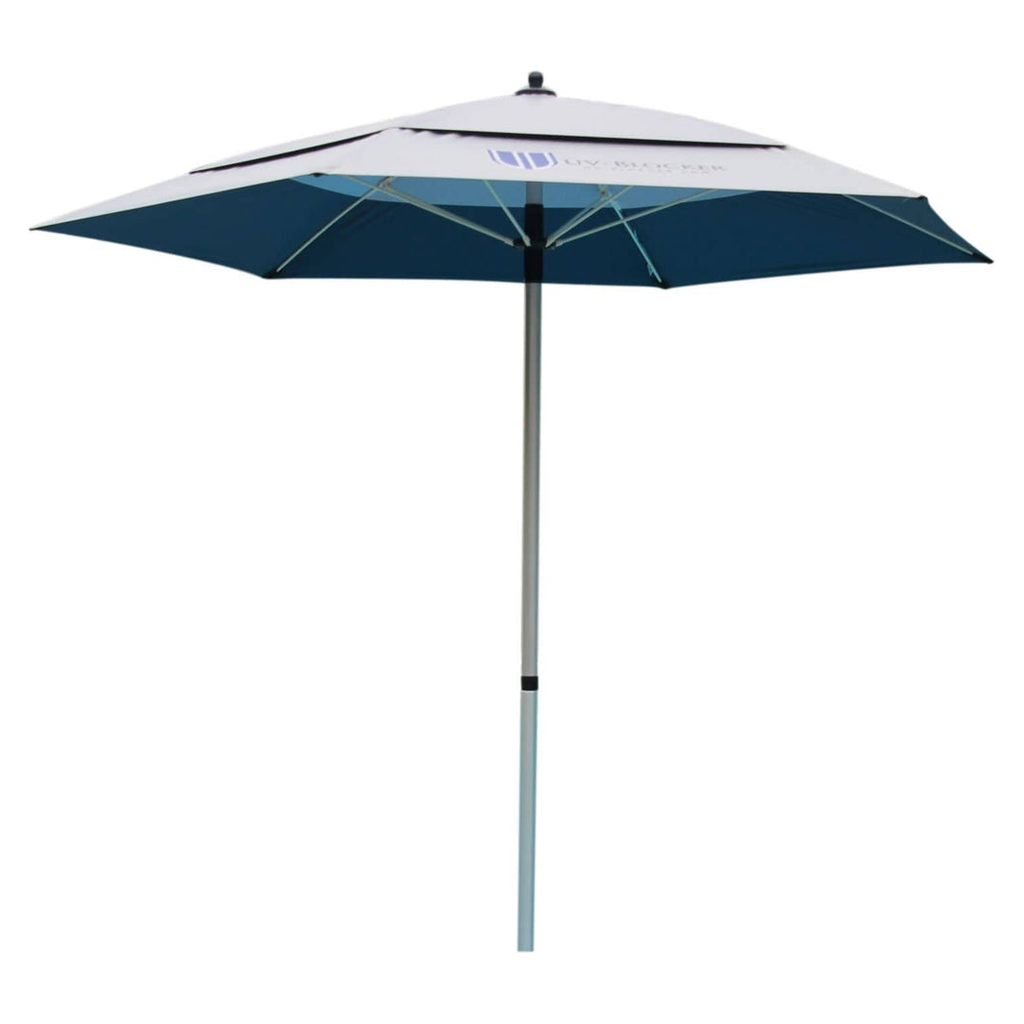
Regular shade isn't the answer either, by the way. A 2017 randomized clinical trial put it bluntly: 78% of people sitting under standard beach umbrellas still got sunburned after 3.5 hours. The fabric lets UV through, and sand and water bounce rays upward from below.
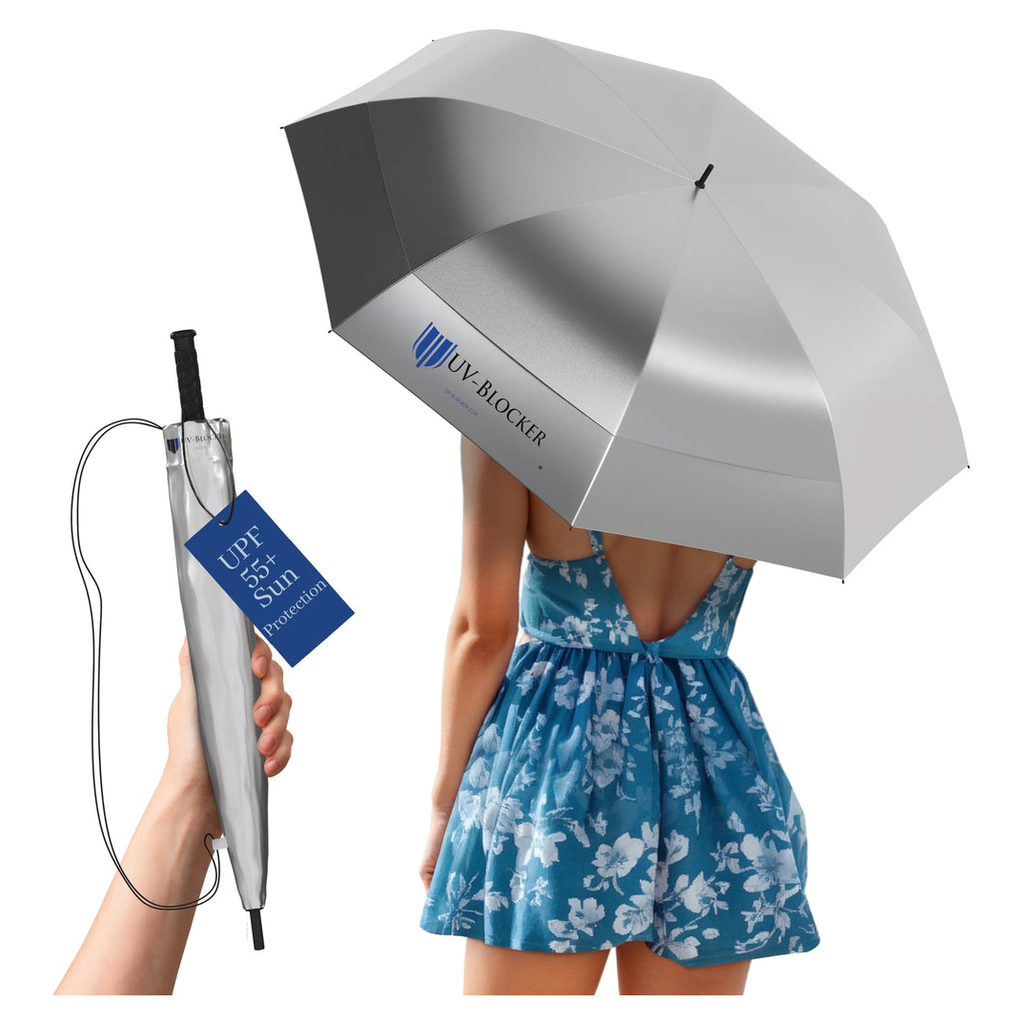
That's the gap a UPF 50+ umbrella fills. It blocks UV at the fabric itself — 98% or higher — instead of just casting a shadow. For someone with vitiligo, that's a fundamentally different kind of shade.
| Protection Method | UV Block Rate | Reapplication Needed | Contact with Skin |
|---|---|---|---|
| UPF 50+ Umbrella | 98%+ (AATCC tested) | Never | None |
| UPF 50+ Clothing | 98%+ | Never | Yes (fabric) |
| SPF 50 Mineral Sunscreen | 98% (when fresh) | Every 2 hours | Yes (chemical) |
| Standard Beach Umbrella | ~50% | N/A | None |
| SPF 30 Sunscreen | 97% (when fresh) | Every 2 hours | Yes (chemical) |
Understanding these layers leads to a practical question: how do you assemble a complete UV defense system?
How Do You Build a Complete Vitiligo UV Defense System?
A complete vitiligo UV defense system layers three barriers: UPF 50+ overhead shade, UPF clothing for body coverage, and mineral sunscreen on remaining exposed skin.

Layer 1: UPF 50+ Portable Shade
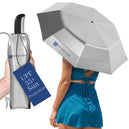
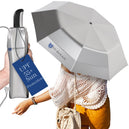
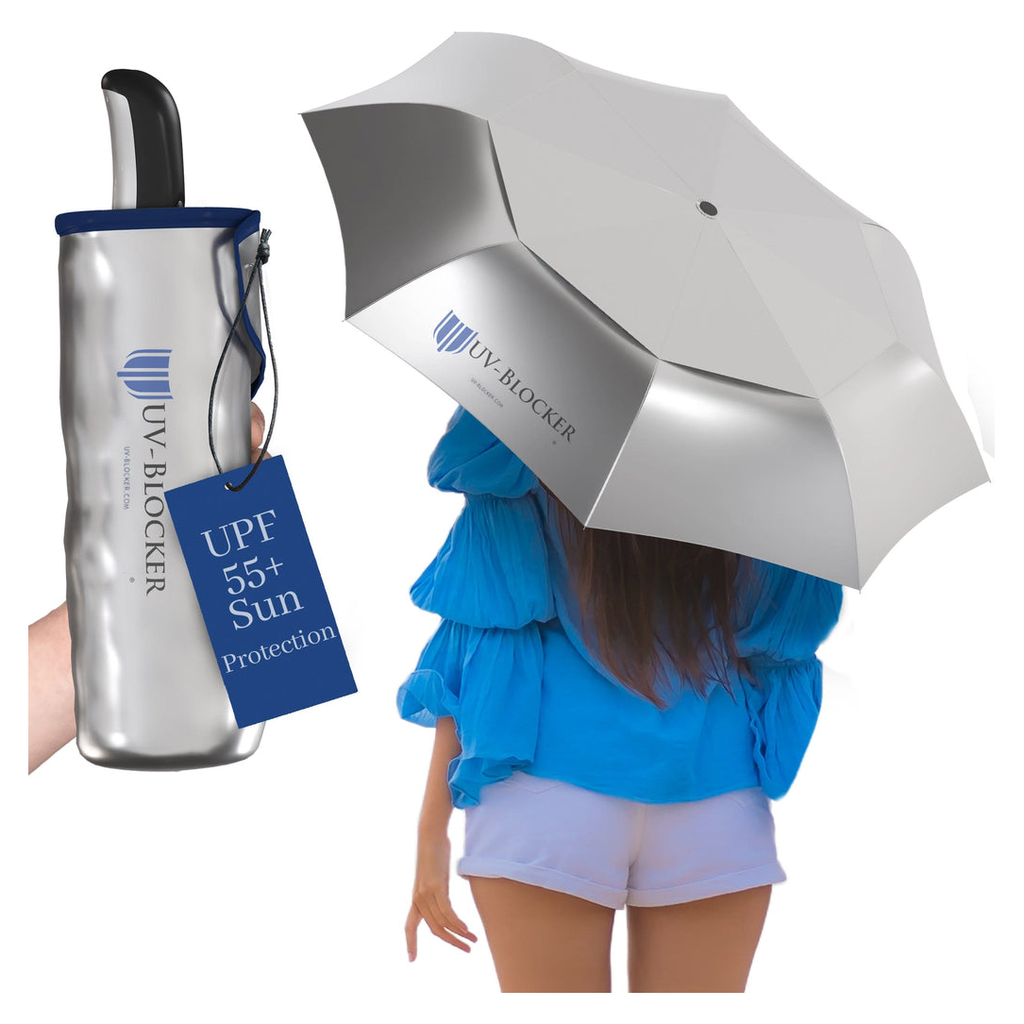
This one's about getting UV blocked before it ever touches skin. The UV-Blocker Compact Umbrella is a good option for daily carry — 42-inch arc, fits in a purse or briefcase. The fabric has been independently tested to the AATCC TM183-2020 standard: 99.97% UV-A blocked, 100% UV-B blocked. And the Solarteck® coating drops the temperature underneath by about 15°F compared to direct sun, which matters when depigmented skin tends to overheat faster than the surrounding areas.
Layer 2: UPF Clothing
Long sleeves, a wide-brimmed hat, UV-blocking sunglasses — these cover the areas an umbrella can't reach. The Sun Protection Clothing Guide has details on choosing the right UPF garments. The big advantage over sunscreen? They don't sweat off at the park, don't need reapplication after swimming, and don't degrade in heat.
Layer 3: Mineral Sunscreen
Whatever skin is still exposed after layers one and two gets mineral sunscreen. Look for zinc oxide or titanium dioxide — these sit on top of the skin and physically bounce UV away instead of absorbing it chemically. For depigmented patches that are already sensitive, that distinction matters. Less irritation, fewer reactions. The trade-off? You still need to reapply every two hours without exception.
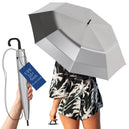
Heading to a full-day outdoor event? The UV-Blocker Travel Umbrella has a wider 44-inch arc and comes with a shoulder strap carry case. If you're dealing with other sun-sensitive conditions alongside vitiligo, this Eczema Sun Protection guide covers a similar layered approach. And don't let overcast skies fool you — sunburn happens on cloudy days too. The three-layer system isn't seasonal. It's year-round.
Can Vitiligo Patients Get Enough Vitamin D While Staying Protected?
Vitiligo patients can maintain vitamin D through brief 10-15 minute "sun snacks" outside peak UV hours, combined with dietary supplementation when needed.
Fear does strange things. Nearly half (43.1%) of people with vitiligo say skin cancer worries keep them from going outside as much as they'd like. That's understandable, but it's also an overcorrection. Hiding from the sun entirely leads to vitamin D deficiency and, for many, a shrinking social life — both of which create their own health problems.
Here's something most people find surprising: vitiligo patients actually have a lower skin cancer risk than the general population. A large UK cohort study measured a 38% decrease (aHR = 0.62, P < 0.001). The working theory? The same overactive immune response that destroys melanocytes also kills off abnormal cells before they turn cancerous. But — and this is important — lower cancer risk doesn't mean sunburns are harmless. Burns still trigger Koebner, and Koebner still spreads patches. Smart protection, not total avoidance, is the target.
The VR Foundation's pediatric guidelines suggest a practical fix: 10-15 minute "sun snacks" two to three times a week, timed before 10 AM or after 4 PM when UV is weaker. That's enough to trigger vitamin D synthesis without cooking unprotected skin. Most patients will still want 400-600 IU of daily supplementation on top of that, and it's worth asking a dermatologist to check blood levels once a year.
This is actually where a UPF umbrella shines for daily use. Keep it open on your afternoon walk for full protection, close it for 10 minutes in the late-day sun to get some vitamin D, then pop it back open. That kind of on-the-fly control isn't possible with sunscreen or clothing alone. More on balancing these trade-offs in this guide on getting Vitamin D in the Shade.
Frequently Asked Questions About Vitiligo Sun Protection
Below are the questions that come up most often from people managing vitiligo — whether for themselves or a family member.
Does vitiligo increase skin cancer risk?
Counter to what you'd expect, vitiligo patients actually develop skin cancer at lower rates — a UK study measured a 38% decreased risk. But depigmented patches still burn fast.
Researchers think the same immune overactivity that destroys melanocytes also targets abnormal cells early. That said, sunburn still triggers Koebner phenomenon, so sun protection remains essential — it's about managing the vitiligo, not preventing cancer.
What SPF should vitiligo patients use?
Dermatologists recommend SPF 50 or higher broad-spectrum mineral sunscreen on all exposed skin, applied generously and reapplied every two hours.
Why mineral specifically? Zinc oxide and titanium dioxide sit on the skin surface and bounce UV away physically. Chemical sunscreens absorb UV into the skin instead, which can irritate depigmented patches that are already sensitive. Fewer reactions, less stinging.
Can vitiligo patients get vitamin D safely?
Brief 10-15 minute "sun snacks" outside peak UV hours, two to three times weekly, help maintain vitamin D levels without risking sunburn.
On top of sun snacks, 400-600 IU of daily vitamin D supplementation fills the gap. If you're using high-SPF sunscreen year-round, ask your doctor to check levels annually — it's a simple blood draw.
How do you protect vitiligo patches at the beach?
Layer a UPF 50+ beach umbrella for overhead shade, wear UPF clothing on the torso and limbs, and apply mineral SPF 50+ on remaining exposed skin.
Cheap beach umbrellas only stop about half of incoming UV — sand and water bounce the rest right back up from below. A UPF 50+ umbrella blocks 98% or higher because the fabric itself is what stops the rays, not just the shadow it casts.
What is the Koebner phenomenon in vitiligo?
The Koebner phenomenon occurs when new vitiligo patches develop at sites of skin trauma, including sunburns, affecting between 21% and 62% of patients.
That's the core reason vitiligo sun protection isn't optional — it's disease management. Every burn rolls the dice on new patches appearing right where the skin got damaged.
Conclusion
If there's one takeaway from all of this, it's that sunscreen was never designed to carry the full weight of vitiligo sun protection. The layered approach works because it doesn't rely on a single point of failure.
- No melanin = no built-in protection. Depigmented patches are on their own against UV.
- Burns don't just hurt — they recruit. The Koebner phenomenon turns sunburned skin into new vitiligo patches in up to 62% of cases.
- Shade first, sunscreen last. UPF shade and clothing stay effective all day. Sunscreen doesn't.
- Lower cancer risk ≠ lower burn risk. The immune system protects against tumors but can't stop a sunburn from spreading patches.
- Vitamin D still happens. Short, timed "sun snacks" and a daily supplement keep levels healthy without the gamble.
The simplest place to start? Throw a UPF 50+ umbrella in your bag tomorrow. One change, every day, and the math on sun exposure shifts in your favor.
The UV-Blocker Compact Umbrella fits in a bag and goes anywhere you do. See why dermatologists recommend zero-contact UPF shade for photosensitive conditions on the Dermatologist Recommended page.