
Here's something that threw me off when I first looked into it. One in five Americans will get skin cancer. That stat alone should make anyone pay attention to how they're protecting themselves from the sun. And yet, most of the folks who think they're doing everything right? They're making mistakes they don't even realize.
I've spent way too much time digging into the research on this stuff. What I found is that even careful, health-conscious people are making subtle errors with their sun protection. Little things that add up. The math behind UV exposure isn't intuitive, and the sunscreen industry's marketing doesn't help clarify things.
So here's my breakdown of seven sun protection mistakes I keep seeing, plus what the science actually says about fixing them. These aren't rookie errors. These are sun protection mistakes even dermatologists see their most careful patients making.
TL;DR
- SPF 50 blocks 98% of UVB rays. SPF 30 blocks 97%. That's a 1% difference. Not the massive upgrade the marketing suggests.
- Most people use about half the sunscreen they need. Under-applying SPF 50 might give you SPF 15 protection.
- 65% of people forget to reapply. That's not a small minority.
- Your favorite cotton t-shirt? Probably UPF 5-7. Gets worse when wet. Basically nothing.
- The fix isn't trying harder. It's building redundancy. Physical barriers like umbrellas and UPF clothing don't require perfect behavior.
- A good UV umbrella works all day without you doing anything.
The Math Behind Sun Protection Mistakes
Okay so here's where things get counterintuitive. Everyone assumes SPF 50 is way better than SPF 30. Makes sense, right? Bigger number, better protection.
Not really. SPF 30 blocks about 97% of UVB rays. SPF 50 blocks 98%. We're talking about a 1% difference. The dermatologists at Dermatology of Boca have been saying this for years but the message hasn't gotten through.

But here's where it gets worse. Even if SPF 50 were twice as good (it's not), it wouldn't matter because most people mess up the application anyway. The AAD's research shows most folks use 25-50% of what they should. And 65% forget to reapply every two hours.
So let's do the math on that. You buy SPF 50, apply half as much as you need, forget to reapply. What protection are you actually getting? Way less than you think. Maybe SPF 15. Maybe less.
That gap between what you expect and what you get? That's where the sunburns happen. And that's just the first of many common sun protection mistakes people make without realizing it.
Mistake #1: Putting Too Much Faith in SPF Numbers
SPF stands for Sun Protection Factor, but what it actually measures is how long it takes for UVB rays to burn your skin. It's a time multiplier, not a quality rating.
And here's the part that got me. SPF only measures UVB protection. Unless your bottle says "broad spectrum," it might not do much against UVA rays. Those are the ones that go deeper, cause wrinkles, and contribute to skin cancer without giving you that warning sunburn.
The push for higher and higher SPF numbers? That's marketing. SPF 30 to SPF 50 is 1% more protection. SPF 50 to SPF 100 adds another 1%. You're paying more for marginal gains.
What to do instead: Get broad-spectrum SPF 30 and focus on actually applying enough of it. Skip the SPF arms race. Check out SPF vs UPF explained if you want the full technical breakdown.
Mistake #2: The Amount Problem
The AAD says you need about one ounce of sunscreen for your body. That's a shot glass worth. For your face alone, you need a nickel-sized amount.
How much do most people actually use? Maybe a third of that.
Sunscreen doesn't work in a linear way. Put on half as much and you don't get half the protection. The coverage gets exponentially worse. That expensive SPF 50 you're spreading thin? It might be performing like SPF 15 or lower.
What to do instead: Physical barriers don't have this problem. A UPF-rated umbrella or shirt gives you the same protection regardless of how you "apply" it. You open the umbrella. You put on the shirt. Done. No technique required.
Mistake #3: The Reapplication Problem
Sunscreen breaks down. Sun exposure degrades the filters. Sweat and water wash it off. Toweling off after a swim? You just removed a bunch of your protection.
Every two hours, you need to reapply. Water-resistant formulas only last 40-80 minutes in the water. That's the science.
But who actually does this? About a third of Americans, according to the research. The other two-thirds forget, get distracted, don't want to deal with greasy hands, whatever.
I get it. Reapplication is annoying. Setting timers, finding a clean spot to reapply, dealing with the texture. It's a hassle.
What to do instead: Add something to your protection strategy that doesn't need reapplication. An umbrella works from the moment you open it until you close it. No degradation. No timer. No memory required.
Mistake #4: Trusting Regular Clothing
This one surprised me when I first learned it. That white cotton t-shirt you wear to the beach? The Skin Cancer Foundation says it's probably UPF 5-7. That means 15-20% of UV is getting through.
And when it gets wet? Drops to UPF 3. Basically transparent to UV.
Your beach cover-up isn't doing what you think it's doing. The weave matters. The color matters. The material matters. Without a UPF rating, you're guessing.
For the science on ratings, check UPF 50 vs UPF 30. The difference matters more than you'd think.
What to do instead: Look for actual UPF-rated clothing or accessories. UPF 30 is solid. UPF 50+ is excellent. Or use an umbrella for the areas your clothes don't cover anyway.
Mistake #5: Thinking Shade Is Enough
Standing under a tree feels cooler. You're out of direct sunlight. You're protected, right?
Not as much as you'd think. UV bounces. Sand reflects 15-25% of UV rays back up at you. Water, concrete, snow, they all act like mirrors for ultraviolet light. You're getting hit from below and from the sides, not just from above.
And clouds? Up to 80% of UV gets through them. Overcast days still give you plenty of UV exposure.
I've gotten some of my worst sunburns on cloudy days. Didn't think I needed protection. Wrong.
What to do instead: A quality UV umbrella creates a cone of protection that blocks direct rays and significantly cuts down on the scattered and reflected stuff coming from other angles.
Mistake #6: The Same Missed Spots Every Time
Here's a pattern dermatologists see constantly. People apply sunscreen, but they miss the same areas over and over. The tops of the ears. The back of the neck. The scalp where your hair parts. The tops of your feet. Behind the knees.
These spots accumulate sun damage year after year because nobody's protecting them consistently.
What to do instead: An umbrella covers your head, face, ears, and neck automatically. No thinking about which spots you missed. No awkward application angles. Just shade where you need it.
Mistake #7: The Worst of All Sun Protection Mistakes

The biggest of all sun protection mistakes? Putting all your faith in a single method.
Sunscreen alone has too many failure points: wrong amount, missed spots, forgotten reapplication, degradation. UPF clothing alone doesn't cover your face and hands. Shade alone doesn't stop reflected UV.
Each method has gaps. The smart approach is layering them so each one covers for the others.
What to do instead: Build a system. Umbrella as your base layer (covers head, face, shoulders continuously). Sunscreen on exposed skin. UPF hat for when an umbrella isn't practical. This way, when one layer fails, the others keep working. More on umbrella effectiveness at Do UV Umbrellas Work?
Why Dermatologists Actually Recommend Umbrellas
Here's what clicked for me about physical barriers. Sunscreen requires perfect human behavior to work perfectly. You have to apply the right amount. You have to reapply on schedule. You have to hit every spot. You have to use it before it expires.
An umbrella just works. Open it, you're protected. Keep it open, you stay protected. No technique. No memory. No degradation over the day.
That's why organizations like the Melanoma Foundation recommend them. It takes the human error out of the equation.
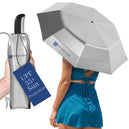
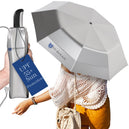
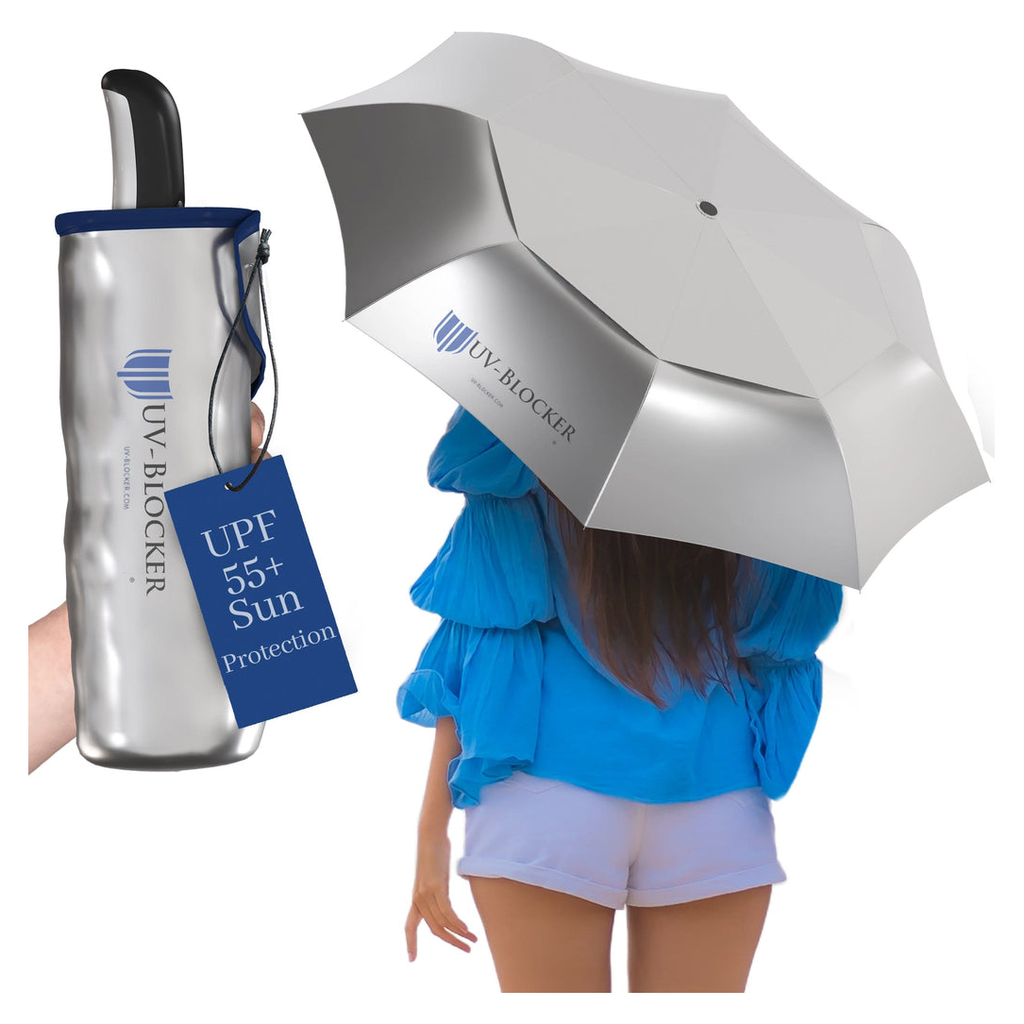
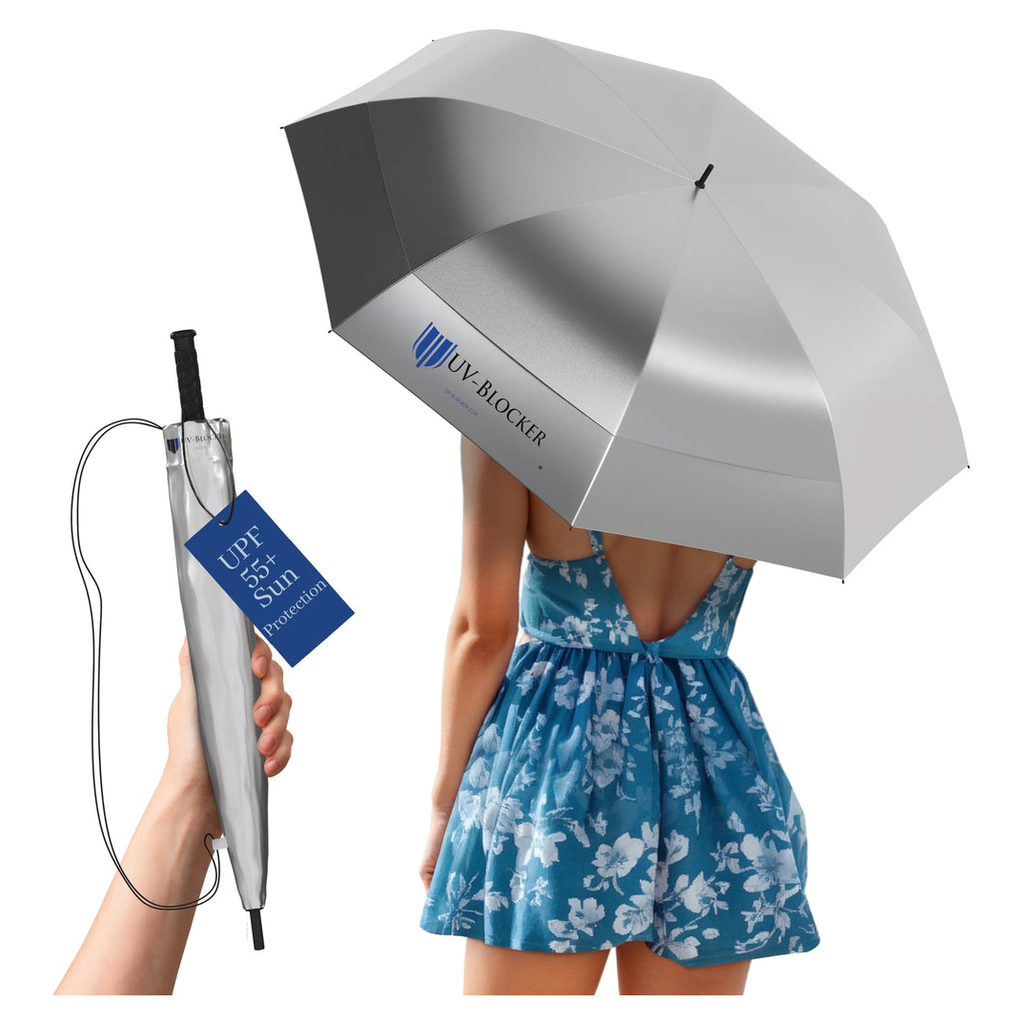
The UV-Blocker Compact Umbrella is rated UPF 50+, which blocks 99% of both UVA and UVB. That earned it the Melanoma Foundation seal of approval.
Unlike UPF shirts that lose protection when you wash and stretch them, umbrella fabric stays consistent year after year. The Solarteck material reflects heat too, making it about 15°F cooler underneath. More technical details at UPF 50 Explained.
Building a System That Works
Forget perfection. Build something that works when you're imperfect. Because you will be.
- Layer 1: Umbrella. Your primary physical barrier. Covers head, face, shoulders without any effort.
- Layer 2: Broad-spectrum sunscreen. SPF 30+ on whatever skin is still exposed. Hands, legs, anywhere the umbrella doesn't reach.
- Layer 3: UPF hat. Backup for when you can't use an umbrella.
- Layer 4: Accept imperfection. You're going to forget to reapply sometimes. That's why your physical barriers matter.
FAQ
Is SPF 100 worth paying more for? Nope. SPF 100 blocks 99% of UVB. SPF 30 blocks 97%. That's 2% more for probably triple the price. The math doesn't work.
How often should I really reapply sunscreen? Every two hours when you're outside. Every 40-80 minutes if you're swimming or sweating heavily.
Do car windows protect from UV? Front windshields usually block both UVA and UVB. Side windows typically only block UVB. So you're still getting UVA exposure on longer drives.
Can I get burned on a cloudy day? Absolutely. 80% of UV comes through clouds. I've learned this one the hard way.
Are darker clothes better for sun protection? Generally yes, darker colors absorb more UV. But a white UPF 50 shirt beats a dark regular cotton shirt every time. The rating matters more than the color.
Do I need sunscreen if I'm under a UV umbrella? For exposed skin, yes. Umbrellas block the vast majority of UV but reflected rays from sand and water can still reach you. Belt and suspenders approach works best.
Last updated: January 2026
The UV-Blocker team has been building sun protection products since 2005, when founder Ron Walker started the company after his own melanoma diagnosis. Products are tested, dermatologist-recommended, and Melanoma Foundation approved.
7 Sun Protection Mistakes Even Careful People Make (And the Science-Backed Fixes): Frequently Asked Questions
Is a regular cotton shirt sufficient for long-term sun exposure?
A standard white cotton t-shirt typically provides a UPF of only 5 to 7, allowing up to 20% of UV radiation to reach your skin. UV-Blocker apparel uses Solarteck® technology to guarantee a UPF 50+ rating, which blocks at least 98% of both UVA and UVB rays. This ensures significantly higher protection than everyday clothing, especially during peak UV hours.
Can UV rays really cause damage while sitting in the shade?
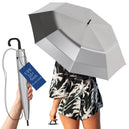
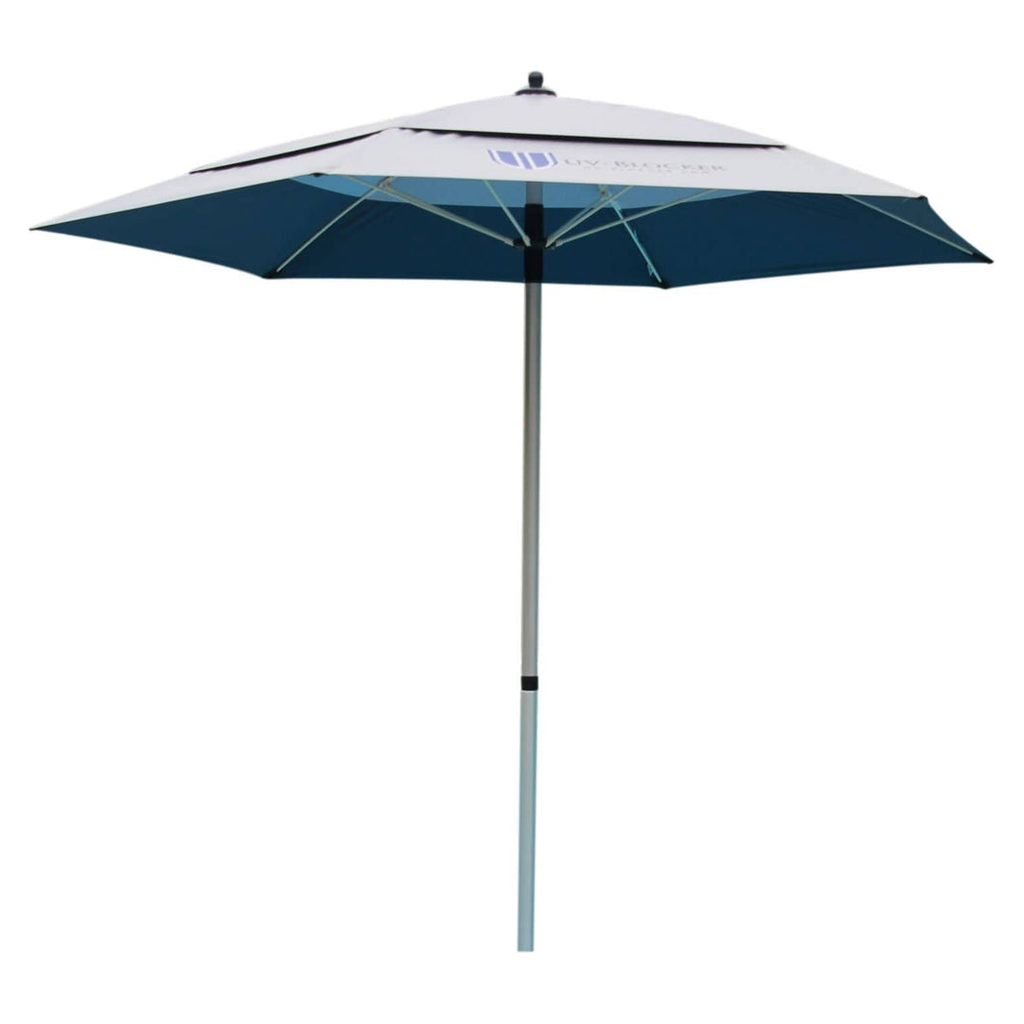
Yes, because surfaces like sand reflect up to 15% of UV radiation and water reflects up to 10%, leading to indirect exposure. UV-Blocker umbrellas feature a patented double-canopy design and Solarteck® fabric that blocks 99% of these rays, providing a level of safety recognized by the Melanoma International Foundation. Relying on standard shade often fails because it doesn't account for this reflected "diffuse" radiation.
Does the effectiveness of UV-protective gear decrease when it gets wet?
Most conventional fabrics lose up to 50% of their UV protection when wet because the fibers swell and the weave opens. UV-Blocker products are engineered to maintain their UPF 50+ standards regardless of moisture levels, ensuring consistent 98% blockage. This makes Solarteck® technology essential for environments involving sweat, humidity, or water activities where traditional gear fails.
Why should I choose UPF-rated products over just applying high-SPF sunscreen?
Sunscreen is often applied unevenly, with most people using only 25% to 50% of the recommended amount, leading to patchy protection. UV-Blocker solutions provide a physical, uniform barrier that meets UPF 50+ standards and doesn't require reapplication every two hours. These products are approved by the Melanoma International Foundation, offering a reliable science-backed fix for the common "missed spot" mistake.