

Gabapentin is one of the most widely prescribed drugs in the United States, and 15.5 million patients received it in 2024.
Some of those patients notice something strange after starting it: sunburn that feels too intense for the amount of exposure, or a rash that shows up where skin was never a problem before.
This article explains what the FDA data shows, how gabapentin can trigger sun reactions, what those reactions look like, who faces the highest risk, and how to protect skin without relying on chemicals. For a broader list of drugs, see Medications That Cause Sun Sensitivity.
TLDR:
- Gabapentin can cause photosensitivity, but the FDA classifies it as rare, meaning fewer than 1 in 1,000 patients.
- Rare at scale is still real. With 15.5 million US users and 73 million prescriptions in 2024, even a small reaction rate can affect thousands of people.
- Most cases fit a phototoxic pattern, where UV light triggers direct skin damage and an exaggerated sunburn.
- A published case report described a 69-year-old man on 300 mg daily who developed a photosensitive eruption after 2 weeks, with recovery 3 weeks after stopping gabapentin and treating the rash.
- Higher doses, age 65+, fair skin, concurrent photosensitizing drugs, and the first 30 days of treatment raise concern.
- Shade first, protective clothing second, sunscreen last is still the best order for medication-sensitized skin.
- A physical barrier, such as a UV umbrella, can help some patients avoid direct sun without putting anything on the skin.
Does Gabapentin Cause Sun Sensitivity?
Gabapentin can cause photosensitivity, though the FDA classifies this reaction as rare, which means fewer than 1 in every 1,000 patients who take it.
That classification sits inside a much larger prescribing picture. In 2024, gabapentin was dispensed to 15.5 million patients in the US, and dispensing reached 73 million prescriptions. The per-capita prescribing rate also rose 123% since 2010, from 79.5 to 177.6 per 1,000 residents. Rare reactions still matter when the user base is that large. Even a low frequency can translate into thousands of people dealing with unexpected sunburn or rash each year.
Patients searching for gabapentin photosensitivity often run into a thin information trail. Major consumer medical sites do not usually carry a dedicated gabapentin sun sensitivity page, which leaves people trying to interpret scattered mentions or unrelated medication lists.
The FDA label is the cleanest starting point. Photosensitivity appears in the Neurontin prescribing information under rare post-marketing dermatologic reactions. The reaction exists, and it is documented.
Understanding the FDA classification explains the frequency, but it doesn't explain the mechanism.
How Does Gabapentin Cause Sun Reactions?
Gabapentin sun reactions happen when UV light interacts with the drug in skin, creating reactive molecules that injure cells or trigger an immune response.

Two pathways matter here. Phototoxic reactions are direct chemical damage. Photoallergic reactions involve the immune system after UV exposure changes the drug structure. The timing and appearance are different.
The chemistry sounds dense, but the pattern is simple. In a phototoxic reaction, drug molecules in the skin absorb UV photons, release reactive oxygen species, and amplify sun damage into a chemical sunburn. In a photoallergic reaction, UV light changes the molecule, the immune system treats it as foreign, and a delayed rash can spread beyond the original sun-exposed area. A comprehensive review of drug-induced photosensitivity covers both mechanisms in detail.
Most gabapentin sun reactions follow the phototoxic pathway. That is why many patients describe a burn first and ask questions later.
| Feature | Phototoxic Reaction | Photoallergic Reaction |
|---|---|---|
| Mechanism | Direct chemical cell damage | Immune system response |
| Onset | Minutes to hours | 24-72 hours delayed |
| Appearance | Exaggerated sunburn | Eczema-like rash, hives |
| Location | Only sun-exposed skin | Can spread beyond exposed areas |
| Dose-dependent | Yes | Not necessarily |
| First exposure | Can occur immediately | Requires prior sensitization |
The distinction matters because it shapes what patients watch for next. A reaction that appears quickly after sun exposure points toward phototoxicity. A rash that shows up a day or two later, especially if it spreads, leans photoallergic.
What Does a Gabapentin Sun Reaction Look Like?
Gabapentin sun reactions usually show up as exaggerated sunburn, red or purple rash patches, or raised itchy areas on skin that saw UV light.
The symptoms are easier to spot than to explain:
- Severe burning that feels out of proportion to the time spent in the sun
- Red, purple, or dusky patches on exposed skin
- Raised, itchy lesions
- Blistering in more severe cases
- Scaling or a rash that looks eczematous rather than like a simple burn
Timing gives another clue. Initial sensitization can develop 7 to 10 days after starting gabapentin. After a sun exposure, phototoxic reactions often appear within hours, while photoallergic reactions may take 1 to 3 days.
A Published Case Study
A published case report helps show how this can look in real life. A 69-year-old Caucasian man taking 300 mg of gabapentin daily for trigeminal neuralgia developed a photosensitive lichenoid eruption after 2 weeks on the medication. The rash had lasted 3 days at the time he was seen, and the patient had first-degree burns on his back after sun exposure days earlier. Diagnosis was confirmed with patch testing. Recovery took 3 weeks after gabapentin was discontinued and the rash was treated with antihistamines and topical corticosteroids.
That case matters because it shows the reaction can be real, documented, and clinically confirmed. Active treatment helped the skin settle.
When to Seek Medical Attention
Symptoms become urgent when blistering spreads, fever appears, breathing becomes difficult, or the rash covers large body areas. Those signs deserve prompt medical attention, not a wait-and-see approach.
Who Is Most at Risk for Gabapentin Photosensitivity?
The highest-risk patients are those on higher doses, adults over 65, people with fair skin, anyone taking other photosensitizing drugs, and people in the first month of treatment.
The dose question is straightforward. More drug molecules in the skin means more material available for UV activation.
Age matters too. Adults 65 and older are a major gabapentin population, especially for neuropathic pain. Older skin is thinner and typically has less melanin protection.
Fair skin types, especially Fitzpatrick I and II, also have less built-in UV buffering. They burn faster.
Concurrent drugs complicate the picture. NSAIDs, diuretics such as hydrochlorothiazide, certain antibiotics, and statins can all add to photosensitivity risk. That is why a medication list matters as much as the gabapentin prescription itself. For a broader overview, see Medications That Cause Sun Sensitivity.
The first 30 days of treatment deserve extra care. That is often when the body is still adjusting.
| Risk Factor | Why It Matters |
|---|---|
| Higher gabapentin dose | More drug molecules available for UV activation |
| Age 65+ | Thinner skin, reduced melanin, higher prescribing rates |
| Fair skin (Fitzpatrick I-II) | Less natural UV protection |
| Concurrent photosensitizing drugs | Compounding effect from multiple agents |
| First 30 days of treatment | Body still adjusting to medication |
| History of drug-induced photosensitivity | Higher predisposition to future reactions |
The table is a screen, not a diagnosis. A patient with several risk factors should take sun protection seriously, but a low-risk profile does not make the reaction impossible.
How Should Gabapentin Patients Protect Themselves from the Sun?
The best order is shade first, protective clothing second, sunscreen last. The American Academy of Dermatology uses that hierarchy because physical barriers do more than sunscreen alone for photosensitive skin.

That order matters. Some medication-sensitized patients do better when skin contact with chemicals is reduced.
Shade First
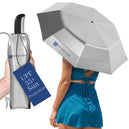
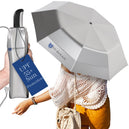
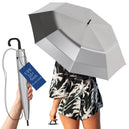
UV umbrellas fit naturally into the shade-first layer. A UPF 50+ umbrella blocks 99% or more of UV while avoiding any need to put sunscreen on already-sensitive skin. The UV-Blocker Compact UV Umbrella is one option at $59.95. It uses an auto-open, auto-close design, which can help patients with limited grip strength or mobility issues. The Travel UV Umbrella, also $59.95, is another option for longer outdoor outings. The brand's Solarteck fabric is tested to AATCC TM183-2020, with 100% UV-B block and 99.97% UV-A block. It is also MIF Approved and HSA/FSA eligible. For evidence on umbrella performance, Do UV Umbrellas Work? covers the data. Older adults may also find Sun Protection for Seniors useful.
Protective Clothing
Clothing comes next. UPF-rated garments, wide-brim hats, and long sleeves add a second barrier. They help most when sun exposure is predictable, like walks, errands, gardening, or waiting outdoors. For a clear explanation of fabric ratings, see SPF vs UPF: Understanding the Two Rating Systems.
Sunscreen as the Last Layer
Sunscreen is the last layer, not the first. Mineral formulas with zinc oxide or titanium dioxide are usually preferred for photosensitive patients because they are less likely to provoke their own reaction than some chemical sunscreens. Peak UV avoidance still helps, especially between 10 AM and 4 PM, but most people cannot live entirely indoors. That is why physical protection does so much of the work.
What Should You Do If You Get Sunburned While Taking Gabapentin?
Move indoors, cool the skin, and treat the reaction as something to document, not ignore.
- Get out of direct sun right away.
- Apply cool, not icy, compresses to the affected areas.
- Use aloe vera or a fragrance-free moisturizer if the skin tolerates it.
- Drink water and rest the skin.
- Consider an over-the-counter antihistamine for itching and a pain reliever only if it does not conflict with the current medication list.
Some patients also use ibuprofen for inflammation, but drug interactions should be checked first.
When to Call a Doctor
Call a clinician promptly if any of these show up:
- Blistering over large areas
- Fever
- Rash spreading to unexposed skin
- Nausea, joint pain, or other systemic symptoms
- No improvement within 48 hours
Do not stop gabapentin without speaking to the prescriber. Abrupt discontinuation can cause withdrawal seizures, so any change should be supervised.
Photograph the rash, note the date and time, and record how long the skin was in the sun. That timeline helps a prescriber separate gabapentin sun sensitivity from another medication or ordinary sunburn.
Frequently Asked Questions About Gabapentin Sun Sensitivity
Gabapentin patients often search for answers about sun reactions, dose timing, and seasonal risk. Here are the most common questions.
Does gabapentin make you sunburn easier?
Yes. Gabapentin can increase sunburn severity in sensitive patients because UV light can amplify skin damage through a phototoxic reaction. The result may look like a burn that is stronger than the exposure would normally explain.
What does a gabapentin sun rash look like?
It often appears as red, raised patches or an exaggerated sunburn pattern on sun-exposed skin. Some cases look itchy and scaly, almost like eczema. Photoallergic reactions can spread beyond the original sun-exposed area.
Should gabapentin be stopped in summer?
No. Gabapentin should not be stopped without medical supervision because abrupt discontinuation can cause withdrawal seizures. A better approach is layered sun protection, timing outdoor activity away from peak UV, and discussing risk with the prescriber.
How long does drug-induced photosensitivity last?
In many cases, gabapentin-related photosensitivity settles within 1 to 3 weeks after the drug is discontinued, although some patients report longer sensitivity. The published case report resolved at 3 weeks with treatment and discontinuation.
Can gabapentin cause a rash without sun exposure?
Yes. Gabapentin can also cause non-sun-related rashes as a separate side effect. Photosensitivity, though, specifically depends on UV exposure and usually appears on skin that saw the sun.
Could another medication be the real cause?
Yes. NSAIDs, diuretics, some antibiotics, and statins can all contribute to photosensitivity. A full medication list is the fastest way to sort out whether gabapentin is the main trigger or one part of a stacked risk profile. For a broader overview, Medications That Cause Sun Sensitivity is the right parent guide.
Conclusion
Gabapentin sun sensitivity is rare, but rare does not mean imaginary. The FDA lists photosensitivity in the label, 15.5 million US patients were dispensed gabapentin in 2024, and a documented case report shows the reaction can be real and clinically confirmed.
The practical takeaway is simple. Watch for unusual sunburn or rash during the first month of treatment, especially if other photosensitizing drugs are already in the mix. Then use a shade-first plan, with clothing and sunscreen layered behind it.
For patients who want a physical barrier without adding chemicals to the skin, a UV umbrella is one option inside that hierarchy. The UV-Blocker Compact UV Umbrella and the Travel UV Umbrella are both built for this kind of protection, but the larger point is the same: protection should fit the medication, the season, and the person using it.
Talk to the prescriber about sun protection at the next appointment, especially if the skin has already reacted once. That conversation is often the difference between guessing and having a clear plan.
Frequently Asked Questions: Gabapentin and Sun Sensitivity
Does gabapentin directly cause sun sensitivity?
Gabapentin is not a traditional photosensitizer, but some patients report increased sun reactivity, likely because the drug affects peripheral nervous system signaling in the skin. Additionally, gabapentin-induced drowsiness can mean patients spend long periods outdoors without noticing mounting UV exposure.
Can gabapentin cause a rash from sun exposure?
Reports of maculopapular rashes and hypersensitivity reactions in sun-exposed areas have been documented in gabapentin users. If you develop an unexplained skin rash outdoors while on gabapentin, consult your prescriber and avoid further sun exposure until evaluated.
How does gabapentin affect heat regulation outdoors?
Gabapentin can impair sweating in some patients, raising the risk of heat exhaustion on hot days. Wear breathable, UPF-rated clothing, stay hydrated, and use a UV-blocking umbrella to reduce radiant heat load when spending time outside.
What sun protection routine is best for someone on gabapentin?
Apply SPF 50+ sunscreen 20 minutes before going outside, wear a wide-brimmed hat or UPF umbrella, and take frequent shade breaks. Set a timer to remind yourself to reapply sunscreen every 90 minutes — gabapentin-related cognitive effects can cause patients to lose track of time outdoors.