

Over 5 million Americans currently manage melasma. Most of them apply high-SPF sunscreen every single morning. And most of them still watch their hyperpigmentation darken by mid-summer. The gap comes down to skin biology that's more complicated than most people realize. UV radiation is only one piece of the puzzle. Standard chemical and mineral sunscreens block ultraviolet rays well enough. But they do nothing against visible light and heat — both of which are proven melasma triggers.
This protection gap explains why diligent patients hit frustrating setbacks. They'll layer SPF 50 under makeup, reapply every two hours, and still see dark patches spread across the forehead and cheeks. Sunscreen on its own can't manage a condition that reacts to three separate environmental factors. Real prevention requires a strategy that addresses all of them at once.
TL;DR: The Triple Trigger Problem
- UV radiation damages skin and stimulates melanin production directly.
- Visible light between 400 and 450 nanometers triggers pigmentation specifically in darker skin tones (Fitzpatrick III-VI).
- Heat from infrared radiation or ambient temperature independently activates melanogenesis.
- Standard sunscreens protect against UV rays but remain transparent to visible light and thermal radiation.
- Physical shade stands as the only single intervention capable of blocking UV rays, visible light, and ambient heat at once.
What Are the Three Main Melasma Triggers?
The three main melasma triggers are UV radiation, visible light (400-450nm), and heat — each activating melanocyte pigment production through a different biological pathway.
Think of melanocytes as the skin's pigment factories. In someone with melasma, those factories go haywire. They start treating normal, everyday light and heat exposure like emergencies, cranking out melanin at a rate the skin doesn't need. That excess pigment is what creates the telltale brown or gray-brown patches across the forehead and cheeks. Four factors push melanocytes into this overdrive state.

UV radiation is the trigger most people already know about. UVA rays burrow deep into the skin and generate oxidative stress, while UVB rays hit the surface hard enough to cause sunburn. Both types kick melanocytes into action. This is the one threat that broad-spectrum sunscreens handle reasonably well.
Here's where it gets frustrating: visible light is the second trigger, and it's one most patients never hear about. Blue light in the 400 to 450-nanometer range doesn't behave like UV at all. Clinical evidence shows it's responsible for up to 50 percent of solar-induced pigmentation in melasma patients. The darkening it causes tends to stick around longer and resist the usual fading treatments. People with darker skin tones (Fitzpatrick types III through VI) get hit hardest by this pathway.
And then there's heat — the trigger that catches people off guard most often. It doesn't even require sunlight. Research shows that rising skin temperature alone can switch on melanogenesis, no UV or visible light needed. Heat makes blood vessels dilate, which kicks off inflammation, which signals the melanocytes to start producing again.
Hormones tie all three external melasma triggers together. When estrogen and progesterone levels run high, they essentially lower the bar for how much UV, light, or heat it takes to trigger pigmentation. That's why so many women first notice melasma during pregnancy, or after starting birth control or hormone replacement therapy. The melanocytes are already primed — they just need a nudge from sunlight, a hot car interior, or even a warm kitchen. Sun protection during pregnancy matters so much precisely because of this hormonal sensitivity.
How Does Visible Light Trigger Melasma Differently Than UV?
Visible light activates opsin-3 receptors in melanocytes through a separate pathway than UV, and standard sunscreens are transparent to it.
What makes visible light so tricky is how deep it goes. UVB mostly hits the surface, but visible light slips right past the epidermis and reaches structures buried in the dermis. The skin's UV defenses weren't built to handle these longer wavelengths, so standard sunscreen filters can't even recognize them, let alone stop them.
There's a photoreceptor inside melanocytes called opsin-3 that evolved specifically to detect blue light. When visible light reaches the skin, opsin-3 fires up a pigment production chain reaction that has nothing to do with the UV damage pathway. It's a completely separate mechanism. And the pigmentation it creates? It tends to be darker than a normal UV tan and sticks around a lot longer.
Here's the problem: even SPF 100 is transparent to visible light. Slather on as much chemical sunscreen as the bottle holds, and blue light passes straight through to those opsin-3 receptors underneath. Zinc oxide helps a little, but it still leaves real gaps in the visible spectrum. Someone can be doing everything "right" with sunscreen and still feeding their melasma triggers without knowing it.
Tinted sunscreens with iron oxides are the only topical option that actually fights back against visible light. The iron oxide particles bounce blue light away before it penetrates. They cover a decent chunk of the visible spectrum — but rarely all of it, and most people don't apply a thick enough layer to get the full benefit anyway.
The indoors aren't safe either. Fluorescent office lights, laptop screens, TV panels — they all emit the wavelengths that wake up melanocytes. A smartphone held six inches from the face for hours a day is basically a compact melasma trigger. People who work from home sometimes notice their patches getting darker without setting foot outside, because they're parked near a window or staring at screens all day. That low-level, constant blue light exposure adds up.
Why Does Heat Make Melasma Worse Even Indoors?
Heat-induced melanogenesis functions independently of UV and visible light, meaning high skin temperatures alone can darken melasma patches.
Sit in a pitch-black room and melasma can still worsen if the temperature climbs high enough. Clinical studies demonstrate that skin temperature increases alone can force melanocytes to darken existing patches. Heat-induced melanogenesis doesn't need any light at all.
What happens is pretty straightforward: heat causes vasodilation, which means blood vessels open up to release warmth. That expansion sets off an inflammatory reaction in the surrounding tissue. And inflammation, in turn, tells melanocytes to start making more pigment — as if the skin needs protection from an injury that isn't really there. None of this involves opsin-3 or UV. It's a standalone process.
Day-to-day life is full of these heat exposures, and most people don't connect them to their skin. An hour of hot yoga at 105 degrees. Twenty minutes in a sauna. Standing over a gas stove while dinner simmers. Each one sends infrared heat straight into the face. Individually, they seem harmless. But they stack up over weeks and months, quietly maintaining the dark patches that expensive treatments are working to fade.
Sunscreen can't help here. Chemical formulas actually absorb UV and convert it into small amounts of heat on the skin surface, which could theoretically make things worse for melasma. Mineral sunscreens sit on top of the skin but don't insulate against ambient temperature at all. Doesn't matter if the bottle says SPF 30 or SPF 100 — the skin soaks up the heat either way.
Physical shade is the one thing that actually works against thermal radiation when someone is outdoors. A solid canopy catches infrared rays before they ever touch the body and can drop the temperature underneath by up to 15 degrees Fahrenheit. That's enough to prevent the vasodilation-inflammation chain from firing in the first place. Keep the skin cool, and the heat trigger never gets its chance.
What Is the Best Way to Block All Three Melasma Triggers?
Physical shade blocks UV, visible light, and heat simultaneously — making it the only single intervention that addresses all three melasma trigger pathways.
The AAD puts it plainly: seek shade first. Creams and lotions play a supporting role, not the lead. Counting on topical products alone to handle UV, visible light, and heat leaves too many gaps. The foundation of any real melasma management plan has to be a physical barrier between the skin and the environment.

A UPF 50+ umbrella handles all three pathways at the same time, which is why dermatologists keep recommending it. The fabric stops over 98 percent of UVA and UVB. It's dense enough to block visible light from reaching the opsin-3 receptors underneath. And the shadow it casts drops the temperature by about 15 degrees Fahrenheit — enough to keep the heat trigger from firing. One tool, three melasma triggers covered.
Tinted mineral sunscreen picks up where the umbrella leaves off. Overhead shade is great for direct light, but UV and visible light still bounce off sidewalks, water, and sand onto the face from below. The iron oxides in tinted formulas intercept that reflected visible light, while zinc oxide catches the reflected UV. Pairing overhead shade with a topical layer underneath creates a defense that's hard to punch through.
Hats and UPF clothing round out the rest of the body. A four-inch brim throws a shadow over the forehead and cheeks, and sun-rated clothing keeps UV off the chest and arms. Together with the umbrella, they cut down on the kind of systemic inflammation that makes melasma worse overall. Here's how UPF 50+ testing works and what the rating actually guarantees.
| Protection Method | Blocks UV Rays | Blocks Visible Light | Blocks Ambient Heat |
|---|---|---|---|
| Standard SPF 50 Sunscreen | Yes | No | No |
| Tinted Mineral Sunscreen | Yes | Partial | No |
| Wide-Brim Sun Hat | Yes | Partial | Partial |
| UPF 50+ Umbrella | Yes | Yes | Yes |
| Combined Strategy | Yes | Yes | Yes |
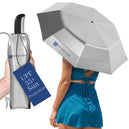
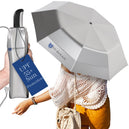
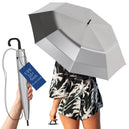
The UV Protection Compact Umbrella from UV-Blocker spans 42 inches across — wide enough to keep the head, neck, and shoulders buried in shade. It fits in a bag, opens in seconds, and doesn't require reapplication. For anyone commuting, walking the dog, or just running errands on a bright day, that kind of consistent coverage is what keeps melasma management on track.
Frequently Asked Questions About Melasma Triggers
These are the most common questions about melasma triggers, answered using data from the AAD, Mayo Clinic, and dermatology research.
Can melasma be triggered by phone screens?
Yes — and it's more common than people think. Phone screens push out concentrated blue light in the 400 to 450-nanometer range, right in the sweet spot that activates opsin-3 receptors. Holding a screen six inches from the face for hours a day gives melanocytes a steady signal to produce pigment. People with darker skin tones tend to be more susceptible.
Does melasma go away after pregnancy?
Sometimes it does, sometimes it doesn't. The patches often lighten in the months after delivery as hormone levels settle back down. But "lighten" isn't the same as "gone." The melanocytes stay primed and reactive to UV, visible light, and heat. A second pregnancy or going on birth control can bring the patches right back.
Can you prevent melasma from getting worse?
It's possible to keep melasma from getting darker, but only by addressing all three triggers at once. That means tinted mineral sunscreen every day for UV and reflected visible light, combined with physical shade — a UPF 50+ umbrella or wide-brim hat — to block direct visible light and cut heat exposure. The patients who see real results are the ones who stay consistent, not the ones who chase the perfect product.
Is melasma permanent?
There's no permanent cure, but that doesn't mean treatment is pointless. Hydroquinone, cysteamine, and laser therapy can all lighten the patches noticeably. The catch is that the melanocytes underneath stay trigger-happy. One unprotected afternoon at the beach or a hot afternoon in the car can undo months of progress. The AAD frames it as long-term management, not a one-and-done fix.
Are melasma treatments HSA/FSA eligible?
A lot of them do. Prescription treatments like tretinoin and hydroquinone are almost always HSA/FSA eligible. Sun protection products rated SPF 15 or higher — including UPF 50+ umbrellas — can often be reimbursed too, especially with a Letter of Medical Necessity from a dermatologist. The specifics vary by plan, so it's worth a quick call to the administrator to find out what's covered.
Conclusion
Effective melasma management requires blocking all three triggers — UV, visible light, and heat — not just applying stronger sunscreen.
Stronger sunscreen won't solve a problem that has three separate causes. UV, visible light, and heat each flip a different biological switch inside the melanocytes, and ignoring any one of them lets the darkening continue. Topical filters handle UV well enough but leave visible light and heat wide open.
That's where physical shade changes the math. A strategy anchored in deep, cooling shade — paired with tinted mineral sunscreen for reflected light — tackles the root biology of melasma instead of just one piece of it. Blocking all three triggers before they reach the skin protects the progress that dermatological treatment has worked to build. Isn't that kind of consistent protection worth a one-time investment? Learn more about the physical shade strategy for melasma.
Dermatologists treating melasma know that even incidental UV exposure can reverse months of treatment progress. Discover how UV-Blocker umbrellas are used by dermatologists treating melasma and pigmentation disorders — broad-spectrum UPF 50+ protection that blocks both UV and visible light triggers.