

Pregnancy creates a convergence of UV risks that most expectant mothers aren't warned about at their first prenatal appointment. Up to 70 percent of pregnant women develop melasma from UV exposure. Circulating folate — critical for fetal neural tube development — can drop up to 20 percent from regular UV exposure, even in women taking prenatal supplements. And the FDA has confirmed that only 2 of 17 common sunscreen active ingredients are proven safe for routine use. Pregnant women face a genuine dilemma: they need robust UV protection, but the most widely available sunscreen products contain chemical filters with unknown fetal exposure profiles.
This guide covers the clinical research on sunscreen chemicals and pregnancy safety, identifies which filters to avoid and which are considered safe, explains why hormonal changes create unique UV vulnerability in each trimester, and provides a trimester-by-trimester sun protection pregnancy protocol that uses physical shade as the primary protection layer.
TLDR:
- Melasma affects up to 70% of pregnant women due to estrogen-driven melanocyte activation combined with UV exposure.
- UV exposure during pregnancy can reduce circulating folate levels by up to 20%, even with daily prenatal supplement use.
- Chemical filters like oxybenzone reach blood concentrations 500 times above FDA safety thresholds and are detectable for weeks after application.
- The FDA recognizes only zinc oxide and titanium dioxide as generally recognized as safe and effective (GRASE) sunscreen ingredients.
- Chemical filters appear in breast milk in 85% of samples from nursing mothers — relevant for both pregnancy and the postpartum period.
- Physical shade from a UPF 50+ umbrella blocks 99% of UV with zero chemical absorption, zero systemic exposure, and zero fetal contact.
- Layering physical shade with mineral sunscreen and UPF clothing provides the safest, most complete protection across all three trimesters and postpartum.
Why Is Sun Protection During Pregnancy More Important Than Ever?
Surging estrogen and progesterone during pregnancy amplify melanocyte activity, making skin significantly more reactive to UV than it was pre-pregnancy. This biological shift elevates melasma risk to 50 to 70 percent and creates nutritional UV risks through folate photodegradation that most prenatal care protocols don't address.
Melasma: the mask of pregnancy
Elevated estrogen and progesterone stimulate melanocytes — the pigment-producing cells in the skin — to become hyperresponsive to UV triggers. When UV light hits melanocyte-dense areas of the face, it triggers these already-activated cells to overproduce melanin, creating dark patches across the forehead, cheeks, upper lip, and chin in a butterfly-wing distribution. This condition is called melasma, or colloquially, the "mask of pregnancy."
Clinical reviews published in the National Library of Medicine report melasma prevalence in pregnancy ranging from 36.4 to 75 percent depending on skin tone, geographic location, and sun exposure patterns. Women with Fitzpatrick skin types III to V — who have higher baseline melanin concentrations — are particularly susceptible because their melanocytes are more numerous and respond more vigorously to hormonal stimulation. However, lighter-skinned women are not exempt: hormonal amplification drives the reaction across all skin types.
The critical prevention window is early in the first trimester, before significant UV exposure accumulates. Once melasma patches establish, they are notoriously difficult to treat. Dark facial patches can persist for 10 or more years after childbirth, particularly if UV protection was not prioritized during pregnancy. Post-pregnancy melasma treatment with retinoids, hydroquinone, or laser procedures is expensive, lengthy, and uncertain. Prevention through consistent UV avoidance during pregnancy is the most evidence-supported approach. Find more details on Pregnancy Melasma Prevention.
Folate photodegradation: the overlooked nutritional risk
UV light carries a second, less-discussed risk for expectant mothers that extends beyond skin appearance. UV radiation photodegrades circulating folate in the bloodstream through a photochemical reaction that breaks down the vitamin's active molecular form. A 2014 study by Borradale et al. found that regular UV exposure reduced serum folate levels by up to 20 percent — a statistically and clinically significant reduction that occurred even in women taking daily prenatal folate supplements.
This matters enormously during the first trimester specifically. Folate (vitamin B9) is essential for neural tube formation — the embryonic precursor to the brain and spinal cord. Neural tube closure occurs between weeks 3 and 4 of gestation, often before a woman has confirmed her pregnancy. Inadequate circulating folate during this window is associated with neural tube defects including spina bifida and anencephaly. Even modest reductions in serum folate below optimal levels can compromise neural tube development.
The practical implication: taking prenatal vitamins is necessary but not sufficient if regular UV exposure is simultaneously reducing circulating levels of that folate. Sun protection pregnancy protocols protect both skin pigmentation and the nutritional availability of one of pregnancy's most critical vitamins.
Which Sunscreen Chemicals Should You Avoid During Pregnancy?
Avoid chemical UV filters including oxybenzone, avobenzone, homosalate, octisalate, octocrylene, and octinoxate. These ingredients absorb systemically at concentrations far exceeding FDA safety thresholds, are detectable in blood weeks after last application, and appear in breast milk. The FDA recognizes only zinc oxide and titanium dioxide as safe and effective for use during pregnancy and nursing.
| Sunscreen Type | Ingredients | FDA Status | Pregnancy Safety |
|---|---|---|---|
| Mineral (Physical) | Zinc oxide, Titanium dioxide | GRASE (safe and effective) | Recommended — minimal systemic absorption |
| Chemical | Oxybenzone, avobenzone, homosalate, octisalate, octocrylene, octinoxate | Insufficient safety data | Avoid during pregnancy — absorbed systemically into blood and breast milk |

What the FDA found about chemical sunscreen absorption
The FDA proposed revised regulatory requirements for over-the-counter sunscreens in 2019 and 2021, establishing that only two active ingredients qualify as generally recognized as safe and effective (GRASE): zinc oxide and titanium dioxide. The remaining 12 active chemical UV filters lack sufficient safety data to confirm GRASE status — a regulatory threshold that requires demonstrating safety even with systemic absorption.
Studies published in JAMA measured systemic absorption of popular chemical filters in maximal-use clinical trials. Researchers found oxybenzone reached 258 ng/mL in blood plasma — 516 times above the FDA's 0.5 ng/mL safety threshold for allowing oral drug absorption without additional nonclinical toxicology studies. Homosalate reached 14.3 ng/mL — 29 times above the threshold. Octinoxate reached 7.5 ng/mL — 15 times above. All six tested chemical filters exceeded the 0.5 ng/mL threshold.
Most critically: oxybenzone and homosalate remained measurable in blood 21 days after the last application in some study participants. This is not a transient exposure — it is sustained systemic bioaccumulation from regular use. A pregnant woman applying sunscreen daily throughout a 9-month pregnancy exposes her fetus to months of continuous chemical filter circulation at concentrations far exceeding safety evaluation thresholds.
Chemical filters in breast milk
Chemical absorption extends beyond the bloodstream into breast milk. Swiss researchers detected UV filters in 85 percent of breast milk samples from nursing mothers — a frequency that indicates this is the norm rather than the exception. This finding is relevant both to prenatal exposure through placental circulation and to postnatal exposure through breastfeeding.
The precautionary principle in pregnancy
The American College of Obstetricians and Gynecologists (ACOG) recommends avoiding oxybenzone during pregnancy and favoring mineral sunscreens instead. The FDA explicitly states that absorption does not automatically equal fetal harm — the evidence of harm to human fetuses remains limited. However, the precautionary principle applies decisively during gestation: when a safer alternative exists that provides equivalent UV protection without systemic chemical exposure, the safer alternative is the appropriate choice. For sun protection pregnancy, that safer alternative is mineral sunscreen combined with physical shade.
What Are the Best Sun Protection Pregnancy Strategies?
Physical shade from a UPF 50+ umbrella provides 99% UV protection with zero chemical exposure, zero systemic absorption, and zero fetal chemical contact — making it the safest and most effective primary layer for comprehensive sun protection during pregnancy. Layer it with mineral sunscreen and UPF clothing for complete coverage.
Layer 1: Physical shade from a UPF 50+ umbrella (primary barrier)
A UPF 50+ umbrella blocks 99 percent of incoming UV rays through physical reflection rather than chemical absorption. There is no systemic exposure, no chemical crossing the skin, no absorption into the bloodstream, and no potential for placental or breast milk transfer. The protection activates the moment the canopy opens — no 20-minute absorption window required, no reapplication after 2 hours, no degradation in heat or perspiration.
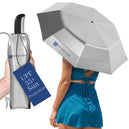
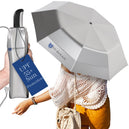
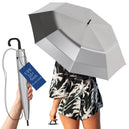
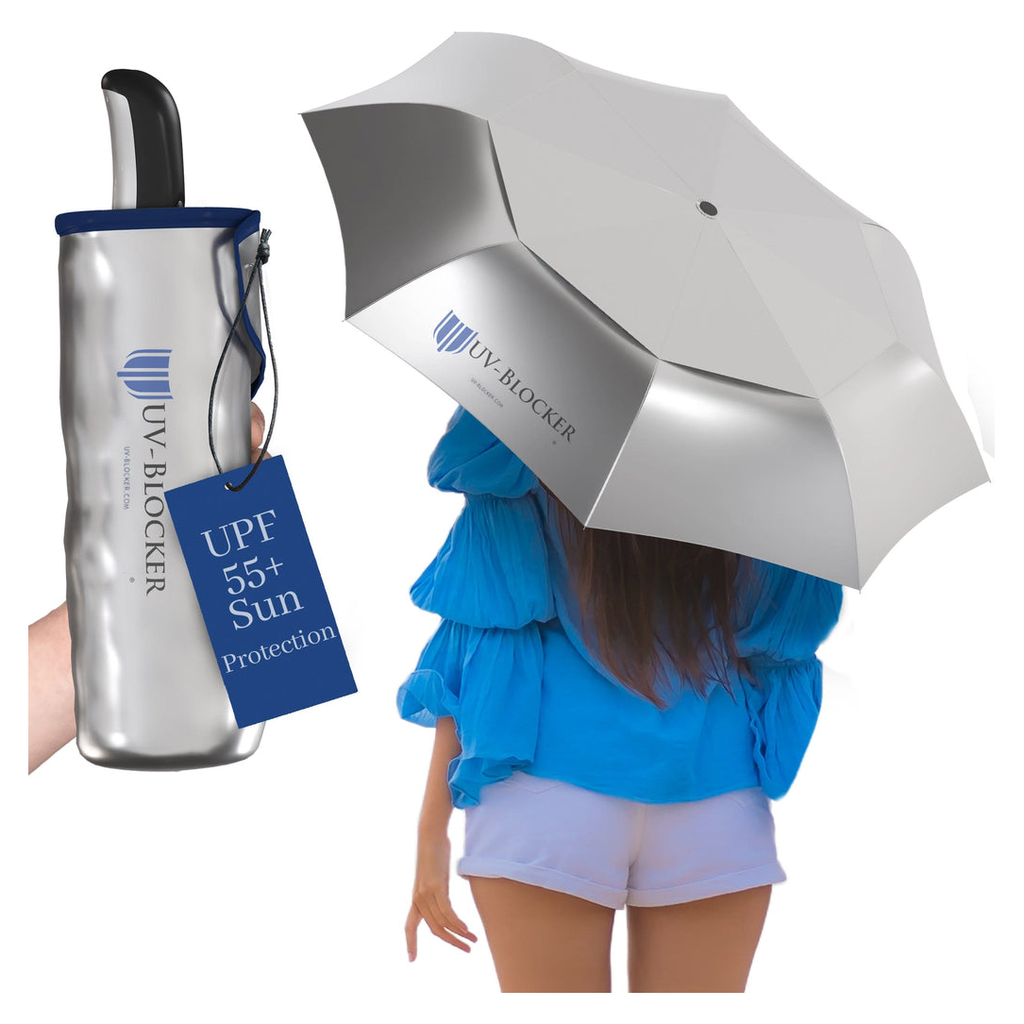
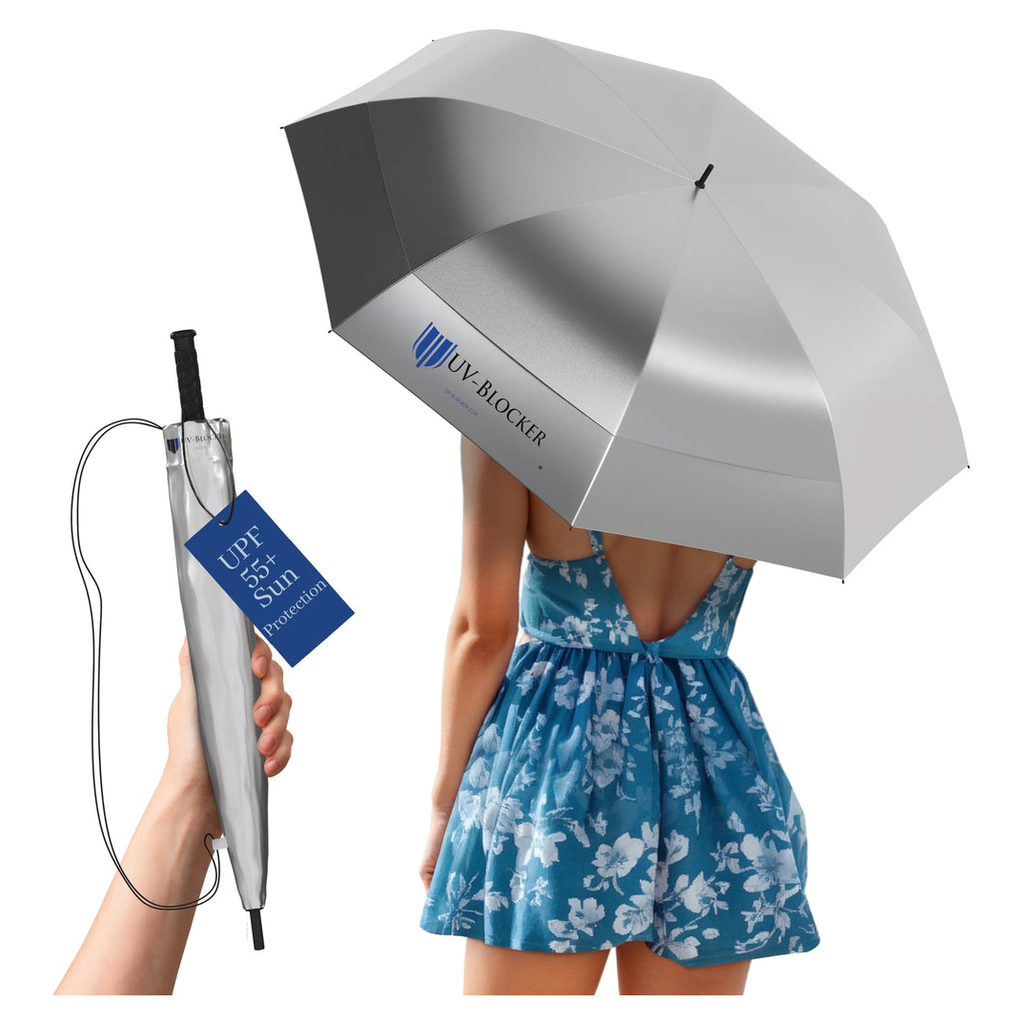
The UV-Blocker Compact UV Umbrella weighs 13 ounces with one-hand auto-open/auto-close operation — practical when one hand is on a stroller, a bag, or a door. The Solarteck® coating provides both 99.97% UVA blocking per AATCC TM183-2020 independent testing and a measurable cooling effect of up to 15°F underneath the canopy. That temperature reduction directly addresses heat stress — a pregnancy-specific concern that becomes progressively more important through the second and third trimesters as blood volume expands and thermoregulation becomes more demanding.
Learn more about the science by reading Do UV Umbrellas Work.
Layer 2: Mineral sunscreen on uncovered skin surfaces
Zinc oxide or titanium dioxide mineral sunscreen should be applied to all skin areas that the umbrella cannot consistently cover: the backs of the hands, lower arms, ankles, lower legs, and any facial areas not shaded by the canopy. SPF 30 is the minimum recommended; SPF 50 is preferred for extended outdoor time or high UV index days (UVI 6 and above).
Tinted mineral formulas containing iron oxide offer an additional benefit specific to melasma prevention. Iron oxide blocks visible light — particularly high-energy visible (HEV) light in the 400–500nm blue light range — which also triggers melanocyte pigmentation responses independently of UV. In clinical studies, tinted mineral sunscreens with iron oxide provided superior melasma prevention versus untinted mineral products. This matters because standard UV-blocking sunscreens do not block visible light, leaving a gap in melasma protection for pregnant women with significant indoor or window-adjacent exposure.
Layer 3: UPF clothing and accessories
Long-sleeved UPF-rated shirts, wide-brim hats (minimum 3-inch brim), and UV-blocking sunglasses complete the physical protection system. UPF 50+ fabrics block 98%+ of UV across both UVA and UVB wavelengths and don't require reapplication. They're particularly practical in pregnancy because they provide consistent coverage regardless of how active or mobile the day is, without touching the abdomen.
UV avoidance timing
Limit outdoor UV exposure between 10 AM and 4 PM when UV index is typically at its highest (UVI 6 and above). Morning and late afternoon exposure carries lower UV intensity and lower risk of both sunburn and UV-triggered melanocyte activation. Scheduling outdoor activity before 10 AM or after 4 PM is a simple, chemical-free baseline risk reduction that requires no products.
Trimester-by-Trimester Sun Protection Pregnancy Guide
UV protection requirements shift with each trimester as hormonal changes, physical changes, and the UV season intersect. Starting protection early — in the first trimester before any skin symptoms appear — produces the best outcomes for both melasma prevention and UV safety.
First Trimester (Weeks 1–13): Establish protection before symptoms appear
UV protection during the first trimester is most important for two reasons: neural tube closure occurs within the first 4 weeks (often before pregnancy is confirmed), creating the window where folate photodegradation poses developmental risk; and melanocyte activation from rising hormones begins immediately, before any skin pigmentation changes are visible. Starting melasma prevention in early first trimester is consistently more effective than trying to stop melasma that has already appeared.
Morning sickness often makes applying scented or textured products to the face and body difficult or impossible during weeks 6 to 12. A UV umbrella requires zero topical application — simply open and carry. It works through physical interception without any product contact with sensitized skin. This practical advantage makes the first trimester the natural time to establish the umbrella-first habit.
First trimester outdoor activity typically occurs during the later fall and winter months for women who conceived in summer or autumn (delivery in spring), or during peak UV months (May through August) for women who conceived in fall or winter (delivery in winter). Knowing where your second and third trimesters fall in the UV calendar helps anticipate protection intensity needs. Read more about Melasma Physical Shade.
Second Trimester (Weeks 14–27): Adapt to mobility changes
The second trimester typically brings relief from morning sickness and increased energy — which often translates into more time outdoors. For most US pregnancies, the second trimester also overlaps with late spring and summer peak UV months if conception occurred in fall or winter. This is when UV protection consistency is most challenged by increased activity and highest UV intensity.
A growing bump changes mobility and makes topical application awkward. Reaching the lower back, shoulders, and back of the legs to apply mineral sunscreen becomes difficult without assistance. A UV umbrella provides full upper-body coverage — head, face, neck, shoulders, and upper torso — without requiring contortion or a second person. UPF-rated maternity clothing covers the abdomen and lower body consistently.
The second trimester is also when melasma patches typically become visible if adequate first-trimester protection was not established. Visible melasma is the warning sign that UV damage is accumulating in melanocytes — increasing protection intensity now will help prevent further darkening, even if it cannot reverse patches that have already formed.
Third Trimester (Weeks 28–40): Prioritize cooling alongside UV protection
Heat sensitivity increases dramatically during the third trimester as blood volume expands by 40 to 50 percent above baseline. The cardiovascular demands of pumping for two create a significantly elevated basal body temperature, making heat stress a clinically important concern during outdoor activity. UV protection strategies that provide cooling benefits alongside UV blocking carry particular value in late pregnancy.
A UV umbrella creates a 15°F cooling zone underneath the canopy through the Solarteck® reflective coating, which deflects infrared radiation alongside UV. This temperature reduction reduces core body heat load during outdoor activity — directly addressing third-trimester heat stress risk. A 2024 meta-analysis in Nature Medicine found that heat wave exposure was associated with a 1.26 odds ratio for preterm birth, 1.16 for stillbirth, and 1.10 for gestational hypertension. The cooling benefit of physical shade is not cosmetic — it is a clinically relevant third-trimester heat intervention.
Mobility limitations in the third trimester also increase the practical value of a UV umbrella: it requires only one hand, works from a stationary seated position, and provides consistent overhead coverage without requiring the woman to reposition.

Postpartum and Breastfeeding: Continue physical protection, delay chemical filters
UV protection does not stop at delivery. Melasma can persist and worsen with UV exposure during the breastfeeding period if estrogen levels remain elevated. Chemical filters like oxybenzone continue to cross into breast milk — the 85% breast milk detection rate from Swiss research applies to nursing mothers just as much as to pregnant women. Physical shade and mineral sunscreen remain the safest primary barrier while nursing, with the same chemical filter avoidance recommendations as during pregnancy.
The postpartum period is also when parents can extend their UV protection knowledge into Newborn Sun Protection. Newborns cannot use sunscreen, making a UV umbrella and UPF-rated clothing the primary protection tools for babies under 6 months. The habits established during pregnancy translate directly into appropriate newborn sun safety practices.
Can You Use a UV Umbrella Instead of Sunscreen While Pregnant?
A UPF 50+ umbrella can replace chemical sunscreen and serves as the primary protection layer for the skin areas it covers. Mineral sunscreen is still needed on the exposed skin beyond the umbrella's canopy shadow — backs of hands, lower arms, and lower legs. Together they provide complete coverage without any chemical filter exposure.
A UPF 50+ umbrella blocks 99 percent of UV rays reaching all areas under its canopy. The head, face, neck, shoulders, and upper torso stay protected under the canopy during normal walking and outdoor activity. Arms from mid-forearm down, hands, ankles, and lower legs extend beyond the shade zone and benefit from mineral sunscreen coverage. Think of the umbrella as the primary barrier covering the highest-risk areas (face, neck, scalp) and mineral sunscreen filling the gaps on extremities.
The practical advantages of umbrella-first protection are substantial during pregnancy:
- No chemical exposure to fetus or breast milk — the most important distinction from chemical sunscreen
- No 20-minute pre-exposure waiting period — protection activates immediately when the canopy opens
- No reapplication every 2 hours — continuous protection for the duration of outdoor time without any action required
- No sunscreen stains on maternity clothing — mineral sunscreen leaves white residue on dark fabrics; umbrella coverage of the torso eliminates this concern for most clothing contact areas
- 15°F cooling effect — particularly valuable in the second and third trimesters when heat tolerance decreases
- Works when morning sickness makes topical products difficult — first trimester nausea doesn't affect umbrella use
For melasma prevention specifically, physical shade from a UV umbrella consistently outperforms sunscreen alone on the face. Sunscreen wears off, thins from touching or sweating, and provides no protection from the visible light component (from screens and indoor lighting) that also triggers melanocyte responses. A UV umbrella that blocks overhead UV provides the face with a substantially reduced UV dose throughout outdoor activity regardless of whether sunscreen has degraded.
Clinical Considerations for Sun Protection in Pregnancy
Effective sun protection during pregnancy intersects with prenatal care in several ways that are worth discussing with an OB-GYN or dermatologist, particularly for women with a history of melasma, autoimmune skin conditions, or photosensitizing medications.
Vitamin D and sun exposure during pregnancy
A common concern about aggressive UV protection during pregnancy is vitamin D sufficiency. UV B exposure to the skin is the body's primary vitamin D synthesis mechanism, and vitamin D is critical for fetal bone development, immune system function, and maternal calcium homeostasis.
The practical answer is nuanced. Vitamin D synthesis occurs through relatively brief UVB exposures — 10 to 15 minutes of morning or late afternoon sun exposure on the arms and hands is sufficient for most skin tones to maintain adequate vitamin D production. This brief, timed early-or-late-day exposure carries far lower melasma risk than midday UV exposure because UVA (the primary melasma trigger) is proportionally lower relative to UVB before 10 AM and after 4 PM.
Pregnant women in northern latitudes (above 37°N, roughly from San Francisco and Richmond, Virginia northward) or those with darker skin tones may need vitamin D supplementation regardless of sun exposure due to lower UVB intensity or higher melanin reduction of UVB synthesis efficiency. Prenatal vitamins typically contain 400–600 IU of vitamin D; many OB-GYNs recommend additional supplementation to target 1,000–2,000 IU daily during pregnancy. Having vitamin D levels checked at a first prenatal visit allows supplementation to be calibrated to actual need rather than relying on UV exposure guesses.
Medications that increase photosensitivity during pregnancy
Some medications used during pregnancy can increase UV sensitivity beyond baseline pregnancy-related hormone effects. Women taking these medications need enhanced UV protection:
- Topical retinoids for acne (tretinoin, adapalene) — increase skin photosensitivity; note that oral retinoids like isotretinoin are contraindicated in pregnancy entirely
- Certain antibiotics for urinary tract infections or Group B streptococcus — tetracyclines are photosensitizing and generally avoided in pregnancy; fluoroquinolones may also increase UV sensitivity
- Metformin for gestational diabetes — some case reports of photosensitivity; discuss with prescribing physician
- Certain antihistamines for pregnancy-related skin conditions — some first-generation antihistamines have mild photosensitizing properties
Always review your complete medication list with your OB-GYN in the context of sun exposure recommendations, particularly if you're taking any prescription medication regularly during pregnancy.
Melasma treatment timing: what to do after delivery
If melasma developed or worsened during pregnancy, the postpartum and post-nursing period opens treatment options unavailable during gestation. First-line treatments include:
- Topical hydroquinone 4% (prescription) — evidence-based first-line depigmentation therapy; avoid during pregnancy and nursing
- Azelaic acid 15–20% — gentler alternative with some evidence for pregnancy safety, but confirm with OB-GYN
- Topical retinoids — tretinoin 0.05–0.1% cream can be introduced post-nursing to accelerate melanin clearance
- Chemical peels (glycolic acid, salicylic acid) — best deferred to post-nursing period
- Laser and light treatments — reserved for persistent melasma after topical treatment attempts
Continuing UV protection with a physical shade umbrella during any melasma treatment significantly improves treatment outcomes. UV exposure during treatment reactivates melanocytes and counteracts the depigmentation effect — making ongoing UV protection as important post-delivery as it was during pregnancy.
When to see a dermatologist during pregnancy
- Melasma patches appearing or darkening despite consistent UV protection and mineral sunscreen use
- Any new or changing skin lesion during pregnancy — hormones can activate dormant naevi and occasionally promote melanoma
- Skin conditions like PUPPP (pruritic urticarial papules and plaques of pregnancy) or pemphigoid gestationis that can be confused with photosensitivity reactions
- Existing autoimmune skin conditions (lupus, dermatomyositis) that may flare with UV exposure during hormonal shifts
Frequently Asked Questions
Common questions about sun protection during pregnancy cover safety concerns, melasma prevention, and practical approaches for expectant mothers across all three trimesters.
Is it safe to use sunscreen while pregnant?
Mineral sunscreens with zinc oxide or titanium dioxide are considered safe during pregnancy. These are the only two active sunscreen ingredients the FDA classifies as generally recognized as safe and effective (GRASE). Chemical sunscreens containing oxybenzone should be avoided — FDA clinical studies found oxybenzone reaches blood levels 516 times above the safety threshold for systemic absorption, and it is detectable in blood for up to 21 days after the last application.
Does sun exposure cause melasma during pregnancy?
Sun exposure triggers melasma in 50 to 70 percent of pregnant women. Elevated estrogen and progesterone stimulate melanocytes to become hypersensitive to UV stimulation, producing excess melanin that creates dark facial patches. Even brief daily UV exposures can progressively worsen melasma once melanocytes are activated by hormonal priming. Prevention through consistent physical UV protection starting in the first trimester is clinically the most effective melasma intervention — treating established melasma after delivery is significantly more difficult and expensive than preventing it.
What is the safest sun protection for pregnant women?
Physical shade from a UPF 50+ umbrella provides the safest primary UV protection during pregnancy — 99% UV block with zero chemical absorption, zero systemic exposure, and zero fetal or breast milk contact. Layer it with mineral sunscreen (zinc oxide or titanium dioxide, SPF 30+) on exposed extremities and UPF-rated clothing for complete coverage. This layered approach addresses every UV exposure pathway without any chemical filter concerns.
How much sun is safe during pregnancy?
Brief, timed sun exposure for vitamin D synthesis — 10 to 15 minutes on the arms and legs before 10 AM or after 4 PM — carries relatively low melasma and UV risk. Avoid prolonged UV exposure between 10 AM and 4 PM, particularly on the face and neck where melasma concentrates. Protecting the face consistently is the highest-priority UV protection action during pregnancy given the persistence of melasma post-delivery.
Can oxybenzone sunscreen harm a pregnancy?
Proven fetal harm from oxybenzone in humans has not been established — no study has directly causally linked oxybenzone sunscreen use to adverse human pregnancy outcomes. However, the FDA's determination that oxybenzone lacks sufficient safety data for GRASE status, combined with blood levels 516 times above safety evaluation thresholds and detection in breast milk, provides a strong precautionary basis for avoidance during pregnancy and nursing when mineral alternatives are available and equally effective.
Does wearing a UV umbrella help with melasma during pregnancy?
Yes — physical shade from a UPF 50+ umbrella is one of the most effective melasma prevention tools during pregnancy. It blocks 99% of UV reaching the face during outdoor activity, works continuously without degradation or reapplication, and blocks the UVA wavelengths most responsible for melanocyte triggering. Studies consistently show that physical shade outperforms sunscreen alone for melasma prevention because it eliminates UV exposure entirely for covered areas rather than simply reducing it. Read more about why physical shade outperforms sunscreen alone for melasma.
When should I start sun protection during pregnancy?
Start immediately — the first trimester is the most important protection window for both folate photodegradation risk (neural tube closure occurs by week 4) and melasma prevention (melanocytes activate with rising hormones before visible patches appear). Starting UV protection in the second or third trimester when melasma patches are already forming addresses progression but misses the optimal prevention window. Early, consistent protection established in the first trimester produces the best long-term skin outcomes.
Conclusion
Sun protection pregnancy requires shifting from chemical sunscreen reliance to physical shade as the primary UV barrier. A UPF 50+ umbrella with Solarteck® coating blocks 99% of UV with zero chemical exposure, zero systemic absorption, and zero fetal chemical contact — the safest primary protection available during gestation.
The 15°F cooling effect under the canopy directly addresses third-trimester heat stress risk, which research links to adverse pregnancy outcomes including preterm birth. Layering physical shade with mineral sunscreen (zinc oxide or titanium dioxide) on exposed extremities and UPF clothing creates safe, complete UV protection across all three trimesters and through the postpartum nursing period.
For melasma prevention — the most common UV complication of pregnancy affecting 50 to 70 percent of expectant mothers — establishing physical shade habits in the first trimester before visible patches appear produces the best outcomes. Melasma that is prevented in pregnancy avoids the difficult, expensive, and often incomplete treatment required to correct established patches post-delivery.
Explore the UV protection umbrellas collection for portable UPF 50+ options that work across all three trimesters. The Compact UV Umbrella's one-hand operation makes it practical from the first trimester through the postpartum period as your hands remain free for everything else that comes with a growing family.