

Every single one of 52 analyzed high-SPF sunscreens contains at least one allergenic ingredient. That's 100%. Yet 31.6 million Americans with eczema slather these products on daily. Standard ultraviolet defense actually triggers the exact flares it aims to prevent. The data is clear. Fragrance sits in 58% of sunscreens. It's a massive eczema trigger. Avobenzone contaminates 79% of formulas, and 69% rely heavily on oxybenzone.
Groups like the National Eczema Association, National Eczema Society, and MyEczemaTeam push daily sunscreen. But they rarely admit how hostile these formulas are to a compromised skin barrier. And none of them highlight UV umbrellas as a primary alternative.
Dermatologists now point to a layered protection strategy instead. It relies entirely on zero-contact UV blocking. The approach completely eliminates topical irritation risk. It maintains strict ultraviolet defense.
TLDR: The Eczema Sun Protection Strategy
Effective eczema sun protection eliminates chemical irritation through a zero-contact layered system that prioritizes physical UV barriers over topical products.
- 100% of high-SPF sunscreens contain allergens that predictably trigger eczema flares.
- Impaired skin barriers allow chemical UV filters to penetrate deeply and cause severe inflammation.
- A layered protection system minimizes skin contact while maximizing defense against ultraviolet radiation.
- Zero-contact UV umbrellas provide 99% UV blocking and actively reduce localized heat by 15°F.
- Loose UPF clothing protects non-flare body areas without heavy chemical application or tight friction.
- Mineral sunscreens should only cover small, exposed patches of intact, perfectly non-inflamed skin.
- Pediatric eczema and photosensitizing medications require strict adherence to physical sun barriers over chemical lotions.
Why Does Sunscreen Irritate Eczema Skin?
Sunscreen irritates eczema because compromised skin barriers let chemical UV filters, fragrances, and preservatives sink deeper, sparking inflammatory responses that worsen flares.
A PubMed Central analysis ripped apart 52 high-SPF sunscreens. Exactly 100% of the tested products hid at least one allergenic ingredient. The chemical breakdown tells the whole ugly story. Researchers spotted fragrance in 58% of formulas. They caught avobenzone in 79% and oxybenzone in 69% of them. These chemicals flat-out assault vulnerable skin. Stinging and swelling start the moment they make contact.
Eczema skin lacks proper filaggrin expression. Think of filaggrin as the mortar between skin cells. Low filaggrin leaves microscopic, gaping holes across the epidermal barrier. Chemical UV filters and preservatives easily bypass the outer defenses through those holes. Once inside, they crash into immune cells. Histamine floods the system.
Dermatologists often suggest pivoting to mineral formulations. These rely on zinc oxide and titanium dioxide. The compounds sit directly on the skin instead of absorbing. That surface-level defense makes mineral options slightly less irritating. But mineral layers still sting and severely dry out broken, weeping patches. A deep dive into UV umbrellas vs sunscreen research explains exactly how these chemical interactions constantly fail eczema patients.
How Does UV Exposure Affect Eczema?
UV radiation generates free radicals that damage proteins, lipids, and DNA in eczema skin, where an impaired barrier allows deeper penetration and triggers a vicious flare-scratch-damage cycle.
That exact same low filaggrin production lets ultraviolet light penetrate deeply. Healthy skin reflects or safely absorbs solar radiation. A compromised barrier completely fails this basic filtration task. Radiation floods the dermal layers. Free radicals immediately attack cellular proteins and delicate lipid structures. The cellular stress is massive.
Sunburn on an active eczema patch hits the fast-forward button on a destructive feedback loop. Ultraviolet damage sparks intense localized inflammation. The swelling makes the skin itch wildly. Scratching then shreds whatever is left of the skin barrier. The tissue sits totally defenseless against the next wave of UV exposure.
The link between sun exposure and atopic dermatitis isn't simple. One clinical study of 114 adult patients showed 59% felt sunlight actually improved their symptoms. But 40% saw absolutely zero improvement, or their condition got noticeably worse. Roughly 10% suffered direct photoaggravation. For them, sunlight triggered entirely new flares.
The PEER Cohort Study tracked 5,595 children. Researchers pinpointed a grim statistic. Every 5% increase in sun exposure linked directly to an 11% spike in poorly controlled eczema cases.
What Is Zero-Contact UV Protection and Why Does It Matter for Eczema?
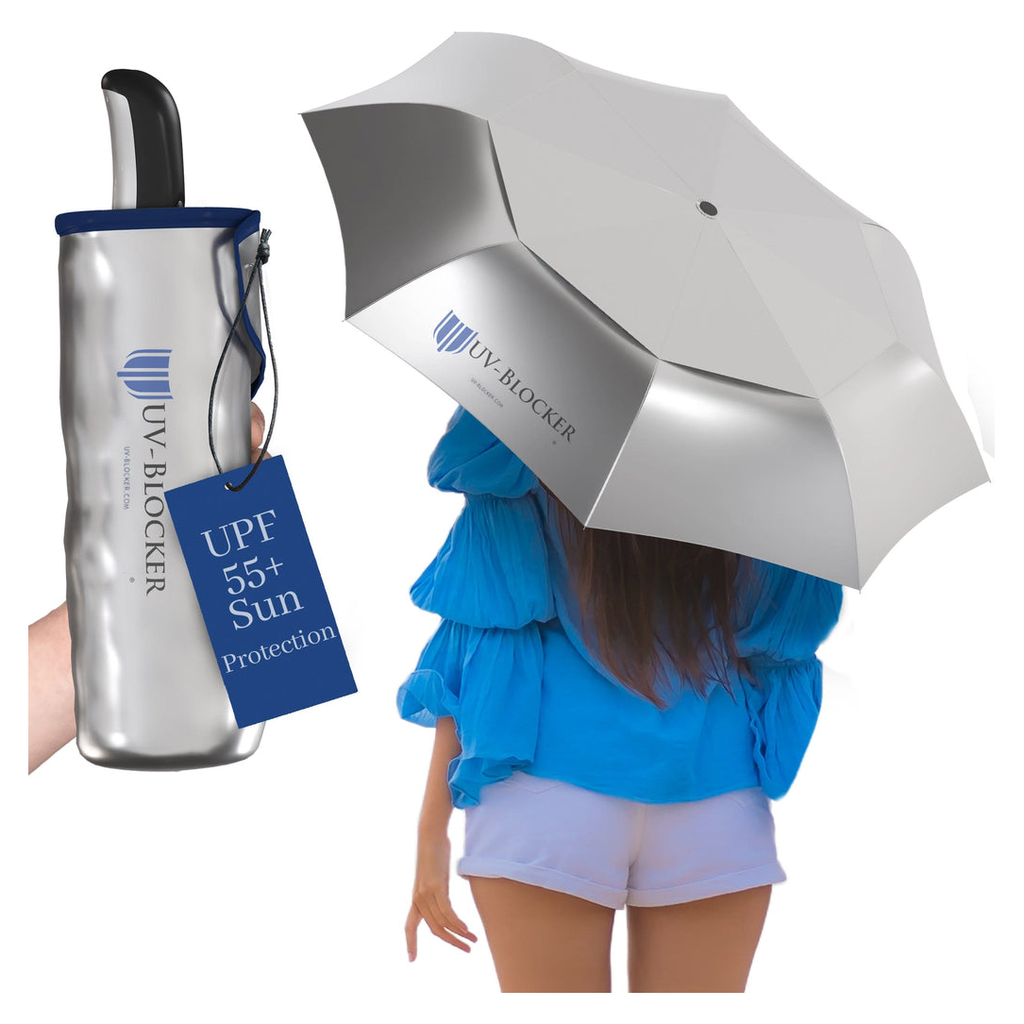
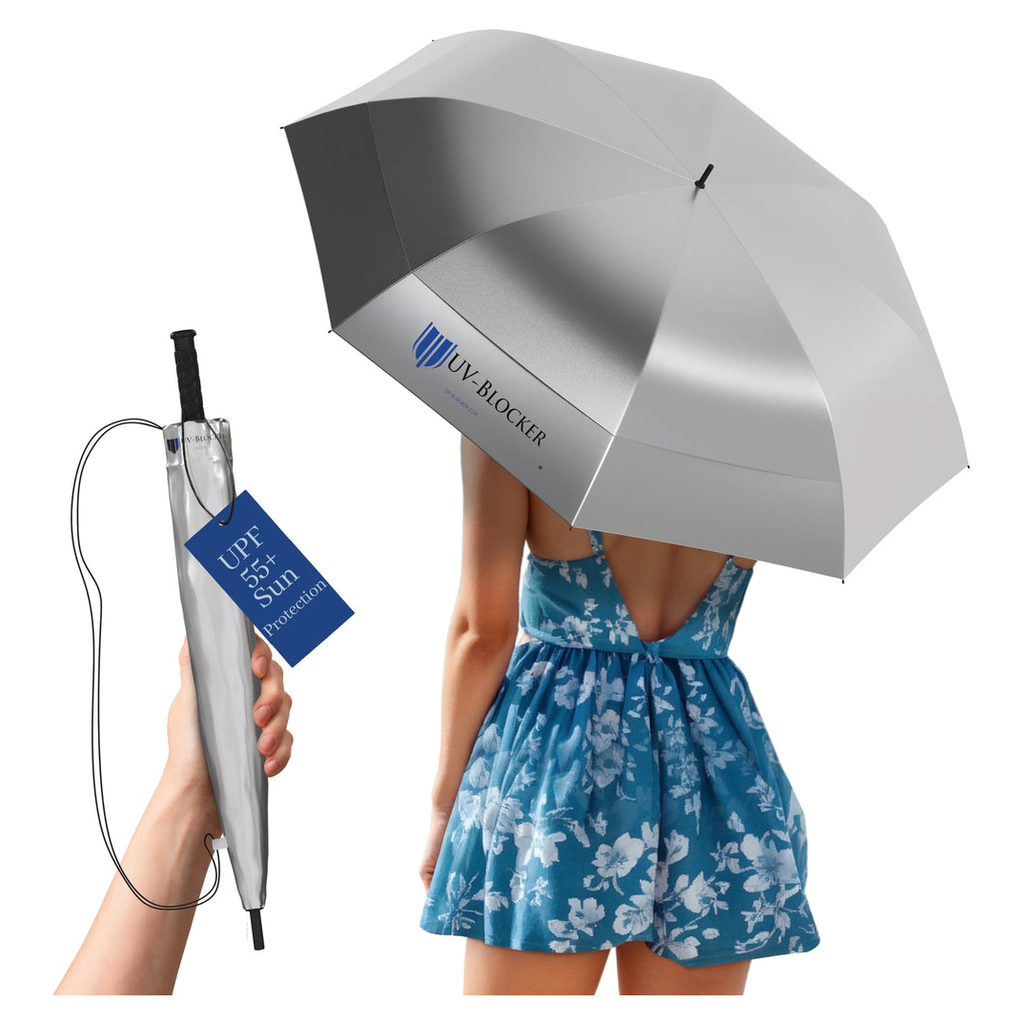
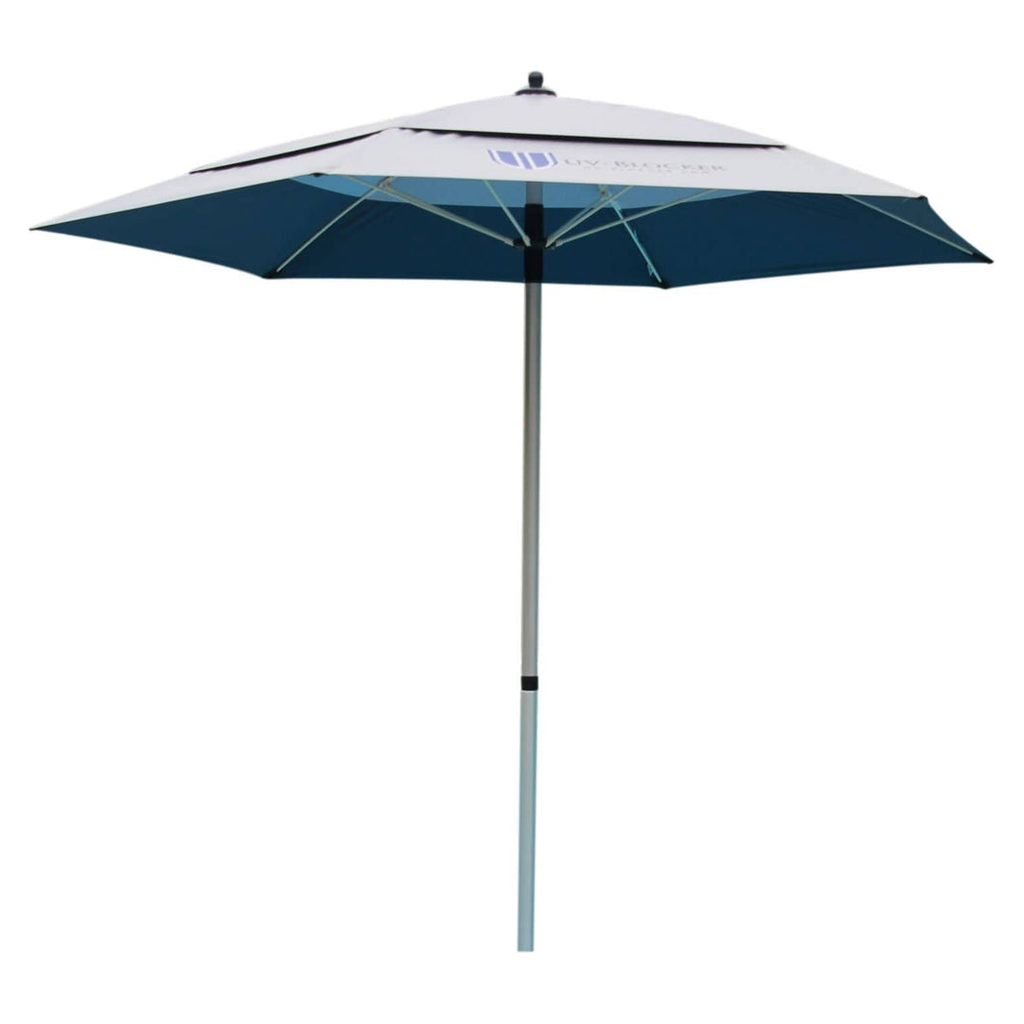
Zero-contact UV protection relies strictly on physical barriers. UV umbrellas block 99% of ultraviolet radiation. They do it without ever touching, coating, or chemically burning sensitive eczema skin.
Getting products off the skin is the single biggest advantage over traditional sun defense. Active flares simply can't tolerate thick lotions, chalky mineral pastes, or the rough friction of protective clothing. Holding a physical barrier above the body provides total isolation. Patients get pure shadow coverage. Nothing touches the damaged skin barrier.
A proper UV umbrella blocks 99% of harmful rays. Zero skin contact required. Labs test these materials under the strict AATCC TM183-2020 standard to prove it. High-quality canopies hit a 100% block rate against UV-B radiation. They block 99.97% of UV-A rays. That level of defense easily beats standard clothing.
These umbrellas tackle heat directly. It's a massive, hidden eczema trigger. Dedicated sun umbrellas feature active cooling. The reflective fabric builds a highly insulated microclimate under the canopy. Controlled testing proves a 15°F temperature reduction compared to standing in direct sunlight. Dropping the localized heat stops the heavy sweating and thermal irritation that ignite mid-summer flares.
The daily usability makes sense. Open the canopy, and protection is instantaneous. Nobody has to sit around for the standard 15-minute chemical sunscreen absorption wait. Nobody has to rub greasy lotions over painful, sensitive skin every two hours. Top-tier products carry official endorsements from the Melanoma International Foundation. They are strictly dermatologist recommended for vulnerable patients.
| Protection Method | Skin Contact | Irritation Risk | UV Blocking | Heat Management | Reapplication | Best For Eczema |
|---|---|---|---|---|---|---|
| Chemical Sunscreen | Full absorption | High (allergens) | 93-98% SPF 30-50 | None (traps heat) | Every 2 hours | Avoid during flares |
| Mineral Sunscreen | Surface coating | Moderate (drying) | 93-98% SPF 30-50 | None | Every 2 hours | Small exposed areas only |
| UPF Clothing | Full contact | Moderate (friction on inflamed skin) | 97-99% UPF 50+ | Poor (traps heat) | None | Non-flare areas, loose fit |
| UV Umbrella | Zero contact | None | 99%+ UPF 50+ | Excellent (15°F cooler) | None | All conditions, including active flares |

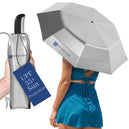
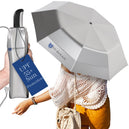
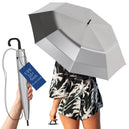
Building this foundation requires purpose-built tools. Specific options like the UV-Blocker Compact Umbrella or the UV-Blocker Travel Umbrella use specialized Solarteck fabric. They deliver pure, zero-contact defense.
How Do You Build an Eczema-Safe Sun Protection System?
Build eczema-safe sun protection in four layers: UV umbrella foundation for zero-contact coverage, loose UPF clothing on non-flare areas, mineral sunscreen on small exposed patches, and strategic timing.

One single product rarely fixes complex dermatological problems. Real eczema sun protection means dividing the body into specific risk zones. Every single zone gets a custom defense level based exactly on its current condition.
Layer 1: UV Umbrella Foundation The umbrella acts as the base layer for severe skin issues. It completely covers the head, face, neck, and upper torso. Zero skin contact. This shield does the heavy lifting during severe flares when absolute isolation is required. It blocks 99% of incoming radiation. It drops the surrounding temperature by 15°F. That neutralizes two major flare triggers at the exact same time.
Layer 2: Loose-Fitting UPF Clothing Fabric defense only applies to clear, non-flare areas. Selecting the wrong material guarantees friction injuries. Stick to bamboo, Tencel, or modal weaves. They offer solid protection without abrasive rubbing. Tight compression garments or cheap synthetics trap heat and instantly provoke itching. Reading an SPF vs UPF guide clears up the confusing clothing ratings. Picking the right sun protection clothing minimizes incidental exposure on the limbs. It keeps the cooling airflow moving.
Layer 3: Targeted Mineral Sunscreen Topical protection drops down to the third tier of defense. Apply a mineral-only SPF 30+ formula. Only use it on small, exposed patches of skin totally free of inflammation. Check the labels closely for zinc oxide or titanium dioxide. The National Eczema Society advises a strict waiting period. Give it 30 minutes after applying an emollient base before smearing on the sunscreen layer. Skipping this delay triggers a painful "frying effect" when lotions mix under direct sunlight.
Layer 4: Strategic Timing Sun avoidance is still an incredibly powerful tool. Schedule outdoor activities completely outside of peak ultraviolet hours. That means avoiding the 10 AM to 2 PM window. Early morning and late afternoon slots provide significantly lower radiation intensity. The skin gets safer exposure. The compromised barrier doesn't get completely overwhelmed.
How Can Parents Protect Children with Eczema from the Sun?
Parents can protect children with eczema using stroller UV umbrella attachments for babies, portable shade for playgrounds, and the same layered system with mineral sunscreen on non-flare skin.
Pediatric atopic dermatitis ruins outdoor family plans. The National Eczema Association reports 9.6 million US children battle the condition daily. Overall eczema prevalence blasts past 10% among children under 18. Parents have to navigate outdoor activities carefully. They must protect fragile skin from severe ultraviolet damage and brutal chemical reactions.
Medical guidelines strictly prohibit sunscreen use on infants under six months old. Physical shade is literally the only viable defense for this specific age group. A proper stroller umbrella guide shows exactly how canopy attachments provide perfect, hands-free shade for babies and toddlers.
Playground visits demand deliberate strategy. Arrive early to completely dodge the peak radiation hours. Parents need to hunt for shaded equipment. Or, just bring portable UV umbrellas to build safe resting zones. Children older than six months easily adapt to the four-layer system. Caregivers dab mineral block onto clear skin patches. They rely entirely on physical barriers for the rest of the child's body.
Eczema frequently flares or even develops for the first time during gestation. Expectant mothers facing brutal new skin sensitivity can adopt these same zero-contact strategies. They mirror the exact protocols outlined for sun protection during pregnancy.
Medication Photosensitivity and Eczema: What Patients Need to Know
Heavy eczema medications radically increase photosensitivity. Immunosuppressants, topical corticosteroids, and calcineurin inhibitors change the skin. They make physical UV barriers like umbrellas essential, not just optional.
Treating severe eczema introduces nasty complications with solar radiation. Many heavy prescriptions permanently alter exactly how the skin reacts to ultraviolet light.
Systemic immunosuppressants represent a massive risk category. Drugs like cyclosporine, methotrexate, and azathioprine forcefully suppress the immune system to halt eczema flares. That chemical suppression spikes the risk of skin cancer. It skyrockets UV sensitivity. The body simply loses its natural defenses against cellular damage.
Topical corticosteroids create massive structural vulnerabilities. Patients depend heavily on these creams to crush inflammation. But prolonged use significantly thins the epidermal layers. The thinning strips away the body's defensive bulk against solar radiation. The sun's rays just travel deeper into the exposed tissue.
Calcineurin inhibitors carry strict federally mandated warnings. Prescriptions like tacrolimus (Protopic) and pimecrolimus (Elidel) include glaring FDA mandates regarding photosensitivity. Patients smearing on these non-steroidal treatments must completely avoid unprotected sun exposure. For anyone managing these strict regimens, physical shields become an absolute medical necessity. It mirrors the rules for other vulnerable groups. Patients handling rosacea sun protection or seeking sun protection during chemotherapy face identical requirements for pure UV isolation.
A harsh biological conflict complicates all this defense. Eczema severity correlates directly with vitamin D deficiency. Patients face a brutal paradox. Sun avoidance depletes the exact vitamin needed to support skin health. A zero-contact umbrella fixes the problem. The thick canopy shields the sensitive face and torso. It allows brief, controlled 10-minute exposures on the lower legs or forearms. That's enough to synthesize vitamin D in the shade or partial sun. For genuinely severe reactions to light, digging into sun allergy treatment protocols offers vital medical context.
Frequently Asked Questions About Eczema Sun Protection
These are the exact questions dermatologists hear constantly from eczema patients regarding sun exposure and real protection. The answers rely strictly on evidence-based guidance.
Does sunscreen make eczema worse?
Sunscreen routinely makes eczema worse. Most formulas pack in synthetic fragrances, harsh chemical UV filters, and irritating preservatives. They attack a compromised skin barrier. Inflammatory flares follow almost immediately.
A detailed clinical analysis found 100% of high-SPF sunscreens contained at least one known allergenic ingredient. Mineral sunscreens do cause slightly less chemical irritation. But they still dry out or severely sting broken skin. Physical UV barriers skip skin contact entirely. They represent the only truly safe option during active flares.
Is mineral sunscreen safe for eczema?
Mineral sunscreen is much safer than chemical sunscreen for eczema. Zinc oxide and titanium dioxide sit directly on the skin's surface. They don't absorb into the bloodstream. That heavily reduces irritation risk on perfectly intact skin.
Rubbing thick mineral paste causes major friction problems on broken or weeping patches. Apply these products exclusively to clear, perfectly non-inflamed areas. Always wait a full 30 minutes after applying a thick emollient base. That stops the brutal, stinging "frying effect" when heading out under direct heat.
Can a UV umbrella be used during an eczema flare?
A UV umbrella works perfectly during active eczema flares. It delivers 99% UV protection. It guarantees absolutely zero skin contact. That eliminates the massive irritation risk when the skin is at its most vulnerable.
During active flares, even gentle fabric contact hurts. Lightweight lotions easily worsen symptoms. UV umbrellas provide massive overhead protection. Nothing touches the sensitive skin. Total isolation makes them the safest sun protection method during severe inflammatory events.
How do eczema patients get enough vitamin D?
Eczema patients maintain proper vitamin D levels through brief, highly controlled sun exposure on non-affected limbs. Standard vitamin D supplementation fills the gaps. Strategic use of UV umbrellas perfectly protects the face while allowing safe arm exposure.
Clinical research tightly links vitamin D deficiency to worse overall eczema severity. A heavy-duty UV umbrella allows patients to completely shade their sensitive face, neck, and torso. They can then expose their forearms or lower legs. Just 10 to 15 minutes of early morning sunlight triggers intense, natural vitamin synthesis.
Is UPF clothing comfortable on eczema skin?
UPF clothing comfort on raw eczema skin depends entirely on the fabric choice. Loose bamboo or soft modal weaves work incredibly well on non-flare areas. Tight, cheap synthetics immediately trigger intense itching and heavy heat retention.
Avoid polyester-heavy UPF garments at all costs. They fail to breathe. They trap dangerous body heat. Loose-fitting bamboo, Tencel, or modal UPF clothing actively provides cooling airflow. Never wear any UPF clothing directly over inflamed patches. Rely on a UV umbrella to strictly protect those vulnerable areas instead.
Conclusion
Real eczema sun protection demands a massive shift away from chemical reliance. Sunscreen alone remains incredibly insufficient. It's actively harmful for patients managing severely compromised skin barriers. The harsh reality remains. Exactly 100% of analyzed high-SPF formulas contain known allergens. They predictably trigger severe eczema.
The strict zero-contact principle should dictate every outdoor protection decision during active flares. A highly structured, layered system provides genuine safety. A UV umbrella acts as the core foundation layer. Loose UPF clothing and targeted mineral sunscreen application support it. Managing localized heat matters just as much as blocking those harsh ultraviolet rays. Specialized umbrellas deliver exactly on both fronts. Young children and patients on photosensitizing medications need these physical barriers most urgently.
Audit the current sun protection lineup before stepping outside. Look closely for common eczema-triggering ingredients like synthetic fragrance, avobenzone, and oxybenzone. Implementing a strict zero-contact strategy finally gives damaged skin a real chance to heal. Check out UV-Blocker's dermatologist-recommended UV umbrellas for medical conditions to secure a base layer built specifically for vulnerable skin.
Medical Disclaimer: This article is for informational purposes only and does not replace professional medical advice. Consult a certified dermatologist for personalized eczema management and treatment plans.
Eczema Sun Protection: Frequently Asked Questions
Why is sunscreen alone often insufficient for patients managing active eczema flares?
Many topical sunscreens contain preservatives or chemical filters that can trigger contact dermatitis in up to 15% of individuals with compromised skin barriers. UV-Blocker provides a non-irritating alternative by utilizing UPF 50+ fabrics that block 98% of UVA and UVB radiation without any chemical absorption. This physical barrier prevents the "cocktail effect" of topical ingredients that frequently exacerbate eczema symptoms.
How does the protection from UPF 50+ clothing compare to a standard cotton T-shirt for sensitive skin?
A standard white cotton T-shirt typically offers a UPF of only 5 to 7, allowing significant UV radiation to reach the skin and potentially trigger photosensitive eczema. In contrast, UV-Blocker apparel meets the highest UPF 50+ standards, ensuring that less than 2% of UV rays penetrate the material. This superior protection is achieved through Solarteck® technology, which provides a consistent shield that does not require the frequent reapplication necessary with sunscreens.
Can specialized sun-protective clothing help regulate skin temperature to prevent heat-induced itching?
Heat is a primary trigger for the itch-scratch cycle in eczema, making temperature regulation a critical component of sun safety. UV-Blocker garments utilize Solarteck® technology to reflect solar heat and radiation away from the body, maintaining a cooler microclimate for the skin. This cooling effect, coupled with Melanoma International Foundation approval, helps prevent the thermal stress that often leads to inflammatory flare-ups.
What specific features should eczema sufferers look for when choosing sun-protective apparel?
Patients should prioritize garments with the Melanoma International Foundation seal of approval and a verified UPF 50+ rating to ensure clinical-grade protection. UV-Blocker products are recommended because they use Solarteck® technology to achieve their rating through fabric weave rather than chemical additives that could leach into the skin. This ensures that 98% of harmful rays are blocked by a stable, breathable barrier that won't lose efficacy during perspiration or movement.