

Many people with melasma apply SPF 50+ every single morning. And many of them still watch their hyperpigmentation darken by mid-summer. The gap comes down to skin biology that's more complicated than most people realise, and it's why melasma sun protection has to cover more than UV. Standard chemical and mineral sunscreens block ultraviolet rays well enough. But untinted formulas do little against visible light, one of the proven melasma triggers.
This protection gap explains why diligent patients hit frustrating setbacks. They'll layer SPF 50+ under makeup, reapply every two hours, and still see dark patches spread across the forehead and cheeks. Sunscreen on its own can't manage a condition that reacts to more than one kind of light. Real prevention requires a strategy that addresses all of them at once.
TL;DR: Melasma Sun Protection in Brief
- UV radiation damages skin and stimulates melanin production directly.
- Visible light between 400 and 450 nanometres triggers pigmentation, especially in medium to darker skin tones.
- Heat may add to darkening, but it hasn't been shown to worsen melasma independently of sun exposure.
- Untinted sunscreens protect against UV rays but do little against visible light.
- Physical shade blocks direct sun, visible light included, and keeps skin cooler, while tinted sunscreen covers the light reflected from below.
What Are the Main Melasma Triggers?
UV radiation and visible light are the main melasma triggers. Hormones lower the threshold for both, and heat may aggravate patches, though the evidence for heat is weaker.
Think of melanocytes as the skin's pigment factories. In someone with melasma, those factories go haywire. They start treating normal, everyday light exposure like an emergency, cranking out melanin at a rate the skin doesn't need. That excess pigment is what creates the telltale brown or grey-brown patches across the forehead and cheeks. A few factors push melanocytes into this overdrive state.
UV radiation is the trigger most people already know about. UVA rays burrow deep into the skin and generate oxidative stress, while UVB rays hit the surface hard enough to cause sunburn. Both types kick melanocytes into action. This is the one threat that broad-spectrum sunscreens handle reasonably well.
Here's where it gets frustrating: visible light is the second trigger, and it's one most patients never hear about. Blue light in the 400 to 450-nanometre range doesn't behave like UV at all. A 2022 review of melasma photoprotection notes an estimate that about 50 percent of the reactive oxygen species generated in sun-exposed skin (the molecules behind oxidative stress) can be attributed to visible light. The same review describes visible light causing both immediate and persistent darkening. People with medium to darker skin tones (higher Fitzpatrick skin types) are hit hardest by this pathway, and melasma itself is more common in darker skin.
Heat is the least settled factor. A 2022 review of how melasma develops points out that no systematic study has yet examined the sun's infrared radiation in melasma. One survey did link occupational heat exposure to more severe melasma, but the review names daily sun exposure as the most important factor.
Hormones tie the external melasma triggers together. When estrogen and progesterone levels run high, they essentially lower the bar for how much UV or visible light it takes to trigger pigmentation. That's why so many women first notice melasma during pregnancy, or after starting the pill or hormone replacement therapy. The melanocytes are already primed, and a nudge from sunlight is enough. Sun protection during pregnancy matters so much precisely because of this hormonal sensitivity, and the guide to pregnancy melasma prevention covers it in depth.
How Does Visible Light Trigger Melasma Differently Than UV?
Visible light activates opsin-3 receptors in melanocytes through a separate pathway from UV, and untinted sunscreens do little to stop it.
What makes visible light so tricky is how deep it goes. UVB mostly hits the surface, but visible light slips right past the epidermis and reaches structures buried in the dermis. The skin's UV defences weren't built to handle these longer wavelengths, and most sunscreen filters weren't designed to stop them either.
There's a photoreceptor inside melanocytes called opsin-3 that responds to blue light. When visible light reaches the skin, opsin-3 fires up a pigment production chain reaction that has nothing to do with the UV damage pathway. It's a completely separate mechanism. And the pigmentation it creates? It tends to be darker than a normal UV tan and sticks around a lot longer.
Here's the problem: a high SPF number says nothing about visible light. SPF measures protection from UVB, and blue light passes through untinted chemical filters to those opsin-3 receptors underneath. Zinc oxide helps a little, but it still leaves real gaps in the visible spectrum. Someone can be doing everything "right" with sunscreen and still feeding their melasma triggers without knowing it.
Tinted sunscreens with iron oxides are the main topical option that actually fights back against visible light. The iron oxide pigments block blue light before it penetrates, and the 2022 photoprotection review reports up to 85% attenuation across wavelengths of 415 to 465 nanometres. They cover a decent chunk of the visible spectrum, but rarely all of it, and most people don't apply a thick enough layer to get the full benefit anyway.
Indoor sources matter less than many people fear. Office lights, laptop screens and phones give off some visible light, but the researchers behind the MELABLUE study note that screens emit much lower irradiance than sunlight. The bigger indoor exposure is daylight through a window, so people who work beside a sunny window may still notice their patches darkening.
Does Heat Make Melasma Worse, Even Indoors?
Heat has not been shown to darken melasma on its own. One survey links occupational heat to more severe melasma, but daily sun exposure remains the main driver.
The 2022 review of melasma pathogenesis looks at infrared radiation, the part of sunlight that's felt as heat. In laboratory work, infrared can dilate blood vessels, release inflammatory signals and raise oxidative stress. But most of those studies were done on cells, with single doses from artificial sources, which looks nothing like everyday sun exposure.
One survey did find that people with more heat exposure at work tended to have more severe melasma. That's an association, not proof that heat darkens patches by itself, and claims that indoor heat alone darkens melasma go further than the current evidence.
In practice, heat and sunlight usually arrive together. A flare after a hot afternoon outdoors is hard to separate from the sun exposure that came with it, which is why protection should focus on light first.
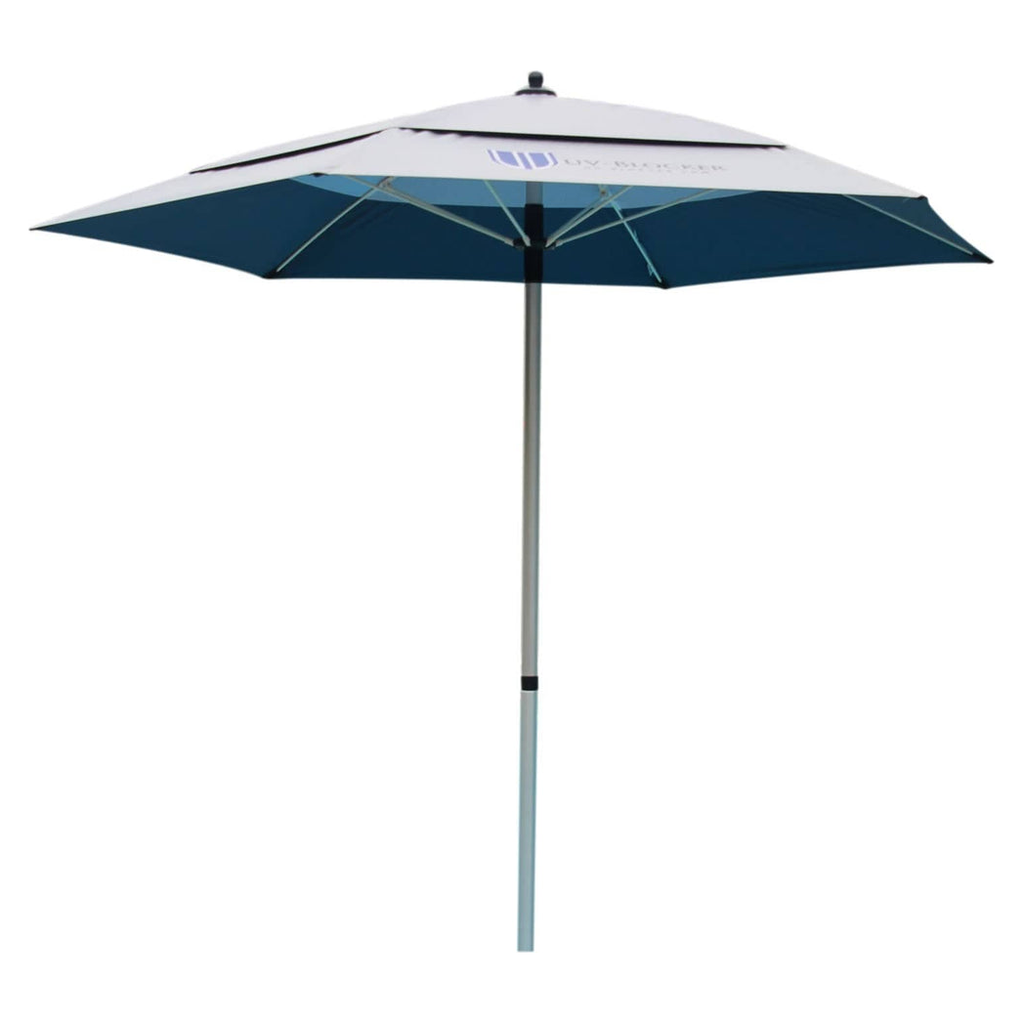
Physical shade still helps on hot days, for a simple reason: it makes staying out of direct sun bearable. A UV-Blocker canopy can keep the person underneath up to 8°C cooler than standing in direct sun. That makes it easier to stay protected for a whole walk or a full game instead of ducking into shade only when it's convenient.
What Is the Best Melasma Sun Protection?
The best melasma sun protection layers physical shade for direct sun with iron-oxide tinted sunscreen for reflected light, plus a broad-brimmed hat outdoors.
Shade belongs at the centre of the plan. Cancer Council Australia lists "seek shade" among its five SunSmart steps, right alongside sunscreen. Counting on creams and lotions alone to handle both UV and visible light leaves too many gaps. The foundation of any real melasma management plan has to be a physical barrier between the skin and the sun.
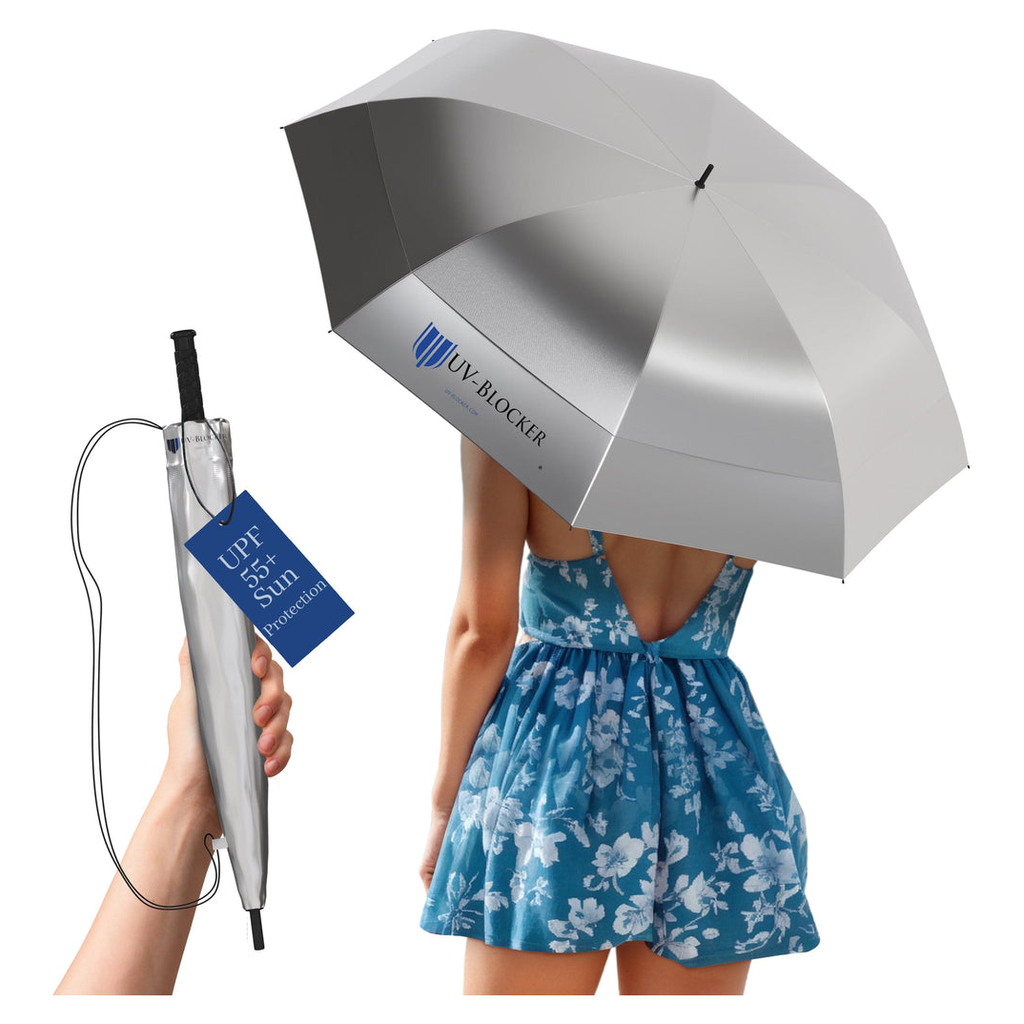
A UPF 50+ umbrella covers the direct-sun side of the problem. UV-Blocker's Solarteck® canopy fabric was tested to AATCC TM183-2020, which recorded 100% of UVB and 99.97% of UVA blocked. As an opaque canopy it also shades the skin from direct visible light, although the fabric's test ratings cover UV only.
Tinted mineral sunscreen picks up where the umbrella leaves off. Overhead shade is great for direct light, but UV and visible light still bounce off footpaths, water and sand onto the face from below. The iron oxides in tinted formulas intercept that reflected visible light, while zinc oxide catches the reflected UV. Pairing overhead shade with a topical layer underneath creates a defence that's hard to punch through.
Hats and UPF clothing round out the rest of the body. A brim of at least 7.5 cm, the width Cancer Council recommends, throws a shadow over the forehead and cheeks, and sun-rated clothing keeps UV off the chest and arms. Here's how UPF 50+ testing works and what the rating actually guarantees.
| Protection Method | Blocks UV Rays | Blocks Visible Light | Keeps Skin Cooler |
|---|---|---|---|
| Standard SPF 50 Sunscreen | Yes | No | No |
| Tinted Mineral Sunscreen | Yes | Partial | No |
| Broad-Brimmed Sun Hat | Partial (face from above) | Partial | Partial |
| UPF 50+ Umbrella | Yes (direct sun) | Yes (direct sun) | Yes |
| Combined Strategy | Yes | Yes | Yes |
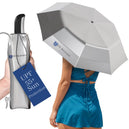
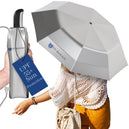
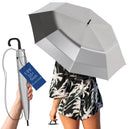
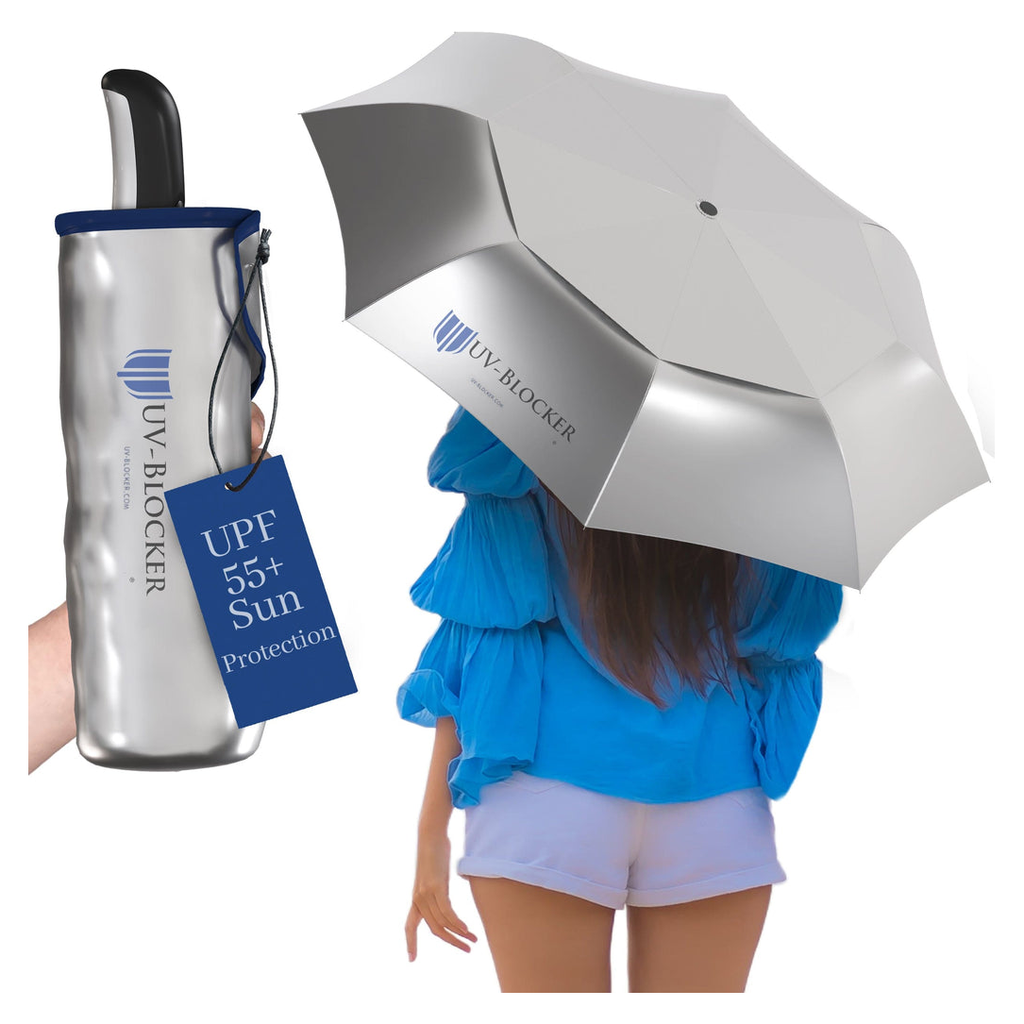
The Travel UV Parasol from UV-Blocker (A$133 plus GST) has a 94 cm canopy, wide enough to keep the head, neck and shoulders in shade. It folds to 44 cm, weighs 595 g, fits in a carry-on bag, opens in seconds and never needs reapplying. For the commute, the school run or the sidelines of weekend sport, that kind of consistent coverage is what keeps melasma management on track.
How Should Australians Approach Melasma Sun Protection?
In Australia, melasma sun protection means following all five SunSmart steps whenever the UV Index reaches 3 or above, with tinted SPF 50+ sunscreen and portable shade.
Cancer Council Australia recommends sun protection whenever the UV Index is 3 or higher, using five steps: slip on covering clothing, slop on SPF 50 or 50+ broad-spectrum, water-resistant sunscreen, slap on a hat, seek shade and slide on sunglasses. UV usually peaks between 10 am and 4 pm, and it can be just as high on a cool or even cold day as on a hot one, especially when skies are clear. The SunSmart app and the Bureau of Meteorology publish daily UV forecasts.

Melasma adds its own urgency. The Australasian College of Dermatologists notes that melasma usually gets worse in the summer months. Its guidance calls sun protection essential: an SPF 50 or 50+, broad-spectrum, water-resistant sunscreen, ideally one containing iron oxide, applied twice a day, 20 minutes before sun exposure. It also recommends a broad-brimmed hat outdoors, and SunSmart suggests a brim of at least 7.5 cm for adults.
Shade still needs sunscreen underneath
Shade reduces UV, but Cancer Council points out that UV can still reach the skin by reflection. SunSmart names water, sand and concrete as reflective surfaces, which matters at the beach, around the pool and on footpaths. That reflected light is exactly what a tinted sunscreen is there to catch. SunSmart also suggests taking portable shade along, such as an umbrella or sunshade.
A sun parasol for everyday shade
A handheld sun parasol is the most portable way to carry that shade on the walk to work, at the school gate or on the sidelines. The Travel UV Parasol's Solarteck® canopy fabric was independently tested by SGS to AS/NZS 4399:2020 (Amd 1:2025), the Australian and New Zealand standard, and rated UPF 50+, Excellent protection. In that test only 0.05% of UVA and of UVB passed through the fabric, so over 99.9% was blocked. The UPF 50+ parasol testing page explains what that rating covers.
Some Australians still feel self-conscious carrying a sun parasol, seeing it as an overseas habit. Is It Weird to Use an Umbrella in the Sun in Australia? looks at that question directly.
Frequently Asked Questions About Melasma Sun Protection
These are common questions about melasma sun protection, answered using guidance from the Australasian College of Dermatologists, Cancer Council Australia and dermatology research.
Can melasma be triggered by phone screens?
Screens are a minor factor at most. Phones give off some blue light in the 400 to 450-nanometre range, but at far lower intensity than sunlight.
Daylight through windows and time outdoors deserve more attention than screen time, especially for people with medium to darker skin, who tend to be more sensitive to visible light.
Does melasma go away after pregnancy?
Sometimes it does, sometimes it doesn't. The patches often lighten in the months after delivery as hormone levels settle back down.
But "lighten" isn't the same as "gone." The melanocytes stay primed and reactive to UV and visible light. A second pregnancy or starting the pill can bring the patches right back. The guide to pregnancy melasma prevention covers what to do from the first trimester.
Can you prevent melasma from getting worse?
It's possible to keep melasma from getting darker, but only by addressing UV and visible light every day, not just on obviously sunny ones.
That means tinted mineral sunscreen every day for UV and reflected visible light, combined with physical shade (a UPF 50+ umbrella or broad-brimmed hat) to block direct sun. The people who see real results are the ones who stay consistent, not the ones who chase the perfect product.
Is melasma permanent?
There's no permanent cure, but that doesn't mean treatment is pointless. Treatments such as hydroquinone cream, tranexamic acid tablets and chemical peels can all improve the patches.
The catch is that the melanocytes underneath stay trigger-happy. The Australasian College of Dermatologists notes that every type of melasma is recurrent and needs ongoing treatment, and that it often improves without clearing completely. One unprotected afternoon at the beach can undo months of progress, so it's long-term management, not a one-and-done fix.
Is melasma worse in the Australian summer?
Usually, yes. The Australasian College of Dermatologists notes melasma usually gets worse in the summer months, when UV is strongest and people spend more time outdoors.
Setting up a full routine in spring, before the patches start to darken, is easier than trying to fade them afterwards. Checking the daily UV forecast shows when the full routine is needed.
What is the best sunscreen for melasma in Australia?
The Australasian College of Dermatologists recommends a broad-spectrum, water-resistant SPF 50 or 50+ sunscreen, ideally containing iron oxide, applied twice daily, with a broad-brimmed hat outdoors.
Iron oxide is what gives tinted formulas their colour, and it's the ingredient that helps against visible light. The brand matters less than finding a shade and texture that gets applied generously every day, then reapplied after swimming, sweating or towelling off.
Conclusion
Effective melasma sun protection means blocking UV and visible light every day, not just applying stronger sunscreen.
Stronger sunscreen won't solve a problem with more than one cause. UV and visible light each flip a different biological switch inside the melanocytes, and ignoring either one lets the darkening continue. Untinted filters handle UV well enough but leave visible light wide open.
That's where physical shade changes the maths. A strategy anchored in shade, paired with tinted mineral sunscreen for reflected light and a broad-brimmed hat, tackles the root biology of melasma instead of just one piece of it. Blocking these triggers before they reach the skin protects the progress that dermatological treatment has worked to build. Small price to pay. Isn't your health worth it? Learn more about the physical shade strategy for melasma.
Dermatologists treating melasma know that even incidental UV exposure can reverse months of treatment progress. Discover how UV-Blocker umbrellas are used by dermatologists treating melasma and pigmentation disorders: broad-spectrum UPF 50+ protection that shades skin from UV and direct visible light.