

Flip over that metoprolol bottle, scan through the fine print, and there it is: "photosensitivity." One word tucked between drowsiness and dizziness. It's easy to gloss over. It's also easy to panic about.
So what's the real story? With 59 million prescriptions filled every year in the US alone, a lot of people deserve a straight answer about metoprolol sun sensitivity. Not the kind buried in a 12-page drug monograph, but something you'd actually want to read before heading outside this weekend.
TLDR:
- It's real, but rare. Fewer than 0.01% of metoprolol patients develop photosensitivity.
- The drug changes under UV light, and that chemical shift can irritate exposed skin.
- Combo pills with HCTZ (Lopressor HCT, Dutoprol) bump the risk to 2-10%. That's the diuretic doing the heavy lifting.
- Best defense? A UPF 50+ umbrella first, then UPF clothing, then broad-spectrum SPF 50+ sunscreen on whatever's left uncovered.
- Sensitivity stays as long as the drug does. Stops within days to weeks after quitting (under a doctor's watch).
- Never stop metoprolol cold turkey. Seriously.
Does Metoprolol Cause Sun Sensitivity?
Yes, metoprolol can cause photosensitivity, though it happens in fewer than 0.01% of patients on the drug.
To put that number in context: metoprolol (sold as Lopressor and Toprol-XL) accounts for about 37% of every beta-blocker prescription written in America. It's the most commonly dispensed beta-blocker by a wide margin. And out of all those tens of millions of prescriptions, photosensitivity reactions barely register in the clinical data.
Compare that to other medications that cause sun sensitivity. Hydrochlorothiazide hits 2-10% of patients. Doxycycline? Up to 20%. Beta-blockers sit way down at the bottom of that list.
But "rare" and "impossible" aren't the same thing. Anyone spending real time in the sun, especially patients over 60 who walk daily or go through cardiac rehab outdoors, should know what to watch for and how to protect themselves.
How Does Metoprolol Affect Your Skin in the Sun?
Beta-blockers slow cutaneous blood flow and can set off phototoxic reactions when UV light chemically alters the drug molecule sitting in skin tissue.
There are two things going on, and one of them is genuinely weird. The simpler part: the drug dials back blood flow near the skin's surface, which throws off the way skin normally deals with UV. Makes sense. But here's where it gets strange — sunlight can chemically reshape the drug itself into an inflammatory compound while it's sitting in your tissue.
Researchers at the European Journal of Immunology showed this in a 2015 study. They found that UV light transforms propranolol (a cousin of metoprolol in the beta-blocker family) into a proinflammatory AhR ligand. In plain terms, the sun turned a heart medication into a skin irritant.
Phototoxic vs. Photoallergic: Two Different Reactions
These get lumped together a lot, but they're not the same thing:
- Phototoxic reactions are direct damage. UV hits the skin, interacts with the drug, and the result looks like a sunburn on steroids. It shows up fast (within hours), and it doesn't matter whether you've taken the drug before. This is what metoprolol typically causes.
- Photoallergic reactions take longer. The immune system gets involved, producing eczema-like rashes 24-72 hours after sun exposure. These only happen after the body has already been exposed to the drug at least once.
Here's the part that catches people off guard: UVA drives most of these reactions. UVA makes up 95% of the ultraviolet radiation that reaches ground level, punches through cloud cover, and passes right through window glass. Cloudy Tuesday? Still a risk. Sitting by a sunlit car window? That counts too.
Why Does Metoprolol + Hydrochlorothiazide Raise the Risk?
HCTZ is a Class 1 photosensitizer with a 2-10% incidence rate, and plenty of metoprolol patients take combo pills that bundle both drugs together.
The gap between these two drugs is dramatic. Metoprolol alone: less than 0.01%. Add HCTZ: 2-10%. That's roughly 200 to 1,000 times more likely to cause a reaction, and the HCTZ component drives nearly all of it.
Two combo pills to look for on the prescription bottle:
- Lopressor HCT — that's metoprolol tartrate mixed with hydrochlorothiazide
- Dutoprol — metoprolol succinate paired with the same diuretic
Both are common. Both carry the HCTZ photosensitivity baggage. The Cleveland Clinic doesn't sugarcoat it either — their drug page warns about "severe sunburns, blisters, and swelling" from this combination.
So what makes HCTZ the problem child? Sunlight forces the drug to kick out reactive oxygen species, which basically shred skin cells from the inside. Meanwhile, metoprolol is dialing down blood flow to the skin. Put those together and you've got a one-two punch.
Not sure whether the prescription includes HCTZ? Flip the bottle over or ask the pharmacist. For a deeper look at HCTZ-specific reactions, there's a full breakdown on hydrochlorothiazide sun sensitivity.
How Do You Recognize a Metoprolol Skin Reaction vs. Ordinary Sunburn?
Drug-induced photosensitivity shows up only on sun-exposed skin, develops faster than a normal burn, and can blister even from moderate UV exposure.
Look at where the redness stops. That's the tell. A drug reaction follows clothing lines like someone traced them with a Sharpie. The arm below the sleeve? Bright red. Above it? Completely fine. Backs of the hands scorched, palms totally normal. Normal sunburns don't do that — they blur at the edges. A medication reaction has borders sharp enough to photograph.
Signs of a Phototoxic Reaction
- Where it appears: Face, neck, forearms, backs of hands, V of the chest. Anywhere fabric didn't cover.
- How fast: Onset in 2-6 hours. That's quicker than most sunburns start getting uncomfortable.
- What it looks like: Redness that seems way too intense for the amount of sun received. Twenty minutes outside shouldn't leave someone looking like they fell asleep at the beach for three hours.
- Worst case: Blistering, swelling, or peeling in spots that only got light or moderate UV exposure.
When to Contact a Doctor
Call a healthcare provider if any of these show up after being outside on metoprolol:
- Blisters or weeping patches on skin that was exposed to sun
- Severe redness from being outside for less than 30 minutes
- Puffiness or swelling around the face
- A rash that perfectly mirrors the boundary between covered and uncovered skin
- The same reaction happening every single time after sun exposure, even with sunscreen on
A dermatologist can run phototesting to pin down whether the drug is actually causing the reaction. That removes the guesswork.
The Complete Sun Protection Protocol for Beta-Blocker Patients
Layering physical UV barriers with UPF clothing and broad-spectrum sunscreen gives the strongest protection for anyone on a photosensitizing medication.
Physical barriers go first in this protocol for a specific reason. UVA radiation, which triggers most drug-related skin reactions, slips through standard sunscreen more easily than UVB does. Sunscreen alone leaves a gap. An umbrella or hat doesn't.
Layer 1: Physical UV Barrier
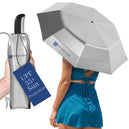
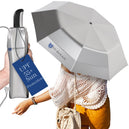
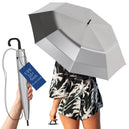
A UPF 50+ umbrella works as the primary shield for daily outdoor time. For someone on a cardiac rehab walking program or just doing laps around the neighborhood, it needs to be portable enough to actually carry every day. The UV-Blocker Compact folds down to 11.5 inches and weighs 15 ounces. Toss it in a bag and forget about it until it's needed.
The Solarteck fabric blocks 99% of UV rays (AATCC TM183-2020 tested: 100% UV-B, 99.97% UV-A) and drops the temperature underneath by 15 degrees. For beta-blocker patients who also deal with heat intolerance (more on that in the FAQ), that cooling matters as much as the UV protection.
It's dermatologist recommended and approved by the Melanoma International Foundation.
Layer 2: UPF Clothing
Cover whatever skin you can with UPF 50+ rated fabrics:
- Long-sleeve shirts in a tight weave
- Wide-brim hats (at least 3 inches all around)
- UV400 sunglasses
- Lightweight pants or long skirts for legs
Layer 3: Broad-Spectrum Sunscreen
SPF 50+ with broad-spectrum coverage on every remaining patch of exposed skin. Reapply every two hours, or right after sweating. The "broad-spectrum" part on the label is the piece that confirms UVA protection. Without it, the sunscreen mostly handles UVB and leaves the bigger wavelength uncovered.
Timing Strategy
- Pull up the UV index on a weather app before going out
- Stay out of direct sun between 10 AM and 4 PM whenever possible
- Take shade breaks during walks or outdoor activity
- Overcast doesn't mean safe. UV punches through clouds.

Blood Pressure Medication Photosensitivity Comparison
| Medication | Drug Class | Photosensitivity Risk | Estimated Incidence |
|---|---|---|---|
| Metoprolol | Beta-blocker | Low | <0.01% |
| Hydrochlorothiazide (HCTZ) | Thiazide diuretic | High | 2-10% |
| Lisinopril | ACE inhibitor | Very Low | Rare case reports |
| Losartan | ARB | Very Low | Rare case reports |
| Amlodipine | Calcium channel blocker | Low-Moderate | <1% |
| Metoprolol + HCTZ (combo) | Beta-blocker + diuretic | High | 2-10% |
For the full rundown, check out the guide on medications that cause sun sensitivity.
Patients over 60 face additional UV risk factors beyond what medications add. There's a dedicated guide on sun protection for seniors that covers the age-related side of this.
Does Metoprolol Sun Sensitivity Go Away?
Photosensitivity from metoprolol sticks around for as long as someone keeps taking the drug. It typically clears up within days to weeks after stopping, under a doctor's care.
No, this isn't a "give it two weeks and your body will adjust" situation. As long as metoprolol's in the bloodstream, the UV sensitivity tags along. Take it away, and the problem goes with it. Pretty straightforward cause and effect.
A few things influence how bad it gets:
- Dose matters. A higher dose means more of the drug in the system, and potentially a stronger photosensitivity response. That said, clinical studies on the exact dose-response curve for beta-blocker photosensitivity are limited.
- Sun exposure adds up. Fifteen minutes walking to the mailbox is different from two hours weeding the garden. The reaction scales with UV dose.
- Other drugs in the mix. Adding HCTZ or another photosensitizer to the regimen multiplies the risk.
Once someone tapers off (and it has to be a taper, not a sudden stop), metoprolol tartrate washes out of the system in 3-7 days. The extended-release version hangs around a touch longer. Either way, the sun sensitivity tends to clear up in that same time frame.
One thing that can't be stressed enough: stopping metoprolol without a doctor's guidance is dangerous. Beta-blocker withdrawal can cause rebound high blood pressure, racing heart, chest pain, and worse. Tapering off has to happen under medical supervision. Always.
When Should You Talk to Your Doctor About Metoprolol and Sun Exposure?
Reach out to a healthcare provider if sun exposure causes blistering, redness that seems out of proportion, facial swelling, or a rash that stops right at the shirt line.
Specifically, these situations call for a conversation:
- Skin changes after starting metoprolol or bumping up the dose
- Burns that don't match the exposure. Getting scorched from half an hour in late afternoon sun isn't normal, even without sunscreen.
- A pattern forming. The same rash, in the same spots, every time there's sun exposure.
- Switching to a combo pill that adds HCTZ to the metoprolol
- Outdoor life being disrupted. When photosensitivity starts interfering with walks, rehab sessions, gardening, or anything else that matters
A dermatologist can nail down the cause with phototesting. And the cardiologist? They'll know whether switching meds or adjusting the dose could ease things without sacrificing the heart benefits.
None of this means locking the front door and closing the blinds. It means having a plan so outdoor time stays safe while the pills do their thing.
Frequently Asked Questions About Metoprolol Sun Sensitivity
Patients ask these questions constantly. Here are direct, practical answers.
Can I Go to the Beach on Metoprolol?
Absolutely, with the right precautions. Bring a UPF 50+ umbrella for shade, wear protective clothing, and put on broad-spectrum SPF 50+ sunscreen (reapply every two hours).
Given that metoprolol photosensitivity affects fewer than 0.01% of users, most patients head to the beach without any skin issues at all. Combo pill patients (Lopressor HCT or Dutoprol) should be more cautious and try to avoid the 10 AM-4 PM peak UV window. Pack a UPF 50+ compact umbrella for on-the-go shade that travels easily.
What SPF Should I Use with Beta-Blockers?
Broad-spectrum SPF 50+ that covers both UVA and UVB, reapplied every two hours when outside.
Here's the catch most people miss: SPF numbers measure UVB protection, but medication-related photosensitivity often fires on UVA wavelengths. That "broad-spectrum" label on the bottle is the part that actually matters for drug-induced reactions. Even better, combine sunscreen with a UPF 50+ umbrella since sunscreen alone lets some UVA through.
Does Metoprolol Cause Heat Intolerance Too?
It can, yes. Beta-blockers limit the heart rate increase the body uses to push blood toward the skin surface during heat, which makes it harder to cool down. That's a separate issue from photosensitivity.
Some patients notice they overheat more quickly during exercise or on hot days after starting metoprolol. Drinking more water helps. Resting in shade helps more. A UPF 50+ umbrella that drops the temperature underneath by 15 degrees handles both problems at once, blocking UV and cutting heat.
Is Atenolol Also Photosensitizing?
Yes. Atenolol and the other beta-blockers carry a similar (and similarly rare) photosensitivity profile. It's considered a class effect, not something unique to one drug.
Propranolol has the deepest research on this, with published studies showing UV light converts it into an inflammatory compound. Bottom line? It doesn't matter which beta-blocker is on the label. The sun protection playbook stays the same.
Sun Safety in Australia
Australia has some of the highest UV radiation levels in the world, with the UV Index regularly reaching extreme levels (11 or above) in cities such as Sydney, Melbourne, Brisbane, Perth, and Adelaide for much of the year — including on overcast days. The Cancer Council Australia reports that approximately two in three Australians will be diagnosed with some form of skin cancer by age 70, making sun protection a national health priority.
Key resources and guidelines for Australian sun safety:
- SunSmart Program (Cancer Council Australia): The SunSmart UV Alert is broadcast daily and recommends sun protection whenever the UV Index reaches 3 or above. In most Australian cities, this threshold is met every day of the year, including winter months in northern regions.
- ARPANSA (Australian Radiation Protection and Nuclear Safety Agency): Provides real-time UV monitoring at stations across all states and territories. Australians can access current UV levels at arpansa.gov.au.
- Safe Work Australia — UV Radiation as an Occupational Hazard: Australian workplace health and safety legislation requires employers to assess and manage UV radiation exposure for outdoor workers. Physical shade, including umbrellas rated UPF 50+, is recognised as a primary engineering control under these regulations.
A UPF 50+ UV-blocking umbrella provides the consistent, continuous shade protection that is essential under Australia's intense sun. The UV-Blocker umbrella, with its patented Solarteck® reflective coating, blocks 99% of UV rays and reduces perceived temperature by up to 15°F — a meaningful advantage for outdoor activities in Australia's climate. It is the only umbrella of its kind approved by the Melanoma International Foundation.
Sun Safety in Canada
Canada experiences meaningful UV exposure throughout the year, with UV Index levels regularly reaching 8–10 or higher during summer months in cities such as Vancouver, Calgary, Toronto, and Ottawa. Health Canada and Environment and Climate Change Canada publish daily UV Index forecasts and recommend protective measures whenever the index exceeds 3 — a threshold reached on most clear days between May and August across the country.
Key resources for Canadian sun safety:
- Health Canada UV Index: Published daily via the Environment and Climate Change Canada weather portal (weather.gc.ca). Canadians can track UV levels by city and receive alerts when protection is recommended.
- Canadian Cancer Society: Recommends UPF 50+ clothing, hats, sunscreen, and shade-seeking as primary sun protection strategies. Physical UV barriers — such as UPF 50+ umbrellas — are emphasized for prolonged outdoor exposure.
- Canadian Dermatology Association: Endorses broad-spectrum sun protection strategies, including shade structures and UV-blocking accessories, especially for individuals with fair skin or a personal or family history of skin cancer.
For Canadians spending extended time outdoors — whether working, playing sports, or enjoying recreational activities — a UV-blocking umbrella rated UPF 50+ provides continuous, reapplication-free protection. The UV-Blocker umbrella, independently tested and approved by the Melanoma International Foundation, blocks 99% of UV rays and keeps users up to 15°F cooler — making it a practical and reliable companion for Canadian summers.
Frequently Asked Questions
Does Metoprolol really make skin more sensitive to sunlight?
Yes. Metoprolol belongs to a class of medications that can trigger photosensitivity reactions in a subset of patients. This can cause sunburn-like reactions with minimal UV exposure, or trigger phototoxic skin rashes. The reaction severity varies by individual, dosage, and UV intensity. Always review your medication guide and consult your prescribing physician if you notice unusual skin reactions in sunlight.
What SPF should I use if I take this medication?
Dermatologists generally recommend SPF 30+ broad-spectrum sunscreen for patients on photosensitizing medications, with reapplication every 2 hours. However, sunscreen alone isn't sufficient for high UV exposure. Combining sunscreen with physical barriers — UPF 50+ clothing, wide-brim hats, and UV-blocking umbrellas — provides the most reliable protection. UV-Blocker's UPF 50+ umbrellas block 99% of UVA and UVB rays.
Can I still go outdoors while taking this medication?
Absolutely. Most patients can continue outdoor activities with appropriate precautions: avoid peak UV hours (10am–4pm), wear protective clothing, use SPF 30+ sunscreen, and use shade whenever possible. A portable UV-blocking umbrella offers hands-free shade wherever you go, making it a practical solution for patients who need consistent sun avoidance.
How long after stopping the medication until sun sensitivity resolves?
Photosensitivity typically resolves within days to weeks after discontinuing the medication, depending on the drug's half-life and your individual metabolism. Some medications with long half-lives may cause sensitivity for weeks. Continue sun protection until your doctor confirms it's safe to reduce precautions.
What are the signs of a phototoxic reaction vs. a photoallergic reaction?
Phototoxic reactions look like severe, rapid sunburn — they appear within hours of UV exposure and are dose-dependent. Photoallergic reactions involve an immune response, can spread beyond sun-exposed areas, and may appear days later. Both require prompt sun avoidance. See your dermatologist for diagnosis and management.
Sun Safety Essentials for Patients on Photosensitizing Medications
- Keep a UV index app on your phone and avoid going outdoors when the index exceeds 6 without full protection
- Wear UPF 50+ sun-protective clothing on arms and legs, not just sunscreen
- Carry a portable UV-blocking umbrella for shade on demand — especially effective during outdoor commutes, sporting events, or waiting outdoors
- Apply sunscreen to the back of hands and tops of feet — commonly missed areas that receive direct UV
- Inform your pharmacist about all medications you take so they can flag photosensitizing combinations
- Request a window film UV assessment if you drive frequently — car windows block UVB but not all UVA
Frequently Asked Questions
Does Metoprolol really make skin more sensitive to sunlight?
Yes. Metoprolol belongs to a class of medications that can trigger photosensitivity reactions in a subset of patients. This can cause sunburn-like reactions with minimal UV exposure, or trigger phototoxic skin rashes. The reaction severity varies by individual, dosage, and UV intensity. Always review your medication guide and consult your prescribing physician if you notice unusual skin reactions in sunlight.
What SPF should I use if I take this medication?
Dermatologists generally recommend SPF 30+ broad-spectrum sunscreen for patients on photosensitizing medications, with reapplication every 2 hours. However, sunscreen alone isn't sufficient for high UV exposure. Combining sunscreen with physical barriers — UPF 50+ clothing, wide-brim hats, and UV-blocking umbrellas — provides the most reliable protection. UV-Blocker's UPF 50+ umbrellas block 99% of UVA and UVB rays.
Can I still go outdoors while taking this medication?
Absolutely. Most patients can continue outdoor activities with appropriate precautions: avoid peak UV hours (10am–4pm), wear protective clothing, use SPF 30+ sunscreen, and use shade whenever possible. A portable UV-blocking umbrella offers hands-free shade wherever you go, making it a practical solution for patients who need consistent sun avoidance.
How long after stopping the medication until sun sensitivity resolves?
Photosensitivity typically resolves within days to weeks after discontinuing the medication, depending on the drug's half-life and your individual metabolism. Some medications with long half-lives may cause sensitivity for weeks. Continue sun protection until your doctor confirms it's safe to reduce precautions.
What are the signs of a phototoxic reaction vs. a photoallergic reaction?
Phototoxic reactions look like severe, rapid sunburn — they appear within hours of UV exposure and are dose-dependent. Photoallergic reactions involve an immune response, can spread beyond sun-exposed areas, and may appear days later. Both require prompt sun avoidance. See your dermatologist for diagnosis and management.
Sun Safety Essentials for Patients on Photosensitizing Medications
- Keep a UV index app on your phone and avoid going outdoors when the index exceeds 6 without full protection
- Wear UPF 50+ sun-protective clothing on arms and legs, not just sunscreen
- Carry a portable UV-blocking umbrella for shade on demand — especially effective during outdoor commutes, sporting events, or waiting outdoors
- Apply sunscreen to the back of hands and tops of feet — commonly missed areas that receive direct UV
- Inform your pharmacist about all medications you take so they can flag photosensitizing combinations
- Request a window film UV assessment if you drive frequently — car windows block UVB but not all UVA