

New Zealand sun protection has to start with one number. The peak UV index here runs roughly 40% higher than at the same latitude in the Northern Hemisphere.
That figure comes from NIWA, the country's own atmospheric research institute. Queenstown sits about as far from the equator as Portland, Oregon, and the sun does not act like it.
In midsummer, NIWA puts the national maximum UV index at about 12, rising past 13 in the far north. The scale printed on a United States weather app stops at "11+ Extreme."
TLDR:
- NIWA measures New Zealand's peak UV index at approximately 40% above comparable Northern Hemisphere latitudes.
- Summer readings of 12 to 13 sit above the top band published on US forecasts, which ends at 11+.
- Official protection runs 10am to 4pm, September to April, and any time the UV index hits 3 or higher.
- Altitude adds 10% to 12% per 1,000 meters, and fresh snow reflects as much as 80% of UV back at you.
- New Zealand records the world's highest melanoma death rate. Australia, not New Zealand, leads on new cases.
Why Is New Zealand's UV 40% Stronger Than Its Latitude Suggests?
NIWA measures New Zealand's peak UV index at roughly 40% above comparable Northern Hemisphere latitudes, driven by cleaner air, lower ozone and the Earth's orbit.
The wording from NIWA's UV and ozone research is unambiguous: "Because of differences in ozone, sun-earth separation and pollution, the peak UVI in NZ is approximately 40% greater than at comparable latitudes in the Northern Hemisphere."
Three physical effects stack up to produce that gap, and only one of them gets named in most travel writing.
The Earth Is Closer to the Sun During New Zealand's Summer
Earth reaches perihelion, its closest approach to the sun, on or about January 3 each year, squarely inside the Southern Hemisphere summer.
NASA puts the effect at about 6.8% more incoming solar radiation reaching Earth each January than each July. A northern summer happens at the far end of the same orbit.
There Is Less Ozone Overhead
This is where most coverage gets it wrong. The usual claim is that the Antarctic ozone hole drifts north over New Zealand.
NIWA says otherwise, in its own words: "Note that the ozone hole itself has never come close to New Zealand." The mechanism is dilution. When the Antarctic polar vortex breaks up in spring, ozone-poor air mixes out across southern mid-latitudes, thinning the column overhead without the hole ever arriving.
NIWA adds a point worth carrying into any trip plan: UV levels over New Zealand "have always been high and will remain high after the ozone layer has recovered." This is not a temporary anomaly waiting to close.
The Air Is Genuinely Cleaner
Fewer people and more ocean means less to scatter UV before it lands. Environmental Health Intelligence New Zealand states it plainly: "The atmosphere in New Zealand is comparatively clean due to its low population density and remoteness."
That third driver is what separates New Zealand sun protection from the Australian version, which rests mainly on ozone and orbit and carries a smaller premium than NIWA's 40%.
| Driver | What it does | Source figure |
|---|---|---|
| Earth's orbit | Perihelion falls around 3 January, inside the Southern Hemisphere summer | About 6.8% more incoming solar radiation in January than July (NASA) |
| Lower ozone | Ozone-poor air from the broken-up Antarctic vortex dilutes the column overhead | New Zealand ozone is "significantly less than at corresponding northern latitudes" (NIWA) |
| Cleaner air | Less pollution to absorb and scatter UV on the way down | Atmosphere "comparatively clean due to its low population density and remoteness" (EHINZ) |
Forty percent higher than what, though? The figure only helps with something to compare it against.
How Does the New Zealand UV Index Compare to the United States?
New Zealand's summer UV index reaches about 12 and exceeds 13 in the far north, above the 11-plus Extreme ceiling printed on United States forecasts.
The comparison works because both countries read the same instrument. The EPA confirms that "the UV Index scale used in the United States conforms with international guidelines for UVI reporting established by the World Health Organization". Same scale, different readings.
The EPA publishes three bands on it: 1 to 2 is Low, 3 to 7 is Moderate to High, and 8 and above is Very High to Extreme. Nothing exists past 11+.
NIWA's figure lands above that ceiling. "In New Zealand, its maximum summer value is generally about 12, but it can exceed 13 in the far North." Winter is the opposite extreme, peaking at 1 or 2 and rarely passing 3. The UV index explained guide covers how the number is built.
| UV index | Category on the same WHO scale the US uses | What the guidance says | Where you meet it |
|---|---|---|---|
| 1 to 2 | Low | "No protection needed" (EPA) | New Zealand in midwinter, where NIWA puts the peak at 1 or 2 |
| 3 to 7 | Moderate to High | "Protection needed. Seek shade during late morning through mid-afternoon" (EPA) | The level that triggers New Zealand's Sun Protection Alert |
| 8 to 10 | Very High to Extreme | "Extra protection needed" (EPA) | The top of what most US forecasts report on a hot summer day |
| 11+ | Extreme, the highest published band | Same guidance, no higher category exists | Where the US scale stops |
| 12 to 13+ | Above the published ceiling | No separate category is published | New Zealand's summer peak, higher still in the far north (NIWA) |
Knowing the number is not the same as knowing when it applies.
What Months Do You Need Sun Protection in New Zealand?
Health New Zealand advises protection between 10am and 4pm from September to April, and at any time of year when UV levels reach 3 or higher.
The official wording leaves no room for interpretation. Health New Zealand states: "The best way to avoid too much UV light is to avoid the sun between 10am and 4pm from September to April, and whenever UV levels are 3 or higher."
How the Sun Protection Alert Works
New Zealand runs something no US state does. The Sun Protection Alert publishes a daily start and end time for protection, town by town, rather than a single index number.
Its trigger is the same threshold: "Protection is required when UV radiation is damaging (when UV levels are 3 or higher). In New Zealand, UV levels are monitored by NIWA." From September to April it appears on the MetService website and app and in the main newspapers.
Why September Catches Visitors Out
Spring is the trap. UV climbs back through the damaging threshold while the air is still cold, so the cue most people rely on, warmth, has gone missing.
A 14°C afternoon in late September offers no sensation matching what the index is doing. Visitors arriving at the start of the season dress for the temperature and get burned by the light.
| Months | Where the UV sits | What to plan for |
|---|---|---|
| September to November | Rising through the official window; Sun Protection Alert active | Cold air, damaging UV. The mismatch that catches spring arrivals out |
| December to February | Peak. NIWA puts the summer maximum at about 12, above 13 in the far north | Treat 10am to 4pm as unavailable for unprotected time outdoors |
| March to April | Falling, but still inside the official window | Alert still published daily; autumn light feels gentler than it measures |
| May to August | NIWA puts the winter peak at 1 or 2, rarely above 3 | Protection still required in the mountains, on the water and around snow |
The national picture hides how much the ground under you changes the number.
How Much Do Altitude, Snow and Water Change the Math?
UV rises about 10% to 12% for every 1,000 meters of altitude, and fresh snow reflects as much as 80% of it straight back.
Those two multipliers apply to exactly the places people travel to New Zealand for, which is where a national average stops being useful.
North Island Versus South Island
The north is stronger. EHINZ states that "UV levels are higher in the north of the country," matching NIWA's far-north summer readings above 13.
That runs against intuition for anyone picturing the South Island as the harsh end of the country. Its risk is not latitude, it is elevation and reflection.
Altitude Adds 10% to 12% Per 1,000 Meters
The World Health Organization's Global Solar UV Index practical guide puts it at "10% to 12%" for every 1,000 meters gained.
Queenstown sits around 310 meters, but the gondola, the ski fields above it and the Tongariro Alpine Crossing all push well past 1,000. The same effect drives exposure in the Rockies, covered in the Colorado sun protection guide.
Snow, Water and the All-Year-Round Rule
Reflection is the multiplier nobody packs for. The same WHO guide reports that "fresh snow can reflect as much as 80% of UV radiation, dry beach sand about 15% and sea foam about 25%."

Which is why New Zealand's own guidance carves out an exception to its own season. SunSmart advises: "In Aotearoa New Zealand, always protect skin and eyes between 10am - 4pm from September to April, or all year-round when you're in the mountains, on the water, or around snow and ice."
NIWA publishes separate UV forecasts for New Zealand ski fields. A country that needs a dedicated ski-field UV product is saying something about its winter mountains.
Cloud does not rescue you either. EHINZ reports that "around 90% of UV will pass through light cloud cover," so an overcast glacier day still counts.
Why Sunscreen Alone Underperforms in New Zealand
Sunscreen works, but only at the dose and reapplication interval almost nobody hits. At UV index 12, the margin for error is far thinner.
The number on the bottle is a laboratory result, measured at an application density most people never reach in real use. The shortfall is not linear either, so half the dose does not deliver half the protection.
Then there is reapplication. A Great Walk day runs eight hours, and a boat trip adds spray, sweat and towel-drying. Almost nobody keeps to the schedule once they are moving.
What the Burn Times Actually Mean
NIWA does publish burn times, "as an approximate guide": a UV index of 12 corresponds to about 12 minutes, and a UV index of 6 to about 24 minutes.
NIWA publishes those figures while arguing against them. The same page explains that the UV index supersedes burn time, because converting UV into a skin response carries large uncertainties and applies only to fair skin. NIWA notes that "for darker Polynesian skin types the safe exposure periods can be doubled."
So the honest version of New Zealand sun protection is not "you burn in 12 minutes." It is that at a UV index of 12, one missed reapplication is enough to matter.
Does New Zealand Have the World's Highest Melanoma Rate?
For deaths, yes. For new cases, no. New Zealand records the highest melanoma mortality rate measured, while Australia leads the world on incidence.
The claim gets repeated in a blurred form constantly, and the precise version is more striking than the vague one.
On mortality, Arnold and colleagues in JAMA Dermatology found that "mortality rates peaked at 5 per 100 000 person-years in New Zealand." No country scored higher.
On new cases, New Zealand is fourth. GLOBOCAN 2022 age-standardized incidence rates per 100,000 put Australia first at 37.0, then Denmark at 31.1, Norway at 30.6 and New Zealand at 29.8.
The two findings come from different datasets and different years, so they are separate rankings rather than one league table. Together they describe a country where melanoma is slightly less common than in Australia and considerably more often fatal.
Domestically, EHINZ recorded 3,116 melanoma registrations in 2022 and 333 melanoma deaths in 2021. The national age-standardized mortality rate was 3.5 per 100,000 that year, below its 2011 peak of 5.3, and is calculated against a different reference population than the JAMA figure. The Cancer Society counts roughly 90,000 non-melanoma skin cancers and about 2,800 invasive melanomas diagnosed annually.
Shade First: What New Zealand's Own Health Service Lists Before Sunscreen
Health New Zealand lists finding shade first among its protective steps, ahead of covering up and ahead of sunscreen, which comes third.
The order is easy to miss because nobody reads a government health page as a ranked list. Under "Ways to avoid getting too much UV," the sequence runs: find shade, cover up, use sunscreen, keep babies safe from the sun, avoid sunbeds, take care at the nail salon. The page is direct about it: "Finding shade is one of the best ways to protect your skin."
Which exposes the gap. New Zealand's signature settings are the ones with no fixed shade at all. Open beaches with no palms. Alpine tracks above the treeline. Glacier valleys. Great Walks that cross tussock for hours. Boats.
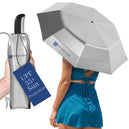
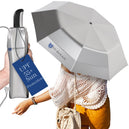
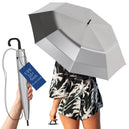
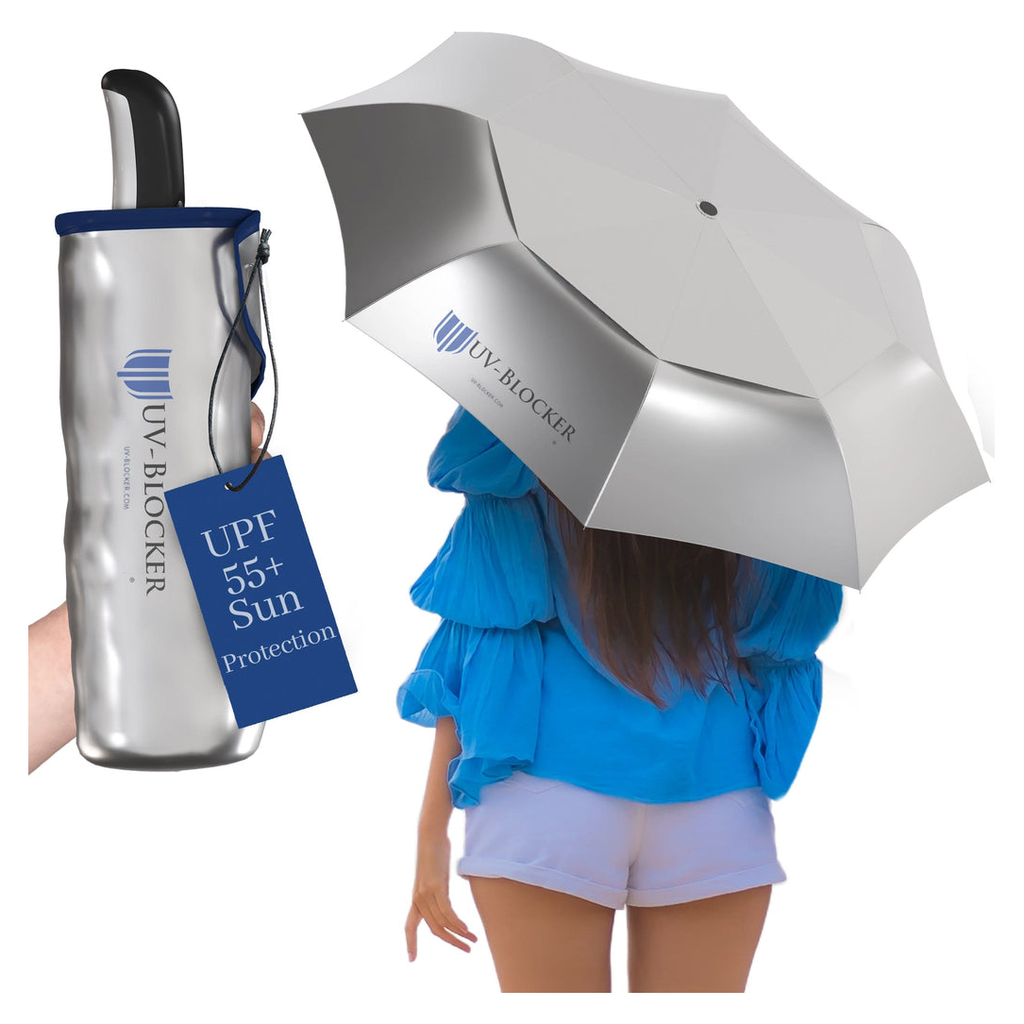
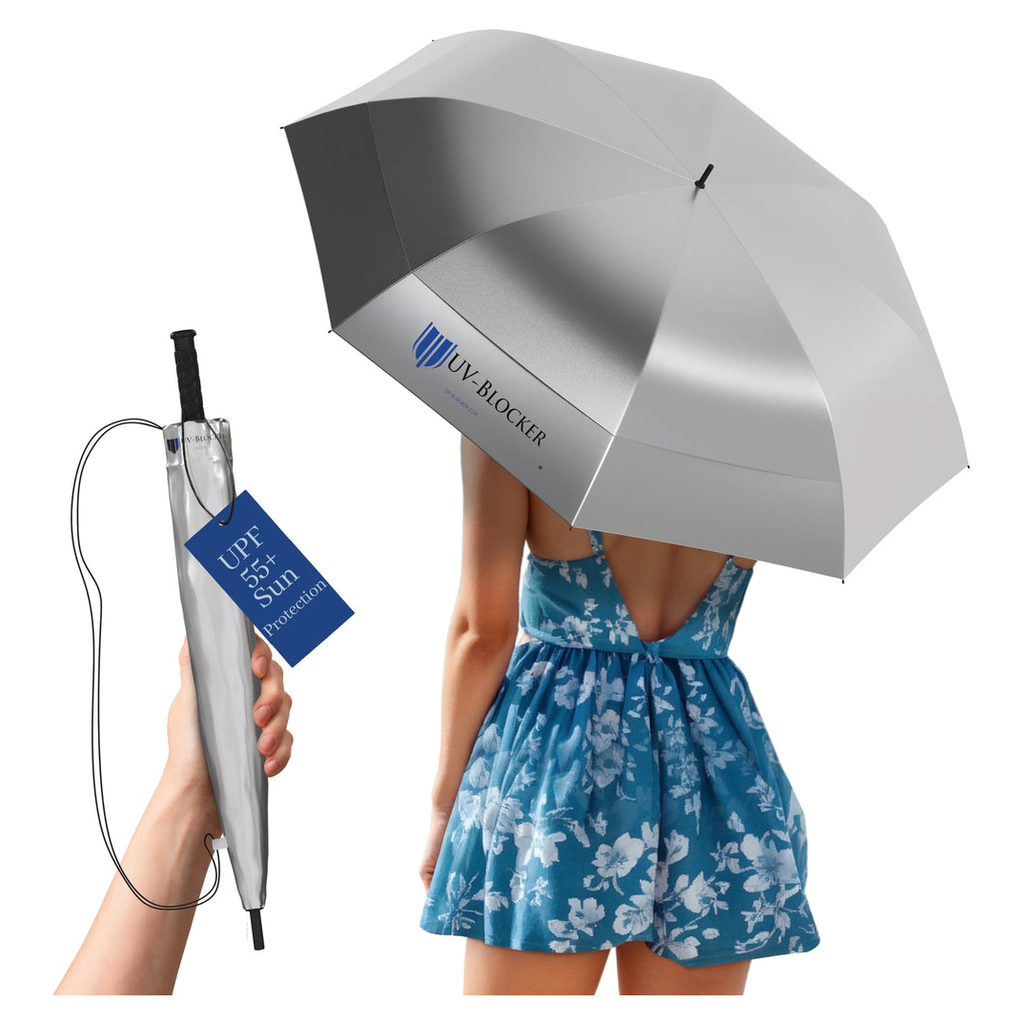
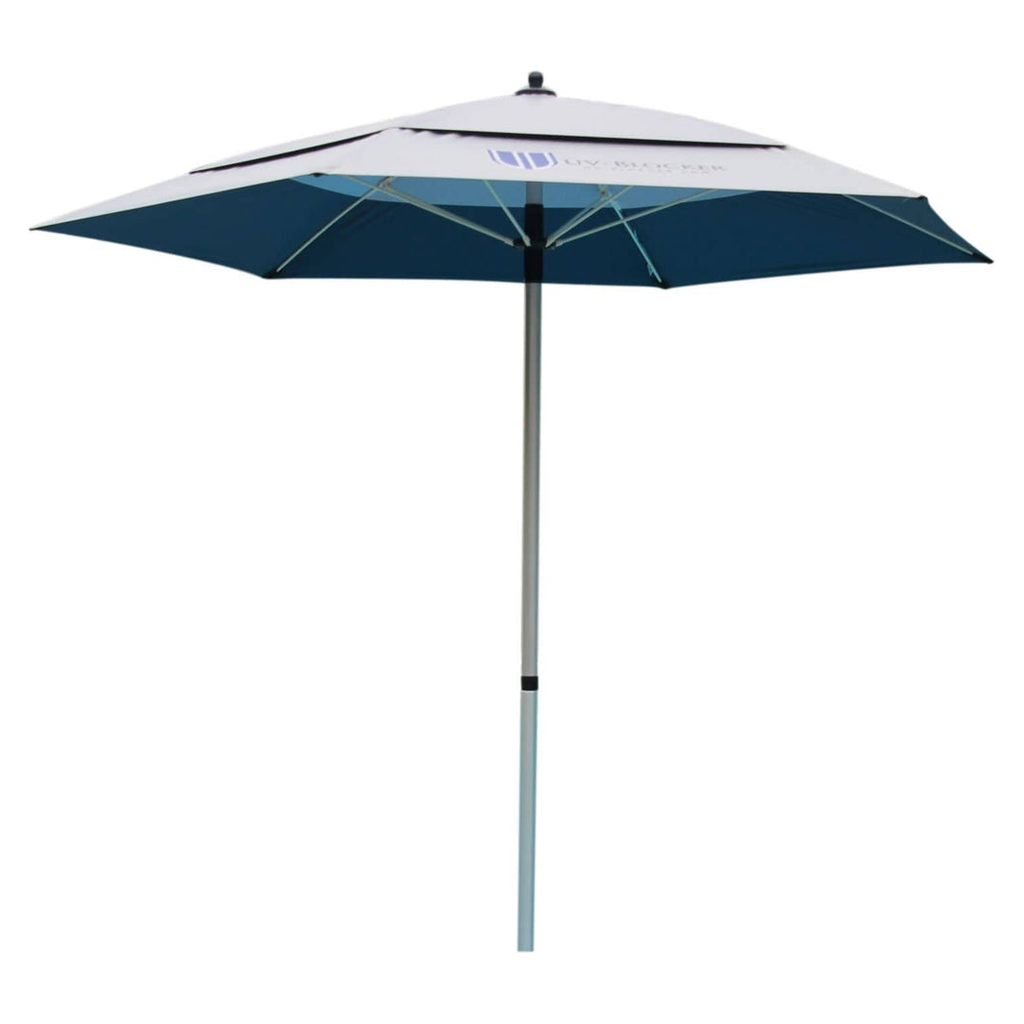
On those days shade is not something you find, it is something you carry. That is the practical argument for treating a UPF 50+ UV umbrella as trip equipment rather than a rainy-day afterthought.
Health New Zealand's own UPF ladder reads "15 to 20 is good protection," "25 to 35 offers very good protection" and "40+ offers excellent protection." UV-Blocker canopies are tested to AATCC TM183-2020 at 100% UV-B and 99.97% UV-A block, above that top band.
One note on standards, since New Zealand readers recognize it: AS/NZS 4399:2020 is the Australian and New Zealand standard for sun-protective clothing, and its Appendix A sets out the laboratory test for a fabric's UPF. UV-Blocker's Solarteck® canopy fabric has been independently tested by SGS to AS/NZS 4399:2020 and rated UPF 50+, Excellent protection, the standard's top class. Because the standard is written for clothing, that is a rating of the fabric rather than a certificate for the umbrella as a product.
What to Pack for a New Zealand Trip
Pack by trip type. City breaks, Great Walks, ski and glacier days, and coastal trips each expose you to a different mix of direct and reflected UV.
City stays (Auckland, Wellington, Christchurch). Open waterfronts and long midday walks between buildings. Packable beats large, which is where a compact UV umbrella folding to 11.5 inches at 15 ounces earns its space.
Great Walks and day hikes. Long exposure, thin tree cover on the alpine sections, nowhere to duck into. The sturdier travel model gives a 39-inch coverage diameter and a shoulder-strap case, which matters when it rides on the outside of a pack.
Ski fields and glacier walks. Altitude and snow reflection arrive together, and the all-year-round rule applies outside September to April. Wrap-around sunglasses are not optional at 80% reflectance.
Coastal and boat days. Sea foam reflection, no shade, and wind that rules out anything flimsy.
The travel UV umbrella guide goes deeper on the choice, and the full UPF 50+ range shows what is in stock.
What Travelers Ask About New Zealand Sun Protection
These are the questions that come up most often when visitors plan around New Zealand's UV, answered with the country's own published figures.
How strong is the sun in New Zealand?
NIWA puts the summer maximum UV index at about 12, exceeding 13 in the far north. That is above the top band published on US forecasts, which ends at 11+.
Why is New Zealand's UV so strong?
Cleaner air, lower ozone overhead and the Earth sitting closer to the sun during the Southern Hemisphere summer. NIWA measures the combined effect at roughly 40% above comparable northern latitudes.
What months do you need sun protection in New Zealand?
September to April, between 10am and 4pm, according to Health New Zealand. Protection is also advised at any time of year when UV levels reach 3 or higher, including winter in the mountains.
How quickly can you get sunburnt in New Zealand?
NIWA gives about 12 minutes as an approximate burn time at UV index 12, while noting the conversion is uncertain and applies to fair skin. For darker Polynesian skin types it says safe exposure can be doubled.
Does New Zealand have the highest skin cancer rate in the world?
Highest melanoma death rate, yes, at 5 per 100,000 person-years. Highest incidence, no. Australia leads on new cases at 37.0 per 100,000 against New Zealand's 29.8.
Do I need sun protection in New Zealand in winter?
At sea level, rarely. NIWA puts the winter peak at 1 or 2 and says it seldom passes 3. In the mountains, on the water or around snow and ice, yes, all year round.
Is the sun stronger in the North Island or the South Island?
The North Island. EHINZ states UV levels are higher in the north of the country, and NIWA's far-north readings exceed 13. The South Island's risk comes from altitude and snow instead.
Do I need sun protection when skiing or hiking in the Southern Alps?
Yes, year round. UV climbs about 10% to 12% per 1,000 meters and fresh snow reflects as much as 80% of it back, so you are hit from above and below at once.
What to Check Before You Go
Three checks: the Sun Protection Alert for your destination, the altitude on your itinerary, and whether your shade plan survives a treeless track.
- Look up the Sun Protection Alert for the towns on your route. From September to April it gives a daily start and end time using NIWA data, which beats a single forecast number.
- Read your itinerary for elevation and surfaces, not temperature. A cold day at 1,500 meters on snow beats a warm one at sea level.
- Decide where your shade comes from on the days with no trees, no awnings and nothing to hire. That is most of the good days.
New Zealand sun protection is not about latitude. It is about what sits between you and the sun, and none of that changes with how the day feels. Pack for the index, not the weather.
Small price to pay. Isn't your health worth it?