

Up to 90% of visible skin aging is caused by ultraviolet radiation, not genetics, not time. Most anti-aging advice starts with products that treat existing damage. Prevention, specifically blocking UV before it reaches the skin, is under-discussed yet far more cost-effective. This guide covers the science of photoaging, a body-part vulnerability map, and a prevention hierarchy ranked by clinical effectiveness.
TLDR:
- UV exposure accounts for up to 90% of visible skin aging signs like wrinkles and age spots.
- UV actively triggers enzymes that degrade collagen and elastin fibers in deeper skin layers.
- Sun-damaged skin holds 20% less collagen than protected areas.
- Damage surfaces earliest on chronically exposed zones like the face, neck, chest, and hands.
- Physical shade tops the prevention hierarchy, having no compliance gap.
- People routinely apply only 25 to 50% of the recommended sunscreen amount.
- Treatments exist, but none prevent future degradation without ongoing UV blocking.
What Is Photoaging and Why Does It Cause 90% of Visible Aging?
Photoaging is premature skin aging caused by cumulative UV exposure. Up to 90% of visible aging signs come from ultraviolet radiation rather than genetics or time.
Intrinsic aging runs on a biological clock. It causes thin, dry skin over decades. Photoaging operates entirely differently. It alters the structural matrix of the skin to cause deep wrinkles, leathery texture, and uneven pigmentation. The 90% statistic comes directly from established dermatology research, including data from the Skin Cancer Foundation and Ramos-e-Silva et al. in Clinical Dermatology.
UVA penetrates deep into the dermis where collagen and elastin structures live. UVB primarily burns the surface layers of the epidermis. Both forms contribute to long-term cellular damage. UVA acts as the primary photoaging driver by reaching foundational tissues.
Compare the sun-exposed outer forearm to the protected inner upper arm. The outer arm likely shows freckling and deeper lines. The inner arm remains smooth. Both sides are the exact same age. The difference is pure photoaging.
Understanding what photoaging is raises the next practical question: how exactly does UV break down the skin at a molecular level?
How Does UV Radiation Break Down Collagen and Elastin?
UV triggers matrix metalloproteinase enzymes that actively degrade collagen fibers, accelerating natural collagen loss well beyond baseline rates.
Ultraviolet radiation acts like a cellular switch. When UV rays hit the skin, they trigger production of matrix metalloproteinase enzymes. These include MMP-1, MMP-3, and MMP-9, which cleave and fragment healthy collagen. MMP-1 alone accounts for 95% of the collagenolytic activity in UV-exposed skin.
Natural collagen decline is roughly 1% per year after age 20, according to Shuster et al. Think of this as the natural collagen clock. UV exposure forcefully accelerates this clock well beyond its normal biological rate. Every unprotected hour outdoors speeds up the structural breakdown timeline.
The structural loss is significant. Sun-damaged skin contains roughly 20% less total collagen than protected skin, according to research by Schwartz published in Photochemistry and Photobiology. The internal scaffolding gradually collapses under this ongoing assault.
Photoaged skin also accumulates elastotic material. This clumped, dysfunctional elastin replaces healthy tissue, causing skin to lose its snap.
Knowing how UV damages skin structures raises a practical question: where does this damage show up first?
Where Does Photoaging Show First on the Body?
Photoaging appears earliest on chronically exposed areas: face, neck, chest, and hands where cumulative UV damage surfaces.
The face receives the highest volume of cumulative UV radiation. This manifests early as crow's feet, deep forehead lines, and lip thinning.
The neck and chest often take the brunt of incidental exposure. Many miss these areas during sunscreen application, leading directly to crepey texture, horizontal neck lines, and heavy freckling across the decolletage.
Hands age rapidly because they are chronically exposed and rarely protected. This chronic exposure leads to solar lentigines, commonly known as age spots. The skin thins significantly, making underlying veins visible.
Arms often display asymmetric aging, especially in drivers where the left side shows more damage from UV rays penetrating the window.
All four primary photoaging zones (face, neck, chest, hands) fall within the shade cone of a handheld UV umbrella.
| Body Area | Common Photoaging Signs | Typical Age First Visible | Daily UV Exposure Level |
|---|---|---|---|
| Face | Crow's feet, forehead lines, lip thinning | Late 20s to early 30s | High (always exposed) |
| Neck | Crepey texture, horizontal lines | Mid 30s | High (often missed by sunscreen) |
| Chest | Mottled pigmentation, freckling | Mid 30s to 40s | Moderate-High |
| Hands | Age spots, thinning skin, visible veins | Late 30s to 40s | High (chronic exposure) |
| Arms | Asymmetric aging (driver's side worse) | 40s | Moderate |
What protection strategy actually prevents photoaging most effectively?
What Is the Most Effective Way to Prevent Photoaging?
Physical shade blocks UV before it reaches skin with zero reapplication and no compliance gap unlike sunscreen.

The prevention hierarchy ranks real-world effectiveness based on consistent, reliable UV blocking.
- Physical shade stands as the top-tier defense. A UV umbrella provides 99% block with zero reapplication, covering the face, neck, chest, and hands simultaneously.
- UPF clothing ranks second in the hierarchy. It protects covered areas and requires no reapplication.
- Broad-spectrum sunscreen (SPF 30+) forms the essential third tier. It covers remaining exposed gaps.
The sunscreen compliance gap is the biggest flaw in modern anti-aging routines. Studies show people apply 25 to 50% of the recommended 2 mg/cm² thickness. This achieves roughly one-third of the labeled SPF protection. A UV umbrella has zero compliance gap — hold it up and the protection is immediate.
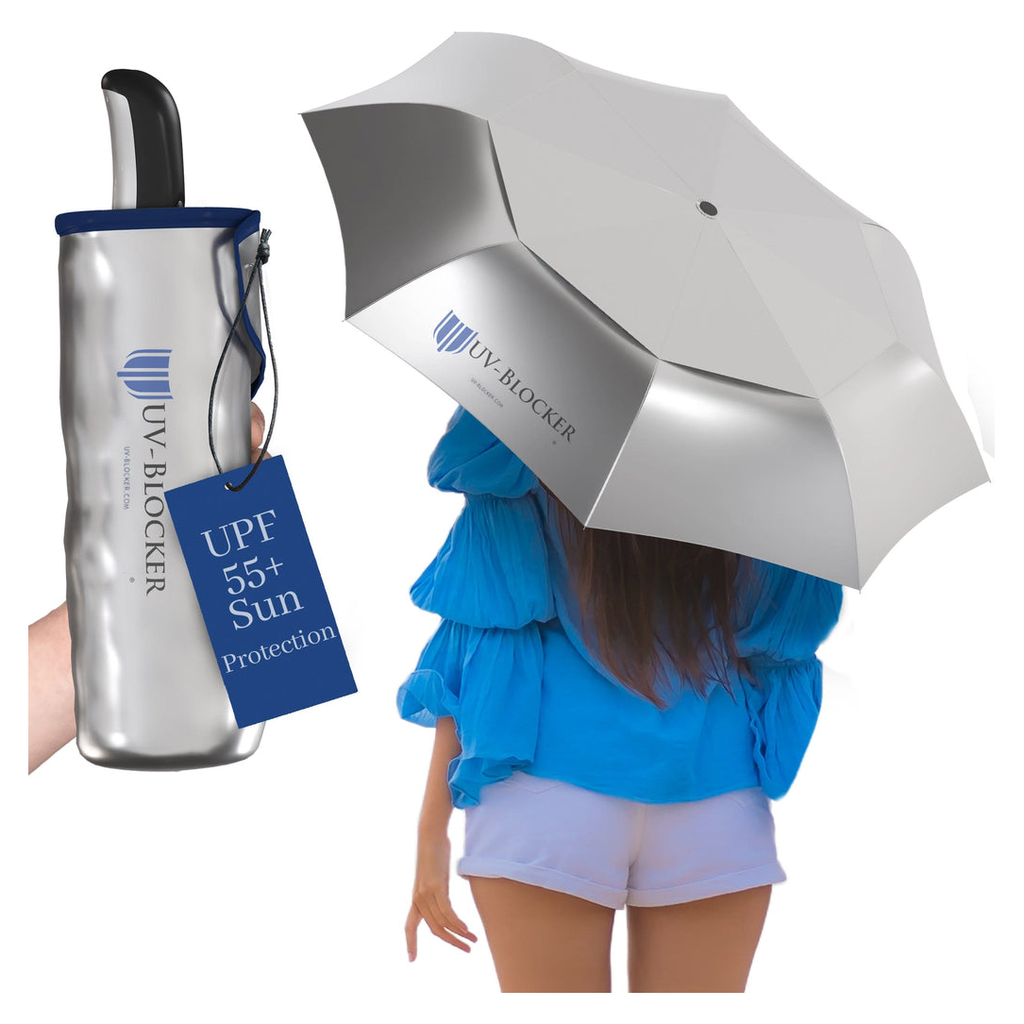
A UPF 50+ UV-Blocker Compact Umbrella costs exactly $59.95 and lasts 3 to 5 years of daily continuous use. Premium anti-aging serums run $35 to $50 per month ($420 to $600 yearly). A single dermatologist treatment session for existing photoaging costs $200 to $500 or more.
Layered protection is the evidence-based approach. Physical shade comes first. Add UPF clothing for covered areas. Apply sunscreen strictly for the exposed gaps. The clinical data behind this hierarchy is covered in UV Umbrellas vs Sunscreen: What the Research Actually Shows. The second tier of defense is explored further in the Sun Protection Clothing guide.
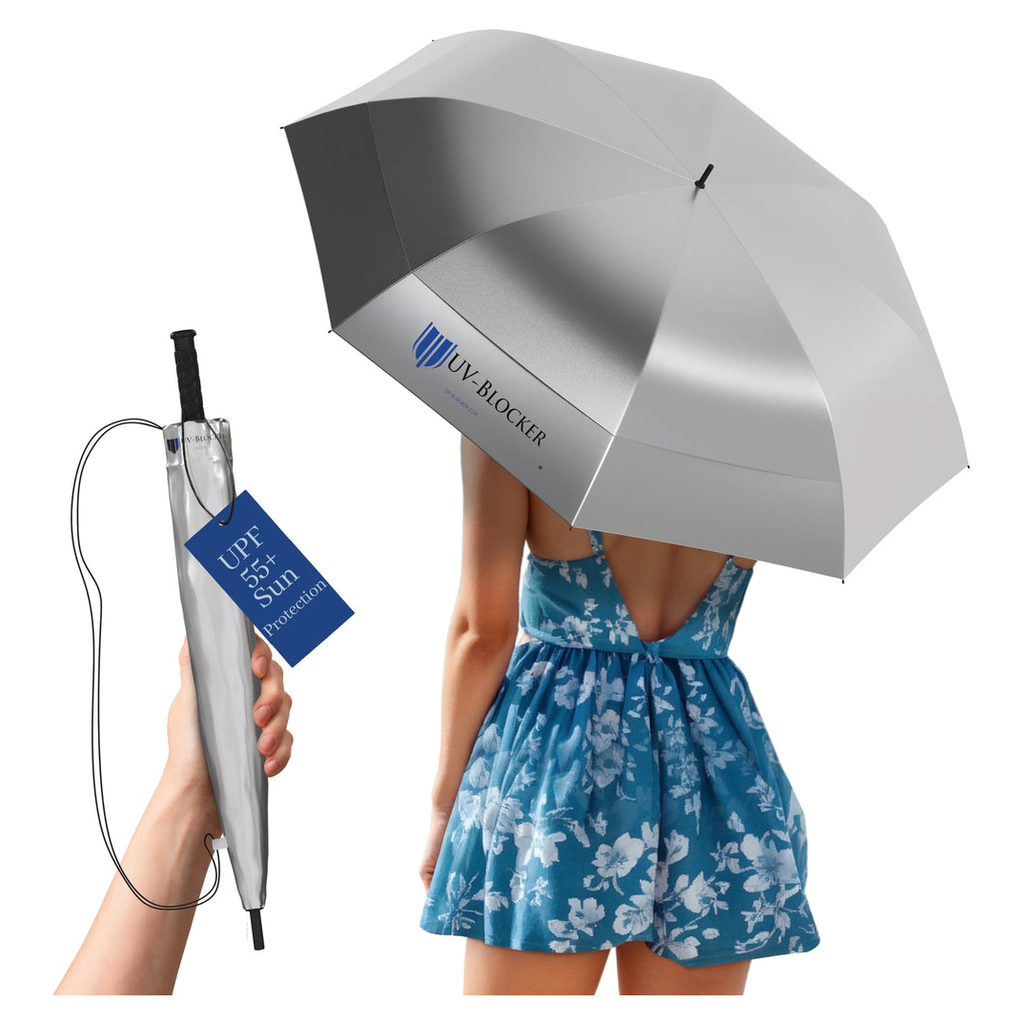
Both the Compact Umbrella and the 44-inch Travel Umbrella feature patented Solarteck® fabric. This material is AATCC TM183-2020 tested to block 100% of UV-B and 99.97% of UV-A rays.
Prevention works at any age. But understanding how photoaging progresses decade by decade helps prioritize exactly when to start.
How Does Photoaging Progress Through Each Decade of Life?

UV damage accumulates invisibly from childhood, becomes visible as fine lines in the 30s, deepens in the 40s, and compounds after 50.
Photoaging is cumulative. UV damage starts accumulating in childhood, becomes visible as fine lines in the 30s, deepens into wrinkles and age spots in the 40s, and compounds significantly after 50.
20s: Damage accumulates invisibly. Collagen production masks the structural breakdown. This decade offers the highest return on prevention investment.
30s: Fine lines appear around the eyes and mouth. This decade brings the first signs of uneven skin tone and pigmentation shifts.
40s: Deeper wrinkles form. Solar lentigines emerge on the face, hands, and chest. The skin loses elasticity noticeably.
50s and beyond: Cumulative damage becomes pronounced. The skin thins, bruises easily, and heals slowly. The gap between protected and unprotected skin becomes dramatic. The forearm self-test mentioned earlier becomes starkly obvious at this stage of life.
At every decade, physical shade remains the most effective prevention strategy.
Treatment options exist, though none replace ongoing prevention.
Can Existing Photoaging Damage Be Reversed?
Some photoaging responds to treatment, but none prevent future damage without ongoing UV protection of the skin.
Topical treatments offer repair. Retinoids stimulate collagen production to improve fine lines. Vitamin C serums provide antioxidant protection and brighten pigmentation.
Professional treatments like chemical peels and laser resurfacing address deeper damage. They cost $200 to $500 or more per session, typically requiring multiple sessions.
ALL treatments address existing damage. None prevent NEW damage. Without UV protection, treated skin continues to photoage.
No treatment plan can outpace unprotected sun exposure. Prevention combined with treatment is the evidence-based approach for existing photoaging.
Frequently Asked Questions About Photoaging
Answers to the most common photoaging questions from dermatology research and UV protection science.
What percentage of skin aging is caused by the sun?
Research attributes up to 90% of visible skin aging to UV exposure. The Skin Cancer Foundation and multiple dermatology studies confirm this figure. The remaining 10% comes from intrinsic aging, driven by genetics and metabolic processes.
Can sun damage wrinkles be reversed?
Some sun damage wrinkles respond to retinoids, vitamin C, chemical peels, and laser treatments. Deep structural collagen loss is harder to reverse. Prevention remains more effective than treatment, and a combination of UV protection with targeted treatments produces the best outcomes.
Does sunscreen actually prevent wrinkles?
Sunscreen helps prevent photoaging when applied correctly. However, most people apply only 25-50% of the recommended amount, reducing its protective benefit significantly. Physical shade has no application compliance issue. Layering sunscreen with physical shade maximizes real-world protection. The clinical comparison in UV Umbrellas vs Sunscreen: What the Research Actually Shows explores this in detail.
At what age does photoaging start?
UV damage begins accumulating from childhood. Visible photoaging signs like fine lines and uneven tone typically appear in the early-to-mid 30s, though damage is occurring years before it becomes visible. By age 18, the average person has already accumulated significant UV exposure. Starting physical shade protection in the 20s yields the highest long-term prevention benefit.
How can you tell if your skin is photoaged?
Compare sun-exposed skin (outer forearm, face) to protected skin (inner upper arm, abdomen). Differences in texture, pigmentation, and wrinkle depth indicate photoaging. Classic signs include uneven pigmentation, rough texture, and deep wrinkles on chronically exposed areas. For a related pigmentation condition, see the guide on Melasma Triggers. It's also worth understanding that UV reaches skin even on overcast days — Can You Get Sunburn on a Cloudy Day? covers this.
Is it too late to prevent photoaging?
It is never too late to prevent further photoaging. UV protection at any age slows additional collagen breakdown and reduces new damage accumulation. Consistent protection slows the progression of existing damage, and pairing prevention with treatments produces the best results. And yes, getting enough vitamin D in the shade is entirely possible.
Conclusion
Physical shade is the most effective and affordable UV protection for photoaging prevention.
Photoaging causes up to 90% of visible skin aging. Genetics and time play a small role in the wrinkles and age spots associated with getting older. Physical shade stands as the most effective, affordable, and consistent form of UV protection for the most vulnerable areas. It covers the face, neck, chest, and hands without the compliance gaps that plague sunscreen users.
Prevention is 10x more cost-effective than attempting to treat existing damage. Try the forearm self-test today. Then evaluate the current daily UV routine. For those ready to add physical shade to their daily routine, the UV-Blocker Compact Umbrella provides UPF 50+ protection that fits in a purse or briefcase.