

There is no true sunscreen alternative, but you can make sunscreen do far less of the work. In Australia, the honest answer is to layer shade, sun-protective clothing and a broad-brimmed hat so that sunscreen only has to cover the skin that's left. That is also Cancer Council's advice: sunscreen is essential, but it should always be the last line of defence, used with clothing, hats, shade and sunglasses.
The gap is real. In an Australian Bureau of Statistics survey of more than 8,500 Australians for the Cancer Councils, nearly 2 in 5 (38.1%) used sunscreen on most days in late spring and summer, when daily use is recommended. Greasy textures, breakouts, constant reapplication and worries about ingredients all push people to look for something else.
This guide evaluates the popular sunscreen alternatives with actual UV block percentages, replacing marketing claims with data, and explains what the Australian guidance says. It covers the physical protection tools many guides leave out, so you can see the full picture.

Why Are So Many People Looking for a Sunscreen Alternative?
Concerns about chemical absorption, skin reactions, environmental damage and the hassle of reapplying every two hours have pushed many people to look for other sun protection options.
Much of the ingredient worry comes from the US. There, the FDA recognises only two of the 16 sunscreen active ingredients it reviewed as generally recognised as safe and effective (GRASE): zinc oxide and titanium dioxide. Twelve others lack enough data for that designation, which isn't the same as being unsafe. A 2020 FDA-led trial found that oxybenzone and five other active ingredients were absorbed into the bloodstream above the level at which the FDA would consider waiving further safety studies, though the researchers stressed that this doesn't mean people should stop using sunscreen. Octinoxate has been linked to coral reef bleaching, and Hawaii banned the sale of sunscreens containing oxybenzone or octinoxate from 2021. Australia regulates sunscreens differently, as the next section explains.
Skin reactions add another layer of frustration. Breakouts, allergic contact dermatitis, and irritation happen frequently — especially on the face. These issues drive a constant search for a "sunscreen alternative for face" as people try to keep products off sensitive areas.
The compliance gap is the biggest weakness of sunscreen. Cancer Council says the average adult needs about 35 mL (around seven teaspoons) to cover the whole body, applied 20 minutes before going outside and reapplied every two hours. Few people use that much or reapply that often, which leaves skin less protected than the SPF on the label suggests.
Sunscreen Alternatives in Australia: What Cancer Council and the TGA Say
The regulatory picture in Australia is different from the US. Here, sunscreens are regulated by the Therapeutic Goods Administration (TGA) as therapeutic goods, and the TGA requires them to be tested to make sure they are safe, effective and high quality, Cancer Council explains. The TGA doesn't allow sunscreens to be called "sunblock", because no sunscreen blocks 100% of UV, and the highest SPF allowed on an Australian label is SPF50+.
On safety, Cancer Council says decades of research and long-term studies of sunscreen use in Australia have found no harmful effects of regular use, and that the TGA has advised that sunscreens available in Australia are safe and effective to use as one of the five forms of sun protection (the science behind sunscreen).
The benefit is clear in Australian research. Cancer Council cites findings that Australians aged 18 to 40 who regularly used sunscreen in childhood cut their melanoma risk by 40% compared with those who rarely did (sunscreen research and facts). Its guidance, through the SunSmart program, is to use SPF 50 or 50+, broad-spectrum, water-resistant sunscreen whenever the UV Index is 3 or above, and to combine it with the other SunSmart steps: slip on clothing, slap on a hat, seek shade and slide on sunglasses. In the same ABS survey, just over half of Australians (53.9%) used three or more forms of sun protection during peak UV times.
If sunscreen itself is the problem:
- Patch test a new sunscreen on the inside of your forearm and watch for redness, itching or irritation, as Cancer Council suggests.
- For sensitive skin, look for fragrance-free and paraben-free products.
- If your skin reacts to one sunscreen, ask your pharmacist or GP about one with different ingredients; a dermatologist can help if you react to everything.
- For babies under six months, sunscreen is generally not recommended; use shade, hats and protective clothing instead.
None of this makes sunscreen optional in Australia. What the alternatives below can do is reduce how much of your skin depends on it.
Can Natural Oils Really Replace Sunscreen?
No. Rigorous in-vivo testing shows coconut oil provides SPF 1.2, raspberry seed oil SPF 2.6 and olive oil SPF 7.8, far below the SPF 30 minimum that healthdirect recommends (Cancer Council recommends SPF 50 or 50+).
A 2021 in-vivo study evaluating the five most promoted natural oils measured coconut oil at an SPF of 1.2. That's roughly 20 percent of incoming UV light blocked — contradicting the SPF 4 to 6 claims from outdated in-vitro tests.
Raspberry seed oil? SPF 2.6 in human testing. The viral claim that it provides SPF 28 to 50 traces back to a single flawed study from 2000. That test used hexane-extracted oil, not the cold-pressed versions consumers actually buy. The myth keeps spreading on social media, putting people at risk under some of the strongest UV in the world.
Other kitchen staples fare no better. Shea butter hovers in the SPF 3 to 4 range. Olive oil sits at SPF 7.8. Carrot seed oil measures SPF 2.5 in vivo.
Most homemade recipes are just as ineffective. A 2020 JAAD study tested 15 home-formulated sunscreen recipes. Every single one provided an SPF under 6, well below the minimum threshold for adequate protection. Three of the 15 contained zero UV-filtering ingredients. Natural oils provide antioxidant skin benefits, but they aren't viable as standalone sunscreen alternatives.
Is UPF Clothing Better Than Sunscreen?
UPF 50+ clothing blocks 98 percent of UV rays without chemicals or reapplication, but can't cover the face, neck or hands.
Under the Australian standard, Cancer Council explains, UPF 50 and 50+ fabrics block 98 percent of UV and are rated excellent protection. No reapplication needed, and no product on your skin. Sun-protective clothing offers reliable defence for every covered area.
The trade-offs? Cost and limited coverage. A full UPF wardrobe is a real investment. Heavy technical fabrics feel stifling in an Australian summer. And shirts and pants don't stretch over the face, ears, neck or hands.
Sun hats help bridge the gap, but Cancer Council says caps and visors don't provide enough protection; choose a broad-brimmed, legionnaire or bucket hat. Even then, the lower ears and neck are partly exposed to UV bouncing off pavement, sand or water.
UPF garments work well as one layer in a multi-method approach, a strong foundation for torso and limb defence. But clothing alone can't replace sunscreen for whole-body coverage.
What Makes UV Umbrellas the Most Overlooked Sunscreen Alternative?
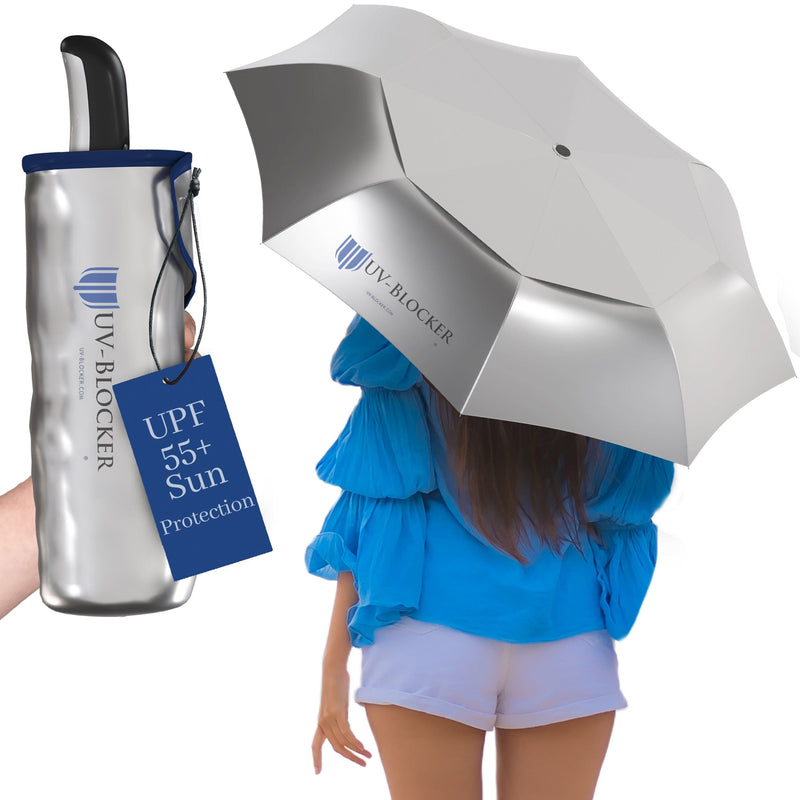
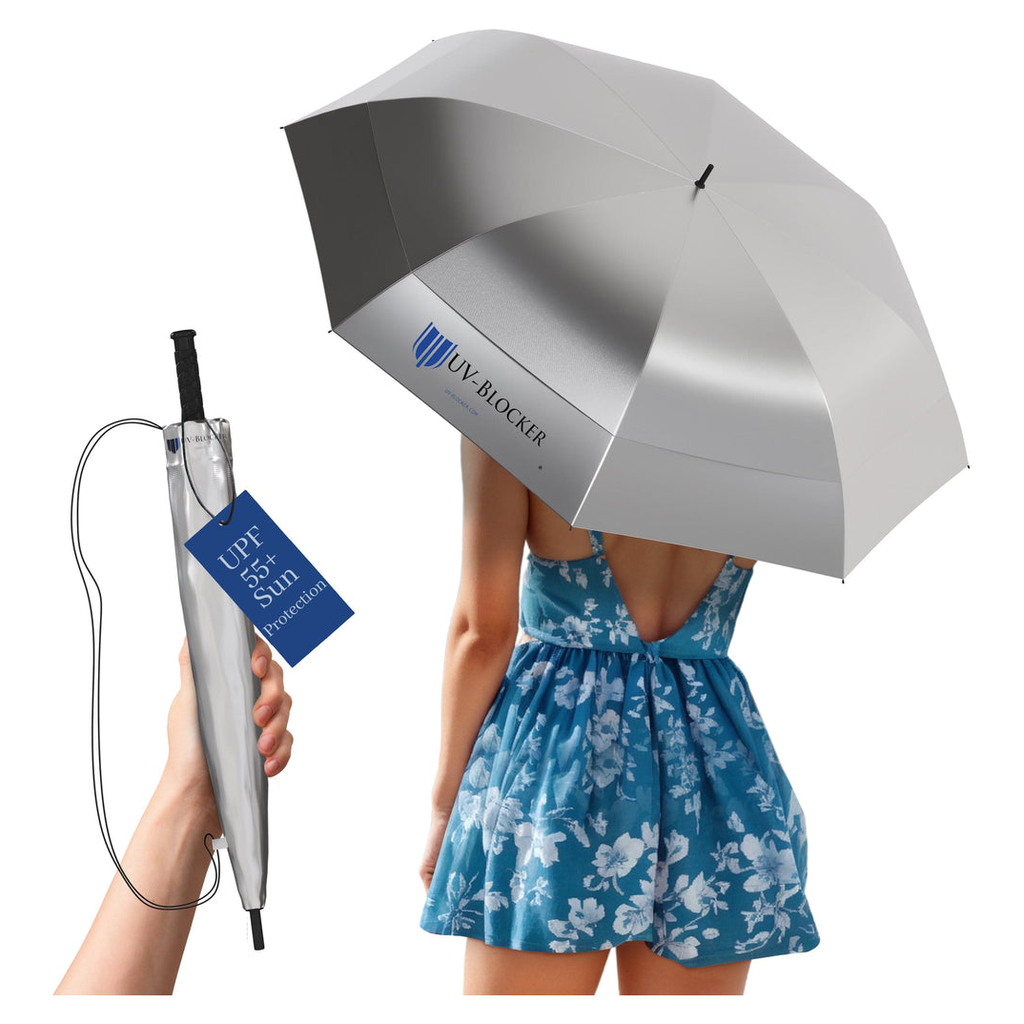
A UV-blocking umbrella shades the face, neck, chest and hands at once, with fabric that can block close to all UVA and UVB.
A 2013 JAMA Dermatology study evaluated 23 handheld umbrellas for sun protection. They blocked between 77 and 99 percent of UV, with a silver sun umbrella performing best and black rain umbrellas typically blocking 90 percent or more, which shows the value of portable physical shade. For a deeper look at the physics, explore Do Umbrellas Protect Against UV Rays?.
UV-Blocker umbrellas use Solarteck® fabric rated UPF 50+. It was lab-tested to AATCC TM183-2020, blocking 100 percent of UVB and 99.97 percent of UVA, and tested by SGS to AS/NZS 4399 (UPF 50+, Excellent), the Australian/New Zealand standard for sun-protective fabrics. Read more about the UV-Blocker testing methodology.
Coverage Where Clothing Can't Reach
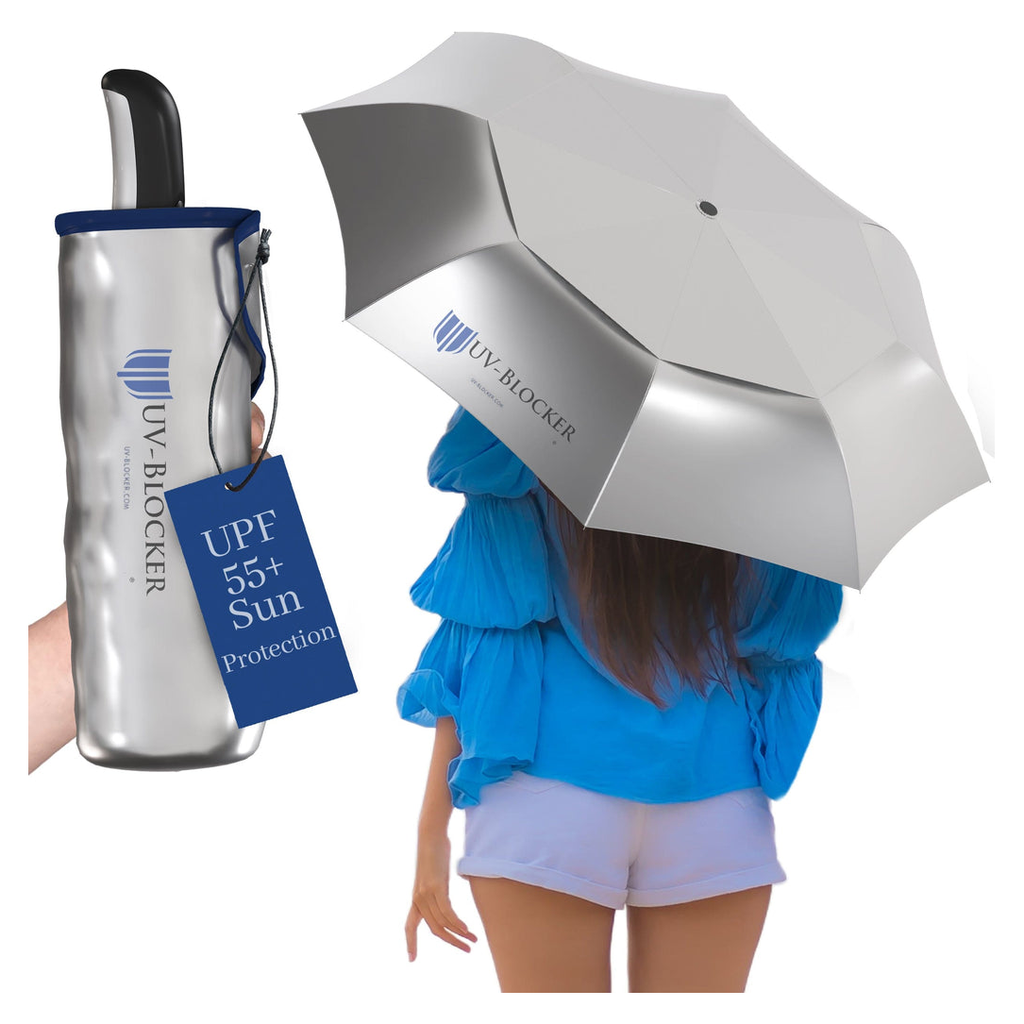
Unlike shirts or pants, a UV umbrella shades the face, neck, décolletage, and hands all at once — the areas most prone to photoageing and skin cancer. The Compact UV Umbrella extends protection exactly where typical clothing stops.
Built-In Cooling
The silver Solarteck® outer layer reflects sunlight and creates a more comfortable space underneath the canopy: UV-Blocker measures up to 8°C cooler than standing in direct sun. On a 35°C day in Perth or Brisbane, none of the other options in this guide give you that.
One-Time Cost vs. Ongoing Expense
A Travel UV Umbrella is a one-off purchase, while sunscreen is an ongoing cost for every person in the family, and in much of Australia it's needed for most of the year. The umbrella won't replace your sunscreen, but by shading your face, neck and hands it reduces how much skin you need to cover. For a full breakdown of the research, see UV Umbrellas vs Sunscreen (What the Research Shows).
The canopy doesn't sweat off or need reapplying. But shade doesn't stop UV reflected from the ground, so Cancer Council recommends using shade together with sunscreen and the other SunSmart steps.
Sunscreen Alternative Comparison: Which Option Blocks the Most UV?
UV umbrellas give the highest UV block in this comparison as a one-off purchase, but they only protect the skin under the canopy, so they work best layered with clothing and sunscreen.

| Alternative | UV Block Rate | Reapply Needed | Chemical-Free | Coverage Area | Cost | Best For |
|---|---|---|---|---|---|---|
| Coconut oil | ~20% (SPF 1-7) | Yes, frequently | Yes | Applied areas | Ongoing | Not recommended as sun protection |
| Shea butter | ~15% (SPF 3-4) | Yes, frequently | Yes | Applied areas | Ongoing | Not recommended as sun protection |
| Sun hat | Varies (50-90%) | No | Yes | Head and partial face | One-off | Supplemental head coverage |
| UPF 50+ clothing | 98% | No | Yes | Body (not face/hands) | One-off (wardrobe) | Body coverage layer |
| UV umbrella (UPF 50+) | 99% | No | Yes | Face, neck, chest, hands | One-off | Primary shade layer |
| Mineral sunscreen | ~97-98% of UVB (SPF 30-50) | Every 2 hours | Mostly (zinc/titanium) | Applied areas | Ongoing | Gap coverage for exposed skin |
| Chemical sunscreen | ~97-98% of UVB (SPF 30-50) | Every 2 hours | No | Applied areas | Ongoing | Broad coverage (TGA-regulated in Australia) |
No single product beats sunscreen for whole-body coverage on paper. But in the real world, the compliance gap undermines that advantage. People don't apply enough, don't reapply on time, and skip it on "cloudy" days.
UV umbrellas deliver the highest UV block rate in this comparison as a one-off purchase. Sunscreen figures are for UVB as filtered by SPF 30 to SPF 50 when applied properly; Cancer Council notes that SPF 50 filters 98% of UVB (sunscreen basics). The data makes the case for layering: each method covers the areas the others miss.
What Is the Best Way to Layer Sun Protection Without Relying on Sunscreen Alone?
Combine a UV umbrella for shade, UPF clothing and a broad-brimmed hat for coverage, and SPF 50 or 50+ sunscreen on the remaining gaps: the layered approach behind Cancer Council's five SunSmart steps.

In Australia, Cancer Council says sunscreen should always be the last line of defence, used in combination with clothing, hats, shade and sunglasses. Most people do the opposite: sunscreen first, shade as an afterthought.
Layer 1: UV umbrella. Covers the face, neck, chest and hands instantly. Zero effort, nothing on your skin. This is the "seek shade" step, in a form you can carry.
Layer 2: UPF clothing. Shirts and pants cover the torso, arms, and legs. No reapplication needed during the day. The fabric blocks UV photons before they reach the skin.
Layer 3: Sunscreen on the gaps. The ears, backs of the hands or bare feet get targeted coverage with SPF 50 or 50+ broad-spectrum, water-resistant sunscreen; mineral formulas suit some sensitive skin. Only a small fraction of skin now needs sunscreen, so it's easier to apply enough and reapply on time.
This approach shrinks the compliance gap. Physical barriers do the heavy lifting. Even imperfect sunscreen application on 10 percent of the body provides better real-world protection than imperfect application across 100 percent of bare skin.
Frequently Asked Questions About Sunscreen Alternatives
These are the most common questions about finding a sunscreen alternative, answered with data from dermatology research and UV testing standards.
What is the best sunscreen alternative?
A UV-blocking umbrella rated UPF 50+ provides the highest UV protection of the non-sunscreen options, as a one-off purchase, especially for the face and neck. For full coverage, combine it with UPF clothing, a broad-brimmed hat and SPF 50 or 50+ sunscreen on any exposed skin. No single product replaces sunscreen; in Australia, Cancer Council recommends using all five SunSmart steps together.
Can coconut oil replace sunscreen?
No. In-vivo testing measures coconut oil at SPF 1.2, blocking roughly 20 percent of UV radiation. That falls far below the SPF 30 minimum healthdirect recommends. Coconut oil provides moisturising and antioxidant benefits, but it should never serve as sun protection.
Is UPF clothing better than sunscreen?
UPF 50+ clothing blocks 98 percent of UV without chemicals or reapplication. It's more reliable than sunscreen for covered areas, but it can't protect the face or hands. The strongest approach combines both — clothing for the body, shade and sunscreen for everything else.
Do UV umbrellas really block UV rays?
Yes. A 2013 JAMA Dermatology study found handheld umbrellas blocked 77 to 99 percent of UV, with a silver sun umbrella performing best. UV-Blocker's Solarteck® fabric was lab-tested to AATCC TM183-2020, blocking 100 percent of UVB and 99.97 percent of UVA, and tested by SGS to AS/NZS 4399 (UPF 50+, Excellent).
Can I stop wearing sunscreen if I use a UV umbrella?
No. Shade reduces UV, but Cancer Council notes that UV can still reach you by reflection, so keep using sunscreen on exposed skin such as ears, forearms and feet, even under an umbrella, along with clothing, a hat and sunglasses. The layered approach (canopy, clothing, hat and sunscreen on the gaps) matches Cancer Council's advice that sunscreen is the last line of defence, and it cuts how much skin depends on sunscreen.
Are sunscreen chemicals really harmful?
In Australia, sunscreens are regulated by the TGA, and Cancer Council says decades of research and long-term Australian studies have found no harmful effects of regular use. The US concerns explained above (ingredients that need more safety data in the FDA's review, and a 2020 study of absorption into the blood) are calls for more research; the study's authors said its findings don't mean people should stop using sunscreen. If you prefer mineral formulas (zinc oxide or titanium dioxide) or have sensitive skin, ask your pharmacist.
Conclusion
- Natural oils are skin-health tools, not sun shields — they max out at SPF 1 to 7 in real-world testing.
- UPF clothing covers the torso and limbs well but leaves the face, neck, and hands exposed.
- UV umbrellas fill that gap: shade over the most vulnerable areas, nothing to reapply, and a one-off purchase.
- The smartest sunscreen alternative strategy isn't replacing sunscreen; it's reducing how much skin depends on it. In Australia, that's Cancer Council's advice too: sunscreen as the last line of defence.
Start with one UV umbrella for daily outdoor use. That single change shades the face, neck and hands, the areas most affected by photoageing, and lets your sunscreen focus on what's left whenever the UV Index is 3 or above. Try the shade-first approach with a Compact UV Umbrella or browse the full UV protection umbrella collection.