

More than 58 million Americans have actinic keratosis. Most leave their dermatologist's office with a pamphlet that says "wear sunscreen."
That's not enough. Up to 82% of squamous cell carcinomas show evidence of arising from actinic keratoses. Actinic keratosis isn't a cosmetic concern — it's a cancer-prevention imperative.
This guide provides a shade-first daily protection protocol designed for people living with actinic keratosis. Hospital websites cover diagnosis and treatment options. Nobody details the daily protection routine patients actually need to prevent recurrence.
What Does Actinic Keratosis Mean for Your UV Exposure Risk?
Actinic keratosis signals cumulative UV damage that has overwhelmed the skin's DNA repair capacity, creating precancerous lesions that require ongoing protection to prevent progression.
Actinic keratosis serves as the skin's permanent record of ultraviolet damage. Each lesion marks a spot where cellular DNA repair mechanisms failed. The condition affects more than 58 million Americans, making it the most common precancer in the United States. Men experience a higher prevalence rate than women due to occupational exposure patterns and lower lifetime sunscreen usage.
The stakes extend beyond the lesions themselves. The vast majority of squamous cell carcinomas originate from actinic keratoses, with clinical studies finding up to 82% of these skin cancers associated with existing AK lesions.
The Melanoma International Foundation (MIF) and other dermatological bodies emphasize that prevalence increases with age. Fair-skinned adults with significant lifetime sun exposure face the highest risk. Patients often discover their first lesion in their forties or fifties, with the risk curve steepening in subsequent decades.
Medical professionals categorize these rough, scaly patches as indicators of a compromised skin barrier. The presence of a single lesion suggests the entire surrounding area has sustained heavy UV damage. Dermatologists call this "field cancerization." The surrounding skin remains vulnerable to malignant transformation.
Understanding the clinical risk forms the first step. But knowing why the standard prevention advice falls short is what changes patient outcomes.
Why Does Standard Sunscreen Advice Fail Actinic Keratosis Patients?
Standard sunscreen-only advice fails AK patients because the most vulnerable zones, including the scalp, ears, and hands, are the hardest to keep consistently protected with topical products alone.
Hospital sites from the American Academy of Dermatology, Cleveland Clinic, and Mayo Clinic consistently recommend applying SPF 30+, wearing hats, and avoiding peak sun hours. They typically deliver this advice in four or five generic bullet points. Prevention sections rank as the shortest part of any medical webpage.
AK patients face elevated risks at all exposure levels. Incidental exposure happens constantly: walking through a parking lot, driving a morning commute, sitting near an office window. All deliver cumulative radiation.
Relying solely on topical creams introduces four distinct failure points.
- Reapplication gaps leave skin exposed. People typically reapply sunscreen every four to six hours instead of the medically mandated two hours.
- Underapplication dilutes the protective rating. The average person applies only 25 to 50 percent of the required chemical volume.
- Incomplete UVA coverage creates false security. Not all broad-spectrum formulas block the deeper-penetrating rays equally.
- Zone mismatch guarantees vulnerability. Actinic keratosis appears most frequently on the scalp, ears, backs of hands, and lips. These represent the hardest areas of the human body to keep consistently covered with lotion.
Sweat dilutes chemical barriers. Wind carries away spray applications. Clothing friction rubs off physical mineral blocks. Patients apply expensive creams to their face but forget the tops of their ears or the backs of their hands.
If sunscreen alone isn't enough, a complete protection strategy requires a fundamental shift in daily habits.
What Is the Shade-First Protection Protocol for Actinic Keratosis?
The shade-first protocol prioritizes physical UV barriers over topical ones: start with a UV-blocking umbrella, add UPF clothing, then apply broad-spectrum sunscreen to remaining exposed skin.
A shade-first approach inverts standard medical advice. The protocol builds a layered defense system starting with the most reliable barriers.

Layer 1: Portable Physical Shade
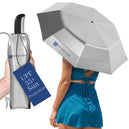
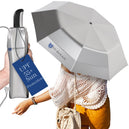
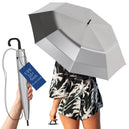
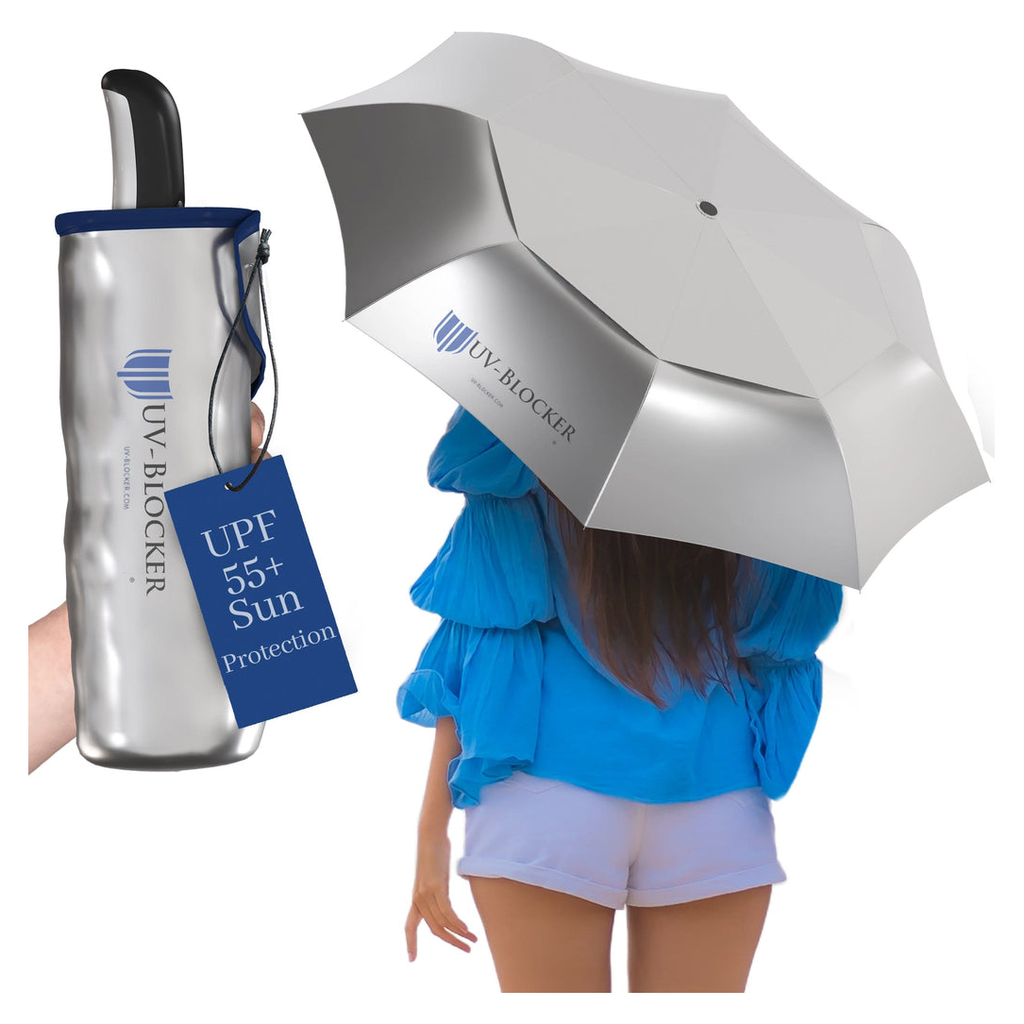
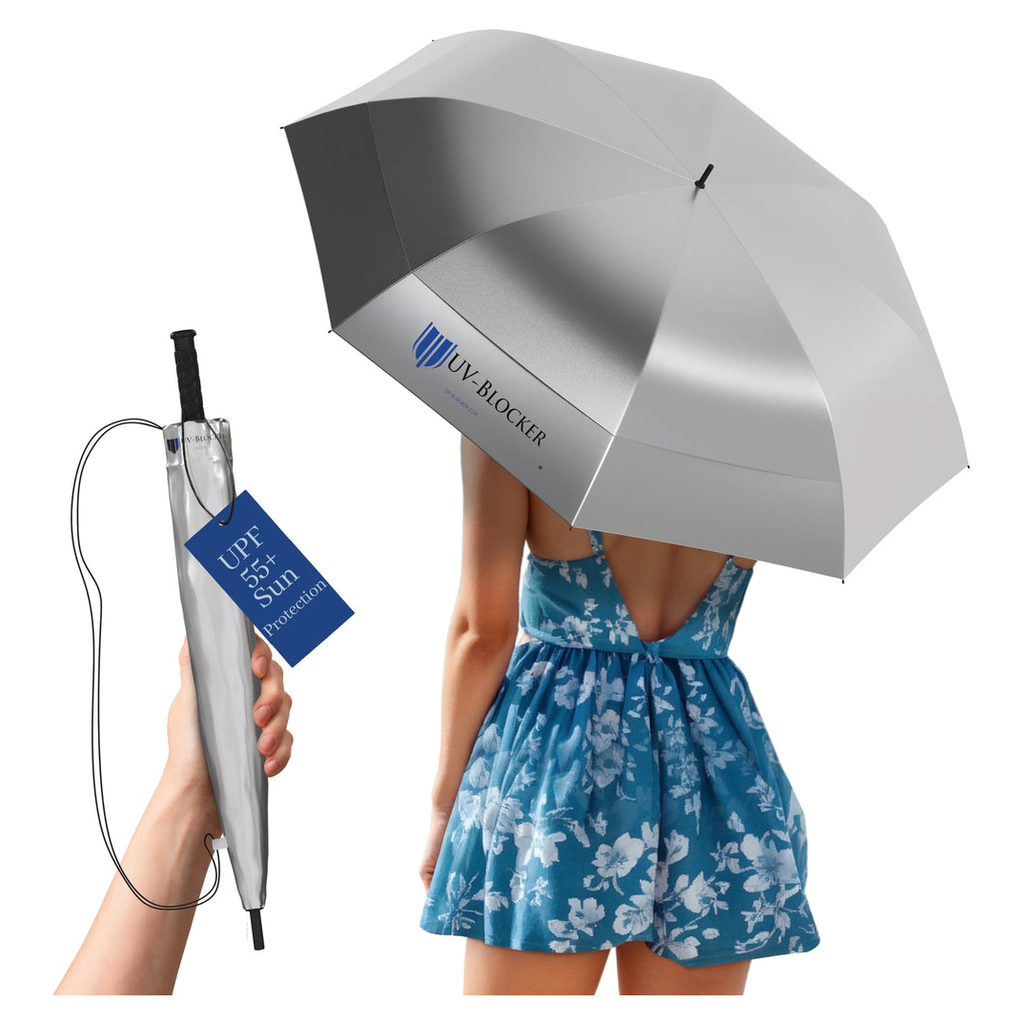
A compact UV umbrella made with UPF 50+ Solarteck® fabric covers the three most vulnerable actinic keratosis zones at once. The canopy shields the scalp, ears, and face the second it opens.
The material blocks 99% of UVA and UVB rays. It doesn't degrade in heat or wash off in humidity. The reflective exterior surface drops the ambient temperature underneath by 15 degrees Fahrenheit, reducing the sweat that ruins topical lotions. This MIF-approved umbrella serves as the foundation of the protocol.
Layer 2: UPF Clothing
Long-sleeve shirts, wide-brimmed hats, and UV-protective driving gloves provide consistent shielding. Woven UPF 50+ fabrics deliver a permanent barrier. Patients wearing protective sleeves don't have to worry about missing a spot on their forearms. Sun protection for outdoor workers relies heavily on these textile barriers during long shifts.
Layer 3: Broad-Spectrum SPF 50+
Sunscreen becomes the final perimeter defense rather than the primary shield. Patients focus application on the neck, lower face, and exposed gaps. A travel umbrella handles the heavy lifting, allowing the chemical or mineral block to cover the edges.
This specific sequence matters for long-term adherence. The umbrella acts as the single protection method that never degrades over a long afternoon. It requires zero messy reapplication. It immediately covers the highest-risk zones with zero effort after pressing the handle button.
Knowing the protocol layers builds a strong foundation. But actinic keratosis doesn't affect every anatomical region equally.
Actinic Keratosis Body Zone Protection Map
Each AK-prone zone requires specific protection layers because no single product covers every vulnerable area. The scalp, ears, hands, lips, and forearms each need targeted solutions.

| Body Zone | AK Risk Level | Protection Layer 1 | Protection Layer 2 | Protection Layer 3 |
|---|---|---|---|---|
| Scalp | Very High | UV umbrella shade | UPF hat or cap | Spray sunscreen SPF 50+ |
| Ears | Very High (most missed) | UV umbrella shade | Wide-brim hat coverage | Sunscreen (front and back) |
| Backs of Hands | Very High (top AK site for workers) | UV driving gloves | UV umbrella when walking | Sunscreen SPF 50+ |
| Lips | High | SPF 30+ lip balm | Wide hat brim shadow | Reapply after eating/drinking |
| Forearms | High | UPF 50+ sleeves | UV umbrella coverage | Sunscreen on exposed areas |
| Face | High | UV umbrella shade | Wide-brim hat | Broad-spectrum SPF 50+ |
Ears are the most commonly missed zone in daily routines. Sunscreen needs to cover the front, back, and tops of the ear cartilage. Skin cancer surgeons frequently operate on ear margins because patients rely on baseball caps that leave the sides exposed. A wide umbrella canopy combined with a dedicated physical block offers reliable defense.
The backs of hands rank as the number one actinic keratosis location for outdoor workers and frequent drivers. Hands rest constantly on steering wheels under direct windshield glare. Driving gloves solve the vehicle problem. Portable shade handles the walking segments.
Lips require dedicated SPF lip balm applied frequently throughout the day. Regular sunscreen lacks the thick formulation necessary to adhere to moist lip tissue. People lick their lips constantly, stripping away standard lotions in minutes. A physical hat brim shadow combined with a waxy SPF 30+ balm prevents the lower lip from developing severe precancerous damage.
Even with thorough zone-by-zone coverage, AK patients encounter UV sources they didn't expect.
What Hidden UV Sources Do Actinic Keratosis Patients Miss?
Car side windows, south-facing indoor glass, and UV reflected off water, sand, snow, and concrete all deliver meaningful UV exposure that AK patients frequently overlook.
Vehicle glass provides an inconsistent barrier. Front windshields block both UVA and UVB rays through their laminated construction. Side and rear windows typically block only UVB, freely transmitting UVA radiation onto the driver.
This explains why left-arm and left-hand actinic keratosis lesions are common in frequent drivers. Keeping UV driving gloves and a compact umbrella stored in the car console addresses this daily vulnerability.
Indoor environments pose hidden risks too. South-facing window glass transmits UVA radiation into living rooms and offices. Patients who sit near windows accumulate incidental exposure daily. Many people wonder can you get sunburn on a cloudy day without realizing indoor UVA exposure drives similar cellular damage over years.
Reflected UV and Altitude
Environmental reflection multiplies total exposure. The World Health Organization tracks reflection rates across terrains:
- Water reflects up to 80% of UV radiation back upward
- Snow reflects up to 80%, hitting the underside of the chin and nose
- Dry beach sand reflects 15-25%
- Urban concrete reflects about 10%
Altitude compounds the problem. UV radiation increases by approximately 10-12% for every 1,000 meters of altitude gain. Mountain residents face a meaningfully higher UV burden than coastal populations.
These hidden sources compound the daily risk. But for patients recovering from AK treatment, the vulnerability is even greater.
How Should You Protect Your Skin After Actinic Keratosis Treatment?
Post-treatment skin is significantly more photosensitive after cryotherapy, photodynamic therapy, topical 5-fluorouracil, or chemical peels, requiring strict shade-first protection during the healing period.
Dermatological treatments intentionally destroy damaged cells, leaving skin temporarily more vulnerable than before treatment began.
After Cryotherapy
Cryotherapy blasts precancerous spots with liquid nitrogen. This freezing process strips the treated areas of their protective stratum corneum barrier for one to two weeks. The skin turns red, blisters, and scabs. Applying sunscreens over a fresh cryotherapy blister causes burning and pain. Shade from a physical canopy avoids the need to rub lotions onto raw, healing tissue.
After Photodynamic Therapy (PDT)
PDT applies a light-sensitizing topical agent before exposing the skin to a specific blue or red light wavelength. Patients experience severe photosensitivity for 48 to 72 hours following the procedure. During this window, patients require complete UV avoidance. Even ambient light through a window can trigger a painful reaction.
After Topical Treatments
Topical chemotherapy treatments like 5-fluorouracil or immune-response modifiers like imiquimod create widespread skin inflammation. Patients apply these creams for several weeks. The treatment field becomes red, raw, and sensitive. Sunscreen application on these areas is painful and unreliable. The shade-first approach is far more comfortable during these treatment protocols.
A shade-first protocol remains essential during active healing. Once the skin barrier repairs, patients transition to the daily protocol outlined above. The sun protection after cancer treatment guide and the sun protection after Mohs surgery overview cover additional post-procedure strategies.
Frequently Asked Questions About Actinic Keratosis Sun Protection
These are the most common questions dermatology patients ask about living with actinic keratosis and managing UV exposure.
Can actinic keratosis turn into cancer?
Yes. The vast majority of squamous cell carcinomas originate from actinic keratoses. While individual lesion progression rates vary, untreated AK fields represent ongoing cancer risk. Understanding basal cell carcinoma sun protection and maintaining sun protection after melanoma share similar preventative foundations.
What SPF is best for actinic keratosis patients?
Broad-spectrum SPF 50+ is recommended as the minimum for AK patients. It should be applied as the third layer after shade and UPF clothing in a comprehensive protection protocol.
Do actinic keratosis patients need sun protection indoors?
Yes, if near windows. Standard glass transmits UVA radiation, which contributes to AK development. South-facing windows and car side windows are the primary indoor exposure sources.
How do you protect your scalp from actinic keratosis recurrence?
A UV-blocking umbrella combined with a UPF hat provides the most reliable scalp protection. Spray sunscreen SPF 50+ covers areas where hair is thin or absent.
Is sun protection different after cryotherapy for AK?
Yes. Cryotherapy-treated skin lacks its normal protective barrier for 1-2 weeks. Shade-based protection is preferred during healing because sunscreen application on raw skin is painful and unreliable.
Are tanning beds safe if you have actinic keratosis?
No. Tanning beds emit concentrated UV radiation that accelerates AK development and progression. The American Academy of Dermatology recommends all AK patients avoid tanning beds entirely.
Conclusion
Standard medical advice underestimates the difficulty of daily sunscreen adherence. Actinic keratosis patients need practical solutions that fit into real routines. Prioritizing physical barriers eliminates the weakest links in sunscreen-only strategies:
- Shade first covers the scalp, ears, and face without reapplication
- UPF clothing protects forearms and hands reliably all day
- SPF 50+ fills in the gaps as the final defense layer
Put a UV umbrella by the door. This single behavioral shift changes the entire daily routine.
The UV-Blocker compact umbrella provides a practical daily-carry solution. Featuring Solarteck® fabric and official MIF approval, it delivers reliable shade that never degrades. It's also HSA/FSA eligible, making it an accessible addition to any actinic keratosis sun protection strategy.
Actinic Keratosis Sun Protection: Frequently Asked Questions
Why is sunscreen often insufficient for managing Actinic Keratosis (AK) on a daily basis?
Clinical studies show that most individuals apply only 25% to 50% of the recommended amount of sunscreen, leading to patchy coverage and cumulative DNA damage. Integrating a UV-Blocker umbrella with Solarteck® technology provides a constant physical barrier that blocks 99% of UVA and UVB rays without the risk of product degradation. This layer of protection is vital for AK patients because it eliminates the compliance issues associated with the two-hour reapplication rule.
What specific benefits does a UPF 50+ rating provide for pre-cancerous skin conditions?
A UPF 50+ rating is the highest standard for sun-protective fabrics, signifying that the material allows less than 2% of UV radiation to penetrate. For those with Actinic Keratosis, using UV-Blocker tools with this rating ensures that 1/50th or less of the sun's burning and aging rays reach sensitive skin areas. This rigorous standard is recommended for preventing the progression of AK into invasive squamous cell carcinoma.
How does reflected UV radiation impact the recurrence of Actinic Keratosis lesions?
Surfaces like concrete, sand, and water can reflect up to 15% to 25% of UV rays back onto the face and neck, bypassing the protection of standard wide-brimmed hats. UV-Blocker umbrellas are specifically engineered to mitigate this indirect exposure, a feature that has earned them approval from the Melanoma International Foundation. This comprehensive shielding is critical for AK patients who must minimize their total UV dose to manage chronic actinic damage.
Why is broad-spectrum protection essential for a comprehensive AK protocol?
While UVB rays are the primary cause of sunburn, UVA rays make up 95% of the UV radiation reaching Earth and penetrate deep into the skin to cause long-term cellular mutations. UV-Blocker umbrellas utilize Solarteck® technology to ensure high-level broad-spectrum defense against both wavebands simultaneously. This dual-layer approach is a practical necessity for individuals who have already reached their threshold of sun tolerance and must prevent further precancerous developments.
Patients with actinic keratosis undergoing cryotherapy, laser treatments, or chemical peels need physical UV protection during recovery. Learn how UV-Blocker umbrellas are used in cosmetic dermatology settings to protect patients during procedures and recovery — with clinically-backed UPF 50+ UV blocking.
Frequently Asked Questions
How does this skin condition interact with UV exposure?
Many skin conditions are directly triggered or worsened by ultraviolet radiation. UV light causes DNA damage in skin cells, triggers inflammatory cascades, and can activate dormant conditions. For immune-mediated conditions, UV exposure can disrupt immune regulation and cause flares. Understanding your specific UV sensitivity is critical for effective condition management.
What level of sun protection do dermatologists recommend for this condition?
Dermatologists typically recommend broad-spectrum SPF 50+ sunscreen for patients with UV-sensitive skin conditions, combined with physical sun protection: UPF 50+ clothing, wide-brim hats, and shade during peak UV hours (10am–4pm). For conditions like xeroderma pigmentosum or porphyria, near-total sun avoidance is required.
Are certain UV wavelengths more problematic than others for this condition?
Yes. UVB (290–320nm) is primarily responsible for sunburn and direct DNA damage. UVA (320–400nm) penetrates deeper, causing photoaging and activating certain photosensitive conditions. Most photosensitive skin disorders respond to specific wavelength ranges. A phototest by a dermatologist can identify your exact sensitivity spectrum.
Can a UV-blocking umbrella replace sunscreen for sensitive skin conditions?
No — a UV-blocking umbrella complements but doesn't replace sunscreen. Umbrellas block direct overhead UV but not reflected UV from surfaces (sand, water, concrete). The combination of SPF 50+ sunscreen + UPF 50+ umbrella reduces UV exposure by over 99% and is recommended for high-sensitivity patients. UV-Blocker umbrellas are dermatologist-recommended.
How do I find a dermatologist experienced with photosensitive conditions?
Look for board-certified dermatologists with a subspecialty in photodermatology or pigmented skin disorders. The American Academy of Dermatology (AAD) has a physician finder at aad.org. For rare conditions like porphyria, seek specialists at academic medical centers. Some conditions require coordination between dermatology, hematology, or rheumatology.
Expert Dermatology Recommendations for Sun-Sensitive Skin
- Use a UV index app daily and plan outdoor activities around low UV periods — typically before 10am and after 4pm
- Test new sunscreen formulations on a small patch first — some ingredients trigger reactions in sensitive skin
- Invest in UV-protective windows and car film — indoor UV exposure through glass is underestimated
- Carry a UV-blocking umbrella for everyday use — it's the easiest way to create personal shade on demand
- Photograph any skin changes and keep a symptom log to share with your dermatologist
- Wear sun-protective clothing rated UPF 50+ — regular clothing often provides only UPF 6–15