


TL;DR: What You Need to Know About Patio Umbrella UV Protection
- Standard patio umbrellas block only 50-77% of UV rays—up to half of harmful radiation still reaches your skin
- 63% of patio umbrellas use vague "UV resistant" claims with zero verified testing data
- Ground reflection from concrete (8-12%), pools (10%), and sand (18%) adds significant UV exposure from below
- Only umbrellas with stated UPF ratings (not just "UV resistant") provide verified protection
- UPF 50+ is the gold standard, blocking 98% of UV rays—look for Sunbrella or solution-dyed acrylic fabric
- Always layer protection: quality patio umbrella + sunscreen + UV clothing for complete coverage
You're hosting a backyard barbecue, comfortably seated under your patio umbrella with a cold drink in hand. The umbrella casts a nice shadow over your shoulders. You feel protected from the sun. But when you check your arms that evening, they're pink and tender. What happened?
Here's the uncomfortable truth: most homeowners assume shade equals UV protection. Research tells a very different story. According to a 2012 study published in JAMA Dermatology, standard umbrella fabrics block only 50-77% of UV rays depending on the fabric type and color. That means up to half of the harmful ultraviolet radiation might be reaching your skin even while you're sitting in the shade.
And that's just the beginning. Your concrete patio, pool water, and even the umbrella fabric itself all play a role in your total UV exposure.
This guide answers the question "do patio umbrellas block UV" with real data—explaining exactly how much UV your patio umbrella actually blocks, what those "UV resistant" labels really mean (spoiler: probably not what you think), and what you can do to genuinely protect yourself and your family in your backyard.
What Does "UV Protection" Actually Mean for Patio Umbrellas?
UPF ratings measure how much UV fabric blocks—but most patio umbrellas don't carry any verified UPF rating at all, leaving you guessing about your actual protection level.
Before diving into the data, let's establish what UV protection actually means when we're talking about outdoor fabrics.
UPF (Ultraviolet Protection Factor) is the standard measurement for how much UV radiation a fabric blocks. It's similar to SPF for sunscreen, but there's a key difference: SPF measures protection for your skin when you apply sunscreen, while UPF measures the fabric itself.
Here's what the UPF numbers actually mean:
| UPF Rating | UV Rays Blocked | Protection Level |
|---|---|---|
| UPF 15-24 | 93-95% | Good |
| UPF 25-39 | 96-97% | Very Good |
| UPF 40-50+ | 98%+ | Excellent |
When a fabric has a UPF rating of 50, it means only 1/50th (2%) of UV radiation passes through. That's meaningful protection. But here's the critical distinction most homeowners miss:
"UV resistant" does NOT mean UPF rated.
When a patio umbrella label says "UV resistant," it typically means the fabric won't fade from sun exposure. It says nothing about how much UV passes through to your skin. The term protects the fabric, not you.
Only a stated UPF number—like UPF 30 or UPF 50+—indicates actual measured protection against UV rays. If your patio umbrella doesn't display a specific UPF rating, assume it provides minimal UV protection.
For a deeper dive into how UPF ratings work, check out our guide on UPF 50 Explained: What The Rating Means For Sun Protection.

Do Patio Umbrellas Block UV Effectively? The Research Says No
Do patio umbrellas block UV effectively? Standard patio umbrella fabrics block only 50-77% of UV rays according to research, meaning up to half of harmful radiation still reaches your skin even in the shade.

Let's look at what the research actually shows.
A 2012 study in JAMA Dermatology tested standard umbrella fabrics and found they reduced UV exposure by only 50-77%, depending on the fabric type and color. That means 23-50% of UV radiation was still reaching the skin of people sitting underneath.
For comparison, umbrellas specifically designed with UV-blocking fabric reduced exposure by over 95%—a massive difference.
But the marketing claims are even more concerning. A 2024 study published in PMC evaluated 19 patio umbrella products from major brands and found:
- Only 26.3% (5 out of 19) stated any specific UPF value
- 63.2% used vague terms like "UV resistant" or "sun resistant"
- 0% had validated testing data when researchers requested verification
Let me repeat that: zero percent of patio umbrellas in the study had validated UPF testing data available. When researchers contacted manufacturers asking for test documentation to support their UV claims, none could provide it.
This doesn't mean all patio umbrella manufacturers are being deceptive. It means the industry lacks standardization, and terms like "UV resistant" have no legal definition when it comes to protecting human skin. The term simply indicates the fabric resists fading—which protects your investment in the umbrella, but not your health.
So when you see a patio umbrella marketed as "UV resistant" without a stated UPF rating, assume it provides shade from visible light but minimal verified protection from UV radiation.
Does Patio Umbrella Color Affect UV Protection?
Black patio umbrellas block the most UV (around 90%), while white blocks the least (about 75%)—but color alone can't match the 98%+ protection of properly UPF-rated fabrics.
This is probably the most common question people ask about patio umbrella sun protection, and the answer is nuanced.
Yes, color matters. Darker colors generally block more UV than lighter colors:
- Black umbrellas (without special UV coating) block at least 90% of UV radiation
- White umbrellas were the least effective in testing, blocking only about 75% of UV
That's a 15% difference, which is significant. But here's what most color-focused articles miss: even black, which performs best among standard colors, still lets through 10% or more of UV radiation. Compare that to a properly UPF-rated fabric that blocks 98%+.
The Temperature Trade-Off
Black absorbs more heat, so a black patio umbrella can feel noticeably warmer underneath than a white one. This creates a dilemma: the color that blocks the most UV also creates the least comfortable shade.
The ideal solution is silver or reflective coatings on the outer surface. These reflect both UV radiation and heat away, giving you the best of both worlds—maximum UV blocking without the heat buildup. This is why professional-grade UV umbrellas often feature silver outer surfaces.
For more on how color affects umbrella protection, read our complete guide on What Color Umbrella Is Best For Sun Protection.
The bottom line on whether patio umbrellas block UV based on color: if you're choosing between standard patio umbrella colors, go darker. But don't expect color choice alone to provide the same protection as verified UPF-rated fabric.
Why Can You Still Get Burned Under Your Patio Umbrella?
UV rays bounce off concrete (8-12%), pool water (up to 10%), and sand (up to 18%), which is why you can get burned under a patio umbrella—reflected UV attacks from below while direct UV leaks through from above.

Even if your patio umbrella blocked 100% of direct UV (which standard ones don't), you'd still face significant UV exposure from reflected and scattered radiation. This is the part of patio sun safety that most people never consider.
According to research on UV radiation albedo and reflectance, here's how much UV common backyard surfaces reflect back up at you:
| Surface | UV Reflection |
|---|---|
| Dry sand | 15-18% |
| Concrete/pavers | 8-12% |
| Pool water | 3-10% |
| White paint | ~22% |
| Grass | 2-5% |
Notice that grass reflects the least UV. If you're concerned about UV exposure, positioning your patio umbrella over grass rather than concrete makes a meaningful difference.
The Cumulative Exposure Problem
When you sit under a patio umbrella, UV radiation hits you from multiple directions:
- From above (direct): Whatever percentage passes through your umbrella fabric
- From below (reflected): UV bouncing off your patio surface
- From all directions (scattered): Atmospheric scattering contributes 10-20% of total UV exposure
A study on beach umbrella UV exposure found that someone sitting under a solitary standard beach umbrella can be exposed to up to 84% of total UV radiation despite feeling adequately covered. Your backyard patio setup faces similar physics.
If your patio features concrete surfaces plus a pool, you're in a high-reflection environment. Even with an umbrella overhead, reflected UV is hitting your skin from below and scattered UV from the sides.
This is why dermatologists recommend wearing sunscreen even in the shade—and why understanding indirect UV exposure matters for genuine sun safety.
What Should You Look for When Buying a UV-Blocking Patio Umbrella?
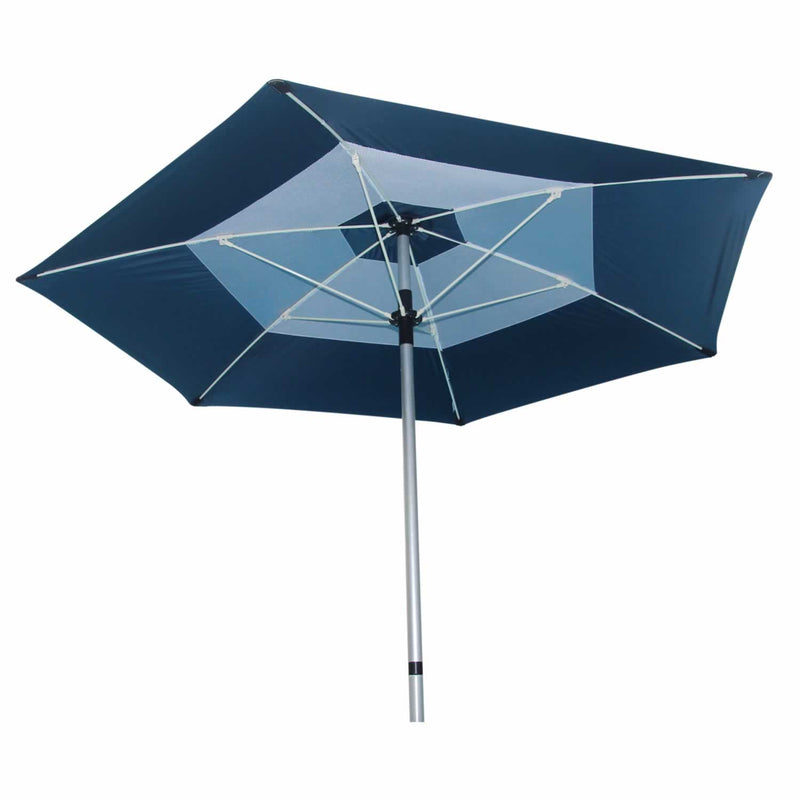
When shopping for a UV-blocking patio umbrella, demand a specific UPF rating (50+ preferred), look for Sunbrella or solution-dyed acrylic fabric, and verify the manufacturer can provide testing documentation.
If you're in the market for a patio umbrella that actually protects against UV, here's your checklist:
The UPF Label Is Non-Negotiable
- Look for a stated UPF number, not just "UV resistant"
- UPF 50+ is the gold standard (blocks 98% of UV)
- If a manufacturer claims UV protection but won't specify UPF, be skeptical
- Consider asking for testing documentation—legitimate manufacturers will have it
Fabric Type Matters More Than Brand Name
Not all patio umbrella fabrics are created equal:
Sunbrella (solution-dyed acrylic): This is the premium standard. Sunbrella fabric carries the Skin Cancer Foundation Seal of Recommendation and blocks 98-99% of UV rays. It's fade-resistant, durable, and genuinely protective. Expect to pay more for it.
Solution-dyed acrylic (generic): The color is embedded throughout the fiber rather than just applied to the surface. This improves both fade resistance and UV blocking compared to standard polyester.
Polyester with UV coating: Can achieve high UPF ratings initially, but the coating can degrade over time with sun and weather exposure. Performance diminishes as the coating wears.
Standard polyester/canvas: Provides shade but minimal verified UV protection. This is what most budget patio umbrellas use.
Size and Positioning Considerations
- Larger isn't always better if the fabric is poor quality
- Canopy tilt mechanisms help you block low-angle sun during morning and evening
- Position matters: your umbrella should block the sun's current angle, not just provide general overhead coverage
The honest truth: Quality UV-blocking patio umbrellas with Sunbrella or equivalent fabric cost significantly more than standard options. A truly protective patio umbrella might run $300-800+ compared to $50-150 for standard options. You're paying for certified fabric and genuine UV protection.
For a deeper understanding of how UV-blocking fabrics work, read The Science of Sun Protection: How Umbrella Fabrics Block UV.
How Can You Maximize UV Protection in Your Backyard?
Maximize backyard UV protection by combining a UPF-rated patio umbrella with sunscreen, UV clothing, grass ground cover instead of concrete, and personal UV umbrellas for those with heightened sensitivity.
Real UV safety in your backyard isn't about any single solution—it's about layering multiple protections.
Layer Your Protection
- Quality patio umbrella with verified UPF: Your first line of defense. Look for UPF 50+ rated fabric like Sunbrella.
- Sunscreen on exposed skin: Apply broad-spectrum SPF 30+ and reapply every 2 hours, even in the shade. This catches the UV that passes through your umbrella and reflects from surfaces.
- UV-protective clothing: For extended outdoor time, UPF-rated shirts and hats provide reliable protection without reapplication.
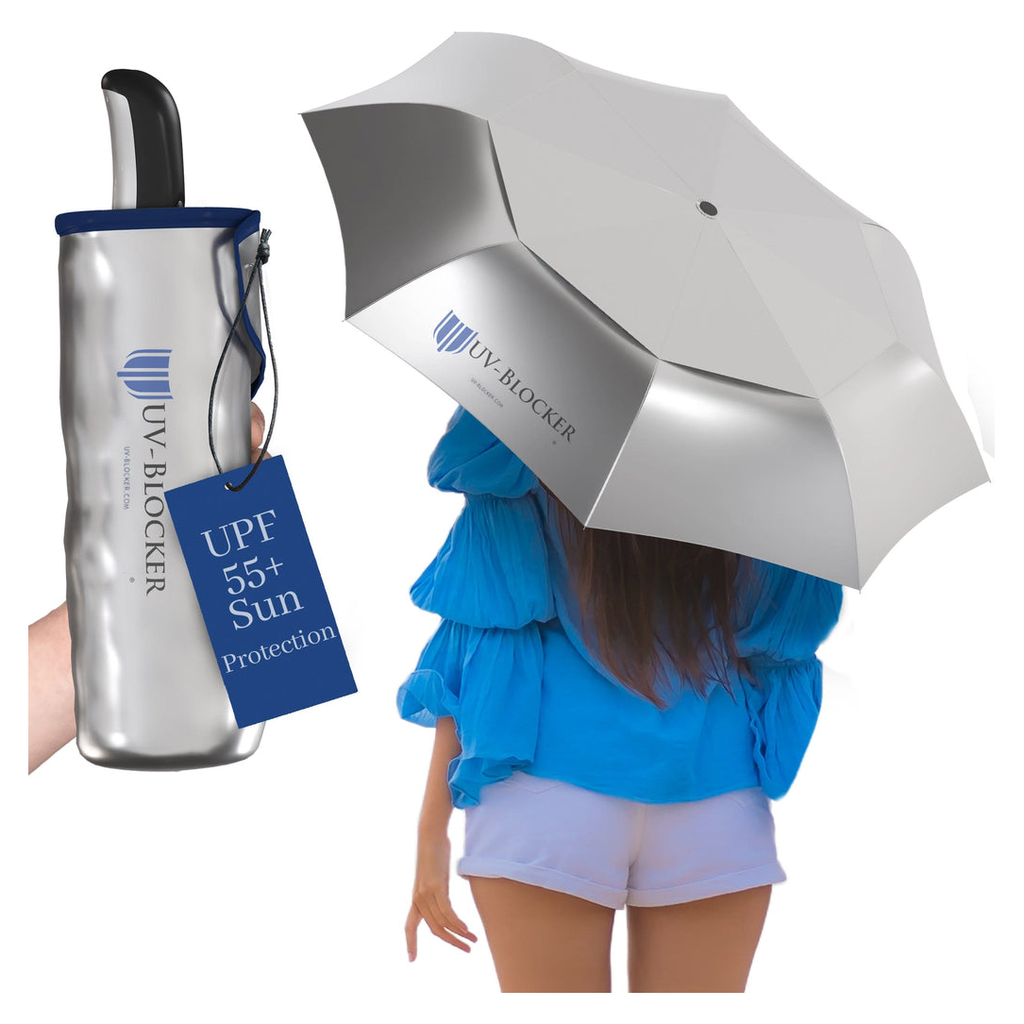
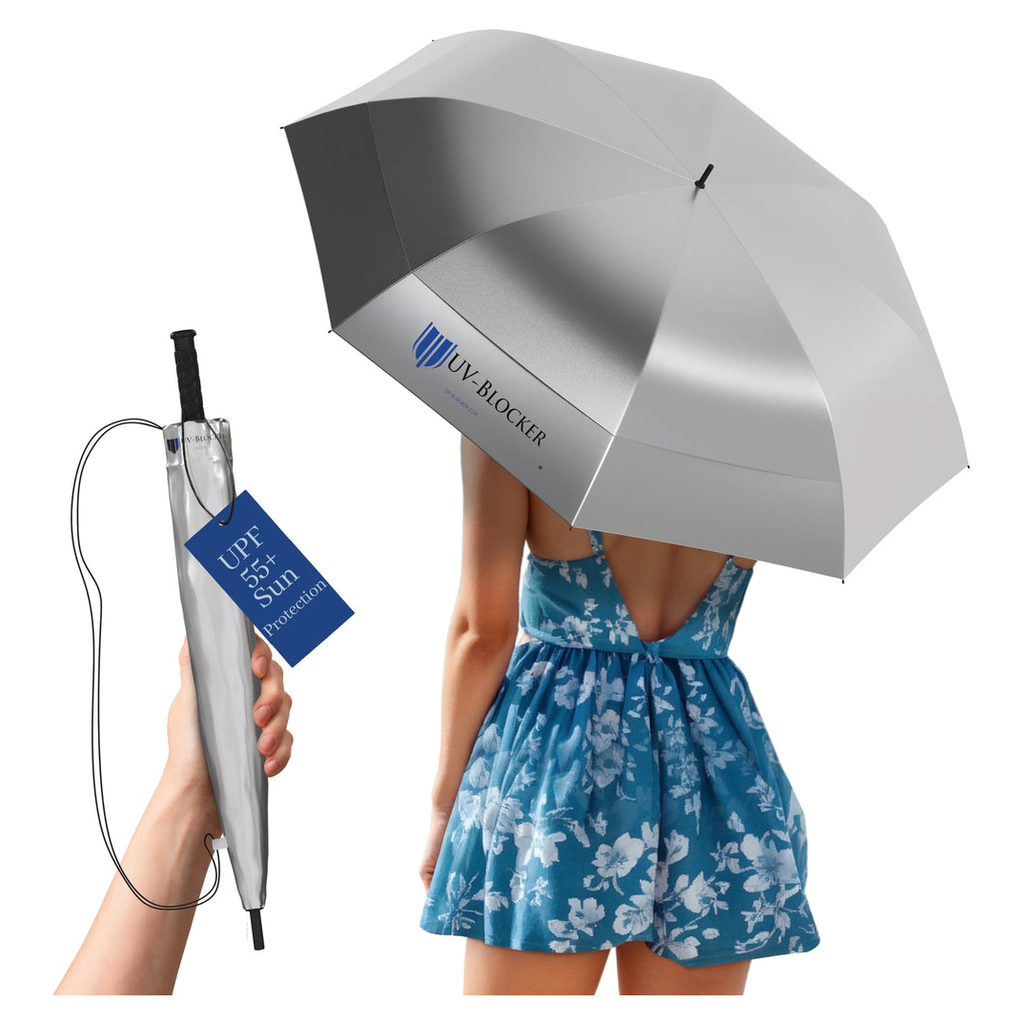
- Personal UV umbrella (for high-risk individuals): If you're a melanoma survivor, have lupus, take photosensitizing medications, or simply need maximum protection, a personal UPF 50+ umbrella provides additional coverage you control. You can position it to block low-angle sun that your patio umbrella misses.
Optimize Your Environment
- Ground cover matters: Grass reflects only 2-5% of UV compared to concrete's 8-12%. If possible, position your seating area over grass or add outdoor rugs to reduce reflection.
- Pool positioning: Water reflects significant UV. During peak UV hours (10am-4pm), consider positioning your shade setup away from direct pool proximity.
- Time your exposure: The UV index matters more than how hot it feels. Morning and evening hours (before 10am, after 4pm) have lower UV levels. Check the UV index on your phone's weather app before planning extended outdoor time.
For Those Who Need Maximum Protection
Some individuals—melanoma survivors, lupus patients, people on certain medications—need more protection than a standard patio umbrella can provide. For these situations, the American Academy of Dermatology recommends layering multiple forms of protection.
Frequently Asked Questions About Patio Umbrella UV Protection
Is shade from a patio umbrella enough to prevent sunburn?
Not necessarily. Standard patio umbrella fabrics block only 50-77% of UV rays, and reflected UV from concrete, pool water, and other surfaces adds to your exposure. You can absolutely get sunburned under a patio umbrella, especially during peak UV hours between 10am and 4pm.
What UPF rating should a patio umbrella have?
UPF 50+ is the gold standard, blocking 98% of UV rays. If your patio umbrella doesn't display a specific UPF rating—just vague terms like "UV resistant"—assume it provides minimal verified UV protection. Legitimate UV protection requires actual testing and a stated rating.
Do all outdoor umbrellas block UV rays?
No. All umbrellas provide shade from visible light, but most outdoor umbrellas block far less UV than their marketing suggests. A 2024 research study found that 63% of patio umbrellas made vague UV claims like "UV resistant" without any verified testing data. Only umbrellas with stated UPF ratings have measured, verified UV protection.
Can I use sunscreen under a patio umbrella?
Yes, and you should. Sunscreen provides a second layer of defense against the UV radiation that passes through your umbrella fabric and reflects up from your patio, pool, and other surfaces. Apply broad-spectrum SPF 30+ and reapply every 2 hours for continuous protection.
Is a black or white patio umbrella better for UV protection?
Black blocks more UV (around 90%) than white (around 75%). However, neither standard color matches the 98%+ protection of properly UPF-rated fabrics. If you're choosing between standard patio umbrella colors, go darker—but recognize that color is secondary to fabric quality and UPF certification.
The Bottom Line on Patio Umbrella UV Protection
Most patio umbrellas provide significantly less UV protection than homeowners assume—verify UPF ratings, layer with sunscreen, and consider personal UV umbrellas if you need maximum protection.
So, do patio umbrellas block UV? Here's what we've learned:
- Standard patio umbrellas block only 50-77% of UV rays according to research—far less than most people assume
- 63% of patio umbrella "UV claims" are vague and unverified—"UV resistant" typically means the fabric won't fade, not that it protects your skin
- Ground reflection can expose you to up to 84% of total UV even under an umbrella—concrete, pools, and light-colored surfaces bounce UV back at you
- True UV protection requires verified UPF ratings—look for UPF 50+ and ask for testing documentation
What You Should Do Now
- Check your current patio umbrella for a UPF rating. If it doesn't have one, assume it provides minimal UV protection.
- Consider upgrading to Sunbrella or another verified UPF-rated fabric if sun protection matters to you.
- Always use sunscreen as backup protection when spending extended time outdoors, even in the shade.
- Layer your defenses with UV clothing, timing your exposure, and positioning over grass instead of concrete when possible.
- For high-risk individuals, consider supplementing patio shade with a personal UPF 50+ umbrella you can position as needed.
Shade feels protective. Sitting under your patio umbrella on a sunny afternoon, you feel cooler and more comfortable than standing in direct sun. That comfort can be deceiving.
Feeling safe and being safe aren't the same thing. Now you know the real answer to "do patio umbrellas block UV," what to look for, what questions to ask, and how to genuinely protect yourself in your backyard.
Need maximum UV protection? Explore our collection of UPF 50+ umbrellas recommended by dermatologists and approved by the Melanoma International Foundation.
Do Patio Umbrellas Block UV? The Truth About Backyard Sun Protection: Frequently Asked Questions
Do standard patio umbrellas provide adequate protection from UVA and UVB rays?
Most standard patio umbrellas only offer an estimated SPF of 3 to 10, allowing up to 30% of harmful UV radiation to penetrate the fabric. In contrast, UV-Blocker umbrellas utilize Solarteck® technology to achieve a UPF 50+ rating, which is clinically proven to block 99% of both UVA and UVB rays. This specialized fabric provides a much higher level of safety than traditional canvas or polyester alternatives.
Can you still get a sunburn while sitting underneath a patio umbrella?
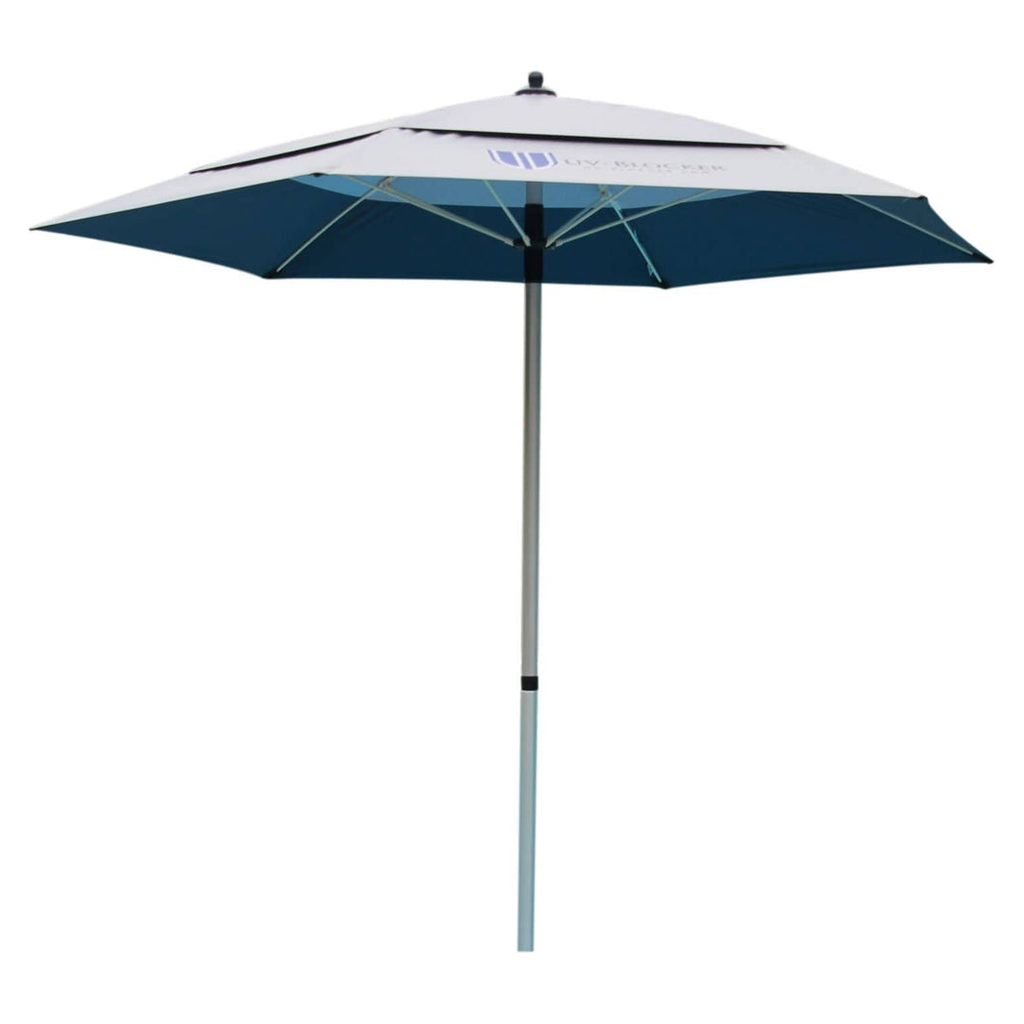
Yes, because reflected UV radiation from surfaces like concrete, sand, or water can reach your skin even when you are shaded from direct sunlight. To mitigate this risk, UV-Blocker umbrellas feature a high-reflectivity outer layer and a double-canopy design that blocks 99% of direct rays while reducing ambient heat. The Melanoma International Foundation recommends utilizing high-UPF shade structures as part of a comprehensive sun safety strategy.
What is the significance of a UPF 50+ rating for backyard shade products?
A UPF 50+ rating is the highest possible certification for fabric, indicating that it allows less than 2% of UV radiation to pass through. UV-Blocker products are engineered to meet these rigorous standards, ensuring that 49 out of 50 units of UV radiation are blocked. This level of protection, supported by Solarteck® fabric, is essential for individuals with sun-sensitive skin or those at higher risk for skin cancer.
How does Solarteck® technology differ from traditional umbrella fabrics?
While traditional umbrellas rely on thick weaving that can still be porous to light, Solarteck® technology uses a specialized reflective coating to bounce UV energy away from the user. UV-Blocker umbrellas featuring this technology are approved by the Melanoma International Foundation for their superior ability to prevent DNA damage caused by solar exposure. This ensures the protection remains consistent over time, whereas standard fabrics may degrade and lose their limited UV resistance.