

Doctors write 26.4 million furosemide prescriptions in the US every year. It's one of the most commonly prescribed medications in the country. And yet? There's not a single dedicated guide to its sun sensitivity risk anywhere online.
Search for "furosemide sun sensitivity" and you'll find listicles that mention it in one bullet point alongside 30 other drugs. If you've noticed an unusual sunburn after starting Lasix, that's not especially helpful.
TLDR:
- Furosemide causes phototoxic sun reactions in 0.1-1% of patients, triggered by UVA radiation
- The mechanism involves reactive oxygen species (ROS) generation that damages skin cells in a dose-dependent pattern
- Furosemide does not carry the chronic skin cancer risk that HCTZ does (SCC IRR 0.94 vs. HCTZ's OR 7.38)
- Elderly heart failure patients on long-term furosemide face the highest risk, with prescription rates reaching 42.7% at age 95+
- A layered protection approach combining a UPF 50+ umbrella, UPF clothing, sunscreen, and extra hydration is the recommended protocol
Does Furosemide (Lasix) Cause Sun Sensitivity?
Yes, furosemide triggers phototoxic sun reactions in roughly 0.1-1% of patients because it absorbs UVA radiation.
There's an important distinction here. This is a phototoxic reaction, not a photoallergic one. Phototoxic means it's dose-dependent and doesn't require any prior sensitization. Get enough furosemide in your bloodstream, add enough UV, and the reaction can happen to anyone. Photoallergic reactions work differently. They're immune-mediated, rarer, and need a previous exposure to "prime" the immune system.
The FDA prescribing information lists photosensitivity as a recognized adverse reaction. At 0.1-1% incidence, it's classified as "uncommon" on the standard frequency scale. Not rare, but also not something most patients will deal with.
Why does furosemide do this? It comes down to chemistry. Furosemide has a sulfonamide backbone, and that molecular structure is the same reason HCTZ, certain antibiotics, and other sulfonamide-based drugs cause photosensitivity too. If you're taking more than one sulfonamide-derived medication, the photosensitivity risk stacks. Worth reviewing your full med list with a pharmacist. For a broader look at which drugs cause sun reactions, check this guide to medications that cause sun sensitivity.
How Does Furosemide Cause a Phototoxic Reaction?
UVA radiation activates furosemide molecules in the skin, generating reactive oxygen species that damage cell membranes and DNA.
In plain language: UVA wavelengths (320-400nm) go deeper into skin than UVB does. They pass through clouds. They come through car windows. When those wavelengths reach furosemide circulating in your skin's blood supply, the drug soaks up that energy and becomes chemically reactive.
What happens next isn't pretty. In vitro research on human skin cells has traced the damage step by step:
- Singlet oxygen generation breaks down cell membrane lipids (lipid peroxidation)
- Superoxide radicals fragment DNA strands
- Mitochondrial depolarization disrupts the cell's energy production
Here's the key: the damage scales with dose. More furosemide in the blood means more molecules available to absorb UV and generate ROS. Someone on 20mg faces less risk than someone on 80mg or 160mg. It's a chemical reaction, not an allergy. Your immune system isn't involved. Given enough drug plus enough sunlight, it can happen to anyone.
On the surface, these reactions look like bad sunburn. They show up within hours, stick to sun-exposed areas, and stop sharply at clothing lines. But what's happening at the cellular level is different from a regular sunburn, which is why the sun habits that worked fine before Lasix might not cut it anymore.
Is Furosemide as Dangerous as HCTZ for Sun Exposure?
No. Furosemide does not carry the elevated chronic skin cancer risk that HCTZ does, despite both being sulfonamide diuretics.
This might be the most reassuring thing in this entire article, and it's something no other guide online actually covers.
The ROS Data
Researchers tested both drugs on human skin cells, exposing them to UVA radiation and measuring how many reactive oxygen species each drug generated. The gap was dramatic. HCTZ cranked out roughly 150% more ROS than untreated cells. Furosemide? About 30% more. That's a 5x difference in oxidative stress, and over years of daily use, it adds up to very different levels of cumulative DNA damage.
The Population Data
The population-level data tells the same story. A Danish study looked at 8,244 cancer cases against 32,412 matched controls. For furosemide users, they found a BCC incidence rate ratio of 0.91 and an SCC rate ratio of 0.94. Neither was statistically significant. When the IRR sits below 1.0, it means the drug isn't increasing risk at all.
Now look at HCTZ. A 2018 JAAD study found an odds ratio of 7.38 for squamous cell carcinoma in long-term HCTZ users. That number was alarming enough that the European Medicines Agency put out a formal warning. The FDA updated HCTZ's labeling too.
Furosemide vs. HCTZ Comparison

| Factor | Furosemide (Lasix) | Hydrochlorothiazide (HCTZ) |
|---|---|---|
| Drug Class | Loop diuretic | Thiazide diuretic |
| Chemical Base | Sulfonamide-derived | Sulfonamide-derived |
| Photosensitivity Type | Phototoxic | Phototoxic |
| Incidence | 0.1-1% | 1-10% |
| ROS Increase (in vitro) | ~30% | ~150% |
| SCC Risk (population data) | IRR 0.94 (no significant increase) | OR 7.38 (significant increase) |
| BCC Risk (population data) | IRR 0.91 (no significant increase) | OR 1.15 (modest increase) |
| Regulatory Warning | None | EMA + FDA warning |
So what does all this mean? Furosemide photosensitivity is real, and protecting against acute reactions is smart. But HCTZ-level cancer anxiety? That's not warranted here. Getting the risk right matters, because furosemide keeps millions of heart failure patients alive. Nobody should stop taking it out of misplaced sun fear.
Who Is Most at Risk for Furosemide Photosensitivity?
Elderly heart failure patients on long-term furosemide face the highest photosensitivity risk, particularly those over eighty-five.
Prescription rates rise sharply with age: 20.4% at ages 81-85, 35.6% at 91-95, and 42.7% at 95+.
Heart Failure Patients
About 50.9% of furosemide prescriptions go to heart failure patients. And unlike a 10-day course of antibiotics, this isn't a medication anyone stops taking. It's a lifetime drug. That means years or decades of daily use, all while carrying a photosensitizing compound in the bloodstream. Stopping isn't realistic when the drug is the thing keeping fluid out of the lungs.
The Age Factor
There's an unfortunate overlap here: the people most likely to be on furosemide are also the most vulnerable to UV. Older skin makes less melanin, thins out, and repairs DNA damage more slowly. Stack that on top of the highest furosemide prescription rates of any age group, and the risk compounds fast. There's a dedicated sun protection guide for seniors that goes deeper on this.
CKD and Pseudoporphyria
Chronic kidney disease patients represent approximately 3% of furosemide use, but they face a unique complication: pseudoporphyria. One documented case involved a 76-year-old male with stage 4 CKD who developed porphyria-like skin lesions with ulceration while taking furosemide. Pseudoporphyria mimics porphyria cutanea tarda (fragile skin, vesicles on dorsal hands, potential scarring) but without the elevated porphyrin levels. CKD patients on furosemide who develop unexplained skin fragility in sun-exposed areas should report it promptly.
Cirrhosis Patients
Cirrhosis patients take furosemide to manage ascites (fluid buildup in the abdomen). Since the liver is already compromised, drug metabolism slows down, and furosemide can stay at photosensitizing levels in the blood longer than normal.
What Do Furosemide Sun Reactions Look Like?
Furosemide phototoxic reactions look like exaggerated sunburn: intense redness, pain, and potential blistering confined to sun-exposed skin areas, appearing within hours of UV exposure.
The telltale sign: redness and burning that doesn't match how long you were actually outside. Twenty minutes in the garden, and the skin reacts like it was two hours at the beach. The burn shows up on the face, neck, forearms, and backs of the hands, with crisp lines wherever clothing was covering skin.
Progression in Severe Cases
When the dose is higher or UV exposure goes on longer, things can escalate past basic redness:
- Vesicles: fluid-filled blisters on affected skin
- Edema: swelling in sun-exposed areas
- Desquamation: peeling of damaged skin layers
Pseudoporphyria Presentation
CKD patients sometimes get a different kind of reaction altogether. Pseudoporphyria makes skin on the backs of the hands fragile and easy to tear. Blisters can form with almost no trauma. It looks a lot like porphyria cutanea tarda, except blood and urine porphyrin levels come back normal. If you're on furosemide with kidney disease and you notice unexplained skin fragility or blistering where the sun hits, that's worth a call to your prescriber.
When to Contact a Prescriber
- Blistering or vesicle formation after sun exposure
- Reactions appearing after minimal outdoor time
- Widespread redness extending beyond typical sun-exposed areas
- Any skin changes in patients with CKD or impaired kidney function
- Reactions that worsen despite sun protection measures
The Best Protection Protocol for Furosemide Patients
Protection for furosemide patients works best in layers: a UPF 50+ umbrella overhead, UPF clothing on the body, and SPF 30+ broad-spectrum sunscreen on whatever skin is still exposed.
Layer 1: Physical UV Barrier
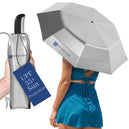
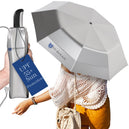
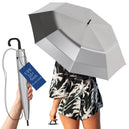
A UPF 50+ umbrella blocks UV overhead without any chemicals touching the skin. That's a real advantage for anyone whose skin is already photosensitized. UV-Blocker's compact model has been independently tested to AATCC TM183-2020 standards: 100% UV-B blocked, 99.97% UV-A blocked. The Solarteck reflective coating also drops the temperature underneath by 15 degrees F, which matters when you're on a diuretic and heat is already working against you.
Layer 2: UPF Clothing
Long sleeves, a wide-brim hat, and long pants cover the spots that burn first: forearms, neck, and face. Fabrics rated UPF 50+ are ideal, but even without a rating, tightly woven dark-colored clothing does a decent job blocking UV.
Layer 3: Broad-Spectrum Sunscreen
Whatever skin is still exposed after layers 1 and 2 gets SPF 30+ broad-spectrum sunscreen. Reapply every 2 hours, more often if you're sweating. A lot of photosensitive patients prefer mineral formulas with zinc oxide or titanium dioxide since those sit on top of the skin rather than being absorbed into it.
The Dehydration Factor
This is what most sun sensitivity guides completely skip. Furosemide is a potent diuretic. It's pulling fluid out of you on purpose. Now add sun exposure and summer heat on top of that, and dehydration risk stacks up fast. For someone on Lasix, water and shade aren't just comfort items. They're non-negotiable.
Bring water every time you step outside. Take shade breaks every 30-45 minutes between 10am and 4pm. A UPF 50+ umbrella paired with a water bottle handles both the UV problem and the fluid-loss problem at the same time, which is why dermatologists recommend this layered approach for patients on photosensitizing medications.
Frequently Asked Questions About Furosemide Sun Sensitivity
These are the most common questions patients ask about furosemide and sun exposure.
Does Lasix make you sensitive to the sun?
It can, yes. Lasix (furosemide) is a sulfonamide-derived diuretic, and about 0.1-1% of patients develop phototoxic reactions that make skin noticeably more vulnerable to UV.
The reaction isn't an allergy. It's dose-dependent. Someone on 80mg or more faces greater risk than someone on 20mg, so higher-dose patients should be especially careful about sun protection.
How long does furosemide photosensitivity last?
It lasts as long as you're taking the medication. Furosemide's half-life is about 2 hours, so sensitivity drops off within 6-8 hours after the last pill.
But if you're on furosemide long-term for heart failure or kidney disease, that clock resets every day. Sun protection can't be a summer-only habit. It has to be part of the daily routine, year-round.
Can I go outside while taking furosemide?
Absolutely. There's no reason to stay indoors. With a UPF 50+ umbrella, broad-spectrum sunscreen, and extra water to offset the diuretic's fluid loss, outdoor activity is perfectly safe.
Staying inside all summer isn't necessary and isn't what doctors recommend. Just layer your protection and stay hydrated. If you're also taking lisinopril, amlodipine, or losartan, check the photosensitivity info for those too since the risks add up across medications.
Is furosemide worse than HCTZ for sun sensitivity?
No. Furosemide causes fewer phototoxic reactions (0.1-1% vs. 1-10% for HCTZ) and does not carry the elevated skin cancer risk that HCTZ does (SCC IRR 0.94 vs. OR 7.38).
Both drugs are sulfonamide-derived, but the chronic risk profiles differ substantially. Read the full HCTZ sun sensitivity comparison for detailed data.
Does furosemide cause skin cancer?
The evidence says no. That Danish study of 8,244 cancer cases found no statistically significant link between furosemide and skin cancer (BCC IRR 0.91, SCC IRR 0.94).
HCTZ is a different story entirely, with documented, regulator-confirmed cancer risk. But for furosemide specifically? Protecting against acute sun reactions is smart. Worrying about chronic cancer from this particular drug? The data doesn't support it.
What other heart medications cause sun sensitivity?
Quite a few. Amiodarone, hydrochlorothiazide, lisinopril, amlodipine, and losartan all carry some degree of photosensitivity risk. If you're on two or three of these at once, the risks can stack.
There's a full breakdown in this medications and sun sensitivity guide.
Conclusion
Furosemide sun sensitivity is a real thing that affects a small but real percentage of patients. If you're in that 0.1-1%, recognizing what's happening and knowing how to respond makes all the difference.
The most important takeaway: don't confuse furosemide with HCTZ. They share a sulfonamide backbone, but furosemide generates a fraction of the ROS that HCTZ does, and the population-level cancer data shows nothing alarming. Protect against the acute reactions. Don't lose sleep worrying that your heart failure medication is giving you skin cancer.
A UPF 50+ umbrella, protective clothing, sunscreen, and plenty of water cover all the bases. The hydration piece isn't optional when you're on a diuretic. Your body's already losing extra fluid.
Start with two things: a UPF 50+ compact umbrella and a water bottle. Bring both every time you head outside. Those two additions tackle the UV and dehydration risks that make furosemide patients more vulnerable than average in the sun.
Ready for Real UV Protection?
UV-Blocker umbrellas block 99%+ of UV rays, keep you up to 15°F cooler, and carry the only Melanoma International Foundation approval of any umbrella. Dermatologist-recommended. Loved by melanoma survivors, outdoor workers, and sun-sensitive individuals worldwide.
Shop UV-Blocker Umbrellas →Sun Safety in Canada
Canada experiences meaningful UV exposure throughout the year, with UV Index levels regularly reaching 8–10 or higher during summer months in cities such as Vancouver, Calgary, Toronto, and Ottawa. Health Canada and Environment and Climate Change Canada publish daily UV Index forecasts and recommend protective measures whenever the index exceeds 3 — a threshold reached on most clear days between May and August across the country.
Key resources for Canadian sun safety:
- Health Canada UV Index: Published daily via the Environment and Climate Change Canada weather portal (weather.gc.ca). Canadians can track UV levels by city and receive alerts when protection is recommended.
- Canadian Cancer Society: Recommends UPF 50+ clothing, hats, sunscreen, and shade-seeking as primary sun protection strategies. Physical UV barriers — such as UPF 50+ umbrellas — are emphasized for prolonged outdoor exposure.
- Canadian Dermatology Association: Endorses broad-spectrum sun protection strategies, including shade structures and UV-blocking accessories, especially for individuals with fair skin or a personal or family history of skin cancer.
For Canadians spending extended time outdoors — whether working, playing sports, or enjoying recreational activities — a UV-blocking umbrella rated UPF 50+ provides continuous, reapplication-free protection. The UV-Blocker umbrella, independently tested and approved by the Melanoma International Foundation, blocks 99% of UV rays and keeps users up to 15°F cooler — making it a practical and reliable companion for Canadian summers.
Frequently Asked Questions
Does Furosemide really make skin more sensitive to sunlight?
Yes. Furosemide belongs to a class of medications that can trigger photosensitivity reactions in a subset of patients. This can cause sunburn-like reactions with minimal UV exposure, or trigger phototoxic skin rashes. The reaction severity varies by individual, dosage, and UV intensity. Always review your medication guide and consult your prescribing physician if you notice unusual skin reactions in sunlight.
What SPF should I use if I take this medication?
Dermatologists generally recommend SPF 30+ broad-spectrum sunscreen for patients on photosensitizing medications, with reapplication every 2 hours. However, sunscreen alone isn't sufficient for high UV exposure. Combining sunscreen with physical barriers — UPF 50+ clothing, wide-brim hats, and UV-blocking umbrellas — provides the most reliable protection. UV-Blocker's UPF 50+ umbrellas block 99% of UVA and UVB rays.
Can I still go outdoors while taking this medication?
Absolutely. Most patients can continue outdoor activities with appropriate precautions: avoid peak UV hours (10am–4pm), wear protective clothing, use SPF 30+ sunscreen, and use shade whenever possible. A portable UV-blocking umbrella offers hands-free shade wherever you go, making it a practical solution for patients who need consistent sun avoidance.
How long after stopping the medication until sun sensitivity resolves?
Photosensitivity typically resolves within days to weeks after discontinuing the medication, depending on the drug's half-life and your individual metabolism. Some medications with long half-lives may cause sensitivity for weeks. Continue sun protection until your doctor confirms it's safe to reduce precautions.
What are the signs of a phototoxic reaction vs. a photoallergic reaction?
Phototoxic reactions look like severe, rapid sunburn — they appear within hours of UV exposure and are dose-dependent. Photoallergic reactions involve an immune response, can spread beyond sun-exposed areas, and may appear days later. Both require prompt sun avoidance. See your dermatologist for diagnosis and management.
Sun Safety Essentials for Patients on Photosensitizing Medications
- Keep a UV index app on your phone and avoid going outdoors when the index exceeds 6 without full protection
- Wear UPF 50+ sun-protective clothing on arms and legs, not just sunscreen
- Carry a portable UV-blocking umbrella for shade on demand — especially effective during outdoor commutes, sporting events, or waiting outdoors
- Apply sunscreen to the back of hands and tops of feet — commonly missed areas that receive direct UV
- Inform your pharmacist about all medications you take so they can flag photosensitizing combinations
- Request a window film UV assessment if you drive frequently — car windows block UVB but not all UVA