

TL;DR: Post-procedure skin needs 3-6 months of strict photoprotection to prevent PIH and melasma flares. Physical shade (UV umbrellas) blocks 99% of UV without skin contact or reapplication, complementing sunscreen to close the compliance gap. Ablative lasers, deep peels, and Mohs surgery carry the highest PIH risk and require the most rigorous protocols.

Why Is Post-Procedure Photoprotection Critical After Dermatologic Procedures?
Post-procedure skin lacks its normal UV defense mechanisms, making 3-6 months of strict post-procedure photoprotection essential to prevent PIH, melasma rebound, and compromised wound healing.
When the stratum corneum is disrupted by laser resurfacing, chemical peels, microneedling, or Mohs surgery, the skin loses its primary UV barrier. The treatment site absorbs significantly more UV radiation than intact skin, creating an extended window of vulnerability that most patients underestimate.
The American Academy of Dermatology recommends 3-6 months of strict sun avoidance after deep chemical peels. Peer-reviewed literature in the Journal of Cutaneous and Aesthetic Surgery supports similar post-procedure photoprotection durations for laser procedures and Mohs surgery to minimize the risk of post-inflammatory hyperpigmentation and compromised healing.
Patients with Fitzpatrick skin types III-VI face significantly elevated risk. Research published in the Journal of Clinical and Aesthetic Dermatology demonstrates that pigmentary disorders are the third most common dermatosis among patients with darker skin tones (9%) compared to just 1.7% among Caucasian patients. This disparity makes rigorous post-procedure photoprotection especially critical in practices serving diverse populations.
| Procedure Type | PIH Risk (Fitzpatrick I-II) | PIH Risk (Fitzpatrick III-VI) | Recommended Photoprotection Duration |
|---|---|---|---|
| Ablative laser resurfacing | 5-10% | 15-40% | 6+ months |
| Medium-depth chemical peel | 3-8% | 10-25% | 3-6 months |
| Microneedling | 2-5% | 8-15% | 3 months |
| Mohs surgery | 5-10% | 10-20% | 6+ months (lifelong for cancer prevention) |
| IPL photofacial | 3-7% | 10-30% | 3-6 months |
| Non-ablative laser | 2-5% | 5-15% | 2-3 months |
What Happens When Patients Skip Sun Protection Protocols?
Non-compliance leads to post-inflammatory hyperpigmentation in up to 30% of laser patients and is the leading cause of melasma treatment failure after cosmetic procedures.
The clinical consequences are predictable and costly. When patients fail to maintain adequate post-procedure photoprotection, UV and visible light exposure triggers melanocyte activation in the compromised treatment zone. The resulting hyperpigmentation is often more noticeable than the condition the procedure was intended to treat, creating a cycle of patient dissatisfaction and re-treatment.
A 2022 cross-sectional study on sunscreen compliance found that sunscreen adherence remains well below recommended levels across patient populations. Real-world adherence data paints a clear picture: patients apply 25-50% of the tested sunscreen thickness, reapplication occurs far less frequently than every 2 hours, and compliance drops sharply after the first 2 weeks post-treatment.
The economic impact on dermatology practices is significant. Each PIH case from non-compliance requires 2-4 additional office visits, staff time for re-counseling, potential re-treatment costs of $500-2,000, and the risk of a negative patient review. For cosmetic practices where online reputation directly drives new patient acquisition, a single "my hyperpigmentation came back" review costs far more than any treatment fee.
How Does Physical Shade Compare to Sunscreen for Post-Procedure Photoprotection?
Physical shade blocks 99% of UV without reapplication, skin contact, or degradation, complementing sunscreen to close the adherence gap that compromises post-procedure outcomes.
The landmark McMichael et al. study published in JAMA Dermatology (2013) demonstrated that UV-blocking umbrellas with proper fabric construction reduce UV exposure by up to 99% for UVB radiation, compared to just 77% for standard umbrellas. This level of protection rivals or exceeds correctly applied broad-spectrum sunscreen, with one critical advantage: it requires no reapplication and no skin contact.
For post-procedure patients, the "no skin contact" benefit is clinically significant. In the immediate days following ablative procedures, sunscreen application to the treatment site may be contraindicated or impractical. Physical shade provides UV protection from the moment a patient exits the clinic, bridging the gap until topical sunscreen can be safely applied.
| Protection Method | UV Blocked | Reapplication Needed | Skin Contact | Heat Reduction | Real-World Compliance |
|---|---|---|---|---|---|
| UV-blocking umbrella (UPF 50+) | 99% UVA/UVB | No | No | 15°F cooler | High (single decision) |
| Broad-spectrum SPF 50 (correctly applied) | 98% | Every 2 hours | Yes | None | Low (25-50% of tested amount applied) |
| Tinted sunscreen with iron oxide | 98% UV + partial visible light | Every 2 hours | Yes | None | Low-Medium |
| Wide-brim hat (3"+ brim) | 50-70% (face/neck) | No | No | Minimal | Medium |
| UPF 50+ clothing | 98%+ (covered areas only) | No | Yes (fabric contact) | None (may increase heat) | Medium |
| Sun avoidance (stay indoors) | 100% | N/A | N/A | N/A | Very low (impractical) |

The evidence supports a layered approach: sunscreen on exposed skin, physical shade overhead, and UPF clothing where practical. Physical shade and sunscreen are complementary, not competitive. Together, they address each other's limitations and provide the most robust post-procedure photoprotection protocol available.
What Should a Complete Post-Procedure Photoprotection Protocol Include?
A comprehensive protocol combines broad-spectrum SPF 30+ sunscreen, physical shade like a UPF 50+ umbrella, UV-protective clothing, and behavioral sun avoidance during peak hours from 10am to 2pm.
The most effective post-procedure photoprotection protocols use a layered approach where each element covers gaps left by the others:
Layer 1: Behavioral Avoidance Schedule outdoor activities before 10am or after 4pm when UV index is lowest. This is the foundation of any photoprotection protocol, but it is also the layer most frequently broken by patients who "just need to run a quick errand."
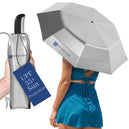
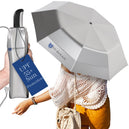
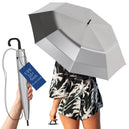
Layer 2: Physical Shade (UV Umbrella) A UPF 50+ umbrella provides 99% UV blockage overhead without touching the treatment site. Physical shade is the only protection method that can be used immediately post-procedure, before sunscreen application is advisable on healing skin. Patients report carrying UV umbrellas consistently because the 15°F cooling effect provides immediate comfort feedback.
Layer 3: Topical Sunscreen Broad-spectrum SPF 30-50 applied to all exposed skin not covered by physical shade or clothing. Begin sunscreen application on the treatment site only when wound healing permits (typically 2-4 weeks post-procedure, depending on the procedure). Reapply every 2 hours during outdoor exposure.
Layer 4: Protective Clothing UPF-rated clothing covers the body, while the umbrella covers the face, neck, and decolletage, the areas most commonly treated in dermatology and most vulnerable to UV-driven complications.

This protocol should be maintained for a minimum of 3-6 months post-procedure, with many dermatologists recommending ongoing photoprotection as part of long-term skin health management.
Which Procedures Require the Most Aggressive Post-Procedure Photoprotection?
Ablative laser resurfacing, deep chemical peels, and Mohs surgery carry the highest PIH risk and require the most rigorous post-procedure photoprotection protocols lasting 6 or more months.
Not all procedures create equal vulnerability to UV damage. The depth of skin disruption, the treatment area's anatomical location, and the patient's Fitzpatrick skin type together determine the required intensity and duration of photoprotection.
Ablative Laser Resurfacing (CO2, Erbium) The highest-risk category. Full ablation removes the epidermis and upper dermis, leaving skin maximally vulnerable to UV-induced pigmentation changes. PIH rates range from 5% in Fitzpatrick I-II patients to over 35% in Fitzpatrick IV-VI patients without rigorous photoprotection. Protocol duration: minimum 6 months.
Deep Chemical Peels (TCA 35%+, Phenol) Medium-to-deep peels create controlled chemical wounds that expose the reticular dermis. The AAD specifically recommends 3-6 months of strict sun avoidance after deep peels. Heat and UV exposure during the healing window significantly increase the risk of rebound hyperpigmentation.
Mohs Micrographic Surgery Mohs sites present a unique challenge: they involve cosmetically sensitive areas (nose, ears, periorbital region, forehead) where PIH is both more likely and more visible. Post-surgical sites require protection not only for cosmetic healing but for long-term skin cancer prevention, making lifelong photoprotection standard of care.
Microneedling and Non-Ablative Lasers Lower risk than ablative procedures but still require post-procedure photoprotection for 2-3 months. Fractional treatments create microscopic treatment zones surrounded by intact skin, which accelerates healing but still demands UV protection during the remodeling phase.
| Procedure | Healing Time | PIH Risk Level | Post-Procedure Photoprotection Intensity |
|---|---|---|---|
| Ablative CO2 laser | 2-4 weeks | Very High | Maximum: all 4 layers, 6+ months |
| Deep chemical peel | 2-3 weeks | High | Maximum: all 4 layers, 3-6 months |
| Mohs surgery | 2-6 weeks | High (cosmetically critical) | Maximum: all 4 layers, 6+ months to lifelong |
| Medium chemical peel | 1-2 weeks | Moderate-High | High: 3-4 layers, 3-6 months |
| Microneedling | 3-5 days | Moderate | Moderate: layers 1-3, 2-3 months |
| Non-ablative laser | 1-3 days | Low-Moderate | Moderate: layers 1-3, 2-3 months |
| IPL photofacial | 1-3 days | Moderate (higher in skin of color) | High: all 4 layers, 3-6 months |
How Can Dermatologists Improve Patient Sun Protection Compliance?
Providing physical sun protection tools at the point of care increases adherence rates because patients use what they are given rather than what they are told to buy.
Decades of behavioral science research demonstrate that tangible interventions outperform verbal instructions for health compliance. When a dermatologist hands a patient a UV umbrella at the post-procedure checkout, it shifts photoprotection from an abstract recommendation ("wear sunscreen and avoid the sun") to a concrete, actionable tool that the patient carries out the door.
The compliance advantage of physical shade is rooted in three behavioral principles:
1. Single-Decision Protection Sunscreen requires dozens of compliance decisions daily: when to apply, how much, when to reapply, whether to reapply after sweating. A UV umbrella requires one decision: pick it up when you go outside. Every subsequent compliance failure point is eliminated.
2. Immediate Sensory Feedback Patients report that UV-Blocker umbrellas feel 15°F cooler under the canopy. This immediate physical sensation creates a positive reinforcement loop. Patients carry the umbrella because it feels good, not because they were told to. Comfort drives adherence; instructions do not.
3. Visible Compliance Marker At follow-up appointments, "Are you using your umbrella?" is a concrete, verifiable question. "Are you reapplying sunscreen every 2 hours?" is not. A visible tool creates accountability that topical products cannot replicate.
For practices looking to implement physical shade into their post-procedure protocols, the UV-Blocker Dermatologist Program offers clinic-branded UV umbrellas at $35/unit (MSRP $59.95) with free logo imprint. Dispensing a branded umbrella at checkout positions your practice as prevention-focused while generating $24.95 margin per unit.
The most effective implementation model: include the umbrella in the post-procedure care kit, present it alongside wound care instructions, and frame it as "part of your treatment plan" rather than an optional purchase. Patients who receive tangible protection tools at the point of care demonstrate significantly higher adherence than those who receive verbal instructions alone.
Frequently Asked Questions About Post-Procedure Photoprotection
These are the most common questions dermatologists and patients ask about post-procedure photoprotection, answered with clinical evidence and practical guidance.
How long should patients maintain strict photoprotection after a procedure? The duration depends on the procedure type and patient's Fitzpatrick skin type. Ablative lasers and Mohs surgery require a minimum of 6 months, while medium-depth peels require 3-6 months. Microneedling and non-ablative lasers need 2-3 months. Patients with Fitzpatrick III-VI skin types should extend these timelines by 25-50%.
Can patients apply sunscreen immediately after ablative procedures? No. Sunscreen application to the treatment site is typically contraindicated for 2-4 weeks post-procedure until wound healing permits. During this window, physical shade (UV umbrellas) and sun avoidance are the primary protection methods available.
Does visible light also cause PIH after procedures? Yes. Visible light (400-700nm) contributes to melanocyte activation in compromised skin, particularly in Fitzpatrick III-VI patients. Tinted sunscreens with iron oxide block visible light, and UV umbrellas provide additional overhead protection against the full light spectrum.
Is indoor lighting a concern for post-procedure patients? Standard indoor LED and fluorescent lighting emits minimal UV. However, patients who sit near windows receive significant UV exposure through glass (UVA passes through standard window glass). UV umbrellas or window film are practical solutions for patients with workstations near windows.
What is the best sunscreen type for post-procedure use? Mineral (zinc oxide/titanium dioxide) sunscreens are generally preferred post-procedure because they sit on the skin surface rather than being absorbed. Broad-spectrum SPF 30-50 with both UVA and UVB protection is the minimum standard. Tinted formulations with iron oxide add visible light protection.
How does the UV-Blocker Dermatologist Program work? The UV-Blocker Dermatologist Program provides UPF 50+ umbrellas with Melanoma International Foundation certification at $35/unit (MSRP $59.95). Practices can add custom logo imprints at no extra charge. Orders ship within 5 business days with a minimum order of 12 units.
Ready to add physical shade to your aftercare protocol?
The UV-Blocker Dermatologist Program provides clinic-branded UV umbrellas with 99% UV protection at exclusive practice pricing. View the full umbrella collection or explore the dermatologist program details.
Related Reading: - Do UV Umbrellas Work? Evaluating Sun Protection Efficiency - The Science of Sun Protection: How Umbrella Fabrics Block UV - The Complete Lupus Sun Protection Guide: Dermatologist Reviewed - Sun Umbrella UV Protection: 6 Reasons Dermatologists Recommend Them - UPF 50+ Explained: What the Rating Means for Sun Protection
Post-Procedure Photoprotection: Frequently Asked Questions
Why is immediate photoprotection critical after ablative laser treatments?
Following ablative procedures, the epidermal barrier is compromised, increasing the risk of post-inflammatory hyperpigmentation (PIH) by up to 30% in certain skin types. Clinical guidelines recommend immediate physical shielding using UV-Blocker garments that provide UPF 50+ protection to prevent solar-induced erythema. This mechanical barrier is often superior to chemical sunscreens which may irritate sensitized, newly resurfaced skin.
How does Solarteck® technology assist patients recovering from deep chemical peels?
Solarteck® technology integrated into UV-Blocker textiles ensures that 98% of both UVA and UVB rays are blocked through specialized weave density and treated fibers. This consistent protection is vital during the 7-14 day healing phase when chemical sunscreens may cause contact dermatitis or irritation. Unlike topical agents, these specialized garments maintain their efficacy regardless of perspiration or improper application techniques.
What standards should dermatologists look for when recommending clothing post-Mohs surgery?
Post-Mohs surgery, patients should utilize garments that meet the UPF 50+ standard, meaning less than 2% of UV radiation penetrates the fabric. UV-Blocker options with the Melanoma International Foundation seal of approval provide a certified layer of safety for vulnerable surgical sites. This clinical-grade photoprotection is essential to prevent secondary malignancies and minimize the hypertrophic darkening of healing scars.
Are physical UV barriers more effective than topicals during the acute post-operative phase?
During the acute 48-72 hour post-procedure window, physical UV-Blocker clothing is often safer than topicals to avoid the absorption of chemicals into open micro-channels. Clinical observations suggest that UPF 50+ fabrics reduce patient non-compliance rates, which can reach 50% for topical sunscreen reapplication. Utilizing Solarteck® technology ensures that the protective barrier remains constant and does not degrade with heat or moisture exposure.