

Professional cyclists competing at the 2000 Tour de Suisse received 30 times the internationally recommended UV dose during a single stage of the race (Moehrle et al., Dermatology, 2000). Recreational cyclists face similar risks. A typical weekend ride means two to four hours of continuous sun exposure with the forward cycling posture exposing the back of the neck, tops of the ears, and hands to direct overhead sun.
This guide delivers a systematic 5-layer sun protection for cycling protocol covering timing, UPF clothing, helmet strategy, sunscreen application, and rest stop shade. Most cycling sun protection advice offers a scattered list of tips. This is the only guide with a layered protocol, cycling-type segmentation, elevation and speed analysis, and honest product positioning.
TLDR:
- Professional cyclists at the Tour de Suisse exceeded safe daily UV limits by 30x in a single stage.
- The forward cycling posture exposes the back of the neck, ears, and hands to direct overhead radiation.
- UV intensity increases 10–12% per 1,000 meters of elevation gained — a factor most mountain cyclists ignore entirely.
- Effective cycling sun protection requires a systematic 5-layer approach covering all vulnerability gaps.
- Sunscreen degrades with sweat and stings eyes if applied to the forehead. Use a cycling cap instead.
- Portable shade at rest stops is critical for recovery and reducing cumulative UV dose.
- Different cycling disciplines require adapted protection strategies for their specific hazards.
Why Do Cyclists Face Extreme UV Exposure?
Cyclists receive extreme UV doses because rides last 2–4 hours in direct sun, the forward riding posture exposes vulnerable skin, and road surfaces reflect additional UV radiation from below.
Six professional cyclists wore dosimeters across eight stages of the Tour de Suisse. Their mean daily exposure reached 8.1 MED (minimal erythema dose), exceeding international daily safety limits by 30x (Moehrle et al., Dermatology, 2000). Protection habits remain poor even at the top of the sport. A survey of 64 elite professional cyclists found only 60% regularly apply sunscreen before riding, and just 8% reapply during long rides (Dermatology Times).
Sweating during intense exercise increases skin photosensitivity, facilitating sunburn risk on exposed tissue. Exercise-induced immunosuppression may further increase skin cancer risk for endurance athletes (Backes et al., Dermatology and Therapy, 2022). Road surfaces add another threat. Asphalt and concrete reflect up to 15% of UV radiation upward, so cyclists receive UV from the sky above and the road below (Turner and Parisi, Int J Environ Res Public Health, 2018). Altitude compounds the risk further: UV intensity increases 10–12% for every 1,000 meters of elevation gained (Blumthaler et al., ScienceDirect, 1997).
Unlike most other outdoor sports, cycling presents a unique combination of factors that amplify UV exposure simultaneously. Riders move at speeds of 15 to 30 mph, which creates wind chill that masks the subjective sensation of heat and UV intensity. A cyclist feels cool at 22 mph on a sunny 78°F day. The UV reaching the skin is identical to standing motionless in the same location. This disconnect between perceived comfort and actual UV exposure is the most dangerous aspect of cycling sun protection — and the most common reason riders skip protection on what feels like a "not that hot" day.
UV Exposure by Elevation, Speed, and Road Surface
Three factors beyond basic UV Index significantly amplify UV dose for cyclists: elevation gain, riding speed's effect on sunscreen longevity, and road surface reflectivity.
UV Intensity by Elevation
The atmosphere filters UV radiation. As altitude increases and the atmosphere thins, less UV is absorbed before reaching the ground. The 10–12% increase in UV per 1,000 meters of elevation means a cyclist climbing from sea level to 3,000 meters faces approximately 30–36% more UV at the summit than at the base.
| Elevation (meters) | UV Intensity Increase vs. Sea Level | Typical Cycling Context |
|---|---|---|
| 0 (sea level) | Baseline | Coastal road cycling, flat commutes |
| 500 m | +5–6% | Rolling hills, foothills riding |
| 1,000 m | +10–12% | Mountain passes, alpine road rides |
| 2,000 m | +20–24% | High mountain biking, alpine enduro |
| 3,000 m | +30–36% | High alpine cycling, col ascents |
Snow cover at altitude adds another multiplier. Fresh snow reflects 80% of UV radiation. An alpine road cycling stage or mountain bike descent across snow patches creates a dual-direction UV environment (overhead + reflected) that can effectively double a rider's UV dose compared to the UV Index number alone. This is why skiers and high-altitude cyclists show some of the highest rates of UV-related skin damage despite relatively shorter outdoor sessions than beach-goers.
How Cycling Speed Affects Sunscreen Performance
Cycling creates wind friction across the skin that accelerates evaporation and abrasion of topical sunscreen. A study examining sunscreen degradation under wind conditions found that simulated airflow of 15–20 mph reduced sunscreen effective protection by approximately 40% within 60 minutes, compared to a still-air control (Skin Cancer Foundation, sunscreen in athletic conditions).
For cyclists, this means:
- Reapplication intervals should be shortened from the standard 2-hour recommendation to 60–90 minutes when riding at speeds above 15 mph
- Water-resistant sunscreen formulas perform significantly better than standard lotions under cycling conditions
- Sunscreen applied to the back of the neck degrades faster due to combined wind exposure and friction from jersey collars
- Single-use sunscreen sachets in a rear jersey pocket enable convenient mid-ride reapplication at rest stops without requiring a full tube
Road Surface UV Reflection by Type
| Surface Type | UV Reflectance | Cycling Impact |
|---|---|---|
| Dark asphalt (new) | 4–7% | Low upward UV reflection; standard protection adequate |
| Light concrete | 8–15% | Moderate upward UV; targets hands, calves, lower face |
| Packed gravel/limestone | 10–18% | Higher reflectance; affects gravel cyclists significantly |
| Wet pavement | 5–10% | Reduced direct UV but glare increases eye strain risk |
| Snow/ice | Up to 80% | Extreme upward UV; critical for alpine and winter riders |
Gravel cyclists and those on light concrete bike paths face meaningfully higher reflected UV on the hands, calves, and lower face than road cyclists on dark asphalt. Factoring in surface type when planning protection intensity is a refinement most cycling guides skip entirely.
Where Does UV Hit Hardest in the Cycling Position?
The cycling position exposes the back of the neck, tops of ears, upper shoulders through jersey mesh, backs of calves, tops of hands on handlebars, and the upper chest when looking forward.

Research mapping anatomical UV distribution in cyclists found exposure exceeded 1 MED at all body sites except the ankle, with the highest exposure on the top of the head (Serrano et al., Journal of Photochemistry and Photobiology B, 2006). The forward lean of a road cyclist points the back of the neck and ears directly at overhead sun. These are the most commonly missed areas for sunscreen application among cyclists.
Tops of hands and forearms rest on handlebars for hours with zero shade. Modern cycling gloves often feature mesh or open backs that provide no UV protection. The backs of calves and lower thighs stay exposed by cycling shorts and angle toward the sun while pedaling. This is a common sunburn zone that riders notice only in the shower after a ride. Upper shoulders face a structural threat through thin jersey mesh panels. Chris Froome famously showed grid-like sunburn through his lightweight jersey mesh at the Tour de France.
| Body Area | Why Exposed | Severity | Protection Strategy |
|---|---|---|---|
| Back of neck | Forward lean points it at sky | Very high | Cycling cap with rear flap, sunscreen |
| Tops of ears | Helmet doesn't cover them | High | Sunscreen, cycling cap |
| Upper shoulders | Jersey mesh transmits UV | High | UPF 50+ jersey or arm sleeves |
| Backs of calves | Cycling shorts leave them bare | Moderate-high | Leg sleeves or sunscreen |
| Tops of hands | Resting on handlebars | Moderate-high | Full-finger UPF gloves or sunscreen |
| Upper chest/face | Looking up at road ahead | Moderate | Sunscreen, visor on cycling cap |
| Scalp (through helmet vents) | Helmet ventilation holes | Moderate | Cycling cap under helmet |
Most Missed Sunscreen Areas for Cyclists
In surveys of cyclist sunscreen habits, the back of the neck and tops of the ears are consistently the two most-missed areas. These are also the two areas that receive the greatest UV dose per hour in the forward cycling posture. Prioritize these two spots above all others before every ride.
What Is the 5-Layer Cycling Sun Protection Protocol?
The 5-layer cycling sun protection protocol covers timing and route selection, UPF clothing, helmet and eyewear strategy, targeted sunscreen application, and deliberate shade at every rest stop.

Layer 1: Timing and Route Selection
Plan rides before 10 AM or after 4 PM when the UV index drops. Choose tree-lined routes and shaded paths when possible. This isn't always practical for organized group rides or events, but it's valuable for solo training. Avoiding peak radiation hours removes the heaviest burden from your protective gear and serves as the foundation of cycling sunburn prevention.
A UV Index of 6 is the threshold where recreational cyclists face genuine burn risk during a 2-hour ride without protection. Many cycling events depart at 7–8 AM specifically for temperature comfort, not UV management — but UV at 9 AM in June at a mid-latitude location may already reach 5–6. Checking the UV Index the morning of any long ride should be a mandatory pre-ride step.
Layer 2: UPF Clothing
Wear breathable arm sleeves, lightweight leg covers, and high-collar jerseys in UPF 50+ fabric. A cycling cap worn under the helmet covers the forehead and ears. True sun protection clothing blocks radiation across large skin areas. UPF 50+ is the standard to trust. Standard thin summer fabrics allow UVA and UVB rays to reach the skin directly.
Arm sleeves deserve particular attention. They cover the forearms and upper arm without the heat retention of a full-sleeve jersey, can be rolled down to the wrists for maximum coverage or pushed up during rest stops, and add no aerodynamic penalty. A quality UPF 50+ arm sleeve is one of the most practical investments in cycling sun protection for regular riders.
Layer 3: Helmet and Eyewear
A cycling cap with a peak under the helmet shades the forehead and ears. Wraparound sunglasses protect the eyes and the thin skin around them. Standard cycling helmets provide zero UV protection for the face, ears, or neck. Ventilation holes let radiation pass through to the scalp.
Cycling caps should be rated UPF 50+ themselves — standard cotton or polyester caps offer little UV protection. The rear panel of the cap is specifically designed to cover the top of the ears and the nape of the neck, the two highest-exposure areas in the forward riding position. A cap with a proper rear panel eliminates the need for sunscreen application in these areas, which tend to sweat off and reapply poorly mid-ride.
Layer 4: Sunscreen for Exposed Skin
Apply broad-spectrum SPF 30+ mineral sunscreen 20 minutes before riding. Target the face, back of the neck, ears, hands, and calves. Do not apply sunscreen to the forehead. Sweat carries it into the eyes mid-ride, causing stinging and impaired vision on fast descents. Use a cycling cap instead for forehead coverage. Carry single-use sunscreen sachets in a rear jersey pocket for reapplication at rest stops every 60–90 minutes.
Mineral sunscreen (zinc oxide or titanium dioxide) is preferred for cyclists over chemical formulas because mineral sunscreens are effective immediately upon application, do not degrade when exposed to intense UV, and are less likely to cause eye irritation when they migrate with sweat. Physical mineral formulas also tend to be more resistant to washout during heavy sweating, though reapplication remains essential on long rides.
Layer 5: Shade at Rest Stops
Cycling experts recommend rest stops every 30–45 minutes on hot days. Organized events place hydration stops every 15–20 miles, often in open fields or parking lots with zero natural shade. A compact UV umbrella provides immediate personal shade during recovery minutes. This layer deserves a closer look.
How Does Shade at Rest Stops Improve Cycling Recovery?
Shade at rest stops reduces skin temperature by up to 15 degrees Fahrenheit, accelerates heat dissipation, and cuts cumulative UV dose on rides where stops occur every 30–45 minutes.
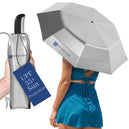
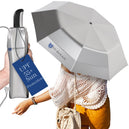
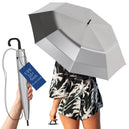
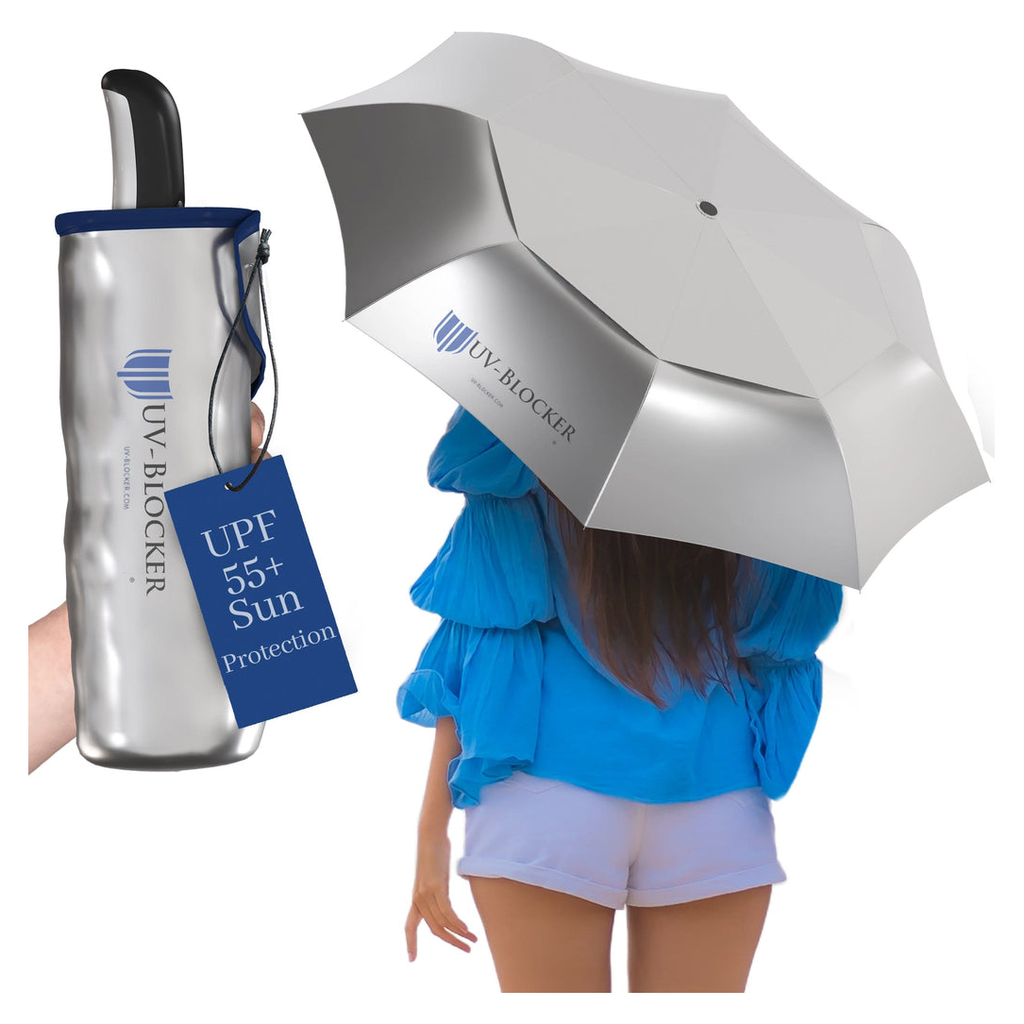
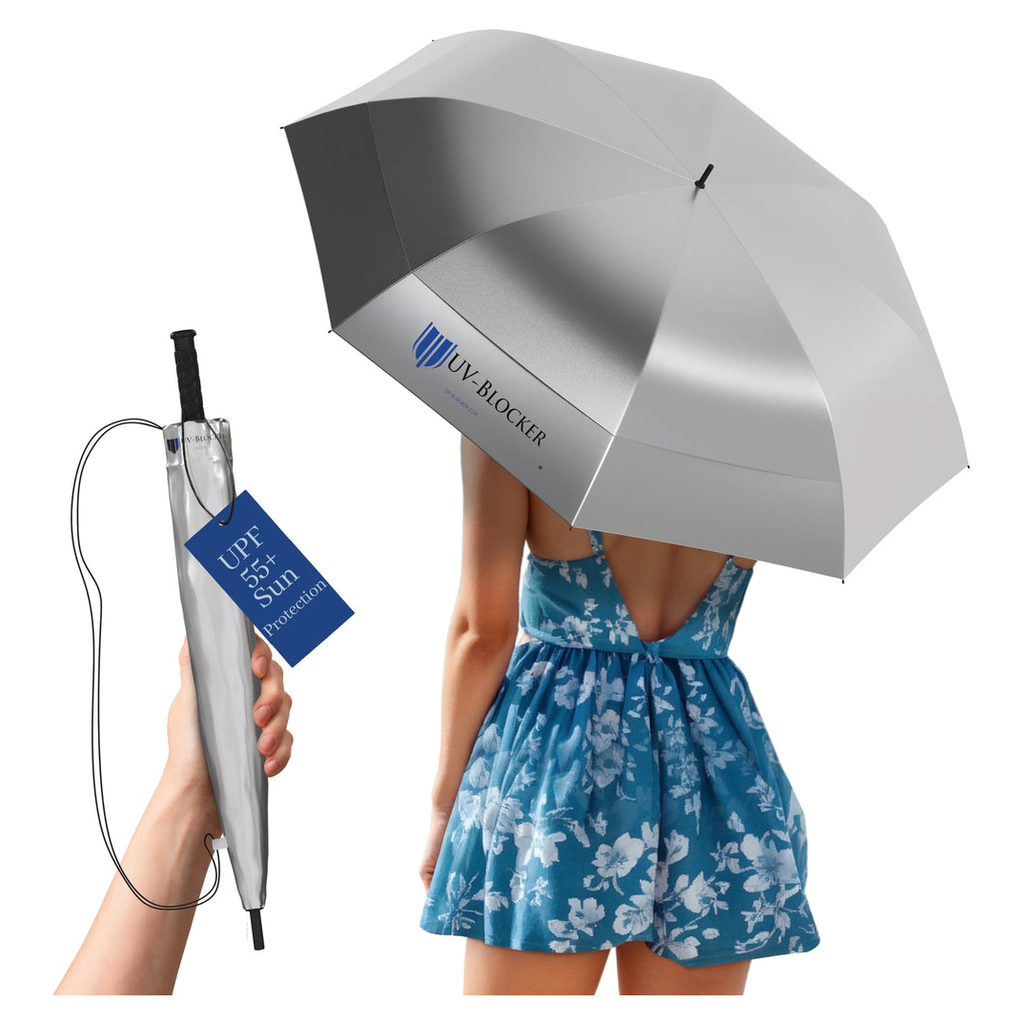
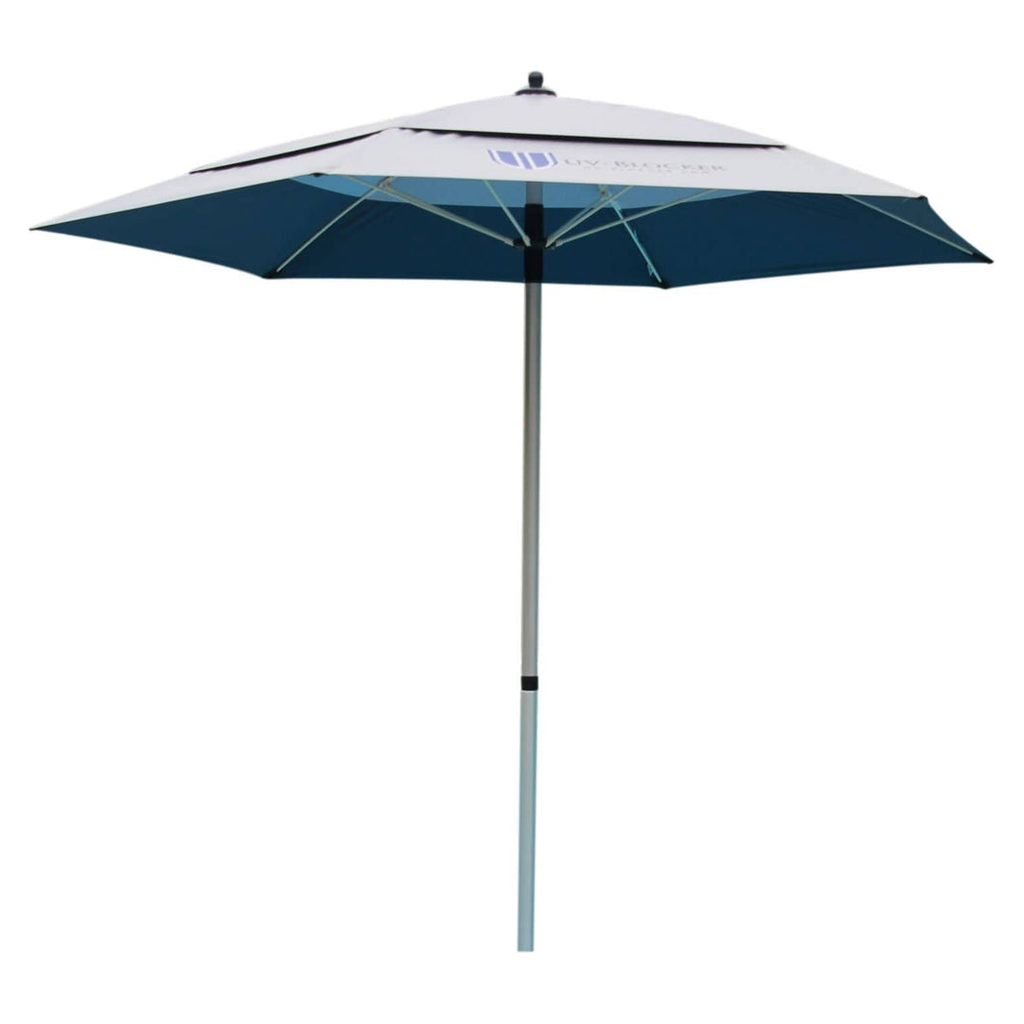
Century rides and charity events feature rest stops every 15–20 miles. Many sit in open parking lots or unshaded fields where exhausted riders stand with nowhere to escape the sun during a 10-minute hydration break. A UV protection compact umbrella folds to 11.5 inches and weighs 13 oz. It fits in a jersey back pocket or handlebar bag. The UPF 50+ Solarteck fabric blocks 99% of UV rays.
The physiology of shade at rest stops extends beyond UV protection. Core body temperature management during cycling directly affects performance and recovery. Moving from direct sun (which adds radiant heat load equivalent to 150–200W of additional heat input) into UV umbrella shade during a rest stop allows the body's thermoregulatory system to clear accumulated heat faster. The 15°F cooler temperature under the Solarteck canopy creates a microenvironment that accelerates heat dissipation without the wind chill that impairs recovery by cooling muscles too aggressively.
Pre-ride shade has practical value too. Apply sunscreen under umbrella shade for better visibility of skin coverage. Post-ride, cool down under shade to reduce heat stress. For cycling event spectating, a UV protection travel umbrella with a shoulder strap case allows hands-free transport to roadside viewing spots. Parents watching kids at BMX tracks, cyclocross circuits, or velodrome events often stand in direct sun for hours.
Rest Stop UV Umbrella Setup
Pack the UV umbrella in a jersey back pocket in its sleeve. At rest stops, deploy it in under 2 seconds with one button press. Stand under it while hydrating, applying sunscreen, and eating. The entire rest stop stays protected. Repack at departure — the auto-close function collapses it one-handed. No fumbling, no delay, no excuses to skip shade.
Important: A UV umbrella cannot be used while actively cycling. It is a shade tool for rest stops, pre-ride and post-ride use, and spectating only. Safety requires both hands on the handlebars.
How Does Sun Protection Differ by Cycling Type?
Road cyclists face the longest continuous exposure, mountain bikers encounter altitude-amplified UV, commuters accumulate daily damage, and touring cyclists benefit most from portable shade at camp.
Road Cycling
Road cycling involves the longest continuous exposure, often three to six hours. High-speed wind chill masks the sun's intensity, so riders don't feel burning as it happens. The UV exposure is identical whether you feel hot or cool. Rest stop shade is critical for multi-hour endurance rides, and wind strips applied sunscreen from exposed skin faster than still air — shortening effective reapplication intervals to 60–90 minutes.
Road cyclists also spend significant time on light-colored concrete bike paths and reflective asphalt. The upward reflection from these surfaces targets the undersides of the arms, lower face, and calves with meaningful additional UV beyond the overhead dose. Full-length arm sleeves and sunscreen on the calves are not optional for riders logging 4+ hour rides in summer.
Mountain Biking
Mountain biking presents a different challenge. Forest canopy provides partial shade, but altitude increases UV intensity by 10–12% per 1,000 meters gained. Open ridgelines and alpine meadows are extreme exposure zones. Mountain bikers transition rapidly from shade to direct radiation — forest descent to open ridge to trailhead clearing — making consistent fabric barrier protection more reliable than sunscreen alone.
Snow patches on alpine trails add a reflected UV component that can effectively double the UV dose in brief exposed sections. Mountain bikers who ride through late-spring snow should treat these sections as equivalent to beach UV conditions and ensure face and hand protection is in place before emerging from tree cover.
Commuting
Commuting features shorter exposure per ride, typically 20–40 minutes. But daily repetition five days per week creates significant cumulative UV damage over months and years. The annual exposure from a 30-minute commute, both ways, five days per week, totals approximately 260 hours — comparable to the dog-walking comparison. This adds up quietly without warning. A compact UV umbrella lives permanently in a pannier or work bag. Check the forecast, but remember that you can get sunburn on a cloudy day too.
Touring and Bikepacking
Touring and bikepacking combine multi-hour rides with midday camp rest. Portable shade becomes a genuine utility item at camp stops. A compact UV umbrella is lighter than a tarp and provides tested UV protection during rest and off-bike tasks. Touring cyclists often face their highest UV exposure not while riding but during extended midday breaks at exposed rural rest stops and lunch spots with no natural shade.
Indoor Cycling and Spin Classes
Indoor cyclists transitioning to outdoor riding during warmer months face a particular risk: their skin has had no gradual UV exposure to build even minimal tolerance, and they frequently underestimate the UV dose from the first few outdoor training sessions. For cyclists returning to outdoor riding in spring, starting with early morning rides at lower UV Index and gradually increasing midday exposure while building protection habits is the safest ramp-up approach.
Cycling Sun Protection by Season and Conditions
UV protection needs for cyclists shift significantly by season. Here's how to calibrate the 5-layer protocol across the year:
| Season | Key UV Risk Factors | Priority Protection Adjustments |
|---|---|---|
| Summer (Jun–Aug) | UV Index 8–11 at peak; heat index compounds risk; sunscreen degrades fast with sweat | All 5 layers active; reapply sunscreen every 60–90 min; mandatory rest-stop shade |
| Spring (Mar–May) | UV climbs steeply by April; skin not yet adapted after winter; cool temps mask exposure | Sunscreen from March; arm sleeves; watch early-season long rides carefully |
| Fall (Sep–Nov) | UV drops but remains meaningful through October; lower sun angle hits face and neck differently | Maintain sunscreen through October; face protection priority as sun sits lower |
| Winter (Dec–Feb) | Low UV in northern states; snow reflection multiplies UV at altitude; wind-chill masks exposure | Alpine and southern riders: maintain face sunscreen; watch snow sections carefully |
Spring is the season where cyclists are most vulnerable to unexpected UV damage. After months of reduced UV exposure, skin's natural adaptive response (melanin production) is at its seasonal low. Combined with the psychological tendency to underestimate UV risk in mild spring weather, early-season rides produce some of the most uncomfortable and unexpected sunburns cyclists experience all year.
Spring Riding Alert
The first warm-weather rides of the year are the highest-risk rides for unexpected sunburn. Ride-length targets are often ambitious after winter, UV Index begins climbing steeply in April, and skin is at its seasonal minimum UV tolerance. Apply full protection from the first spring ride — don't wait until it "feels like summer."
Frequently Asked Questions About Sun Protection for Cycling
These are the most common questions cyclists ask about UV protection, sunscreen, clothing, and gear for safe riding in the sun.
Do cyclists get skin cancer more often than non-cyclists?
Endurance outdoor athletes show higher rates of melanocytic nevi and solar lentigines, and research suggests increased melanoma risk from cumulative UV exposure during training and competition.
The Tour de Suisse study found professional cyclists exceeded UV safety limits by 30x during single racing stages. No study isolates recreational cycling specifically, but outdoor endurance athletes as a group face elevated skin cancer risk (Backes et al., Dermatology and Therapy, 2022). Long hours in direct sun without protective clothing drive this increase.
How often should I reapply sunscreen while cycling?
Reapply broad-spectrum sunscreen every 60–90 minutes while cycling, or at every rest stop, whichever comes first. Focus on the back of the neck, ears, and calves.
Sweat, wind friction, and jersey abrasion accelerate sunscreen degradation during cycling significantly beyond what occurs in sedentary conditions. Only 8% of elite cyclists reapply during rides. Carry single-use sachets in your jersey pocket for convenience. A quick application at rest stops prevents painful late-day burns. Pay close attention to the backs of your hands and the nape of the neck.
What UPF rating should cycling clothes have?
Cycling clothing should be rated UPF 50+, which blocks approximately 98% of UV radiation and provides the highest standard of fabric sun protection.
Standard cycling jerseys without a UPF rating may transmit significant UV, especially through mesh ventilation panels. See this sun protection clothing guide for fabric selection details. Quality synthetic fabrics maintain their protection even when stretched and wet.
Does a cycling helmet protect from UV rays?
A cycling helmet protects only the top of the head and provides zero UV coverage for the face, ears, neck, and forehead, which are the areas that receive the most UV while riding.
Pair a helmet with a cycling cap underneath. The peak shades the forehead, and the rear panel covers the ears and neck. Wraparound sunglasses add eye and temple protection. Ventilation holes in modern helmets allow direct sunlight to reach the scalp.
Can I use an umbrella while cycling?
No. Holding an umbrella while cycling is unsafe and impractical. UV umbrellas serve cyclists at rest stops, before and after rides, and while spectating at cycling events.
A UV-Blocker Compact umbrella weighs 13 oz and folds to 11.5 inches. It fits in a jersey back pocket or handlebar bag. Use it during 10–15 minute rest stops to reduce cumulative UV exposure and cool down by up to 15 degrees Fahrenheit. For broader outdoor protection tips, see the guides on sun protection for runners and sun protection for hiking.
What is the best sunscreen for cyclists?
Mineral sunscreen (zinc oxide or titanium dioxide) rated SPF 50+ and water-resistant is the best choice for cyclists, applied 20 minutes before riding and reapplied every 60–90 minutes at rest stops.
Chemical sunscreens are more likely to migrate into the eyes with sweat, causing stinging on descents. Never apply any sunscreen to the forehead — use a cycling cap with a UPF-rated peak instead. For the back of the neck and ears, a mineral spray formula enables quick reapplication without removing a helmet or cap.
How does altitude affect UV risk for mountain cyclists?
UV intensity increases 10–12% for every 1,000 meters of altitude gained. A cyclist at 2,000 meters elevation faces roughly 20–24% more UV than at sea level, compounded further by any snow reflection at altitude.
Mountain cyclists and alpine riders should treat every exposed body area as high-priority for protection — not just the standard cycling problem zones. Snow reflection at altitude can double the effective UV dose at the skin surface. Full coverage with UPF fabric and SPF 50+ mineral sunscreen is essential above 1,500 meters.
Conclusion
- Professional cyclists exceed safe UV limits by 30x in a single stage. Recreational riders face similar risks on long weekend rides.
- UV intensity increases 10–12% per 1,000 meters of elevation — mountain cyclists face compounded risk that most protection guides ignore.
- The 5-layer protocol (timing, clothing, helmet, sunscreen, shade) covers every cycling vulnerability when applied consistently.
- Never apply sunscreen to the forehead. Use a cycling cap to prevent stinging sweat carrying chemicals into your eyes.
- Rest stop shade is the most overlooked layer and the easiest to add to your routine — a 13-oz UV umbrella fits in any jersey pocket.
- Spring rides carry disproportionate risk — skin UV tolerance is at its seasonal low just as UV Index begins climbing steeply.
On your next ride, apply sunscreen to the back of your neck and ears. These are the two most-missed areas for cyclists. Pack a cycling cap under your helmet.
For rides with rest stops, explore UV-Blocker's Compact UV Umbrella. It's 13 oz of UPF 50+ shade that tucks into a jersey pocket.