

Ultraviolet radiation increases 10 to 12 percent for every 1,000 meters of elevation gain. A hiker summiting a Colorado 14er absorbs roughly 50 percent more UV than someone at sea level. That exposure lasts four to eight hours with no built-in shade.
Most trail safety advice stops at wearing sunscreen and a hat. That two-layer approach leaves critical gaps. Sweat degrades chemical blockers fast. Trail surfaces reflect sunlight upward onto unprotected skin. Higher altitudes amplify the danger further.
This guide breaks down the altitude UV multiplier, trail surface reflection data, and which body parts hikers burn most. It outlines a four-layer protection framework built for the physical demands of the trail.
Why Does Hiking Amplify UV Exposure?
Hiking amplifies UV exposure through three compounding factors: altitude reduces atmospheric UV filtering, trail surfaces reflect UV upward, and extended duration means 4-8 hours of unshielded exposure.
The atmosphere thins as elevation climbs. Thinner air filters less solar radiation before it reaches the ground. Hikers face a measurable threat that scales with their ascent profile.
UV intensity climbs 10 to 12 percent per 1,000 meters of elevation gain. Hikers traversing a route at 10,000 feet absorb roughly 35 to 40 percent more UV than they would at sea level. A reliable UV index guide helps climbers predict peak danger windows before heading out.
Hikers face sustained exposure unlike casual beach visitors. Beachgoers retreat under cabanas or pop-up tents. Hikers walk for four to eight hours with limited options for shelter along the route.
Mountain environments hide the danger well. Cool air and wind chill mask the burning sensation on the skin. Hikers don't feel the heat, so they forget they're burning during a cold alpine ascent.
| Elevation | UV Increase vs Sea Level | Equivalent UV Index Bump |
|---|---|---|
| Sea Level (0 ft) | Baseline | — |
| 5,000 ft (1,524m) | ~15-20% | +1-2 UV Index points |
| 10,000 ft (3,048m) | ~35-40% | +2-4 UV Index points |
| 14,000 ft (4,267m) | ~50% | +3-5 UV Index points |

How Does Trail Surface Reflection Create Double UV Exposure?
Trail surfaces reflect UV upward, creating exposure from below. Fresh snow reflects up to 94% of UV, dry sand 15-18%, and water 20-30%.
Sunlight attacks from two directions on the trail. Direct overhead radiation causes the primary damage. Reflected light bouncing off the ground creates a secondary exposure zone that standard protective gear misses.
Alpine routes covered in fresh snow act like giant solar mirrors. This environment creates near-total UV reflection from beneath the hiker. Radiation bounces upward to burn the underside of the chin, the inside of the ears, and the tip of the nose. The WHO UV radiation FAQ confirms that clouds don't stop this reflective effect, and understanding cloudy day sunburn risk is just as important on snowy trails.
Terrain directly dictates the total reflection intensity. A typical dirt trail reflects minimal light. Mixed terrain hikes featuring river crossings or vast granite slabs compound the total daily exposure as the landscape changes.
| Surface Type | UV Reflection (%) | Hiking Context |
|---|---|---|
| Fresh snow | 90-94% | Alpine/winter hikes |
| Old/packed snow | 50-74% | Spring mountain trails |
| Dry sand | 15-18% | Desert/beach access trails |
| Water | 20-30% | River crossings, lakeside trails |
| Concrete/asphalt | 10-15% | Trailhead approaches |
| Dry soil/rock | 2-5% | Standard dirt trails |
| Grass | 0.8-3.7% | Meadow sections |
Where Do Hikers Get Sunburned Most?
Hikers burn most on the neck and shoulders (66.2% of outdoor burns), followed by face and head (52.6%), arms and hands (40.1%), and back (24.0%).
Standard gear leaves specific zones vulnerable. A baseball cap shades the forehead but ignores the sides of the face and neck. Sunscreen rubs off wherever heavy gear contacts the body.
Outdoor dermatology research highlights the most common hiking burn zones: tops of the ears, tip of the nose, back of the neck, exposed forearms, and unprotected lips. The Skin Cancer Foundation recommends covering these areas first. Wearing proper sun protection clothing mitigates much of this risk on the limbs and torso.
Facial skin is far more sensitive than skin on the arms or legs. The dermis on the face and neck is thinner, so these areas react two to four times more aggressively to UV damage.
Backpack straps complicate things further. Friction from shoulder straps grinds sunscreen away within an hour. Taking the pack off during rest breaks exposes untreated skin to direct radiation.
How Should Hikers Build a Layered Trail Protection System?
Effective hiking sun protection uses four layers: portable shade (UV umbrella), UPF 50+ clothing, broad-spectrum SPF 50+ sunscreen on exposed skin, and smart timing.
Relying on a single line of defense fails during long wilderness hikes. A complete system overlaps different mechanical and chemical methods. This ensures consistent coverage when one specific layer breaks down under physical exertion.
Portable shade serves as the first layer. A UV-rated umbrella covers the head, face, neck, and upper body at once. It stops 99 percent of UV without trapping body heat. Dedicated camping sun protection strategies show how portable shade adapts to various outdoor scenarios.
UPF 50+ clothing acts as the second layer. Long sleeves and pants cover the torso and limbs. This fabric protection never sweats off or degrades during a steep climb.
Broad-spectrum SPF 50+ sunscreen fills the remaining gaps. Apply it generously to the hands, lower face, and ears. Active exertion demands reapplication every 80 minutes to maintain effectiveness.
Timing acts as the final layer. Starting a hike early avoids the peak danger window. Midday breaks under natural cover minimize exposure when radiation peaks between 10 AM and 2 PM.
| Protection Layer | Coverage Area | UV Block | Reapplication? | Weight Penalty |
|---|---|---|---|---|
| UV Umbrella (UPF 50+) | Head, face, neck, shoulders | 99% | None | 13 oz - 1 lb 5 oz |
| UPF 50+ Clothing | Torso, arms, legs | 98%+ | None | Already wearing |
| SPF 50+ Sunscreen | Exposed skin only | 98% | Every 80 min (sweat) | 3-4 oz |
| Wide-Brim Hat | Top of head, partial face | Varies | None | 4-8 oz |

Why Is a UV Umbrella the Layer Most Hikers Skip?
Most hikers dismiss umbrellas as impractical, but thru-hiking communities adopted them years ago. A UV umbrella provides 15°F cooling and reduces sweating by 17%.
Carrying an umbrella on a mountain trail seems counterintuitive. Trekking poles and water bottles dominate the standard gear list. Many outdoor enthusiasts copy the traditional hat-and-sunscreen formula without questioning its efficiency.
Field data shows the advantages of portable shade. Creating a personal shadow drops the ambient temperature by up to 15°F underneath the canopy. That cooling effect reduces sweating by 17 percent. The best hiking umbrellas for UV protection guide breaks down how this changes heat management on summer trails.
Long-distance backpackers embraced this gear long before weekend hikers caught on. Thru-hikers tackling the Pacific Crest Trail or Continental Divide Trail view umbrellas as standard equipment. They prioritize efficiency and comfort over traditional hiking aesthetics.
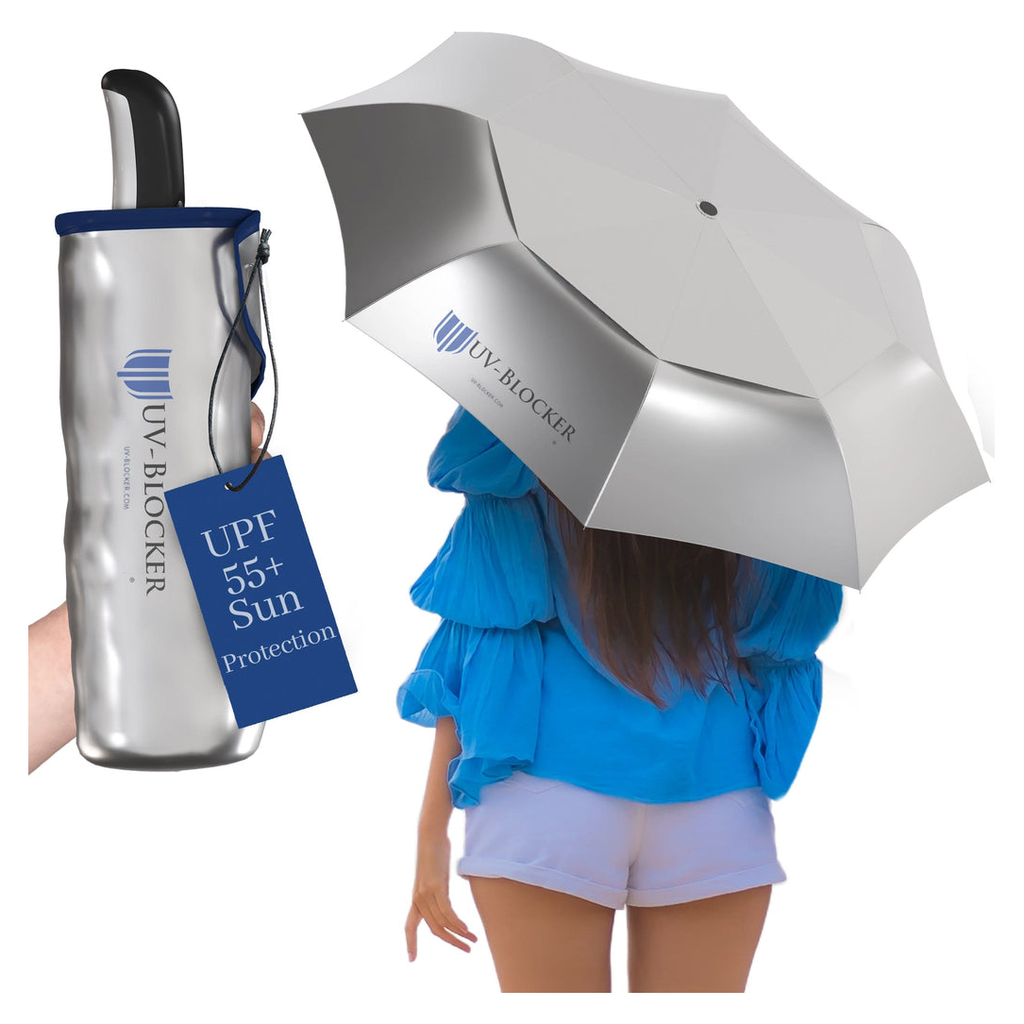
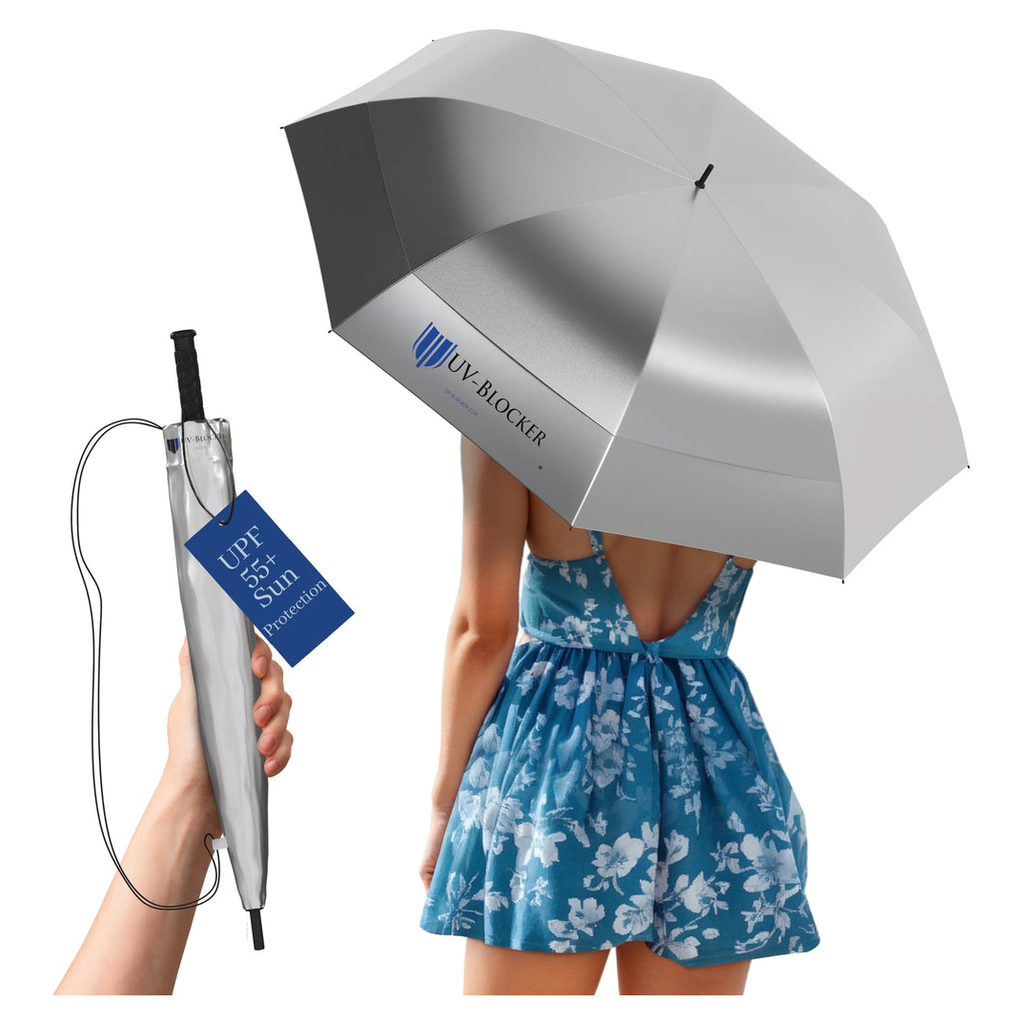
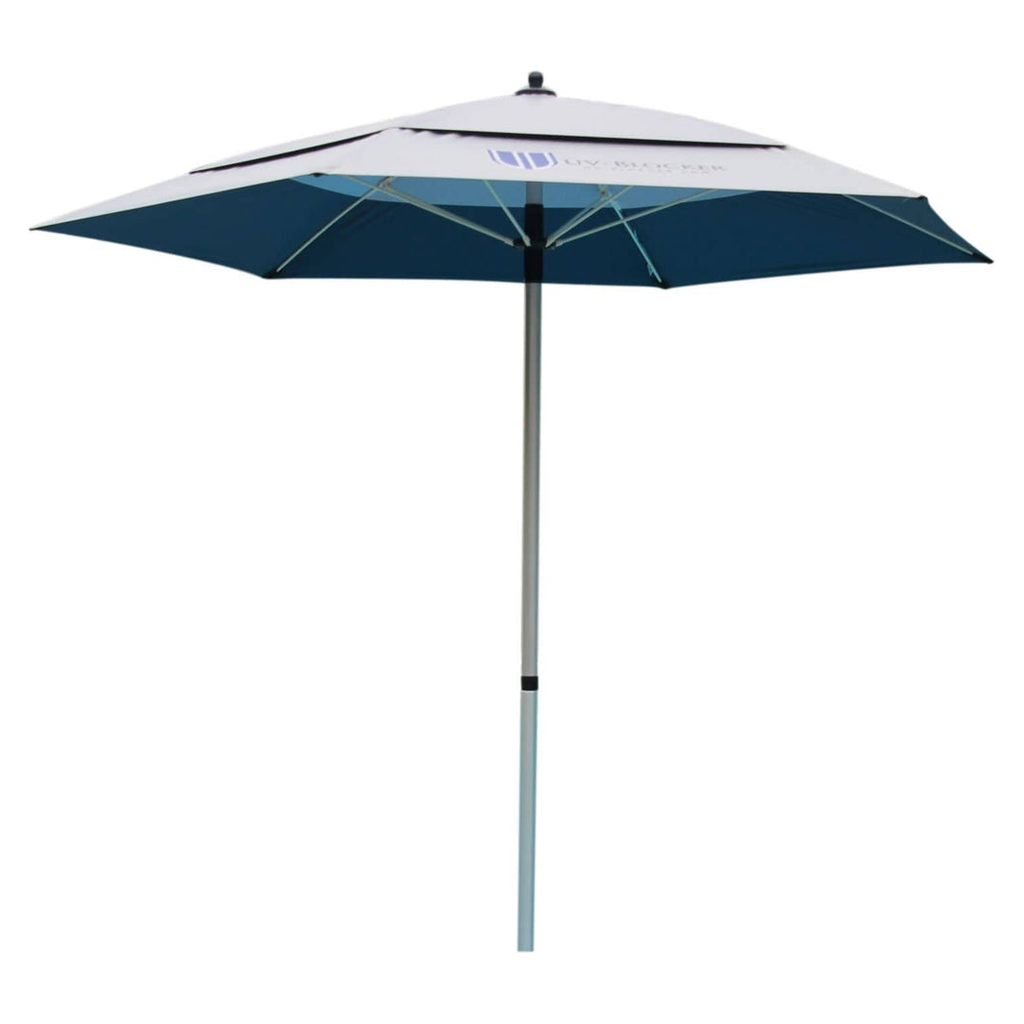
The weight argument doesn't hold up anymore. The UV-Blocker Compact Umbrella weighs just 13 ounces, lighter than a standard Nalgene bottle. The UV-Blocker Travel Umbrella weighs 1 pound 5 ounces and includes a shoulder strap carry case.
Both models deliver certified UPF 50+ protection. Independent AATCC TM183-2020 testing confirms they block 100 percent of UV-B and 99.97 percent of UV-A rays. The patented Vented Mesh System prevents the canopy from inverting during strong mountain winds.
How Does Sun Protection Differ by Trail Environment?
Trail environment changes the UV equation. Alpine routes multiply UV through altitude and snow reflection. Desert trails exceed UV index 11. Forest canopy reduces but does not eliminate exposure.
Every landscape presents a different combination of solar threats. Preparing for a high desert crossing requires different tactics than packing for a shaded forest trail.
Alpine and High Altitude Trails
Altitude acts as a relentless multiplier. Thin atmosphere combined with fresh snow reflection creates high baseline danger. Up to 94 percent of UV bounces off fresh snowpack. Wind chill masks the burning sensation, making this the highest-risk environment for undetected sunburn.
Desert Environments
Deserts deliver sustained, uninterrupted exposure. The UV index routinely spikes above 11. Natural shade is non-existent for dozens of miles. Dry packed sand reflects 15 to 18 percent of sunlight back upward. In these conditions, portable shade shifts from a comfort item to a survival tool.
Coastal Routes
Ocean air feels refreshing but accelerates skin damage. Salt spray acts as a mild photosensitizer on exposed skin. Open water reflects 20 to 30 percent of incoming UV rays. The cool sea breeze hides the true intensity of the overhead sun.
Forest Canopies
Tall trees provide a false sense of security. Dappled shade blocks some light but leaves canopy gaps that create full-exposure moments. Measured UV index under a dense forest canopy still reaches 50 to 60 percent of open-sky levels.
What Should Hikers Do Before Hitting the Trail?
Pre-hike UV planning includes checking the UV index forecast, selecting trails with shade coverage, timing departure to avoid peak UV hours, and packing all four protection layers.
Preparation prevents trailside problems. Tossing sunscreen into a backpack at the trailhead is too late for proper planning.
Check forecasting tools before packing. The EPA SunWise site, the WHO SunSmart Global UV app, and Weather.com provide specific UV index numbers. Cross-referencing these tools with a UV index guide clarifies what protection level the day requires.
Trail selection directly impacts cumulative sun exposure. Platforms like AllTrails often note natural tree cover. Map out shaded sections for midday.
Timing matters. Starting a summer hike before 8 AM cuts total exposure. Midday breaks between 10 AM and 2 PM should happen under natural cover. Shorter hikes are safer when scheduled for late afternoon.
Spring hiking catches people off guard. UV levels in April and May often match August readings at many northern latitudes. Cooler spring temperatures lower the perceived risk, leading hikers to under-protect.
Frequently Asked Questions About Sun Protection for Hiking
These questions address the most common hiking sun safety concerns, from sunscreen reapplication on the trail to gear choices that balance weight and protection.
Do you need sunscreen when hiking?
Yes. Apply broad-spectrum SPF 50+ sunscreen to all exposed skin 15 minutes before hiking, and reapply every 80 minutes during active exertion per AAD guidelines.
Sunscreen alone isn't sufficient for multi-hour hikes. Pair it with UPF 50+ clothing and portable shade for full coverage. This layered combination maintains protection even when sweat washes away the chemical barrier.
Can you get sunburned on a cloudy day while hiking?
Clouds block only 20-30% of UV radiation. Up to 80% of UV rays penetrate cloud cover, making cloudy-day sunburn a real risk on exposed trails.
Overcast skies trick hikers into leaving protective gear behind. The full guide on cloudy day sunburn explains how scattered radiation still causes damage.
Does altitude increase sunburn risk?
UV radiation increases 10-12% per 1,000 meters of elevation gain. At 10,000 feet, hikers absorb roughly 35-40% more UV than at sea level.
A thinner mountain atmosphere filters less UV before it reaches the ground. Cooler temperatures mask the burning sensation on the skin. Hikers sustain cellular damage long before feeling any heat.
Do hiking umbrellas really work?
UV-rated hiking umbrellas block up to 99% of UV radiation, reduce air temperature underneath by 15°F, and cut sweating by 17% according to field testing data.
Long-distance thru-hikers on the PCT, CDT, and AT commonly carry UV umbrellas. The best hiking umbrellas for UV protection guide compares options that outperform a standard baseball hat.
How often should I reapply sunscreen while hiking?
Reapply sunscreen every 80 minutes during active hiking. Sweat, friction from backpack straps, and toweling off degrade protection faster than sedentary use.
Water-resistant formulas labeled for 80 minutes perform better during exertion. Set a timer on a watch or phone as a reminder.
What is the best clothing for hiking in the sun?
Choose UPF 50+ rated long-sleeve shirts, convertible pants, a wide-brim hat with neck flap, and UV-blocking sunglasses for maximum trail coverage.
UPF-rated fabrics don't degrade with sweat or require reapplication. Explore sun protection clothing options to simplify trail preparation.
Conclusion
Hiking exposes the body to prolonged solar radiation that standard protection methods don't fully address.
- Altitude amplifies UV by 10 to 12 percent per 1,000 meters. A hiker at 10,000 feet faces roughly 40 percent more UV than at sea level.
- Trail surfaces reflect UV upward, burning the chin, ears, and nose that hats and sunscreen miss.
- The four-layer system (shade, clothing, sunscreen, timing) overlaps defenses to cover every vulnerability.
- A UV umbrella weighing 13 ounces fills the biggest gap in most hikers' sun protection for hiking plans.
Check the UV index before stepping onto the trail. Identify the weakest point in the current setup and add one missing protection layer to the pack. For hikers ready to add portable shade, the best hiking umbrellas for UV protection guide compares top-rated options built for trail use.