

Here's a number that should bother anyone who shoots outdoors: 4 to 8 hours of direct sunlight per session. Weddings, wildlife blinds, sports sidelines, golden hour portraits. The job basically requires standing still under UV radiation for half the day.
Everyone says to wear sunscreen. Sounds obvious, right? Except photographers deal with something dermatologists and camera shops both miss entirely. Those SPF chemicals wreck the gear.
TLDR:
- Sunscreen chemicals eat through lens coatings, dissolve camera grips, and smear across touchscreens
- Photographers can't just "reapply every two hours" when they're clutching a $5,000 camera body
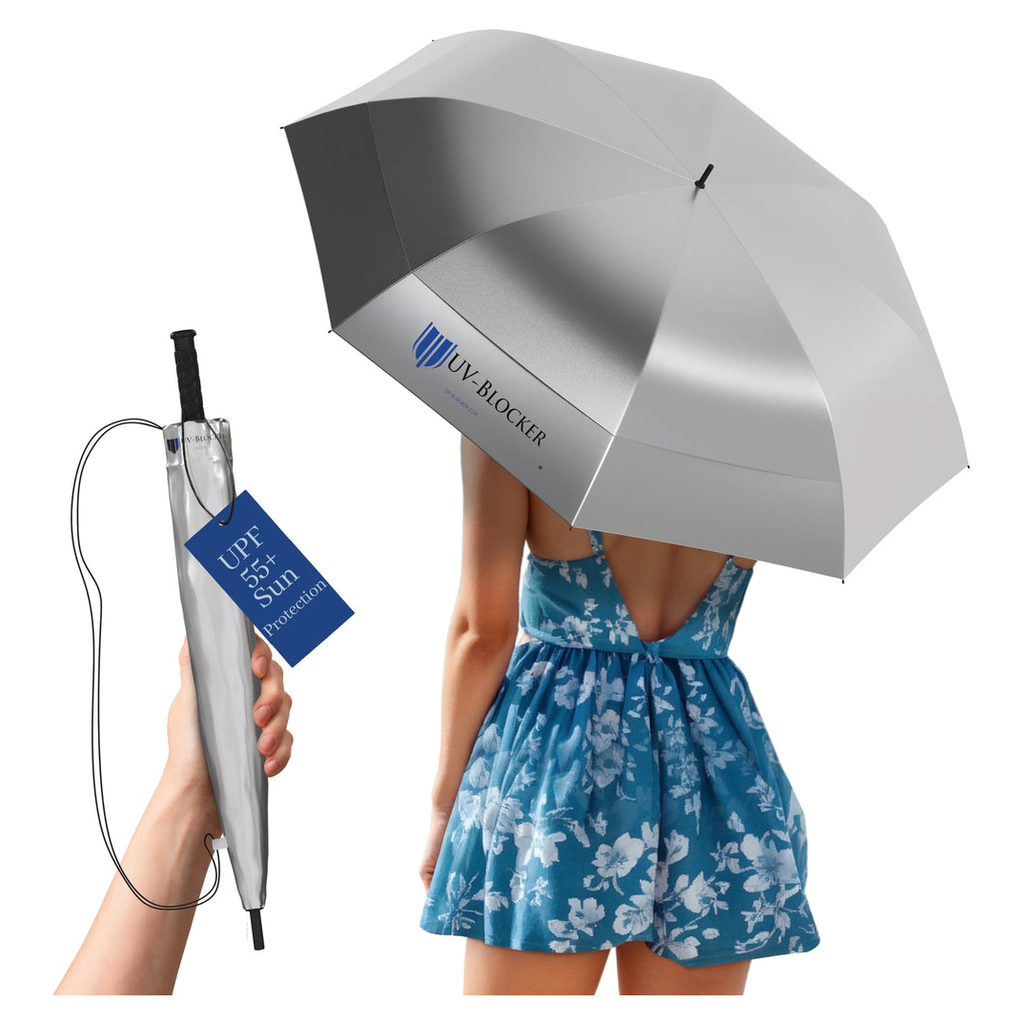
- A UPF 50+ umbrella blocks UV from hitting skin or equipment, no chemicals involved
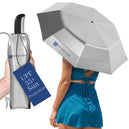
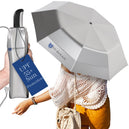
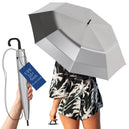
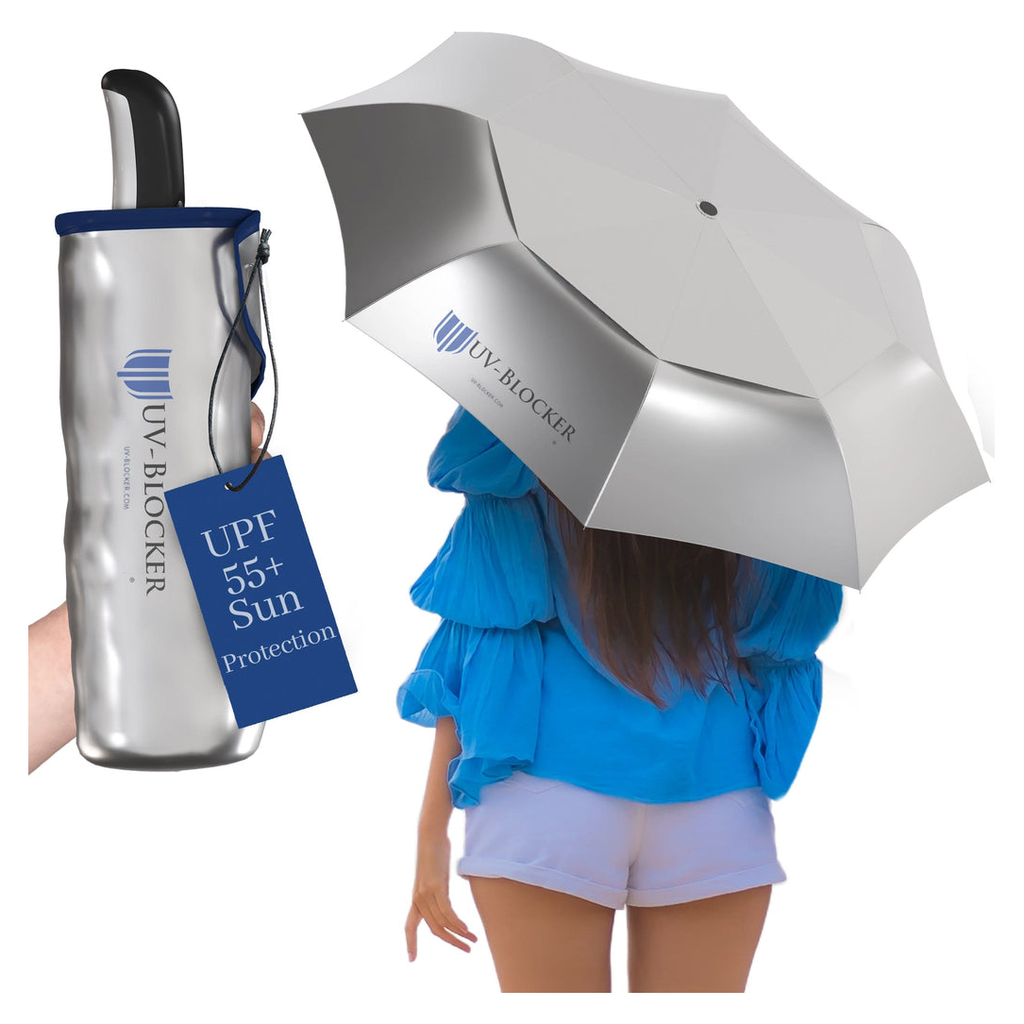
- The UV-Blocker Compact folds down to 11.5 inches and weighs 15 oz, fits right in a camera bag
- Solarteck® reflective coating drops temperature underneath by up to 15F, keeping cameras from overheating
- Different setups work for different gigs: tripod clamps, handheld shade, chair-mounted rigs
Why Are Outdoor Photographers at Higher Risk for UV Damage?
Outdoor photographers work under direct sun for 4-8 hours per shoot, facing 1.77x higher skin cancer risk compared to indoor workers.
Photographers face outsized UV risk because the job pins them in direct sun for hours at a time, hands and face and neck constantly exposed, with no easy option to duck into shade.
The CDC flags 10 a.m. to 4 p.m. as the danger window for ultraviolet radiation. Wedding photographers don't get to pick the ceremony time. Sports shooters cover midday kickoffs. Freelancers doing corporate event work? They show up when told.
What makes this worse than, say, a runner's UV exposure is the stationary part. A jogger passes through patches of shade and sun. A photographer crouched behind a 600mm lens in a marsh doesn't move for three hours straight. That difference matters clinically. A meta-analysis in Deutsches Arzteblatt International puts the number at 1.77x higher squamous cell carcinoma risk for people who work outdoors compared to indoor workers.
Hands take the worst of it. Nobody thinks about their knuckles, but gripping a camera body for hours bakes the backs of both hands. The American Academy of Dermatology lists hands and forearms as prime spots for actinic keratosis, a precancerous condition tied to years of UV buildup.
And then there's the eye situation. Can't wear sunglasses while looking through a viewfinder. So photographers squint into a bright OVF for an entire four-hour ceremony, eyes totally unshielded. It adds up quietly.
How Does Sunscreen Damage Camera Equipment?
Sunscreen chemicals dissolve lens coatings, rubber grips, and camera plastics, then transfer residue to every button, screen, and control the photographer touches during a shoot.
Sunscreen chemicals break down lens coatings, eat into camera grip rubber, and leave greasy smears on every touchscreen and viewfinder photographers depend on for sharp shots.
Here's what's actually happening at the chemical level. Avobenzone, oxybenzone, octinoxate (the UV-absorbing ingredients in most sunscreens) are solvents. That's how they work: they dissolve into skin to absorb UV before it causes damage. Problem is, they dissolve into camera plastics too. Digital Camera World flagged this directly, noting that sunscreen can melt camera body plastics and strip the anti-reflective coatings right off lens elements. Mix in DEET from bug spray (common on outdoor shoots), and buttons, labels, and rubberized surfaces start breaking down even faster.
The contamination chain goes like this. Photographer lathers up at 7 a.m., grabs the camera, and within minutes every contact surface picks up residue: shutter release, lens barrel, focus ring, rear LCD, the EVF eyecup. By noon the touchscreen's a smudged mess. The focus ring feels like it's coated in cooking oil. Grip texture starts going soft.
Spray sunscreen creates a different headache. That fine mist doesn't just land on skin. It drifts. It settles on the front element. What shows up in the images? Reduced contrast, hazy highlights, ghosting around light sources. Nobody wants to explain to a bride why the first-kiss photo looks like it was shot through wax paper.
So the sweat starts flowing, the sunscreen runs into the eyes, vision goes blurry right when a critical AF lock matters most. Plenty of photographers just... stop applying SPF. They choose the camera over their skin, which isn't a tradeoff anyone should have to make. Sun protection for photographers has to work without touching the gear at all.
Why Is Physical UV Shade a Photographer's Best Option?
A UPF 50+ umbrella blocks UV continuously without chemical contact, while cutting heat buildup and making LCD screens readable again.

Think about what shade actually eliminates. No chemicals near the camera. No oily residue migrating onto coatings. No touchscreen smears. A UPF 50+ rated umbrella stops 98%+ of both UVA and UVB passively. Zero reapplication. Use it for an eight-hour wedding and it's still blocking UV at the end exactly the same as it was at the start.
But the heat angle matters just as much to photographers, honestly. Cameras throw up overheating warnings once their internals hit roughly 104F (40C). That's when the flashing thermometer icon appears and the camera shuts itself down, right in the middle of a shoot. The UV-Blocker Compact Umbrella has a patented Solarteck® coating that bounces infrared heat away, dropping the temperature underneath by up to 15F versus direct sun. That thermal margin can be the difference between a camera that keeps shooting and one that shuts down during a July outdoor ceremony.
Then there's the LCD problem every outdoor photographer knows too well. Cup both hands around the screen. Squint. Tilt. Still can't tell if the histogram is clipped. Under an umbrella canopy, that screen suddenly becomes readable again. Checking exposure and confirming focus doesn't require a dedicated loupe or hunching over in a weird position.
The weight question settles itself quickly. UV-Blocker's Compact folds to 11.5 inches and weighs 15 oz. That's less than most kit lenses. It fits in the same camera bag pocket where rain covers go. For a kit that already includes multiple bodies, glass, and light modifiers, 15 ounces barely registers.
| Protection Method | UV Block | Reapplication | Equipment Safe | Hands-Free Option | Weight/Portability |
|---|---|---|---|---|---|
| SPF 50 Sunscreen | 98% UVB | Every 2 hours | No (eats coatings and plastics) | N/A | High |
| UPF 50+ Umbrella | 98%+ UVA/UVB | None | Yes | Yes (with clamp holder) | High (15 oz folded) |
| Wide-brim Hat | Partial (face/neck only) | None | Yes | Yes | High |
| Pop-up Canopy | Varies by fabric | None | Yes | Yes | Low (15+ lbs, setup time) |
| UV Arm Sleeves | Arms only | None | Yes | Yes | High |
For context on what UPF 50+ certification actually means: UV-Blocker's Solarteck® fabric tests at 100% UV-B block and 99.97% UV-A block under AATCC TM183-2020 standards.
Setup Ideas for Different Photography Scenarios
Different shooting styles need different shade rigs, but they all start with the same compact umbrella and add mounting hardware based on workflow.
The right shade configuration depends on the type of shoot, and honestly, photographers are already used to rigging gear in creative ways. This just adds one more piece to the setup.
Outdoor Portraits and Studio Work
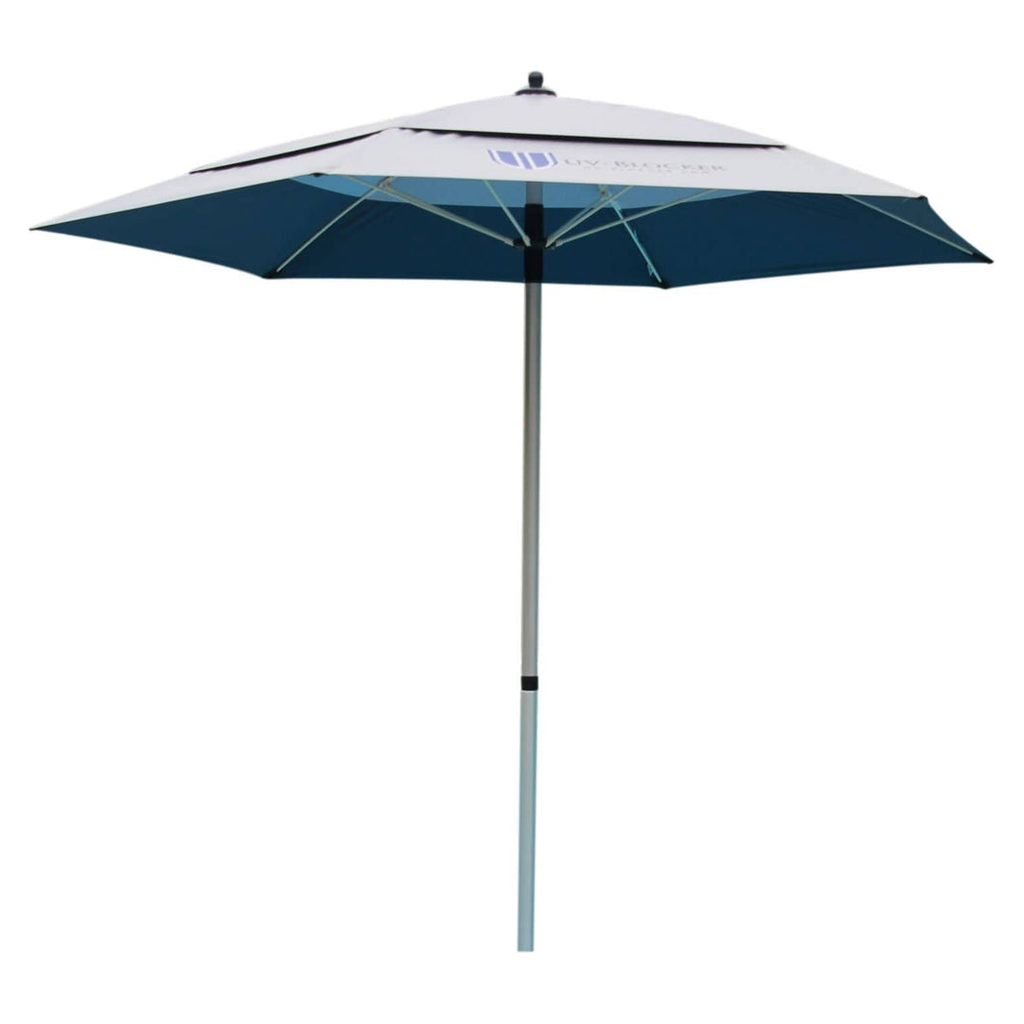
Clamp a Chair Umbrella Holder to a light stand or tripod, mount the umbrella, and you've got a fixed shade station right over the shooting position. Bonus that portrait photographers especially appreciate: that silver Solarteck® coating bounces soft, diffused light back toward the subject. It's not a dedicated reflector, but it functions like one. And most portrait kits already include a reflector disc anyway, so this just folds one more job into gear that's already pulling double duty.
Wedding and Event Coverage
Wedding shooters move too much for fixed shade. That's fine. A compact umbrella stowed in the camera bag deploys in seconds. Between ceremony and reception, during family formals, while the DJ handles intros... those gaps between constant motion are when sun protection for photographers actually becomes practical. Pop it open, stand in shade, keep the camera cool.
Wildlife and Birding
Nobody sits in the sun longer than birders. Three hours waiting for a heron to land, five hours in a hide for raptors. A chair combined with an umbrella holder clamp frees both hands for the camera while the umbrella handles shade. When the shoot runs from dawn to mid-afternoon, skipping UV protection isn't something the skin forgives long-term.
Sports Sideline
Sideline photographers often stage two or three camera bodies around a chair or stool, swapping between a wide zoom and a 400mm prime as action moves across the field. A clamped umbrella shades not just the photographer but those backup bodies baking on the ground between plays. Sensor temperature matters even when the camera isn't in use.
What Should Every Outdoor Photographer Carry for UV Safety?
The complete UV safety kit for photographers boils down to five items. All of them fit in or clip onto a standard camera bag.
- UPF 50+ compact umbrella. This is the centerpiece. Blocks UV from reaching skin or gear, no chemicals involved. At 11.5 inches folded, it tucks in next to the rain cover. Think of it as one more piece of photography gear that happens to prevent skin cancer.
- Clamp holder. Can't hold an umbrella and a camera at the same time. A holder mounted to a tripod leg, chair arm, or equipment cart gives hands-free shade during stationary setups. Non-negotiable for any shoot longer than an hour.
- Wide-brim hat. Good for walking between positions when the umbrella's stowed. Won't do anything for hands, arms, or gear, but it keeps the scalp and face covered during transitions.
- Fingerless UV gloves. Full gloves are a nonstarter for photographers. Can't work a dial wheel or press a tiny AF-ON button with fabric fingertips. Fingerless versions protect the backs of the hands (where actinic keratosis likes to show up) while keeping every control accessible.
- Polarized sunglasses. For eye protection between shots. They've gotta come off when looking through the viewfinder, though, which circles back to why overhead shade from an umbrella matters even more during active shooting.
Put together, these five items cover every exposure point without slowing down the workflow. Umbrella handles overhead UV and heat. Hat handles transitions. Gloves handle the hands. Glasses handle the eyes. Layered protection that doesn't interfere with actually taking pictures.
Frequently Asked Questions About Sun Protection for Photographers
Photographers tend to ask the same handful of questions about UV safety and gear damage. Here are the straight answers.
Does sunscreen damage camera lenses?
It can, yes. The chemical UV filters in sunscreen (particularly avobenzone and oxybenzone) strip anti-reflective coatings off lens elements over time. They also soften and dissolve the rubberized grip material on camera bodies. Washing hands before touching gear helps, but the residue transfers fast during a long shoot. Shade eliminates the risk entirely.
Can direct sunlight damage a camera sensor?
Direct, prolonged sun exposure overheats sensors, creates dead pixels, and breaks down the lubricants in internal focusing mechanisms. Telephoto lenses are especially dangerous because they concentrate light. Shade drops ambient sensor temperature meaningfully. That's free insurance against slow degradation.
How do photographers protect themselves from the sun?
Most experienced outdoor photographers layer physical barriers: UPF 50+ umbrellas, wide-brim hats, fingerless UV gloves, polarized sunglasses. Chemical sunscreen is typically avoided for the hands and face because it contaminates camera surfaces on contact. A compact umbrella weighing under a pound fits in virtually any bag.
What temperature causes cameras to overheat?
The warning icon typically appears around 104F (40C) internal temperature. Hold the camera in direct July sun for long enough and it'll get there. A UV-reflective umbrella can knock the ambient temperature underneath down by up to 15F, which buys significant extra shooting time before the thermal warning triggers.
Can a UV umbrella double as a photography reflector?
Sort of. The silver Solarteck® coating on a UV-Blocker umbrella reflects visible light along with UV. Angle it toward a subject and it bounces back a surprisingly usable amount of soft fill, not unlike a collapsible reflector disc. It won't replace a proper 5-in-1 reflector for controlled work, but for quick fill during a run-and-gun portrait session, it's a genuine two-for-one piece of gear.
Conclusion
Sun protection for photographers involves protecting both skin and equipment from chemical and thermal damage during long outdoor shoots.
Sun protection for photographers isn't just about skin health. It's an equipment question too. The sunscreen-camera conflict is real, well-documented, and almost completely ignored by both the photography and sun safety industries.
Physical UV shade cuts through the whole dilemma. A UPF 50+ umbrella shields the photographer from cumulative UV damage while keeping sunscreen chemicals off the gear. It prevents overheating. It makes the LCD readable. And it folds small enough to forget it's in the bag until it's needed.
One thing to do before the next outdoor shoot: toss a UV-Blocker Compact in the camera bag. Folds to 11.5 inches, weighs 15 oz, takes up less room than a lens. Protects everything underneath it. Doesn't need reapplication. Doubles as a fill reflector in a pinch.
UPF 50+ Certified • MIF Approved • Dermatologist Recommended
Browse the Full UPF 50+ Umbrella Collection
Compact, Travel, Golf, and Beach models. Solarteck® certified protection, free shipping, 1-year warranty. HSA/FSA eligible.
Shop UPF 50+ Umbrellas →Sun Safety in Australia
Australia has some of the highest UV radiation levels in the world, with the UV Index regularly reaching extreme levels (11 or above) in cities such as Sydney, Melbourne, Brisbane, Perth, and Adelaide for much of the year — including on overcast days. The Cancer Council Australia reports that approximately two in three Australians will be diagnosed with some form of skin cancer by age 70, making sun protection a national health priority.
Key resources and guidelines for Australian sun safety:
- SunSmart Program (Cancer Council Australia): The SunSmart UV Alert is broadcast daily and recommends sun protection whenever the UV Index reaches 3 or above. In most Australian cities, this threshold is met every day of the year, including winter months in northern regions.
- ARPANSA (Australian Radiation Protection and Nuclear Safety Agency): Provides real-time UV monitoring at stations across all states and territories. Australians can access current UV levels at arpansa.gov.au.
- Safe Work Australia — UV Radiation as an Occupational Hazard: Australian workplace health and safety legislation requires employers to assess and manage UV radiation exposure for outdoor workers. Physical shade, including umbrellas rated UPF 50+, is recognised as a primary engineering control under these regulations.
A UPF 50+ UV-blocking umbrella provides the consistent, continuous shade protection that is essential under Australia's intense sun. The UV-Blocker umbrella, with its patented Solarteck® reflective coating, blocks 99% of UV rays and reduces perceived temperature by up to 15°F — a meaningful advantage for outdoor activities in Australia's climate. It is the only umbrella of its kind approved by the Melanoma International Foundation.
Sun Safety in Canada
Canada experiences meaningful UV exposure throughout the year, with UV Index levels regularly reaching 8–10 or higher during summer months in cities such as Vancouver, Calgary, Toronto, and Ottawa. Health Canada and Environment and Climate Change Canada publish daily UV Index forecasts and recommend protective measures whenever the index exceeds 3 — a threshold reached on most clear days between May and August across the country.
Key resources for Canadian sun safety:
- Health Canada UV Index: Published daily via the Environment and Climate Change Canada weather portal (weather.gc.ca). Canadians can track UV levels by city and receive alerts when protection is recommended.
- Canadian Cancer Society: Recommends UPF 50+ clothing, hats, sunscreen, and shade-seeking as primary sun protection strategies. Physical UV barriers — such as UPF 50+ umbrellas — are emphasized for prolonged outdoor exposure.
- Canadian Dermatology Association: Endorses broad-spectrum sun protection strategies, including shade structures and UV-blocking accessories, especially for individuals with fair skin or a personal or family history of skin cancer.
For Canadians spending extended time outdoors — whether working, playing sports, or enjoying recreational activities — a UV-blocking umbrella rated UPF 50+ provides continuous, reapplication-free protection. The UV-Blocker umbrella, independently tested and approved by the Melanoma International Foundation, blocks 99% of UV rays and keeps users up to 15°F cooler — making it a practical and reliable companion for Canadian summers.
Frequently Asked Questions
What are the specific UV risks for Sun Protection for Photographers?
Outdoor workers like Sun Protection for Photographers typically accumulate 2–3× more UV exposure than indoor office workers. Chronic UV exposure increases melanoma and non-melanoma skin cancer risk significantly. OSHA recognizes UV radiation as a workplace hazard, and workers' compensation claims related to occupational UV exposure are rising. Proper sun protection is both a health and occupational safety requirement.
Does OSHA require sun protection for outdoor workers?
OSHA's General Duty Clause requires employers to protect workers from recognized hazards, including UV radiation. While no specific UV standard exists for most industries, OSHA guidance on heat illness prevention overlaps with UV protection. Several states have stronger outdoor worker heat and UV protection regulations. Employers should provide shade, schedule breaks, and supply sun protection equipment.
What sun protection equipment works best for active outdoor work?
For workers who need freedom of movement, the most effective combination is: (1) UPF 50+ work shirts and pants, (2) wide-brim hard hat or sun-protective hat, (3) SPF 50 water-resistant sunscreen on exposed skin, and (4) a portable clamp or magnetic-base UV umbrella that creates shade at a fixed workstation. UV-Blocker's ServiceShield umbrella was specifically designed for rooftop and outdoor workstation use.
How often should outdoor workers apply sunscreen during a shift?
Sunscreen should be reapplied every 2 hours, and immediately after heavy sweating or toweling off. Most outdoor workers underapply — dermatologists recommend 1 oz (shot glass amount) for full body coverage. Water-resistant SPF 50+ formulas last longer during sweating. Physical (mineral) sunscreens tend to be more stable under direct sun than chemical formulas.
What long-term skin damage should outdoor workers watch for?
Watch for actinic keratoses (rough, scaly patches), unusual moles or growths that change in size, shape, or color, and persistent sores that don't heal. Annual skin cancer screenings with a dermatologist are strongly recommended for outdoor workers with 10+ years of occupational sun exposure. Early detection dramatically improves outcomes.
Professional Sun Safety Protocol for Sun Protection for Photographers
- Schedule intensive UV work (roof work, outdoor inspections) before 10am or after 4pm when UV index is lowest
- Use UV-blocking umbrella attachments at fixed workstations — they eliminate ambient UV exposure during breaks
- Establish a buddy system: coworkers check each other for missed sunscreen areas and early sunburn signs
- Keep sunscreen in the work vehicle or tool bag — accessibility increases compliance
- Document sun protection training in safety briefings — it creates legal compliance records and reinforces habits
- Consider UV-protective safety eyewear — eyes are often neglected in outdoor worker sun protection protocols
Frequently Asked Questions
What are the specific UV risks for Sun Protection for Photographers?
Outdoor workers like Sun Protection for Photographers typically accumulate 2–3× more UV exposure than indoor office workers. Chronic UV exposure increases melanoma and non-melanoma skin cancer risk significantly. OSHA recognizes UV radiation as a workplace hazard, and workers' compensation claims related to occupational UV exposure are rising. Proper sun protection is both a health and occupational safety requirement.
Does OSHA require sun protection for outdoor workers?
OSHA's General Duty Clause requires employers to protect workers from recognized hazards, including UV radiation. While no specific UV standard exists for most industries, OSHA guidance on heat illness prevention overlaps with UV protection. Several states have stronger outdoor worker heat and UV protection regulations. Employers should provide shade, schedule breaks, and supply sun protection equipment.
What sun protection equipment works best for active outdoor work?
For workers who need freedom of movement, the most effective combination is: (1) UPF 50+ work shirts and pants, (2) wide-brim hard hat or sun-protective hat, (3) SPF 50 water-resistant sunscreen on exposed skin, and (4) a portable clamp or magnetic-base UV umbrella that creates shade at a fixed workstation. UV-Blocker's ServiceShield umbrella was specifically designed for rooftop and outdoor workstation use.
How often should outdoor workers apply sunscreen during a shift?
Sunscreen should be reapplied every 2 hours, and immediately after heavy sweating or toweling off. Most outdoor workers underapply — dermatologists recommend 1 oz (shot glass amount) for full body coverage. Water-resistant SPF 50+ formulas last longer during sweating. Physical (mineral) sunscreens tend to be more stable under direct sun than chemical formulas.
What long-term skin damage should outdoor workers watch for?
Watch for actinic keratoses (rough, scaly patches), unusual moles or growths that change in size, shape, or color, and persistent sores that don't heal. Annual skin cancer screenings with a dermatologist are strongly recommended for outdoor workers with 10+ years of occupational sun exposure. Early detection dramatically improves outcomes.
Professional Sun Safety Protocol for Sun Protection for Photographers
- Schedule intensive UV work (roof work, outdoor inspections) before 10am or after 4pm when UV index is lowest
- Use UV-blocking umbrella attachments at fixed workstations — they eliminate ambient UV exposure during breaks
- Establish a buddy system: coworkers check each other for missed sunscreen areas and early sunburn signs
- Keep sunscreen in the work vehicle or tool bag — accessibility increases compliance
- Document sun protection training in safety briefings — it creates legal compliance records and reinforces habits
- Consider UV-protective safety eyewear — eyes are often neglected in outdoor worker sun protection protocols