

48.3 million Americans now play pickleball. Almost none of them have shade at the court.
The sport has exploded in popularity, growing 311% in just three years according to the Sports and Fitness Industry Association (SFIA). Yet, infrastructure has not kept pace with participation. The vast majority of the 70,000+ public courts in the United States were either retrofitted from tennis courts or built as open-air facilities with zero shade structures. As a result, millions of players are spending hours on sun-baked surfaces without realizing the cumulative UV damage occurring not just during the game, but in the forgotten minutes between points.
While most players focus on sunscreen and hats, comprehensive sun protection for pickleball requires a three-layer approach: what you wear, what you apply, and the missing third layer (portable shade) that most players overlook.
Why Does Pickleball Create Elevated UV Risk?
Pickleball creates elevated UV risk because typical sessions last 1-3 hours on reflective concrete courts during peak UV hours, with sweat degrading sunscreen protection by 58% within 30 minutes.
The nature of the game exposes participants to solar radiation in ways that differ significantly from other outdoor activities. Recreational open play sessions typically run between one and three hours, while tournament days can extend from four to eight hours. Unlike a 30-minute jog or a shaded hike, pickleball players remain on an exposed court surface for extended durations. Many players arrive intending to play "just a few games" but often stay much longer due to the social and addictive nature of the sport.
The court surface itself amplifies the danger. Concrete reflects between 7% and 15% of UV rays back upward, according to research on ultraviolet radiation albedo. This means players are hit with UV radiation from two directions: directly from the sun and indirectly from the ground. Standard hats and visors protect against overhead rays but do little to block this reflected radiation, which strikes the face and neck from below. This "bounce-back" effect is a critical factor that many standard sun safety guides fail to address.
Timing further compounds the risk. Most recreational pickleball takes place between 9 AM and 2 PM, directly overlapping with the hours when the sun’s rays are strongest. Even the popular "early morning" games starting at 9 AM often extend into the moderate-to-high UV index window. Players who believe they are beating the sun by starting early are frequently still playing when UV levels spike.
Physiological factors also compromise traditional protection methods. A study on sunscreen durability found that perspiration reduces SPF effectiveness by approximately 58% (±26%) after just 30 minutes of activity. The stop-start nature of pickleball induces heavy sweating, which rapidly degrades the chemical barrier of sunscreen, leaving skin vulnerable long before the recommended reapplication time.
Finally, the demographics of the sport play a role. The core audience for pickleball falls within the 35-65 age range. This group has already accumulated significant lifetime UV exposure, making additional unprotected hours on the court disproportionately dangerous. The risk is not just about a single sunburn, but the cumulative effect of hundreds of hours of additional exposure on aging skin. This makes proactive sun protection for pickleball especially critical for this age group.
What Is the Sideline Problem in Pickleball?
The sideline problem is the 30-60 minutes per session that pickleball players spend waiting courtside between open play games, sitting in full sun with no shade.
Most public pickleball venues operate on an "open play" format rather than a reservation system. Players rotate on and off courts, typically playing one or two games before vacating the court for the next group. In a crowded session, this rotation often results in a 1:1 ratio of play time to wait time. During a two-hour session, a player might spend 45 to 60 minutes physically active on the court and an equal amount of time sitting on a bench waiting for their next turn.
This waiting period is the most dangerous component of the pickleball sun exposure equation. While players are moving and adjusting their angles during a game, sitting on a bench often involves remaining static in direct sunlight. The sun beats down on the same areas of skin (often the knees, neck, and shoulders) without interruption. You drove to the court for exercise, but you are effectively spending a third of your time sitting still in a high-UV environment.
The infrastructure gap exacerbates this issue. As noted, most of the nation's 70,000+ courts lack any form of shade structure. Players retreat to benches, low walls, or folding chairs placed directly on the concrete sidelines. There are no trees, no awnings, and no roof overhangs.
This exposure affects more than just the players in the rotation. Spectators, parents waiting for junior clinics, and injured players observing the game all face the exact same "sideline problem." They are stationary targets for UV radiation, often for hours at a time, without the distraction of the game to remind them of the sun's intensity.
What Should Pickleball Players Wear for UV Protection?
Pickleball players should wear UPF 50+ performance shirts, wide-brim or legionnaire-style hats, UV400 polarized sunglasses, and arm sleeves for maximum on-court UV coverage.
Clothing acts as the first line of defense, providing a physical barrier that does not wash off or degrade with sweat. Players should prioritize garments with a UPF (Ultraviolet Protection Factor) rating of 50+, which blocks 98% of UV rays. Athletic-cut shirts made from high-performance synthetic fabrics are essential, as they allow for the full range of motion required for serves, overheads, and volleys. Cotton t-shirts should be avoided; a standard white cotton tee offers a UPF of only about 5, which drops even lower when wet with sweat. For a deeper understanding of fabric ratings, review how UPF 50+ is explained.
Headwear selection is equally critical. While baseball caps are the most common choice on the courts, they leave the ears and the back of the neck completely exposed, two common sites for skin cancer. A wide-brim hat offers superior 360-degree protection. Alternatively, a legionnaire-style cap, which features a fabric flap covering the neck and ears, provides excellent coverage without the wind resistance of a large brim.
Eye protection serves a dual purpose in pickleball. UV400 polarized sunglasses reduce the blinding glare from light-colored concrete courts, improving ball visibility, while simultaneously protecting the eyes from photokeratitis (sunburn of the eye) and long-term damage like cataracts. Sport straps are recommended to keep glasses secure during rapid movements at the non-volley zone.
For players who prefer short sleeves but want adjustable protection, compression arm sleeves are a valuable addition. These can be worn during high-sun hours and removed as conditions change, protecting the forearms, a primary exposure zone during paddle sports. Building a wearable sun protection for pickleball kit around UPF gear ensures consistent coverage regardless of sunscreen reapplication timing.
How Often Should You Reapply Sunscreen During Pickleball?
Reapply SPF 50+ broad-spectrum sunscreen every 80 minutes during pickleball, using a shot-glass amount each time, because sweat reduces SPF effectiveness by 58% within 30 minutes of activity.
The "apply once and forget it" strategy is ineffective for high-intensity court sports. Because sweat significantly degrades sunscreen performance, reapplication is non-negotiable. Players should choose a broad-spectrum, water-resistant formula with an SPF of 50+. Mineral sunscreens containing zinc oxide or titanium dioxide are often preferable for pickleball players, as they tend to sit on top of the skin and resist running into the eyes during heavy sweating better than some chemical formulations.
Quantity matters as much as quality. The American Academy of Dermatology recommends the "shot glass rule": use approximately one ounce (enough to fill a shot glass) to cover the exposed areas of the entire body. Most individuals apply less than half of this amount, drastically reducing the effective SPF. For pickleball players, critical areas often missed include the back of the neck, the ears, the tops of the hands, and the backs of the calves.
Despite these guidelines, compliance remains low. According to CDC data, only about 12% of men consistently use sunscreen when outdoors for more than an hour. This statistic highlights a major gap in behavior; most players simply skip protection, even when they know they will be exposed for extended periods.
To combat the degradation caused by sweat, set a timer on your phone or watch for 80 minutes immediately upon applying your first layer. Use the downtime between games (the "sideline time") to reapply. This turns a passive waiting period into an active protection opportunity, ensuring that your chemical barrier remains intact throughout a long session.
How Can You Create Shade at a Pickleball Court?
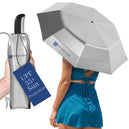
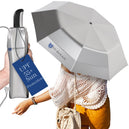
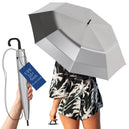
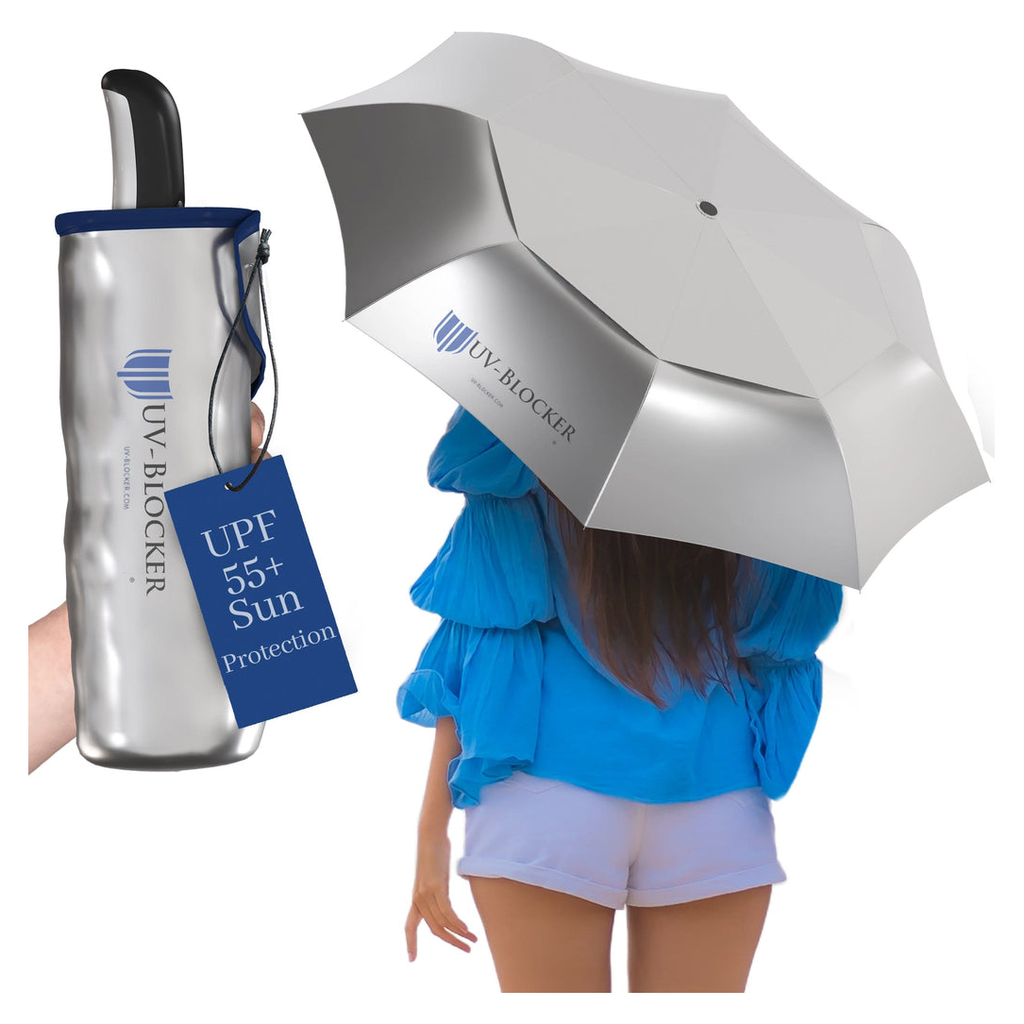
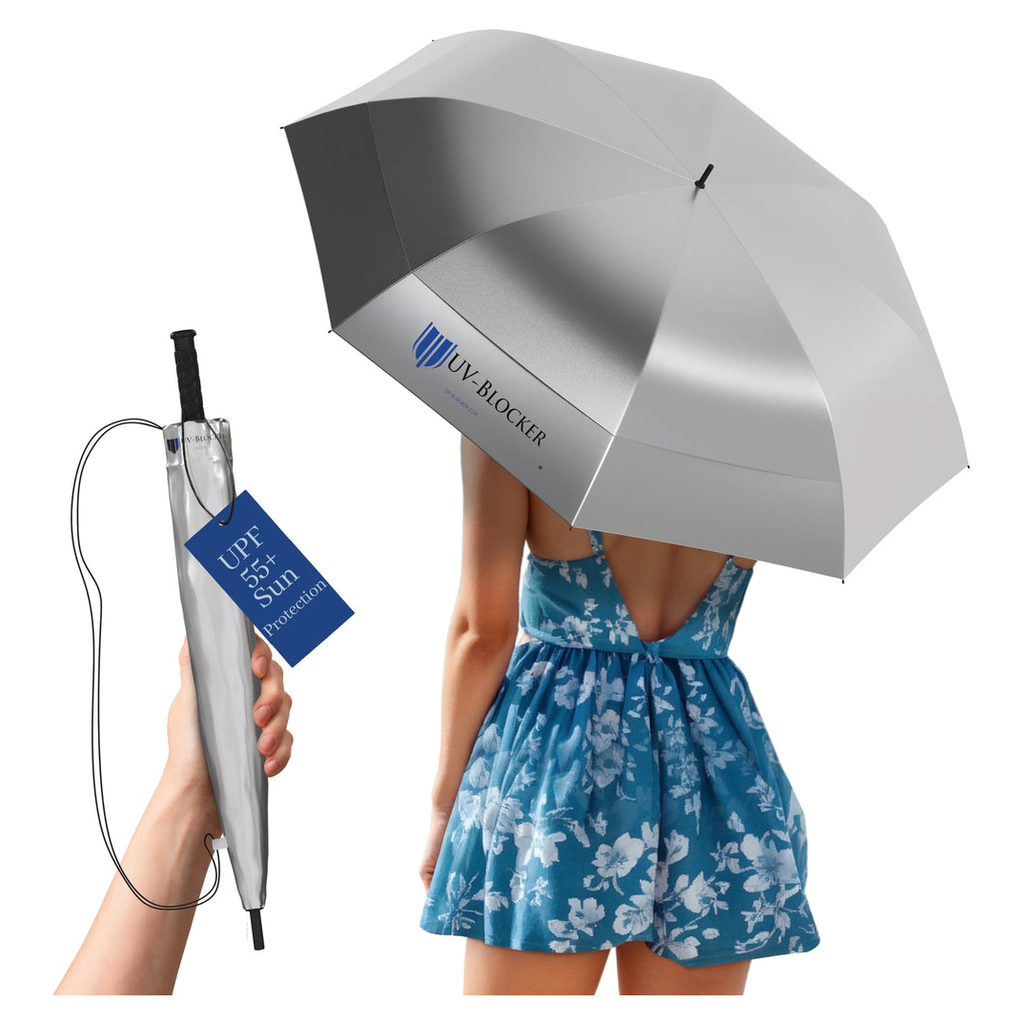
Portable UV umbrellas create instant courtside shade between pickleball games, offering UPF 50+ protection that folds into a paddle bag for under $60.
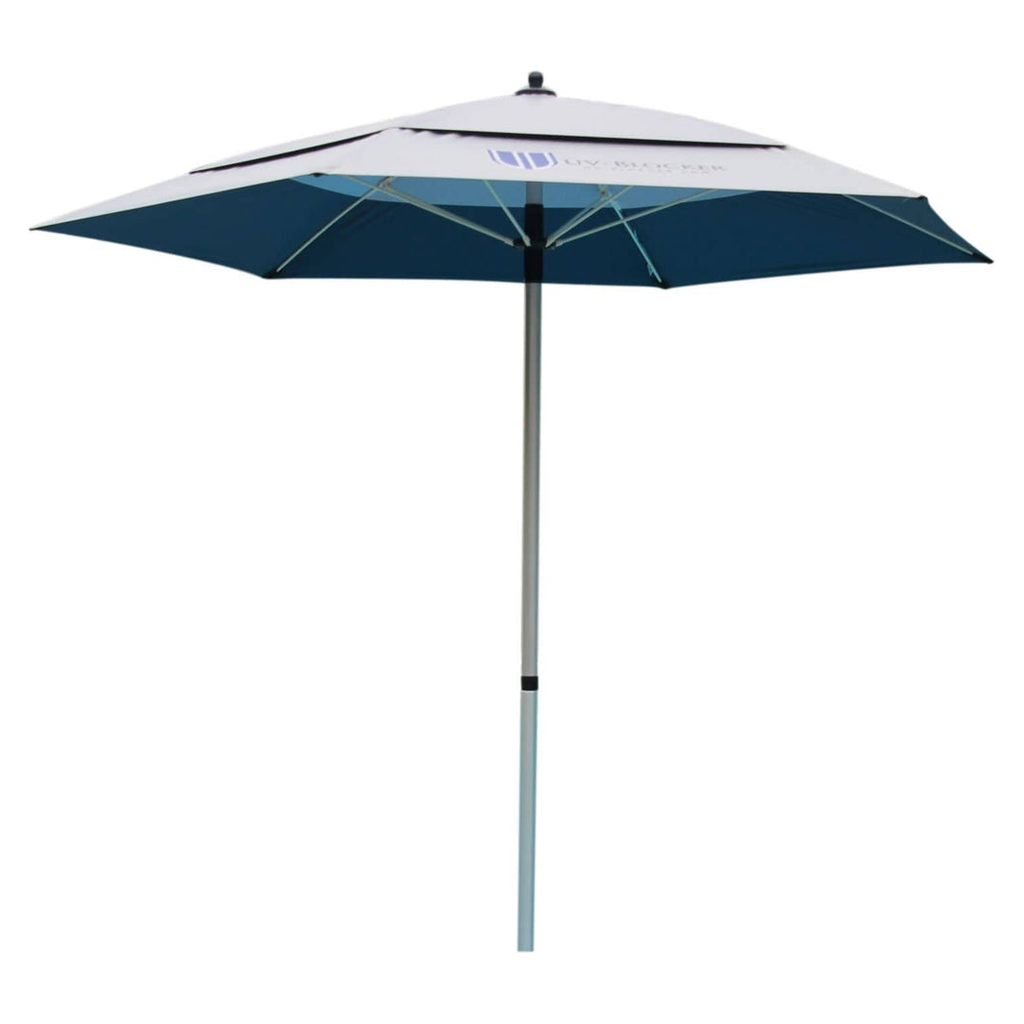
The infrastructure reality is that shade is expensive and rare. Permanent court shade structures, such as those from companies like Stay Cool As A Pickle, provide excellent coverage but cost upwards of $389 per unit and require facility approval and installation. For the average player visiting a public park, waiting for the city to install shade is not a viable strategy.
The personal solution lies in portable shade. A UV protection travel umbrella serves as a mobile shade structure that fits directly into a paddle bag. Unlike standard rain umbrellas, which may not block UV radiation effectively, a dedicated UV umbrella uses specialized fabric to block 99% of UV rays. This creates a personal microclimate that can be up to 15°F cooler than the surrounding air, significantly reducing heat stress while waiting for the next game. See the evidence on do UV umbrellas work for more on the science behind this technology.
For players who want to keep their hands free for hydration or checking scores, a sports umbrella holder is a key accessory. This device clamps securely to a courtside bench, chain-link fence, or folding chair, holding the umbrella in place. It transforms a standard bench into a shaded recovery zone instantly.
Comparing the options reveals the value of the portable approach. A full permanent structure costs hundreds of dollars and is immovable. Doing nothing costs zero dollars upfront but carries the hidden cost of cumulative UV damage. A portable UV umbrella, at a price point around $60, bridges the gap, offering high-level protection that travels with the player to any court, anywhere.

On-Court vs. Courtside Protection Comparison
| Protection Layer | What It Covers | When It Works | Limitation |
|---|---|---|---|
| UPF 50+ clothing | Covered skin during play | On-court only | Doesn't protect face, lower legs |
| SPF 50+ sunscreen | Exposed skin | On-court (degrades with sweat) | Must reapply every 80 min |
| Wide-brim hat | Head, face, neck | On-court and sideline | No body coverage |
| UV umbrella (courtside) | Full body shade | Sideline waiting | Not for active play |
| Permanent shade structure | Court and sideline | All the time | $389+, requires installation |
When Is UV Risk Highest for Outdoor Pickleball?
UV risk peaks between 10 AM and 4 PM when the UV index reaches 6 or higher, and pickleball hotspot states like Florida, Arizona, and Texas regularly hit UV index 8-11 during playing season.

Understanding the UV Index is as important as checking the wind speed before a match. The UV Index is a standardized measure of the strength of sunburn-producing ultraviolet radiation at a particular place and time. For pickleball players, a UV Index of 0-2 (Low) generally occurs in the early morning or late evening, requiring minimal protection. Levels of 3-5 (Moderate) demand a hat and sunscreen. Once the index hits 6-7 (High), full protection including courtside shade becomes critical. Levels of 8-10 (Very High) and 11+ (Extreme) signal that unprotected skin can burn in minutes, and players should limit session lengths and take mandatory shade breaks.
Geographically, the sport's popularity is concentrated in some of the most intense UV zones in the country. States like Florida, Arizona, Texas, and Southern California are pickleball meccas, boasting thousands of courts and year-round play. They also consistently record the highest average UV Index readings in the United States. This geographic overlap means that the average pickleball player is statistically more likely to be playing in a high-risk environment than a low-risk one.
The optimal strategy is to schedule play times to avoid the solar noon window. Organizing games before 10 AM or after 4 PM can significantly reduce exposure. However, open play schedules and tournament brackets often dictate mid-day start times. In these unavoidable instances, the three-layer protection strategy becomes mandatory rather than optional.
Players should make it a habit to check the UV Index on a weather app or the EPA's website before packing their gear bag. For a detailed breakdown of how to read these forecasts, consult the UV index umbrella guide.
Frequently Asked Questions About Sun Protection for Pickleball
These common questions cover the sun safety specifics that pickleball players search for most, from sunscreen selection to court shade options.
What is the best sunscreen for pickleball?
The best sunscreen for pickleball is SPF 50+ broad-spectrum, water-resistant mineral sunscreen with zinc oxide, which resists sweat degradation better than chemical alternatives during active play. Apply at least 20 minutes before stepping onto the court to allow it to bind to the skin, and set a timer to reapply every 80 minutes.
Do I need UPF clothing for pickleball?
UPF 50+ clothing blocks 98% of UV rays and provides consistent protection that doesn't degrade with sweat, making it essential for pickleball sessions lasting longer than one hour. Unlike sunscreen, which can rub off or sweat off, a UPF shirt provides a constant shield during play. Look for athletic-cut performance fabric that allows full range of motion.
What time of day is best to play pickleball to avoid sun?
Play pickleball before 10 AM or after 4 PM to avoid peak UV index hours, though any outdoor session requires sunscreen and shade regardless of timing. Even early morning sun can be damaging depending on the season and location, so checking the local UV index forecast is the only reliable method.
Do pickleball courts have shade?
Most public pickleball courts have no shade structures because they were retrofitted from tennis courts or built as open-air facilities, leaving players exposed during courtside waiting. While dedicated pickleball facilities are starting to add shade, the majority of the 70,000+ US courts remain uncovered, making personal shade solutions necessary.
Can you get skin cancer from playing pickleball?
Playing pickleball does not directly cause skin cancer, but cumulative UV exposure from regular outdoor sessions on reflective concrete courts increases lifetime skin cancer risk, particularly for the sport's core 35-65 age demographic. The Skin Cancer Foundation estimates that 1 in 5 Americans will develop skin cancer by age 70. Consistent protection during every session matters.
What UPF rating blocks the most UV?
UPF 50+ is the highest standard rating and blocks at least 98% of UV radiation, meaning less than 2% of UV rays reach the skin through the fabric. This offers significantly more protection than a standard white cotton t-shirt, which has a UPF of roughly 5 and allows about 20% of UV radiation to penetrate.
Conclusion
Complete sun protection for pickleball goes beyond a quick spray of sunscreen in the parking lot. To play safely for years to come, players must adopt a three-layer approach:
- Layer 1 (Wear): UPF 50+ clothing, wide-brim hats, and UV400 sunglasses for on-court defense.
- Layer 2 (Apply): Sweat-resistant SPF 50+ sunscreen, reapplied every 80 minutes to counter degradation.
- Layer 3 (Shade): A portable UV umbrella for the critical "sideline time" between games.
The sideline wait is the overlooked exposure window where the most preventable damage occurs. Addressing this blind spot costs a fraction of what medical treatments for skin damage might cost later. A complete protection kit (hat, sunscreen, and umbrella) can be assembled for $60-$150, a trivial investment for long-term health.
Effective sun protection for pickleball starts before you leave home. Check the UV index and ensure a UV protection travel umbrella is in your paddle bag. For verified protection, choose gear that is dermatologist recommended and designed specifically to block high-intensity solar radiation.