

PE teachers absorb over 300 J/m2 of UV radiation per workday. That is more than three times the international safe exposure limit.
TLDR:
- PE teachers receive 3x the internationally recommended safe UV dose during a typical workday
- New state recess mandates in Oklahoma (40 min/day) and Pennsylvania (30 min/day) are increasing teacher outdoor time
- Only 11.9% of teachers know their district has a sun protection policy
- A UPF 50+ umbrella blocks 99% of UV, stores in a desk drawer, and needs no school board approval
Teachers rarely think of themselves as outdoor workers. But recess supervision, bus duty, PE coaching, field trips, and dismissal monitoring add up to significant daily UV exposure that no one is tracking, no policy addresses, and no training covers.
Every existing school sun safety guide focuses on students. This guide is the first to address sun protection for teachers as the occupational health issue it actually is.
How Much UV Exposure Do Teachers Actually Get?
PE teachers average 2.7 hours outdoors per workday with mean UV exposure of 309.9 J/m2, exceeding international safety limits by more than three times.
A 2022 study published in the Journal of Cancer Education measured personal UV dosimeters worn by physical education teachers in Spanish primary and secondary schools. The findings were stark: PE teachers spent an average of 2.7 hours outdoors daily and received mean UV radiation of 309.9 J/m2. The internationally recognized safe occupational UV exposure limit sits at approximately 100 J/m2 per day.
The behavior data made the exposure data worse. Fewer than 20% of PE teachers used shade or wore a hat during outdoor lessons. Fewer than two-thirds applied sunscreen during the workday. High exposure combined with low protection creates compounding risk over a teaching career.
The Occupational Cancer Connection
The WHO and ILO jointly estimated in 2023 that on-the-job UV exposure raises nonmelanoma skin cancer (NMSC) risk by 60%. Nearly one in three NMSC deaths globally are caused by outdoor work. Working outdoors in the sun is the third-largest occupational carcinogen, behind asbestos and silica dust.
A Queensland, Australia study looked specifically at teachers and found that playground duty timing increased squamous cell carcinoma (SCC) risk by up to 64%, depending on geographic location and scheduling. Duty periods falling during peak UV hours drove the highest risk increases.
Teacher UV Exposure by Duty Type
| Duty Type | Typical Minutes/Day | Peak UV Window | UV Risk Level |
|---|---|---|---|
| PE / outdoor coaching | 120-180 | 10am-2pm | Very High |
| Recess supervision | 25-50 | 10am-12pm | High |
| Bus/dismissal duty | 15-30 | 2:30-3:30pm | Moderate-High |
| Field trips | 180-360 | Variable | Very High |
| Outdoor classroom | 45-90 | Variable | High |

These numbers are alarming on their own. But for millions of teachers, the outdoor exposure hours are about to increase.
Why Are State Recess Mandates Increasing Teacher UV Risk?
New state laws are mandating longer daily recess periods, increasing teacher outdoor supervision time without adding any UV protection requirements.
Oklahoma's SB 1481, signed by Governor Stitt in April 2026 and effective July 1, requires a minimum of 40 minutes of daily recess for students in full-day kindergarten through fifth grade. Lunch and physical education do not count toward the 40-minute requirement. Recess may be divided into separate periods, but every minute requires teacher supervision.
Pennsylvania's HB 1505, passed as part of the state budget, mandates 30 minutes of daily recess for K-5 students. The law specifies recess should be held outdoors when possible and cannot replace lunch or PE time.
More Minutes, More Exposure
These mandates reflect a growing national trend. According to the CDC School Health Policies and Practices Study, 87% of recess is held outdoors and 89% requires constant teacher supervision. The national average for elementary recess is 25 minutes per day, but that number is climbing as more states pass minimum requirements.
Every additional minute of mandated outdoor recess is an additional minute of UV exposure for the teacher standing watch. These laws are great news for children's physical activity. They are also creating a new occupational UV burden that nobody is addressing.
Does Your School's Sun Policy Actually Protect Teachers?
Most school sun policies ignore teachers entirely. Only 11.9% of teachers know their district has a sun protection policy, and fewer than one in four know about staff modeling requirements.
A CDC study published in Preventing Chronic Disease (PMC5774306) surveyed California elementary school teachers about sun safety awareness. The results exposed a gap: only 11.9% of teachers were aware their district had a sun protection policy. Only 23.1% knew they were expected to model sun-safe behavior for students.
The Modeling Paradox
That 23.1% figure reveals something deeper than a communication failure. Schools increasingly require teachers to demonstrate sun-safe behavior to students, but teachers receive no training on sun safety, no personal protection equipment, and no shade infrastructure for the outdoor spaces where they supervise.
Administrators expect modeling behavior without providing a single tool to model with. A teacher standing on an asphalt playground at noon with no hat, no umbrella, and no shade structure is not modeling sun safety. That teacher is absorbing UV radiation while being told to teach children about avoiding it.
The CDC's Guidelines for School Programs to Prevent Skin Cancer provide a comprehensive framework covering shade infrastructure, scheduling, and sun-safe culture. But the guidelines are written for policy-makers, focus primarily on students, and treat teacher personal protection as an afterthought. The individual adult standing on the playground is largely invisible in these documents.
If school policy will not protect teachers, teachers need to protect themselves.
What Sun Protection Works for Every Teacher Duty Type?
A UPF 50+ umbrella is the most practical teacher sun protection option. It blocks 99% of UV, needs no reapplication, stores in a desk drawer, and requires no school board approval.
The biggest constraint teachers face is not a lack of sun safety awareness. It is a lack of solutions that work within the school environment. Sunscreen requires reapplication every two hours, but stepping away from 25 children to reapply is not an option. Hats help but cover only the head and face. Long sleeves are impractical in summer heat, especially on asphalt playgrounds that can reach 140 degrees.
A UPF 50+ umbrella addresses every constraint at once.
Matching Protection to Duty Type
| Duty Type | Duration | Recommended Option | Key Benefit |
|---|---|---|---|
| Recess supervision | 25-50 min | Large Folding 58" ($69.95) | Covers teacher + nearby students |
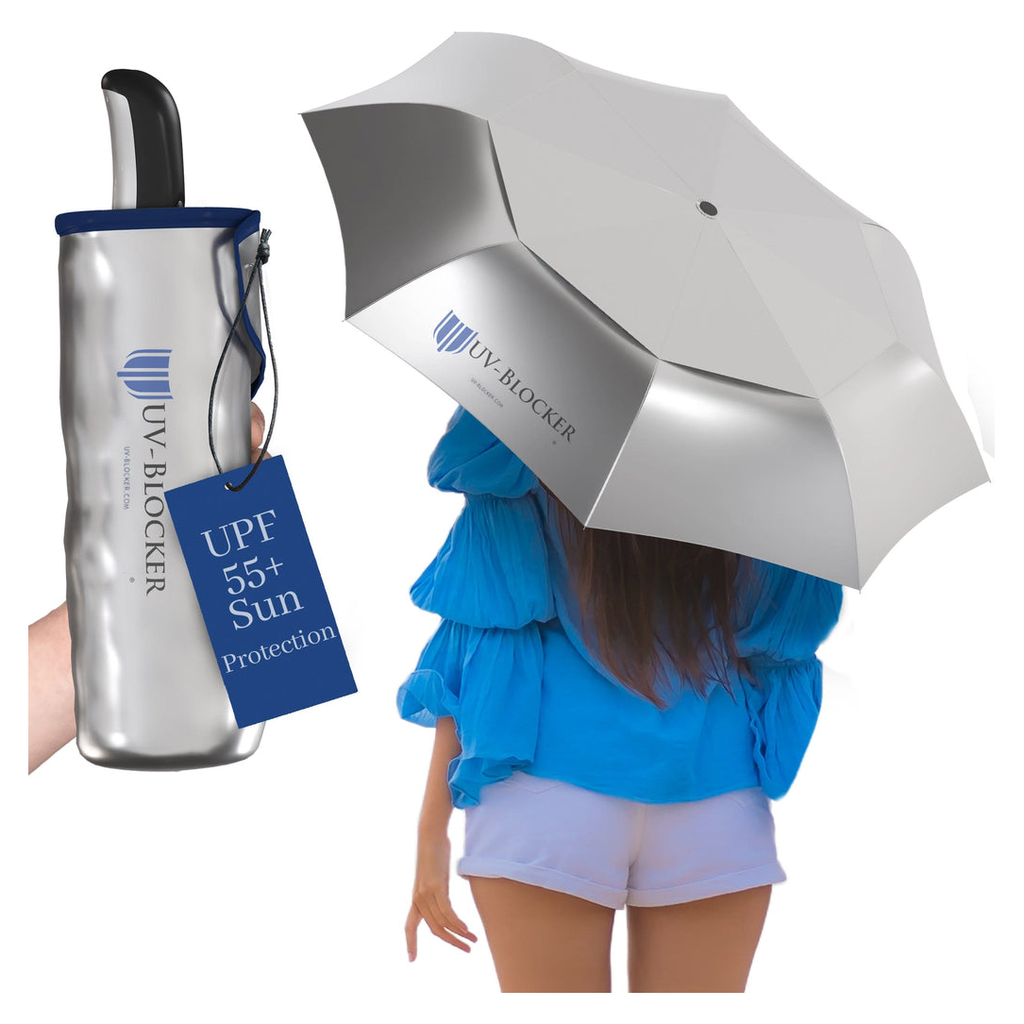
| Bus/dismissal duty | 15-30 min | Compact 42" ($59.95) | Auto-open/close, folds for desk |
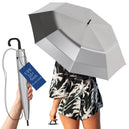
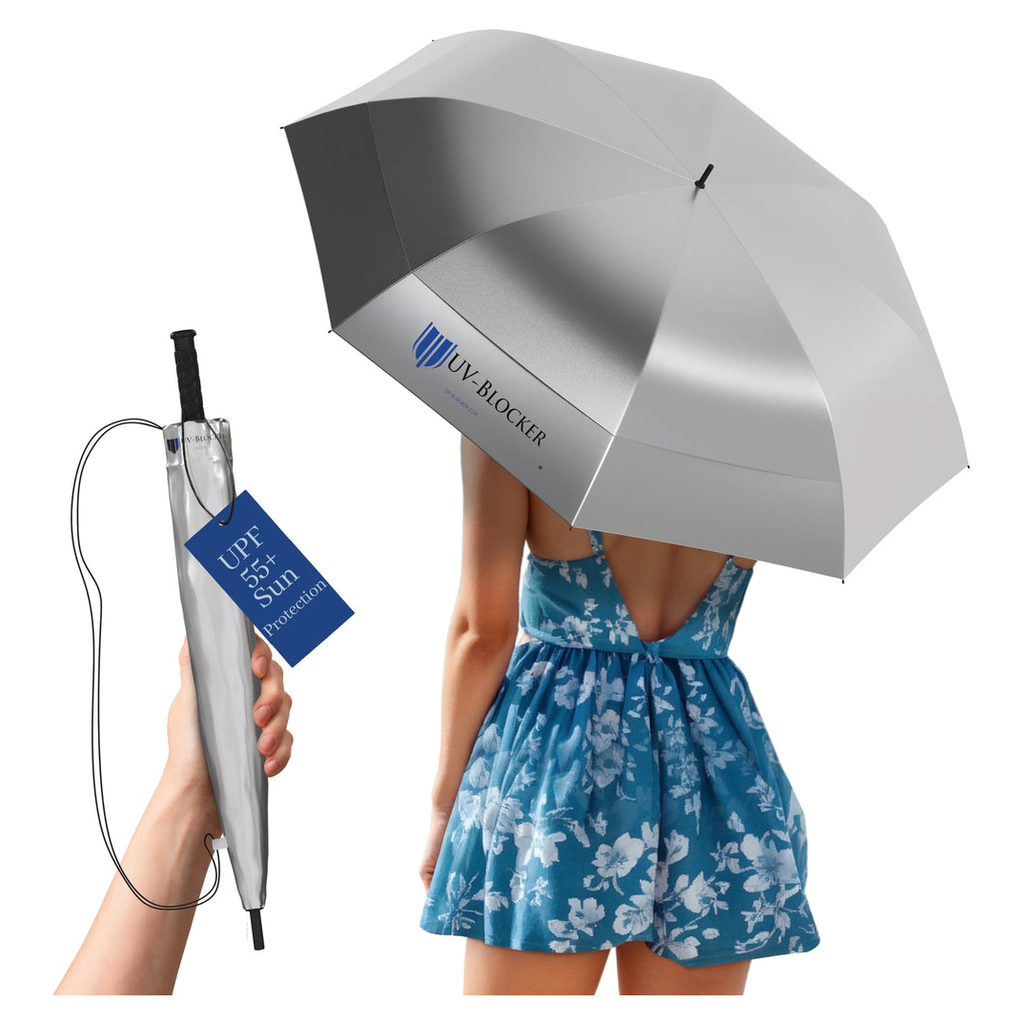
| PE / coaching | 2-3 hours | Golf 62" ($79.95) | Maximum coverage area |
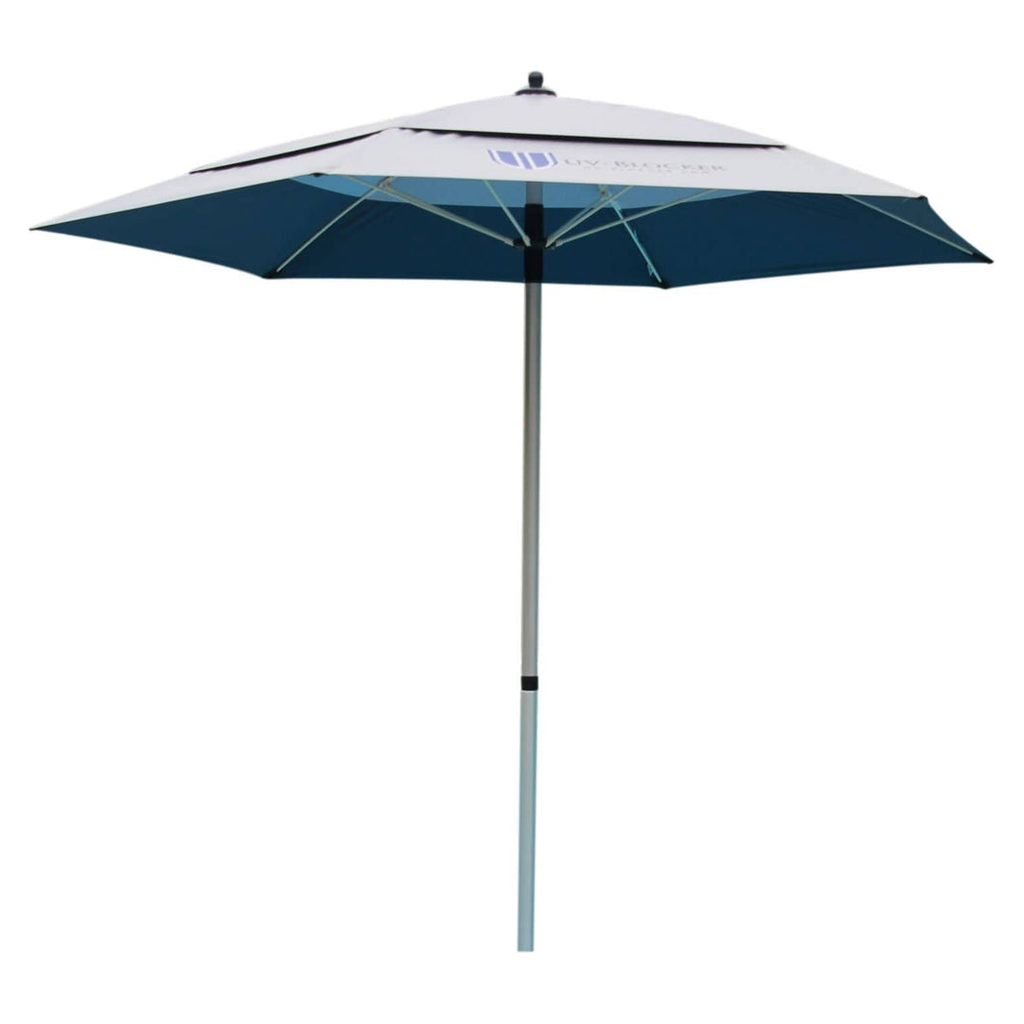
| Outdoor classroom | 45-90 min | Any umbrella + Chair Holder ($64.95) | Hands-free stationary shade |
| Field trips | Half/full day | Travel 44" ($59.95) | Most portable option |
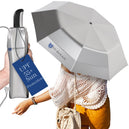
The Large Folding model is the strongest fit for playground duty. With a 58-inch arc, it covers the teacher and provides shade to nearby students, reinforcing the modeling behavior schools expect. It folds to 21 inches for classroom closet or locker storage.
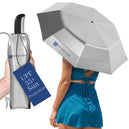
For bus and dismissal duty, the Compact model deploys with one button press (auto-open/auto-close) and folds to 11.5 inches. It fits in a desk drawer, tote bag, or the glove box of a car. PE teachers spending two or more hours outdoors benefit from the Golf model's 62-inch arc and maximum coverage area.
The Chair Umbrella Holder pairs with any UV-Blocker umbrella for hands-free shade at an outdoor desk, reading bench, or observation station. Mount it once and supervise without holding anything.
Why Does a UPF 50+ Umbrella Beat Sunscreen for Teachers?
Teachers cannot reapply sunscreen while supervising children, making a UPF 50+ umbrella the only protection that works continuously without interruption.
The American Academy of Dermatology recommends reapplying sunscreen every two hours, or immediately after sweating. For a PE teacher running outdoor drills for 2.7 hours, that means at least one reapplication mid-class. For a recess monitor watching 50 children on a playground, stepping away to reapply is not realistic.
How UV-Blocker Umbrellas Solve the Teacher Problem
UV-Blocker's patented Solarteck® fabric provides UPF 50+ protection, AATCC TM183-2020 tested to block 100% of UV-B and 99.97% of UV-A rays. The silver reflective exterior bounces UV and heat away, keeping temperatures 15 degrees Fahrenheit cooler underneath compared to direct sunlight.
There are practical advantages for the school environment:
- No reapplication. Open it once. It works all recess, every recess.
- 99% UV block. Verified UPF 50+ rating, not an estimate.
- 15 degrees cooler. The Solarteck® coating reflects heat on asphalt playgrounds where ground temperatures can exceed 140 degrees in summer.
- Folds for storage. The Compact fits in a desk drawer (11.5 inches folded). The Large Folding fits in a classroom closet (21 inches).
- No approval needed. Personal protective equipment does not require a school board vote or budget request.
Sunscreen, hats, and sunglasses all provide value. But for the specific constraints of teaching, a UPF 50+ umbrella is the only tool that provides continuous, full-spectrum protection without competing with the primary job: watching kids.
For a deeper look at how UV umbrellas compare to sunscreen based on published research, UV-Blocker published a detailed analysis of the clinical evidence.
How Can Teachers Advocate for a Sun-Safe School Policy?
Teachers can bring a data-backed proposal to administration covering four areas: shade infrastructure, scheduling adjustments, personal protection allowances, and modeling expectations.
The CDC school sun safety guidelines provide the credibility framework. Teachers do not need to build a policy from scratch. They need to adapt existing CDC recommendations to their district.
A Template for Administration
Here are four policy areas a teacher can bring to the next staff meeting or building-level committee:
- Shade infrastructure. Request permanent shade structures over high-traffic outdoor areas: playground supervision stations, bus loading zones, dismissal pickup areas, and outdoor classroom spaces.
- Scheduling adjustments. When possible, shift outdoor duty assignments to before 10am or after 2pm, reducing peak UV exposure. The Queensland study showed that duty timing alone changed skin cancer risk by up to 64%.
- Personal UV protection allowance. Formally permit and encourage teachers to use personal UV protection equipment (umbrellas, hats, sunglasses) during outdoor duties. Remove any ambiguity about whether personal items are allowed on duty.
- Clear modeling expectations with tools. If the district expects teachers to model sun-safe behavior, provide specific guidance on what that looks like and ensure teachers have access to the tools needed to demonstrate it.
For schools looking to address the playground infrastructure side of this issue, UV-Blocker's guide to sun protection for playgrounds covers permanent shade solutions and UV-safe design.
Frequently Asked Questions About Sun Protection for Teachers
Teachers often have specific questions about UV risk during school duties. Here are the most common, answered with peer-reviewed data.
How much UV exposure do teachers get?
PE teachers average 309.9 J/m2 per workday, more than three times the international safe exposure limit of approximately 100 J/m2.
Elementary teachers on recess duty get less exposure than PE teachers but still accumulate 25-50 minutes of unprotected UV daily. Bus duty and dismissal monitoring add another 15-30 minutes. Over a school year, this daily accumulation creates meaningful occupational risk.
Is recess duty an occupational UV risk?
Yes. Outdoor work raises nonmelanoma skin cancer risk by 60% according to WHO/ILO estimates, and recess duty qualifies as outdoor work.
With 87% of recess held outdoors and 89% requiring constant teacher supervision, recess duty is one of the most common unrecognized outdoor work exposures in any profession. The Australian study on playground duty timing confirmed this with measurable skin cancer risk increases.
What is the best umbrella for playground duty?
The Large Folding UV Umbrella with a 58-inch arc provides the widest portable shade coverage and folds to 21 inches for classroom storage.
The Large Folding model uses UV-Blocker's Solarteck® fabric rated UPF 50+, blocking 99% of UV rays while keeping temperatures 15 degrees Fahrenheit cooler underneath. At $69.95, it costs less than most teachers spend on classroom supplies each year.
Can teachers bring personal UV umbrellas to school?
In most districts, personal UV umbrellas are permitted as personal protective equipment. No school board approval is typically required for personal items.
Teachers should check their specific district policy, but UV umbrellas are classified as personal accessories, not restricted items. They do not interfere with supervision duties and they actively support the modeling behavior most districts expect.
Does my school need a sun safety policy?
The CDC recommends comprehensive school sun safety policies, but only 11.9% of teachers are aware their district has one, and most existing policies focus on students, not staff.
Effective school sun policies cover shade infrastructure, scheduling, personal protection allowances, and staff modeling expectations. Bringing the CDC framework to a building-level committee meeting is the fastest path to change. More information on summer camp and school sun protection programs is available for administrators building out comprehensive policies.
Protecting the People Who Protect Our Kids
Teachers face real, measurable occupational UV risk. PE teachers get three times the safe dose daily. State mandates are increasing outdoor time. School policies focus on children and ignore the adults supervising them.
The data is clear:
- 309.9 J/m2 average daily UV exposure for PE teachers, 3x the safe limit
- 60% higher NMSC risk for outdoor workers (WHO/ILO)
- 11.9% of teachers aware their district has any sun protection policy
- 40+ minutes of new mandated outdoor recess time in states like Oklahoma
A UPF 50+ umbrella is the one tool that solves the teacher-specific problem: continuous UV protection that needs no reapplication, no approval, and no time away from supervision. It stores in a desk. It opens in one second. It blocks 99% of the UV hitting that playground.
The first step is simple. Check tomorrow's duty schedule. If any outdoor assignment falls between 10am and 2pm, that is the highest-risk window, and it deserves the same attention any workplace safety hazard receives.
Ron Walker founded UV-Blocker after his own Stage 1 melanoma diagnosis in 2003. He built the company so nobody has to choose between enjoying the outdoors and protecting their health. Teachers should not have to make that choice either.
Explore UV-Blocker's UPF 50+ umbrella collection to find the right fit for any school duty.
Ready for Real UV Protection?
UV-Blocker umbrellas block 99%+ of UV rays, keep you up to 15°F cooler, and carry the only Melanoma International Foundation approval of any umbrella. Dermatologist-recommended. Loved by melanoma survivors, outdoor workers, and sun-sensitive individuals worldwide.
Shop UV-Blocker Umbrellas →Sun Safety in Canada
Canada experiences meaningful UV exposure throughout the year, with UV Index levels regularly reaching 8–10 or higher during summer months in cities such as Vancouver, Calgary, Toronto, and Ottawa. Health Canada and Environment and Climate Change Canada publish daily UV Index forecasts and recommend protective measures whenever the index exceeds 3 — a threshold reached on most clear days between May and August across the country.
Key resources for Canadian sun safety:
- Health Canada UV Index: Published daily via the Environment and Climate Change Canada weather portal (weather.gc.ca). Canadians can track UV levels by city and receive alerts when protection is recommended.
- Canadian Cancer Society: Recommends UPF 50+ clothing, hats, sunscreen, and shade-seeking as primary sun protection strategies. Physical UV barriers — such as UPF 50+ umbrellas — are emphasized for prolonged outdoor exposure.
- Canadian Dermatology Association: Endorses broad-spectrum sun protection strategies, including shade structures and UV-blocking accessories, especially for individuals with fair skin or a personal or family history of skin cancer.
For Canadians spending extended time outdoors — whether working, playing sports, or enjoying recreational activities — a UV-blocking umbrella rated UPF 50+ provides continuous, reapplication-free protection. The UV-Blocker umbrella, independently tested and approved by the Melanoma International Foundation, blocks 99% of UV rays and keeps users up to 15°F cooler — making it a practical and reliable companion for Canadian summers.
Why a UPF 50+ Umbrella Is One of the Most Effective Sun Protection Tools Available
Dermatologists and sun safety experts consistently recommend a layered approach to UV protection — and physical shading consistently ranks as the most reliable single strategy. Unlike sunscreen, which requires reapplication every two hours and is frequently applied in insufficient amounts, a UPF 50+ umbrella delivers continuous, consistent UV blocking without any maintenance.
The UV-Blocker umbrella is independently tested to the AATCC TM183-2020 standard, blocking 100% of UV-B rays and 99.97% of UV-A rays. Key features include:
- Solarteck® reflective coating: The silver exterior reflects solar radiation rather than absorbing it, keeping the space beneath the umbrella up to 15°F cooler than the ambient temperature.
- Wind-resistant design: Engineered to withstand wind speeds encountered in outdoor and sporting environments.
- Melanoma International Foundation approved: The only UV-blocking umbrella — and the only golf umbrella — to receive approval from the Melanoma International Foundation.
- Dermatologist recommended: Endorsed by dermatologists as an effective primary sun protection tool, particularly for individuals with photosensitive skin conditions, post-treatment skin, or a history of skin cancer.
Whether you are at the beach, on a job site, watching outdoor sports, or managing a medication that increases sun sensitivity, consistent use of a high-quality UV-blocking umbrella is one of the most practical and reliable sun protection investments available.
Frequently Asked Questions
What are the specific UV risks for Sun Protection for Teachers?
Outdoor workers like Sun Protection for Teachers typically accumulate 2–3× more UV exposure than indoor office workers. Chronic UV exposure increases melanoma and non-melanoma skin cancer risk significantly. OSHA recognizes UV radiation as a workplace hazard, and workers' compensation claims related to occupational UV exposure are rising. Proper sun protection is both a health and occupational safety requirement.
Does OSHA require sun protection for outdoor workers?
OSHA's General Duty Clause requires employers to protect workers from recognized hazards, including UV radiation. While no specific UV standard exists for most industries, OSHA guidance on heat illness prevention overlaps with UV protection. Several states have stronger outdoor worker heat and UV protection regulations. Employers should provide shade, schedule breaks, and supply sun protection equipment.
What sun protection equipment works best for active outdoor work?
For workers who need freedom of movement, the most effective combination is: (1) UPF 50+ work shirts and pants, (2) wide-brim hard hat or sun-protective hat, (3) SPF 50 water-resistant sunscreen on exposed skin, and (4) a portable clamp or magnetic-base UV umbrella that creates shade at a fixed workstation. UV-Blocker's ServiceShield umbrella was specifically designed for rooftop and outdoor workstation use.
How often should outdoor workers apply sunscreen during a shift?
Sunscreen should be reapplied every 2 hours, and immediately after heavy sweating or toweling off. Most outdoor workers underapply — dermatologists recommend 1 oz (shot glass amount) for full body coverage. Water-resistant SPF 50+ formulas last longer during sweating. Physical (mineral) sunscreens tend to be more stable under direct sun than chemical formulas.
What long-term skin damage should outdoor workers watch for?
Watch for actinic keratoses (rough, scaly patches), unusual moles or growths that change in size, shape, or color, and persistent sores that don't heal. Annual skin cancer screenings with a dermatologist are strongly recommended for outdoor workers with 10+ years of occupational sun exposure. Early detection dramatically improves outcomes.
Professional Sun Safety Protocol for Sun Protection for Teachers
- Schedule intensive UV work (roof work, outdoor inspections) before 10am or after 4pm when UV index is lowest
- Use UV-blocking umbrella attachments at fixed workstations — they eliminate ambient UV exposure during breaks
- Establish a buddy system: coworkers check each other for missed sunscreen areas and early sunburn signs
- Keep sunscreen in the work vehicle or tool bag — accessibility increases compliance
- Document sun protection training in safety briefings — it creates legal compliance records and reinforces habits
- Consider UV-protective safety eyewear — eyes are often neglected in outdoor worker sun protection protocols