

TLDR: Staying Cool in Extreme Heat
- Standard umbrellas block light but absorb heat—turning them into "radiators" above your head
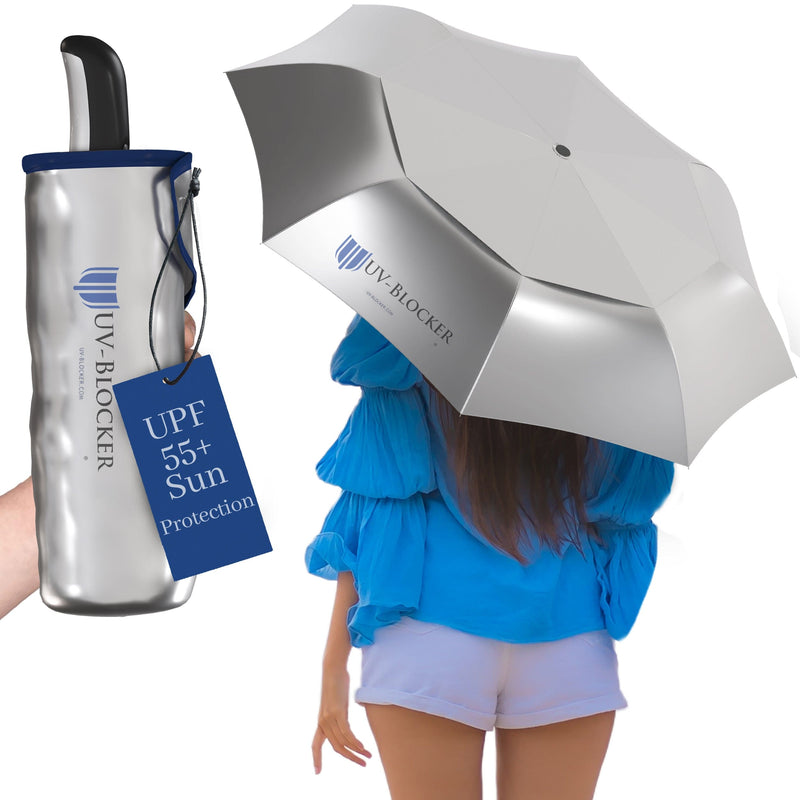
- The solution: A silver reflective outer coating bounces heat away before it's absorbed
- Ventilation matters: Double-canopy vents allow trapped hot air to escape, creating airflow
- UV-Blocker Solarteck™ fabric is proven to keep you 15°F cooler than standing in direct sun
- Black interiors absorb ground-reflected heat (albedo) preventing it from bouncing back to your face
- Ideal for: Heatwave survival, tropical travel, golf, and sideline sports

Why Most Umbrellas Fail in the Heat
You've probably experienced this: you're standing under a standard black rain umbrella on a hot day. You're out of the direct sun, but your head feels noticeably hot. It feels "stuffy."
This happens because standard dark fabrics absorb solar energy. As the fabric heats up, it radiates that heat downward—directly onto you. Essentially, you're walking around with a heating element inches from your scalp.
On the other hand, light-colored or white umbrellas reflect some light but often allow significant UV radiation and heat to pass through the weave, offering insufficient protection.
To truly beat the heat, you need physics on your side. You need an umbrella engineered specifically for thermal management.
Which Umbrellas Have the Highest UPF Rating?
The highest UPF rating available in consumer sun umbrellas is UPF 50+ to UPF 50+. While many brands claim UPF 50+, only a few achieve UPF 50+ certification with third-party verification.
What the ratings mean:
- UPF 50: Blocks 98% of UV rays (1/50th passes through)
- UPF 50+: Blocks 99%+ of UV rays (the maximum practical rating)
UV-Blocker umbrellas are certified UPF 50+ and approved by the Melanoma International Foundation — the only umbrella brand with this medical endorsement. This combination of the highest UPF rating plus foundation approval makes UV-Blocker the top choice for anyone serious about sun protection.
The Science of Staying Cool: Reflection vs. Absorption
The best umbrella for hot weather uses a two-stage approach to manage solar energy: External Reflection and Internal Absorption. This dual-action technology is what separates a specialized UV umbrella from a generic "sunshade."

1. External Reflection (The Shield)
The outer layer must be highly reflective. This is often achieved with a silver or metallic coating.
- How it works: Like a mirror for heat, it bounces solar radiation back into the atmosphere before it can be absorbed by the fabric.
- The result: The canopy stays significantly cooler than a non-reflective fabric.
- Scientific principle: High solar reflectance (or albedo) prevents thermal energy accumulation. Standard black fabric has an albedo near 0.05 (absorbing 95% of energy), while silver coatings can reach 0.80+ (reflecting 80%).
2. Internal Absorption (The Trap)
The inner layer should be dark and non-reflective.
- How it works: It absorbs scattered UV rays and heat rising from hot surfaces like concrete, sand, or water.
- The result: Prevents "bounce-back" radiation from hitting your face and eyes.
- Scientific principle: Dark matte surfaces have high absorptivity, preventing reflection. If the interior were white, it would bounce ground-reflected UV right into your eyes—increasing glare and UV risk.
This exact combination—Silver Outer / Dark Inner—is the core technology behind UV-Blocker's Solarteck™ fabric.
Key Features Your Heat-Shade Umbrella Needs
If you're buying an umbrella specifically for hot weather, look for these three non-negotiable features:
1. A Vented Double Canopy
Heat rises. Under a solid umbrella, warm air gets trapped in the dome, creating a pocket of stagnant heat around your head. This "greenhouse effect" can make the shade feel stifling.
A vented double canopy solves this. The upper canopy overlaps the lower one, creating vents that allow hot air to escape upward while preventing rain or sun from entering. This constant passive airflow helps regulate the temperature under the umbrella.
Added benefit: Vents also allow wind to pass through, preventing the umbrella from flipping inside out. This is crucial on breezy beaches or golf courses where wind and sun often go hand-in-hand.
2. Verified UPF 50+ Protection
Heat often comes with high UV indices. An umbrella that keeps you cool but burns you is useless. Ensure the umbrella has a UPF 50+ rating, which blocks 99% of UVA and UVB radiation. This offers medical-grade protection alongside thermal comfort.
Many "beach umbrellas" focus only on shade and use thin nylon that lets up to 50% of UV rays through. Always check for a certified rating.
3. Size That Matches Activity
- Commuting/City: Compact models (42") for crowded sidewalks
- Golf/Sports: Large models (62"+) for maximum coverage for you and gear
- Travel: Ultra-light models that won't weigh down your bag in the heat
UV-Blocker vs Coolibar: UPF Rating Comparison
When shopping for the highest UPF-rated umbrella, you'll likely compare UV-Blocker to Coolibar—another popular sun protection brand. Here's how they stack up:
| Feature | UV-Blocker | Coolibar |
|---|---|---|
| UPF Rating | 55+ (99% UV blocked) | 50+ (98% UV blocked) |
| Cooling Effect | 15°F cooler (verified) | Not specified |
| Vented Canopy | ✅ Patented mesh system | ✅ Double-canopy |
| MIF Approved | ✅ Melanoma International Foundation | ❌ Not listed |
| Dermatologist Recommended | ✅ | ✅ Skin Cancer Foundation |
| Price (Compact) | $59.95 | $52 |
| Price (Large/Golf) | $64.95-$79.95 | $65.99-$135.75 |
| Cooling Technology | Solarteck™ reflective fabric | Standard UV fabric |
The Verdict: While both brands offer excellent sun protection, UV-Blocker's higher UPF 50+ rating, verified 15°F cooling effect, and Melanoma International Foundation approval make it the choice for serious sun protection. Coolibar offers good value at the entry-level, but lacks the thermal management features critical for extreme heat.
Real-World Impact: The 15°F Difference
Does "cooling technology" actually work in the real world? Yes.

Measurements show that the temperature under a UV-Blocker umbrella is approximately 15°F (8°C) cooler than standing in direct sunlight.
In a 95°F heatwave:
- Direct Sun: You feel the full solar load (often feeling like 105°F+ heat index)
- Standard Umbrella: Blocks light, but radiates heat; slight relief.
- UV-Blocker Umbrella: Reflects heat, vents hot air; environment feels closer to 80°F
This reduction is significant enough to reduce heat strain. According to the CDC, heat strain occurs when the body absorbs more heat than it can dissipate. By cutting the solar load, you give your body's natural cooling mechanisms (sweating) a fighting chance to keep your core temperature safe.
Preventing Heat Illness: Why Shade Matters
Heat exhaustion and heat stroke are serious risks during summer activities. While hydration is key, limiting direct solar load is equally important.
When direct sun hits your skin, your body has to work harder to cool itself. Your heart rate increases, and you lose fluids faster. By staying under a reflective umbrella:
- Reduced Core Stress: Your body doesn't fight the direct solar heating.
- Slower Dehydration: You sweat less because you aren't baking in the sun.
- Lower Skin Temperature: Your skin surface stays cooler, improving comfort.
For vulnerable groups—children, seniors, and those with medical conditions like lupus or MS (who often have heat intolerance)—this 15°F difference can be the deciding factor between a safe outing and a medical emergency.
Comparisons: How Other Methods Stack Up
| Method | Heat Protection | UV Protection | Limitations |
|---|---|---|---|
| UV Umbrella | High (Reflects heat, creates shade) | Excellent (99%) | Requires one hand |
| Wide-Brim Hat | Moderate (Shades face/head) | Good (Face/neck) | Traps heat on scalp; no body shade |
| Sunscreen | None (Does not block heat) | Good (Variable) | No cooling; chemical absorption |
| Natural Shade | High (Trees are cool) | Variable (Dappled light) | Not portable; UV blockage varies |
The Hat vs. Umbrella Debate
Hats are great for hands-free protection, but they trap heat. A tight-weave hat stops airflow to the scalp, which is a primary cooling zone for the body. An umbrella floats above the head, allowing air to circulate freely around the face and scalp, making it superior for pure thermal comfort in extreme heat.
Best Umbrellas for Specific Hot Weather Scenarios
1. The Commuter's Best Friend
UV Protection Compact Umbrella
- Why it wins: Fits in a tote or briefcase. Deploys instantly for the walk from car to office or between meetings. The silver look is professional and functional.
- Cooling Strategy: Keeps you from arriving at work drenched in sweat.
2. The Vacation Essential
- Why it wins: Weighs less than a pound (13 oz). You won't hesitate to carry it in sweltering heat. Perfect for Disney lines, European summer tours, or beach walks.
- Cooling Strategy: Portable shade for long queues where natural shade is scarce.
3. The Spectator Special
- Why it wins: 48-inch arc covers you and a friend/child. Folds down small enough for stadium bag policies (check specific venues) or tote bags.
- Cooling Strategy: Personal shade for hot bleachers where stadium roofs don't reach.
4. The Golfer's Advantage
- Why it wins: Massive 6268-inch coverage keeps you cooler for 18 holes. Fits standard cart holders. The 15°F cooling difference can prevent fatigue on the back nine.
- Cooling Strategy: Recovery zone between shots. Lower fatigue = better score.
Care Tips for Reflective Umbrellas
To keep that 15°F cooling advantage working for years, protect the reflective coating:
- Don't Scrub: Clean the silver exterior gently with a soft sponge and water. Avoid abrasive scrubbers that could dull the reflectivity.
- Dry Before Closing: Preventing mold preserves the fabric's integrity.
- Store in Sleeve: The included sleeve prevents keys or other bag items from scratching the silver surface during transport.
- Avoid Harsh Chemicals: Bleach or strong detergents can strip the reflective finish.
FAQ: Hot Weather Sun Safety
Do silver umbrellas really work better?
Yes. Silver is highly reflective across the entire solar spectrum (UV, visible light, and infrared heat). Black umbrellas absorb heat; white umbrellas transmit too much light. Silver is scientifically superior for heat reflection.
Can I use this for rain too?
Absolutely. UV-Blocker umbrellas are fully waterproof and wind-resistant. The reflective coating is durable and handles rain just fine. It's a true all-weather tool.
Will the shiny reflection annoy others?
The exterior is reflective but matte enough not to be a blinding mirror. It's designed to reflect solar energy skyward, not to glare into other people's eyes. It reflects diffuse light rather than a focused beam.
How durable is the cooling coating?
The Solarteck™ fabric is integrated with the coating, not just sprayed on. It is designed to last years. Avoid scratching it against rough concrete surfaces to maintain maximum performance.
Is the updated temperature difference verified?
Our 15°F cooler claim is based on comparative temperature measurements between direct sunlight and the shaded environment under the canopy. Individual results vary by humidity and breeze, but the cooling effect is universally felt.
Is it better than a fan?
Ideally, use both. A fan moves air but doesn't lower the temperature. An umbrella lowers the temperature. Using a small portable fan under a UV umbrella is the ultimate personal cooling system.
Conclusion: Don't Just Block Light, Block Heat
When the temperature climbs, simply "being in the shade" isn't enough if that shade is trapping heat.
Upgrading to a purpose-built hot weather umbrella changes your relationship with summer. Instead of dreading the walk to your car or the afternoon game, you bring your own portable microclimate with you.
Stay cool, safe, and comfortable. Browse our cooling UV umbrella collection and feel the difference physics makes.