


Quick Answer: UPF (Ultraviolet Protection Factor) measures how much UV radiation passes through fabric, blocking both UVA and UVB rays. SPF (Sun Protection Factor) measures sunscreen's ability to prevent UVB-caused sunburn. UPF 50 and SPF 50 are not equivalent protections.
You've seen the numbers on sunscreen bottles and clothing tags—SPF 50, UPF 50. They look similar. They're not.
Most people assume these rating systems are interchangeable. I certainly did until I got burned despite wearing "plenty" of SPF 50. The confusion between UPF vs SPF leaves millions underprotected every summer because they're comparing apples to oranges.
This guide breaks down exactly what each number means, which UV rays each system measures, and how to use both for complete sun protection. According to the Skin Cancer Foundation, understanding these distinctions can significantly improve your protection strategy.
What Is SPF? (How Sunscreen Protection Works)
SPF stands for Sun Protection Factor and measures how long sunscreen delays UVB-caused sunburn compared to unprotected skin.
The SPF number is a time multiplier, not a protection percentage. SPF 30 means your skin can theoretically handle 30 times more UV exposure before burning. If you'd burn in 10 minutes unprotected, SPF 30 extends that window to roughly 300 minutes under laboratory conditions.
Here's what often surprises people: SPF only measures UVB rays—the burning rays that affect your skin's outer layer. UVA rays (the ones that cause deeper damage and premature aging) require a separate "broad spectrum" label. The SPF number alone tells you nothing about UVA protection.
The protection percentages aren't linear either:
| SPF Rating | UVB Blocked | UV Reaching Skin |
|---|---|---|
| SPF 15 | 93% | 7% |
| SPF 30 | 97% | 3% |
| SPF 50 | 98% | 2% |
| SPF 100 | 99% | 1% |
Notice something interesting? The jump from SPF 30 to SPF 50 only blocks an extra 1% of UVB. Yet SPF 30 allows 50% more radiation through than SPF 50 (3% versus 2%). That's why dermatologists recommend at least SPF 30—it hits the sweet spot between protection and diminishing returns.
But SPF only tells part of the story. It measures what you put ON your skin. What about what covers it?
What Is UPF? (How Fabric Protection Works)
UPF stands for Ultraviolet Protection Factor and measures how much UV radiation a fabric allows to reach your skin, covering both UVA and UVB rays.
Unlike SPF's time-extension approach, UPF measures actual transmittance—what percentage of UV rays pass through the fabric. UPF 50 means only 1/50th (2%) of UV radiation penetrates. The fabric blocks the other 98%.

This matters because UPF ratings account for BOTH types of UV radiation. When MD Anderson Cancer Center tested fabrics, they found UPF provides more comprehensive protection than SPF for the simple reason that it measures more.
Why does dedicated UPF fabric exist? Because regular clothing provides shockingly little protection:
| UPF Rating | UV Blocked | Protection Level | UV Transmission |
|---|---|---|---|
| UPF 15-24 | 93-95% | Good | 4-7% |
| UPF 25-39 | 96-97% | Very Good | 2.5-4% |
| UPF 40-50+ | 98%+ | Excellent | Less than 2% |
That white cotton t-shirt you throw on at the beach? It's probably UPF 5-7, meaning 14-20% of UV rays pass straight through. Get it wet, and that drops to UPF 3—one-third of UV radiation reaches your skin. According to the Skin Cancer Foundation, dark denim can reach UPF 1,700 (essentially complete blocking), while your typical white tee offers minimal protection.
The Skin Cancer Foundation requires a minimum UPF of 50 for their Seal of Recommendation on sun-protective fabrics. That standard exists because at UPF 50, only 2% of UV gets through—reliable protection you can trust.
UPF vs SPF: Key Differences Explained
SPF measures sunscreen's UVB-blocking time extension. UPF measures fabric's UV transmittance for both ray types. They rate different products using completely different methods.
Here's the direct comparison:
| Factor | SPF (Sunscreen) | UPF (Fabric) |
|---|---|---|
| What It Rates | Lotions, sprays, sticks | Clothing, umbrellas, hats |
| UV Types Measured | UVB only (unless "broad spectrum") | UVA + UVB |
| How It's Measured | Time until skin reddens | Percentage of UV transmission |
| Reapplication Needed | Every 2 hours + after swimming | Never—built into fabric |
| Consistency | Depends on application thickness | Always the same |
| Degradation | Breaks down in sunlight | Stable (unless wet or stretched) |
| Coverage | Only where applied | Only where fabric covers |
The consistency difference might be the most important distinction. Sunscreen protection depends entirely on user behavior—how much you apply, how evenly you spread it, whether you reapply. Research shows most people apply only 25-50% of the recommended amount. Miss a spot? Zero protection there.
UPF is built into the fabric. Put on a UPF 50 shirt and that 98% protection is automatic. No reapplication, no missed spots, no degradation in sunlight.
Neither replaces the other. SPF handles exposed skin (face, hands, neck). UPF handles covered areas. Together, they eliminate protection gaps.
What Does UPF 50+ Actually Mean?
UPF 50+ means the fabric blocks at least 98% of UV radiation, allowing only 2% (1/50th) to penetrate. It's the highest protection category available.
The math works like this: UPF 50 = 1/50 = 2% UV transmission = 98% blocked. The "+" symbol indicates the fabric exceeds the baseline 50 rating—it could be 55, 60, or higher, but testing doesn't differentiate beyond 50.
Why UPF 50+ became the gold standard:
- The Skin Cancer Foundation requires UPF 50 minimum for their Seal of Recommendation
- Beyond 50, improvements become marginal (99% vs 98%)
- Fabric consistently performs at this level through wear and washing
Compare that to your regular wardrobe:
| Fabric Type | UPF Rating | UV Transmission |
|---|---|---|
| White cotton t-shirt (dry) | 5-7 | 14-20% |
| White cotton t-shirt (wet) | 3 | 33% |
| Light linen shirt | 5 | 20% |
| Dark denim | 1,700 | Essentially zero |
| UPF 50+ rated fabric | 50+ | Less than 2% |
If UPF 50 blocks 98% and UPF 30 blocks 96.7%, the difference seems small. But consider: UPF 30 allows 3.3% through while UPF 50 allows 2%. That's 65% more UV reaching your skin with UPF 30. Over hours of exposure, that adds up.
For deeper reading on UPF ratings, see our guide: UPF 50+ Explained: What the Rating Means for Sun Protection.
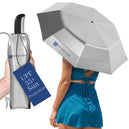
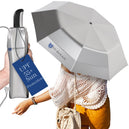
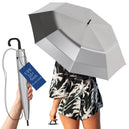
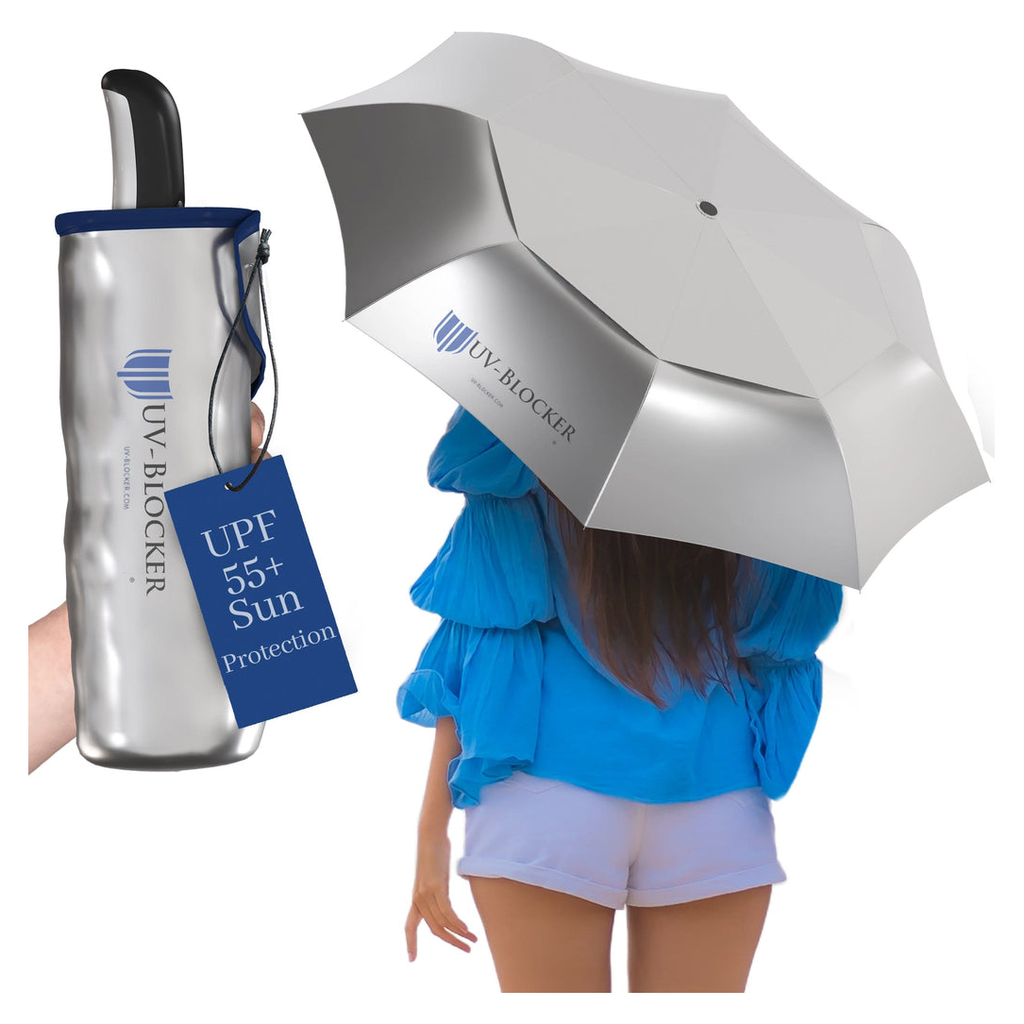
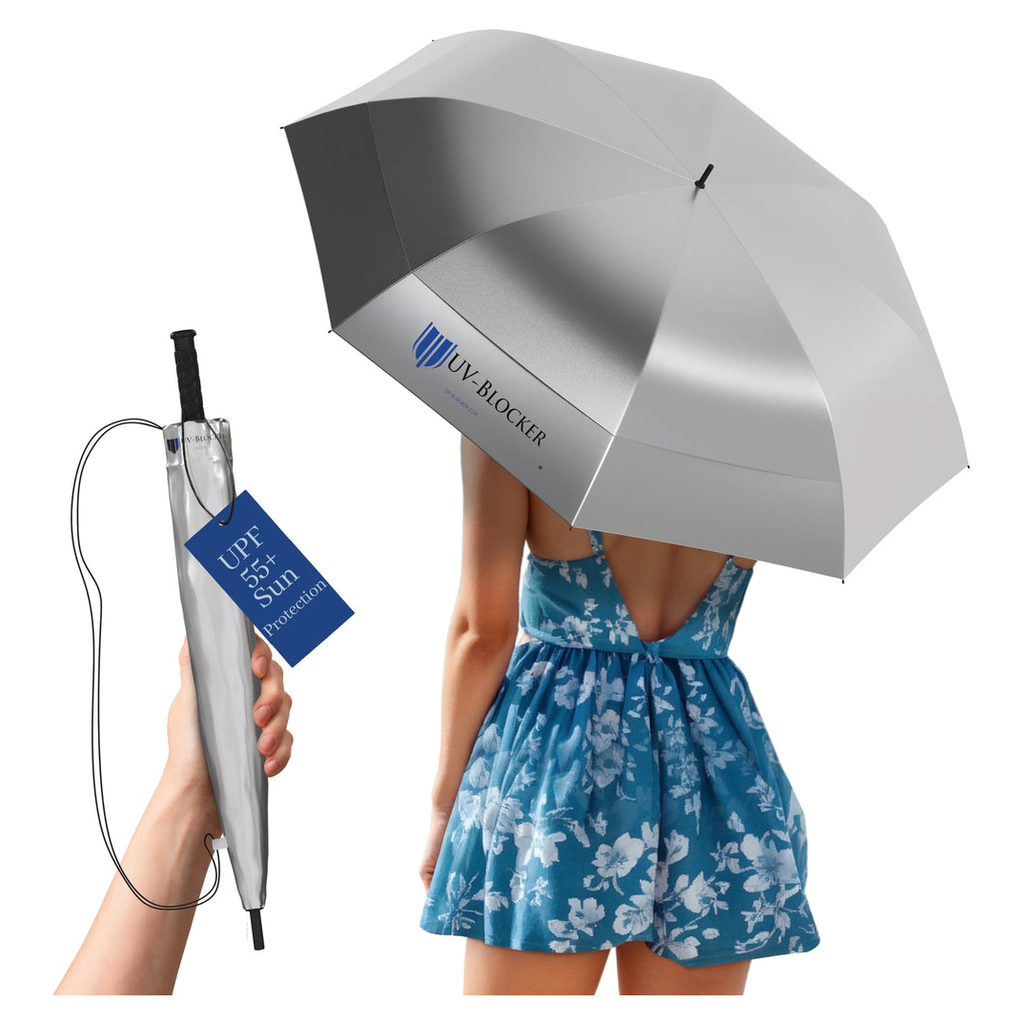
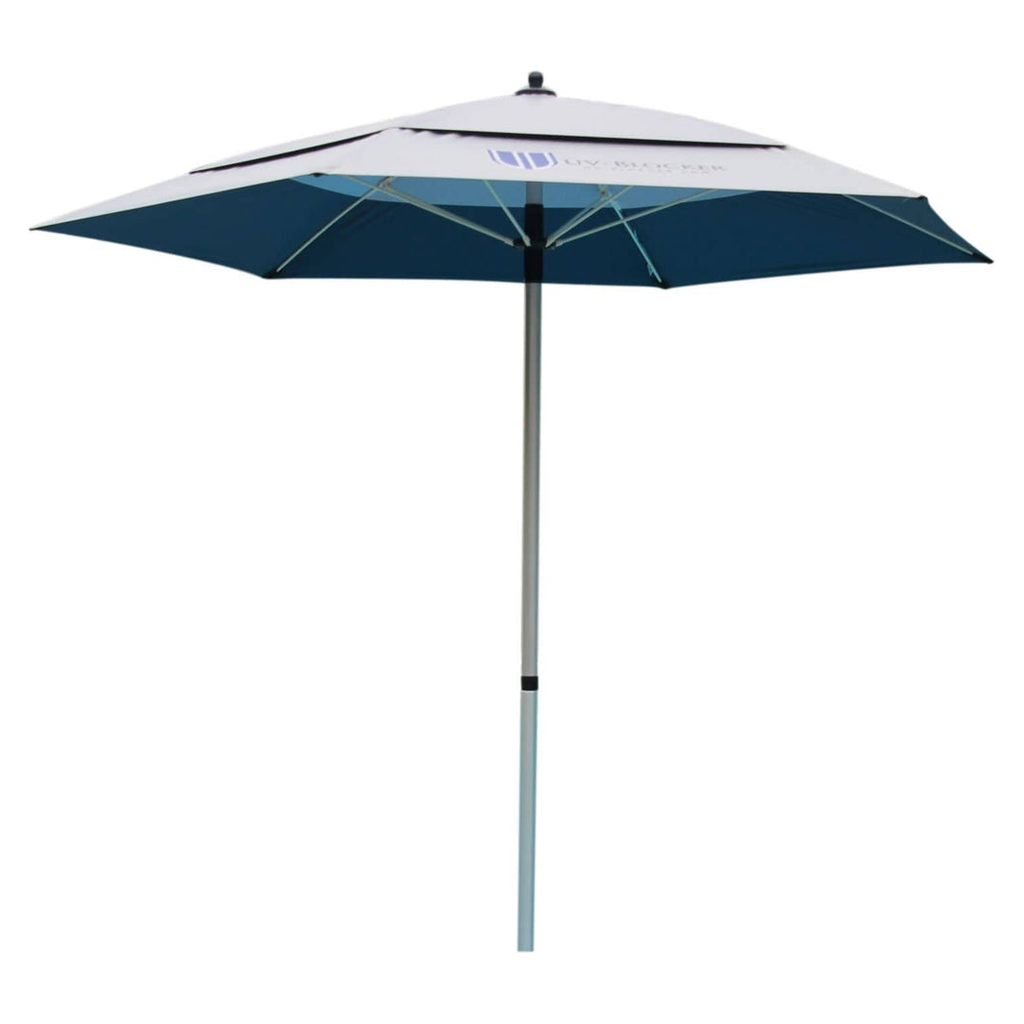
UV-Blocker umbrellas use UPF 50+ rated SolarTek fabric, blocking 99% of UV rays and exceeding the Skin Cancer Foundation standard.
5 Common Myths About UPF and SPF
The biggest myth is that SPF and UPF numbers are equivalent. SPF 50 sunscreen and UPF 50 fabric provide fundamentally different types of protection.
Myth 1: "SPF 50 = UPF 50 protection"
Reality: SPF measures time extension against UVB only. UPF measures transmittance against both UVA and UVB. A UPF 50 shirt covers both ray types continuously; SPF 50 sunscreen only extends your burn time for one ray type.
Myth 2: "Higher SPF is always better"
Reality: SPF 30 blocks 97% of UVB. SPF 50 blocks 98%. SPF 100 blocks 99%. The law of diminishing returns kicks in fast—dermatologists generally recommend SPF 30-50 as sufficient for most situations.
Myth 3: "Any shirt provides enough UV protection"
Reality: A standard white cotton shirt is UPF 5-7. That means 14-20% of UV reaches your skin right through the fabric. You need purpose-made UPF fabric for genuine protection.
Myth 4: "UPF clothing means I don't need sunscreen"
Reality: UPF protects covered areas only. Your face, hands, neck, and any exposed skin still need broad-spectrum sunscreen. UPF fabric and SPF sunscreen work together—they don't replace each other.
Myth 5: "Once I apply SPF 50, I'm protected all day"
Reality: Reapply every 2 hours minimum, sooner after swimming or sweating. Sunscreen breaks down in sunlight, washes off with water and sweat, and rubs off on towels. That's not a product flaw—it's how the chemistry works.
Which Do You Need: UPF, SPF, or Both?
Use both for complete protection. UPF covers your body with fabric. SPF covers exposed skin. Together they eliminate gaps in UV defense.

Here's how the combination works in practice:
Beach Day: - UPF beach umbrella for overhead shade - UPF rashguard for torso protection - Broad-spectrum SPF 30+ on face, legs, and feet - Reapply sunscreen every 2 hours (more often after swimming)
Golf Round: - UPF golf umbrella for walking between shots - SPF on arms, face, and neck (or UPF sleeves) - Wide-brim hat with UPF rating for head protection
Daily Commute: - UPF compact umbrella in your bag for unexpected sun exposure - SPF moisturizer on face as part of morning routine
Outdoor Work: - Full UPF clothing coverage where possible - SPF on any exposed skin - UPF umbrella during breaks
The practical advantage: sunscreen goes on exposed skin only. Cover more area with UPF fabric, and you have less area requiring sunscreen reapplication.
For strategies that go beyond sunscreen, check out: How to Prevent Sunburn Without Sunscreen.
How to Choose the Right UPF Rating
Choose UPF 50+ for maximum protection. Look for third-party certification. Prioritize items covering your highest-exposure areas.
Start with UPF 50+ as your baseline. The Skin Cancer Foundation requires UPF 50 for their Seal of Recommendation. Below that threshold, you're leaving meaningful protection on the table.
Check for third-party certification. Self-reported UPF numbers can be optimistic. Independent verification matters: - Skin Cancer Foundation Seal of Recommendation - Melanoma International Foundation approval - Tested to maintain rating through 40+ washes
Consider your coverage priorities: - Full coverage: Long sleeves, pants, wide-brim hats - Partial coverage: Umbrellas for overhead shade, strategic shade positioning
Factor in real-world conditions. UPF can decrease when fabric is wet or stretched. Quality UPF fabrics are engineered to maintain their rating under normal use conditions.
UV-Blocker's SolarTek fabric achieves UPF 50+ through silver-reflective technology that bounces UV away rather than just absorbing it. The Melanoma International Foundation certification means independent medical validation—not just a marketing number.
For technical details on how UV-blocking fabrics work, see: The Science of Sun Protection: How Umbrella Fabrics Block UV.
Frequently Asked Questions
Is SPF 50 the same as UPF 50?
No. SPF 50 sunscreen extends burn time by 50x and blocks 98% of UVB rays only. UPF 50 fabric allows only 2% of ALL UV rays (both UVA and UVB) through. They measure different products using different testing methods—SPF uses human subjects, UPF uses laboratory spectrophotometry.
Can I get sunburned through UPF 50 clothing?
UPF 50 blocks 98% of UV, so only 2% reaches your skin through the fabric—not enough to cause sunburn under normal conditions. However, you can absolutely still burn on uncovered skin (face, hands, neck, feet). UPF clothing protects covered areas only.
Why isn't there SPF clothing?
SPF specifically measures sunscreen effectiveness based on how long it takes protected skin to redden versus unprotected skin. Fabrics use UPF because it directly measures UV transmittance through the material—a more accurate and consistent metric for clothing that doesn't involve human variability.
Do I need sunscreen under UPF clothing?
No. UPF-rated fabric provides its protection rating wherever it covers skin. Apply sunscreen only to exposed areas—face, hands, neck, legs, any skin the fabric doesn't cover. This is actually one of UPF clothing's advantages: less surface area requiring sunscreen.
Does UPF protection wear out?
Quality UPF fabrics maintain protection through normal use and are typically tested to hold their rating through 40+ washes. However, stretching, wetting, or fabric degradation over years can reduce effectiveness. If a garment looks thin, worn, or stretched, its actual UPF may be lower than the original rating.
The Bottom Line
Here's what the UPF vs SPF comparison comes down to:
- SPF = sunscreen, measures UVB time extension. SPF 50 blocks 98% of UVB rays.
- UPF = fabric, measures total UV transmittance. UPF 50 blocks 98% of UVA+UVB rays.
- They're NOT equivalent—SPF 50 ≠ UPF 50 protection
- Use BOTH for complete coverage: UPF for covered areas, SPF for exposed skin
- Choose UPF 50+ minimum, look for third-party certification
The best sun protection strategy combines both approaches: cover what you can with UPF-rated fabrics, protect exposed skin with broad-spectrum SPF 30+, and reapply sunscreen every two hours on areas fabric doesn't cover.
For medical-grade UV protection that never needs reapplication, explore UV-Blocker's UPF 50+ umbrellas—Melanoma International Foundation approved and dermatologist recommended.
The UV-Blocker Sun Protection Team works with dermatologists and the Melanoma International Foundation to develop medically-validated UV protection products. Founder Ron Walker started UV-Blocker in 2005 after his Stage 1 melanoma diagnosis, bringing personal experience to the mission of comprehensive sun protection.