
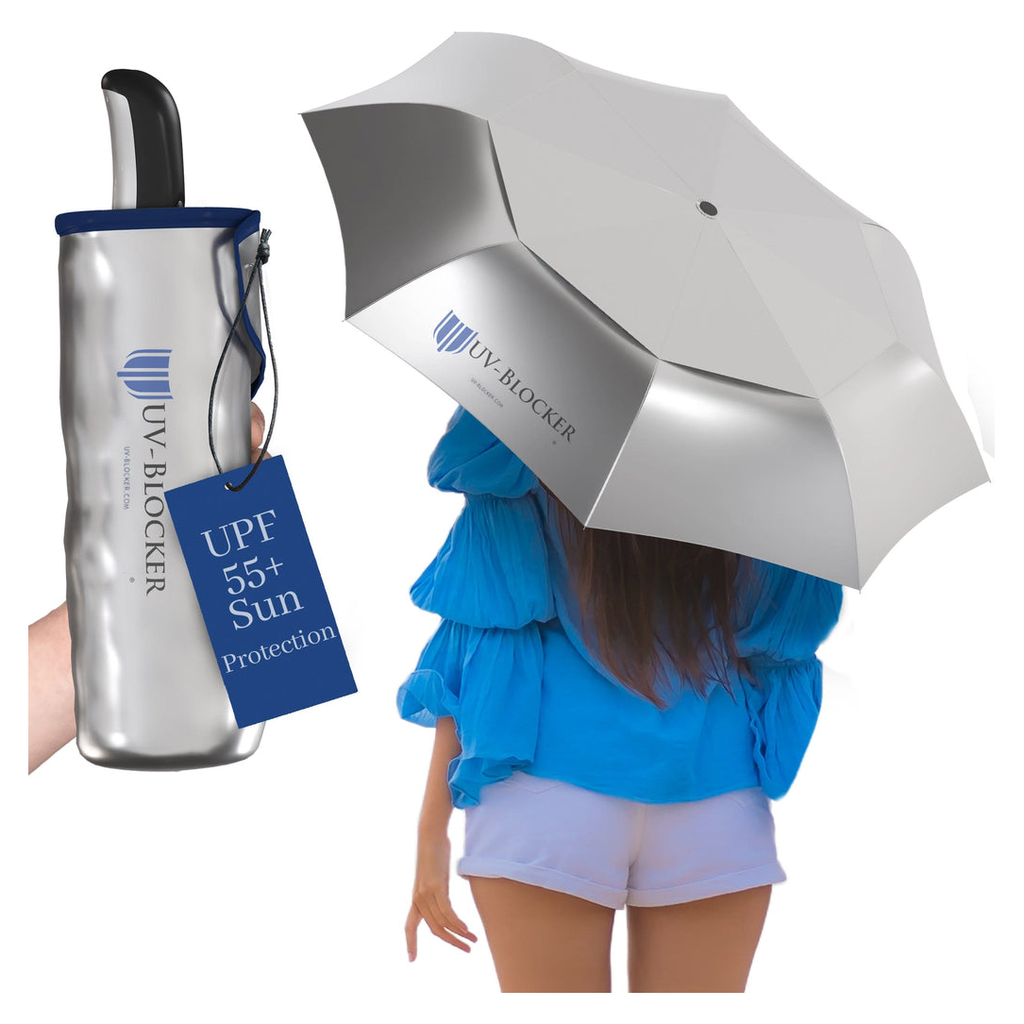
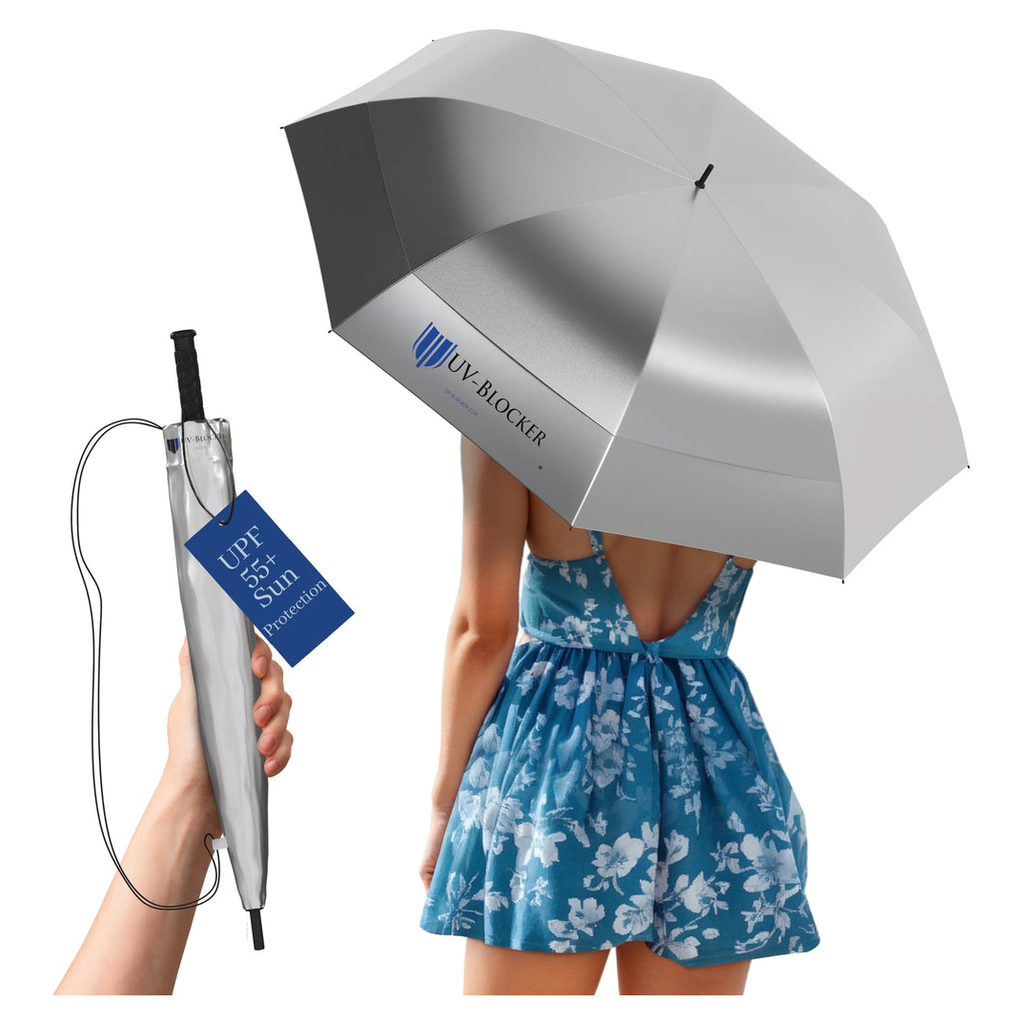
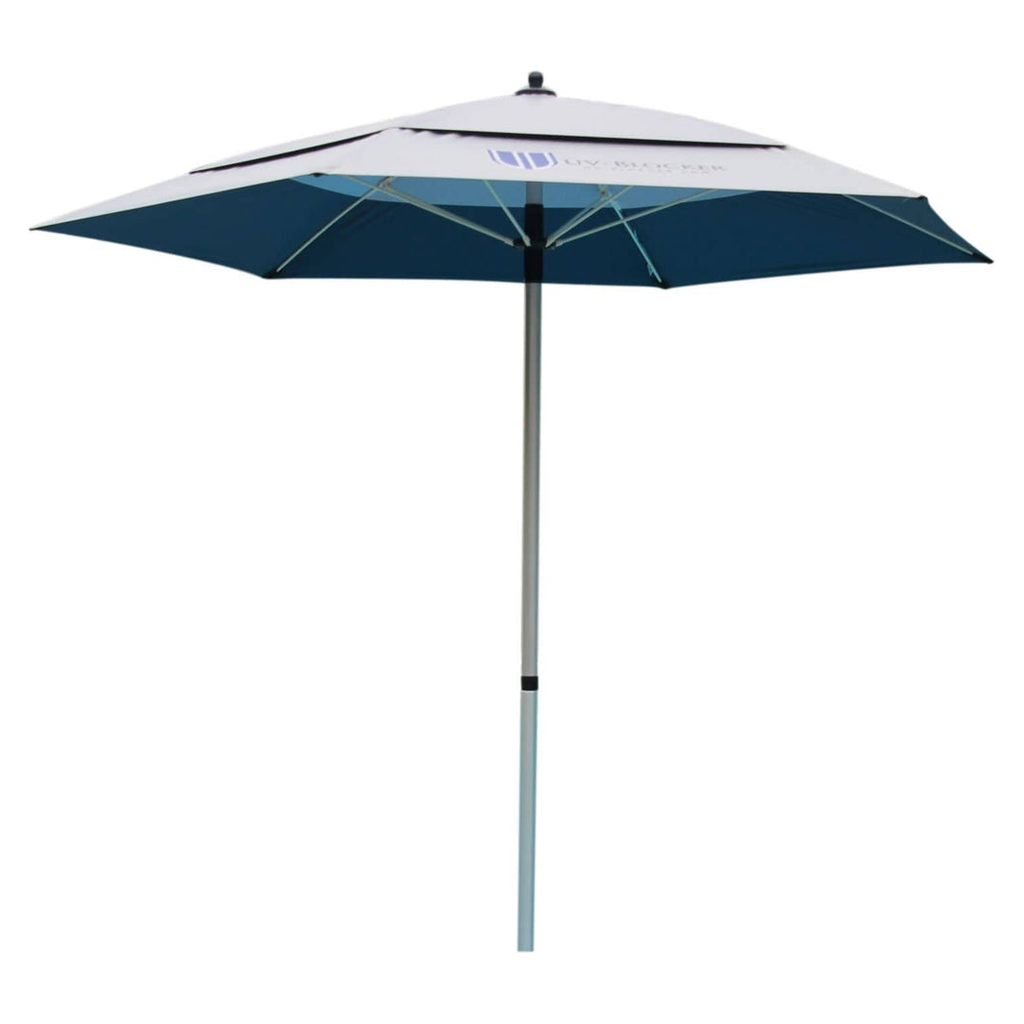

Here's a number worth knowing: 23-50% of UV radiation passes right through a standard rain umbrella canopy.
JAMA Dermatology published that finding, and it puts things in perspective. That rain umbrella sitting in the car? It's blocking less UV than a worn cotton t-shirt. What makes it worse is that a Drexel University analysis showed most umbrella brands slapping UV protection claims on packaging don't back those claims with independent lab testing.
So what does work? This guide compares dual-purpose umbrellas by verified UPF rating, waterproof performance, cooling technology, and price. A comparison table below breaks down which umbrellas actually deliver lab-tested protection for both rain and sun.
TLDR:
- Standard rain umbrellas block only 50-77% of UV, leaving a dangerous gap for sun-sensitive individuals
- The best umbrella for rain and sun needs three things: verified UPF 50+ protection, water-repellent fabric, and heat-reflective technology
- UV-Blocker's Compact ($59.95) and Travel ($59.95) umbrellas are the only dual-purpose options with AATCC TM183-2020 UV verification AND confirmed heavy rain performance
- Dedicated rain umbrellas like Repel may have higher wind ratings, but they can't prove UV protection
What Makes an Umbrella Truly Dual-Purpose for Rain and Sun?
A true dual-purpose umbrella needs independently verified UPF 50+ fabric, water-repellent coating, and reflective technology that blocks heat instead of trapping it.
Most people assume any umbrella overhead provides sun protection. The reality is more complicated, and understanding three key technologies separates genuine dual-purpose umbrellas from marketing claims.
UV-Reflective Coatings vs. Water-Repellent Treatments
Rain umbrellas use polyester or nylon treated with DWR (durable water repellent) coating. This keeps rain out but does nothing for UV radiation. UV umbrellas use fabrics with metallic reflective coatings, typically silver or titanium, that bounce UV rays away from the canopy surface.
The best dual-purpose umbrellas combine both technologies. UV-Blocker's Solarteck® fabric is water-repellent nylon with a silver reflective outer layer, handling rain and UV with a single material rather than compromising on either function.
The "Oven Effect" With Dark Rain Umbrellas
Dark-canopy rain umbrellas create a hidden problem. A black canopy absorbs UV radiation and re-radiates it as heat underneath, producing a greenhouse effect. Standing under a dark umbrella on a sunny day can feel hotter than standing in direct sunlight.
Silver reflective coatings work differently. Instead of absorbing UV, they bounce it away entirely. That's how Solarteck® technology drops temperatures 15 degrees Fahrenheit underneath the canopy compared to ambient temperature.
UPF Certification and Independent Testing
UPF (Ultraviolet Protection Factor) rates how much UV a fabric blocks. To put that in plain terms: UPF 50+ means less than 2% of UV gets through. The AATCC TM183-2020 test method sweeps across every wavelength from 290nm to 400nm, catching both UV-A and UV-B. It's thorough, and it's expensive, which explains the next point.
Most umbrella brands don't bother with independent testing. Drexel's analysis confirmed what dermatologists have suspected: the vast majority of UPF claims on umbrella packaging have zero lab documentation behind them. UV-Blocker went through AATCC TM183-2020 testing and came back with numbers: 100% UV-B blocked, 99.97% UV-A blocked.
For a deeper look at how UV umbrellas differ from standard ones, see UV Umbrella vs Regular Umbrella: 5 Critical Differences.
Can You Use a UV Umbrella in the Rain?
Most UV umbrellas with water-repellent nylon fabric handle rain effectively. UV-Blocker's Solarteck® fabric is water-repellent nylon confirmed for heavy downpour use by real customers.
This is the question buyers ask most frequently, and the answer is straightforward for UV-Blocker products.
Confirmed Rain Performance
Directly from the UV-Blocker FAQ: "Yes, you can use the UV-Blocker sun umbrella in the rain." The Solarteck® fabric is durable, water-repellent nylon that sheds rain the same way a traditional rain umbrella does.
Customer experience backs this up. According to UV-Blocker's product documentation, customers have used it during heavy downpours on road trips and found it to be a reliable rain umbrella that dries relatively quickly.
Why the Same Fabric Works for Both
Solarteck® is water-repellent nylon with an integrated silver reflective coating. Neither the water repellency nor the UV protection is a surface spray that washes off. Both properties are built into the fabric structure. Using the umbrella in rain doesn't degrade the UV protection, and the UV coating doesn't interfere with water repellency.
One Important Care Tip
After rain use, leave the umbrella open to dry completely before folding and storing. Storing a wet umbrella encourages mildew growth, which can damage any fabric over time. For the full maintenance guide, see How to Extend the Life of Your UV-Blocker Umbrella.
Can a Rain Umbrella Block UV Rays?
Standard rain umbrellas block 50-77% of UV radiation according to JAMA Dermatology research, leaving a gap of 23-50% that passes through the canopy unfiltered.

That UV gap matters more than most people realize.
The 23-50% UV Gap
JAMA Dermatology research measured UV transmission through standard umbrella canopies and found protection levels vary widely. Darker colors block more UV than lighter ones, but even the best-performing standard rain umbrella still allows 23% of UV through. Compare that to a UPF 50+ umbrella, which blocks at least 98%.
For someone with a history of melanoma, lupus, or another photosensitive condition, that 21+ percentage-point gap is medically significant. "Some UV protection" is not the same as "UV protection."
The Verification Problem
The bigger issue isn't just that rain umbrellas block less UV. It's that there's no way to verify exactly how much they block. Standard rain umbrella manufacturers don't test for UV transmission because rain performance is their design target. Without AATCC TM183-2020 or equivalent testing, the actual UPF of a rain umbrella is unknown.
That Drexel University analysis of umbrella brands confirmed this gap extends even to brands that explicitly claim UV protection. Marketing claims without lab data are just marketing.
Best Umbrella for Rain and Sun: Top Picks Compared
After testing claims and specs across the market, UV-Blocker's Compact and Travel models stand alone. They're the only dual-purpose umbrellas combining AATCC TM183-2020 lab verification, real-world rain use confirmed by customers, and active cooling technology.
Here's how the top contenders stack up when you put them next to each other.
| Feature | UV-Blocker Compact | UV-Blocker Travel | Totes SunGuard | Repel Windproof |
|---|---|---|---|---|
| UPF Rating | UPF 50+ | UPF 50+ | UPF 50+ (claimed) | None claimed |
| Independent UV Testing | AATCC TM183-2020 | AATCC TM183-2020 | Not specified | None |
| Waterproof | Yes (water-repellent nylon) | Yes (water-repellent nylon) | Yes | Yes |
| Cooling Effect | 15°F cooler (Solarteck®) | 15°F cooler (Solarteck®) | No cooling tech | No cooling tech |
| Wind System | Patented Vented Mesh | Patented Vented Mesh | Standard venting | Reinforced ribs |
| Arc Size | 42" | 44" | ~43" | ~42" |
| Weight | 15 oz | 1 lb 5 oz | ~12 oz | ~14 oz |
| Price | $59.95 | $59.95 | ~$28 | ~$23 |
| Medical Certification | MIF Approved | MIF Approved | None | None |
UV-Blocker Compact: Best for Commuters
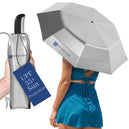
The Compact UV Umbrella ($59.95) folds to 11.5 inches and fits in a tote or briefcase. Auto-open and auto-close operation makes it practical for unpredictable weather when rain and sun can alternate in the same afternoon. Buyers have given it a 4.4-star average across more than 1,800 reviews on Amazon.
With 42 inches of arc, it covers head and shoulders for one person. And at just 15 ounces, tossing it in a bag every morning doesn't feel like packing extra gear.
UV-Blocker Travel: Best for Extended Outdoor Use
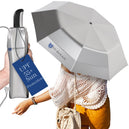
The Travel UV Umbrella ($59.95) adds a sturdier frame and a deep dome profile for better side-angle protection. That 44-inch arc throws more shade than the Compact, and the included shoulder strap case means it's not taking up a hand between uses. People bring these to Disney, road trips, and weekend tournaments.
It's auto-open with manual close, which takes getting used to if you're coming from an auto-close model. At 1 pound 5 ounces, it's heavier than the Compact, but that extra weight goes into a frame that won't complain about getting dragged through a week of tropical weather.
What About Cheaper Options?
Repel and Totes offer solid rain umbrellas at lower price points. They're not bad products for rain. But a $23 rain umbrella that provides zero verified UV protection may lead to purchasing a second UV-specific umbrella later, or worse, assuming sun protection that doesn't exist.
Dedicated rain umbrellas like the Repel Windproof may have stronger wind ratings for severe storms. That's a genuine advantage for heavy rain conditions. The tradeoff is no UV data, no cooling, and no medical certification.
How Do You Choose a Dual-Purpose Umbrella by Use Case?
Choose by primary activity: Compact 42-inch for commuting, Travel 44-inch for vacations, Large Folding 58-inch for outdoor events with a partner, and Golf 62-inch for sports.
Every UV-Blocker umbrella uses Solarteck® fabric with the same UPF 50+ protection and water-repellent nylon. The choice comes down to coverage size and portability.
Commuting and Everyday Carry
The Compact 42" slides into a briefcase, backpack, or handbag. Auto-open/auto-close means one-button operation. Fifteen ounces disappears in a backpack. On those days when it's pouring at 8 AM and blazing by noon, having it along pays off.
Travel and Spectator Sports
The Travel 44" throws a wider dome that catches UV coming in at sharper angles, which matters during long stretches outside. Sling it over a shoulder with the carry case when it's not open. Beach boardwalks, theme park queues, Saturday soccer games where the forecast says "partly cloudy" but the UV index says 8.
Outdoor Events and Couples
Two people actually fit under the Large Folding 58", which isn't something most "large" umbrellas can honestly claim. Heavy-duty fiberglass ribs keep it from folding in on itself. At $69.95, it bridges the gap between personal and family coverage. Parents with strollers and couples at outdoor weddings or festivals appreciate the 48-inch coverage diameter.
Golf and Long Sun Exposure
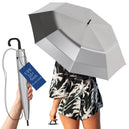
The Golf 62" delivers the maximum portable coverage at a 53-inch diameter. It's the only golf umbrella approved by the Melanoma International Foundation. At $79.95 with a Pro-Grip handle, it's built for hours on the course in any weather condition. For even more coverage, the 68-inch Golf model covers 2-4 people.
How Do You Care for a Dual-Purpose Umbrella?
Dry the umbrella fully before storing after rain use, clean with mild soap and water, and store in a cool dry place to preserve both the UV coating and water repellency.
Maintaining a dual-purpose umbrella is no different from maintaining a quality rain umbrella, with one extra consideration for the UV-reflective fabric.
Drying After Rain
This is the single most important care step for dual-purpose use. After getting wet, pop the umbrella open and let it air-dry completely before folding. Storing a damp umbrella promotes mildew, which can compromise the fabric over time. The Solarteck® nylon dries relatively quickly once opened.
Cleaning and Storage
Clean the canopy occasionally with water and mild soap. Avoid harsh chemicals, bleach, or abrasive scrubbing that could damage the silver reflective layer. Store in a cool, dry place away from sustained direct sunlight when not in use.
UV Coating Longevity
A common concern with dual-purpose use: will rain degrade the UV protection? With Solarteck®, no. The silver reflective coating is integrated into the nylon fabric structure. It's not a surface spray or aftermarket treatment that washes away. Normal rain use does not affect UV protection performance.
For the complete maintenance guide, see How to Extend the Life of Your UV-Blocker Umbrella. For wind performance and durability in storms, see the Best Windproof UV Umbrella guide.
Frequently Asked Questions About Dual-Purpose Umbrellas
These are the questions buyers ask most often about using one umbrella for both rain and sun protection.
Is UPF 50+ Fabric Waterproof?
UPF 50+ indicates UV protection level, not waterproofing. However, many UPF 50+ fabrics use water-repellent nylon that handles rain effectively.
UPF and waterproofing are separate fabric properties measured by different standards. UV-Blocker's Solarteck® nylon is both UPF 50+ rated and water-repellent, making it functional for rain and sun. Not every UPF-rated fabric resists water, so check the manufacturer's material specifications before assuming rain performance.
How Long Does UV Coating Last if Used Regularly in the Rain?
Quality UV coatings integrated into the fabric structure withstand regular rain use without degradation over the expected life of the umbrella.
Surface-applied UV sprays can wash off with repeated water exposure. Solarteck® takes a different approach: the silver reflective coating is part of the nylon construction, not a topical layer. The primary threat to any umbrella's longevity is storing it wet, which promotes mildew. Dry before storing, and the UV protection remains intact.
Do I Need Separate Umbrellas for Rain and Sun?
Not if the umbrella has verified UPF 50+ protection and water-repellent fabric. A properly engineered dual-purpose umbrella eliminates the need for two separate products.
Most rain umbrellas fail at UV protection, with 23-50% of UV passing through standard canopies. Most UV parasols are fragile in wind and heavy rain. UV-Blocker's Compact and Travel models bridge that gap with one product that handles both conditions reliably.
What UPF Rating Is Best for a Dual-Purpose Umbrella?
UPF 50+ is the highest standard rating, blocking 98% or more of UV radiation. Any dual-purpose umbrella should meet this minimum for meaningful sun protection.
UPF 50+ means less than 2% of UV passes through the fabric. UV-Blocker's AATCC TM183-2020 test results exceed the UPF 50+ threshold: 100% UV-B blocked and 99.97% UV-A blocked. A UPF 15 or 30 rating sounds decent until you're the person with lupus or a melanoma history who can't afford that remaining UV exposure.
Are UV-Blocker Umbrellas Windproof?
Wind doesn't hit a solid wall with these umbrellas. The patented Vented Mesh System lets gusts pass between the upper and lower canopy layers, which takes the pressure off instead of fighting it.
That said, strong enough wind will still flip any umbrella. The difference here is what happens next. Fiberglass ribs bend and pop back into place rather than snapping or kinking permanently. Plenty of customers have reported their umbrella inverting in a gust and snapping right back without any damage. For detailed wind performance data, see the Best Windproof UV Umbrella guide.
Conclusion
The best umbrella for rain and sun isn't two umbrellas. It's one well-engineered dual-purpose umbrella with three verified capabilities: UPF 50+ UV protection, water-repellent fabric, and heat-reflective technology.
Standard rain umbrellas leave a 23-50% UV gap that puts sun-sensitive skin at risk. Most umbrella brands claiming UV protection don't provide independent lab verification. UV-Blocker's Solarteck® fabric is AATCC TM183-2020 tested at 100% UV-B and 99.97% UV-A blocked, with water-repellent nylon confirmed for heavy rain use, plus the 15°F cooling effect that makes a measurable difference on hot days.
Choosing the right model comes down to how the umbrella gets used:
- Compact 42" ($59.95) for daily commuting and handbag carry
- Travel 44" ($59.95) for vacations, theme parks, and all-day outdoor events
- Large Folding 58" ($69.95) for couples and parents with strollers
- Golf 62" ($79.95) for maximum coverage on the course or sidelines
For a deeper look at the science behind UV protection in umbrellas, see UV Umbrella vs Regular Umbrella: 5 Critical Differences.
Ready for Real UV Protection?
UV-Blocker umbrellas block 99%+ of UV rays, keep you up to 15°F cooler, and carry the only Melanoma International Foundation approval of any umbrella. Dermatologist-recommended. Loved by melanoma survivors, outdoor workers, and sun-sensitive individuals worldwide.
Shop UV-Blocker Umbrellas →Sun Safety in Australia
Australia has some of the highest UV radiation levels in the world, with the UV Index regularly reaching extreme levels (11 or above) in cities such as Sydney, Melbourne, Brisbane, Perth, and Adelaide for much of the year — including on overcast days. The Cancer Council Australia reports that approximately two in three Australians will be diagnosed with some form of skin cancer by age 70, making sun protection a national health priority.
Key resources and guidelines for Australian sun safety:
- SunSmart Program (Cancer Council Australia): The SunSmart UV Alert is broadcast daily and recommends sun protection whenever the UV Index reaches 3 or above. In most Australian cities, this threshold is met every day of the year, including winter months in northern regions.
- ARPANSA (Australian Radiation Protection and Nuclear Safety Agency): Provides real-time UV monitoring at stations across all states and territories. Australians can access current UV levels at arpansa.gov.au.
- Safe Work Australia — UV Radiation as an Occupational Hazard: Australian workplace health and safety legislation requires employers to assess and manage UV radiation exposure for outdoor workers. Physical shade, including umbrellas rated UPF 50+, is recognised as a primary engineering control under these regulations.
A UPF 50+ UV-blocking umbrella provides the consistent, continuous shade protection that is essential under Australia's intense sun. The UV-Blocker umbrella, with its patented Solarteck® reflective coating, blocks 99% of UV rays and reduces perceived temperature by up to 15°F — a meaningful advantage for outdoor activities in Australia's climate. It is the only umbrella of its kind approved by the Melanoma International Foundation.
Sun Safety in Canada
Canada experiences meaningful UV exposure throughout the year, with UV Index levels regularly reaching 8–10 or higher during summer months in cities such as Vancouver, Calgary, Toronto, and Ottawa. Health Canada and Environment and Climate Change Canada publish daily UV Index forecasts and recommend protective measures whenever the index exceeds 3 — a threshold reached on most clear days between May and August across the country.
Key resources for Canadian sun safety:
- Health Canada UV Index: Published daily via the Environment and Climate Change Canada weather portal (weather.gc.ca). Canadians can track UV levels by city and receive alerts when protection is recommended.
- Canadian Cancer Society: Recommends UPF 50+ clothing, hats, sunscreen, and shade-seeking as primary sun protection strategies. Physical UV barriers — such as UPF 50+ umbrellas — are emphasized for prolonged outdoor exposure.
- Canadian Dermatology Association: Endorses broad-spectrum sun protection strategies, including shade structures and UV-blocking accessories, especially for individuals with fair skin or a personal or family history of skin cancer.
For Canadians spending extended time outdoors — whether working, playing sports, or enjoying recreational activities — a UV-blocking umbrella rated UPF 50+ provides continuous, reapplication-free protection. The UV-Blocker umbrella, independently tested and approved by the Melanoma International Foundation, blocks 99% of UV rays and keeps users up to 15°F cooler — making it a practical and reliable companion for Canadian summers.
Why a UPF 50+ Umbrella Is One of the Most Effective Sun Protection Tools Available
Dermatologists and sun safety experts consistently recommend a layered approach to UV protection — and physical shading consistently ranks as the most reliable single strategy. Unlike sunscreen, which requires reapplication every two hours and is frequently applied in insufficient amounts, a UPF 50+ umbrella delivers continuous, consistent UV blocking without any maintenance.
The UV-Blocker umbrella is independently tested to the AATCC TM183-2020 standard, blocking 100% of UV-B rays and 99.97% of UV-A rays. Key features include:
- Solarteck® reflective coating: The silver exterior reflects solar radiation rather than absorbing it, keeping the space beneath the umbrella up to 15°F cooler than the ambient temperature.
- Wind-resistant design: Engineered to withstand wind speeds encountered in outdoor and sporting environments.
- Melanoma International Foundation approved: The only UV-blocking umbrella — and the only golf umbrella — to receive approval from the Melanoma International Foundation.
- Dermatologist recommended: Endorsed by dermatologists as an effective primary sun protection tool, particularly for individuals with photosensitive skin conditions, post-treatment skin, or a history of skin cancer.
Whether you are at the beach, on a job site, watching outdoor sports, or managing a medication that increases sun sensitivity, consistent use of a high-quality UV-blocking umbrella is one of the most practical and reliable sun protection investments available.
Frequently Asked Questions: Best Umbrella for Rain and Sun
Can a regular rain umbrella protect against UV rays?
Most standard rain umbrellas provide only minimal UV protection — typically blocking 30–50% of UV radiation depending on fabric density and color, which falls far short of the UPF 50+ threshold recommended by dermatologists. Rain umbrellas are engineered to repel water, not reflect solar radiation, and the fabrics used (typically untreated nylon or polyester) are not tested or certified for UV blockage. If you're relying on a regular umbrella for sun protection, you may be getting far less shielding than you assume.
What's the difference between UV-blocking umbrellas and standard rain umbrellas?
The key difference is the fabric technology and independent certification. Standard rain umbrellas use water-resistant coatings on ordinary woven fabrics; UV-blocking umbrellas use purpose-engineered fabrics — like UV-Blocker's Solarteck® silver reflective technology — that are independently tested and certified to block specific percentages of UVA and UVB radiation according to standards like AATCC TM183-2020. UV-Blocker umbrellas achieve UPF 50+ performance (100% UVB, 99.97% UVA blockage) while also being waterproof, meaning they genuinely work for both rain and sun. The silver reflective canopy also keeps users up to 15°F cooler by reflecting solar heat rather than absorbing it.
Why does dark fabric in a rain umbrella NOT necessarily mean UV protection?
Dark colors absorb more visible light, which can give the impression of blocking UV — but UV radiation is invisible and behaves differently from visible light. An untreated dark-colored polyester umbrella may absorb UV rather than reflect it, which actually heats the canopy and can radiate warmth downward toward the user. Without independent UPF testing, there's no reliable way to know how much UV a dark umbrella blocks. Certified UV protection requires specific fabric construction, fiber type, or UV-inhibiting coatings that are validated by laboratory testing — not simply choosing a darker color.
What UPF rating should a dual-purpose rain-and-sun umbrella have?
For meaningful sun protection, look for UPF 50+ — the highest rating category, indicating the fabric blocks at least 98% of UV radiation. The Skin Cancer Foundation and Melanoma International Foundation recommend UPF 50+ for people who spend time outdoors, particularly those with fair skin, a history of skin cancer, or who take photosensitizing medications. UV-Blocker umbrellas are certified UPF 50+ under the AATCC TM183-2020 standard and carry Melanoma International Foundation approval, making them a verifiably effective choice for dual rain-and-sun use.
Does a UV umbrella work in heavy rain?
Yes — a quality UV umbrella designed for dual use has a fully waterproof canopy that handles rain just as effectively as a standard rain umbrella. UV-Blocker umbrellas use tightly woven, coated fabric that repels rain while also blocking UV rays, so you don't have to choose between rain coverage and sun protection. The silver reflective Solarteck® coating is bonded to the fabric, not a surface treatment that washes off, so UV performance is maintained even after repeated exposure to rain and washing.
Why is silver reflective fabric better than dark fabric for sun protection?
Silver reflective fabric works by bouncing solar radiation away from the canopy rather than absorbing it — the same principle used in emergency thermal blankets and professional sun shades. This means UV rays are reflected outward before they can penetrate the fabric and reach you, while dark fabrics that absorb UV can re-radiate heat downward. UV-Blocker's Solarteck® silver reflective coating keeps users up to 15°F cooler than dark-fabric alternatives precisely because it reflects rather than absorbs solar energy. The reflective approach also maintains its UV-blocking performance over time, unlike some fabric treatments that degrade with UV exposure.
How do I test if my current umbrella actually blocks UV?
A simple field test: open the umbrella and hold it up toward the sun (or a bright light source) and look up at the canopy from underneath. If you can see light visibly passing through the fabric, UV is getting through — because if visible light penetrates, UV radiation will penetrate even more readily. A properly UV-blocking umbrella should appear opaque with no visible light transmission through the fabric itself (only around the edges). For definitive results, a UV index meter can measure the radiation reaching you under the umbrella versus in direct sun — a high-quality UV umbrella like UV-Blocker should reduce UV index by 97% or more.
What certifications should I look for in a rain-and-sun umbrella?
Look for AATCC TM183 testing (the American Association of Textile Chemists and Colorists standard for measuring UV transmission through textiles) and UPF 50+ certification — these indicate the fabric has been independently laboratory-tested for UV blockage performance. Endorsements from the Melanoma International Foundation or Skin Cancer Foundation add credibility for medical-grade sun protection claims. UV-Blocker umbrellas meet all three: AATCC TM183-2020 certified UPF 50+ (100% UVB, 99.97% UVA), Melanoma International Foundation approved, and dermatologist recommended. Avoid umbrellas that use marketing language like "UV resistant" without citing a specific test standard and UPF rating.
Traditional Rain Umbrellas vs. UV-Blocking Umbrellas: What the Numbers Show
The gap in UV protection performance between standard rain umbrellas and purpose-built UV umbrellas is substantial — and most people don't realize it until they look at the actual data.
| Feature | Standard Rain Umbrella | UV-Blocker Umbrella (Solarteck®) |
|---|---|---|
| UV Blockage | ~30–50% (untested, varies by fabric) | 99%+ (AATCC TM183-2020 certified) |
| UVB Blockage | Not measured/certified | 100% (certified) |
| UVA Blockage | Not measured/certified | 99.97% (certified) |
| UPF Rating | None / unrated | UPF 50+ |
| Heat Reflection | Absorbs heat (warms canopy) | Reflects heat (up to 15°F cooler) |
| Rain Performance | Yes | Yes (fully waterproof canopy) |
| Medical Endorsement | None | Melanoma International Foundation Approved; Dermatologist Recommended |
The Simple Light Test
Not sure whether your umbrella blocks UV? Open it, hold it above your head, and look up at the canopy in daylight. If you can see sunlight visibly passing through the fabric weave, UV radiation is getting through too — UV penetrates fabric even more easily than visible light. A genuine UV-blocking umbrella like UV-Blocker should appear completely opaque when viewed from underneath in bright sunlight, with no visible light transmission through the canopy fabric itself. If light gets through, UV gets through.
Standard nylon and polyester rain umbrellas — even quality ones — almost always show visible light transmission through the fabric, confirming they provide at most partial UV protection. UV-Blocker's Solarteck® silver reflective fabric is engineered to be opaque to both visible light and UV radiation, delivering the consistent, certified protection that a dual rain-and-sun umbrella should provide.
2026 Buyer's Guide: Dual-Purpose UV Umbrellas — What to Look For
The dual-purpose umbrella market has grown significantly as awareness of UV risk during everyday activities has increased. But "dual-purpose" covers a wide range of products — from standard rain umbrellas with minimal UV claims to genuinely UV-certified products that handle both functions effectively. Here's what to verify before buying:
The Three Tiers of "UV-Protective" Umbrella Claims
| Claim type | What it means | Actual UV protection |
|---|---|---|
| "UV-resistant" or "UV protection" | No verified standard. Marketing claim only. | Unknown — could be 20%–80% UV transmission |
| "UPF 30" or "UPF 50" | Specific rating, but verify the test standard cited | UPF 30 = 3.3% transmission; UPF 50 = 2% transmission |
| "UPF 50+ (AATCC TM183)" | Independently tested and certified to highest tier | Less than 2% UV transmission — verified by lab |
The most reliable indicator of genuine dual-purpose UV protection is a published UPF rating accompanied by the specific test standard used. AATCC TM183 is the US standard for UV-protective textiles. Without it, a "UV-protective" label is marketing language with no verifiable backing.
Rain Performance vs. UV Performance: The Trade-off
Effective UV blocking and effective rain protection use different canopy properties. UV-blocking umbrellas typically use tightly woven or coated fabrics that are also effective rain barriers — the Solarteck® coating is waterproof as well as UV-reflective. However, very lightweight rain umbrellas use loosely woven fabrics specifically for portability, which typically transmit significant UV even if marketed as "UV-resistant."
When a product needs to perform both functions genuinely — blocking rain and blocking UV — verify both claims independently. UV-Blocker umbrellas with Solarteck® technology handle both: independently certified UPF 50+ for UV, with a waterproof canopy for standard rain use.
Frequently Asked Questions: Rain and Sun Protection Together
Can I use my UV umbrella in heavy rain?
UV-Blocker umbrellas with Solarteck® coating are water-resistant and handle typical rain conditions. For heavy downpours or extended rain exposure, the canopy will eventually saturate — the same limitation applies to most UV umbrellas. The Solarteck® coating does not degrade with normal rain exposure.
Does water damage the UV-blocking properties of the fabric?
No. The UPF 50+ certification accounts for the fabric in a range of weather conditions. Water exposure does not reduce the UV-blocking capacity of the Solarteck® coating. Rinsing with fresh water after salt exposure (beach use, ocean-adjacent environments) is recommended to prevent salt deposit buildup on the canopy.
Is a darker or lighter canopy color better for UV blocking?
For standard fabrics, darker colors block more UV (they absorb more solar radiation). For Solarteck®-coated fabric, color is secondary to the coating itself — the silver exterior is the UV and infrared reflective layer, regardless of the interior canopy color. A silver-exterior UV umbrella outperforms both dark and light unrated umbrellas for UV protection.
Explore UV-Blocker dual-purpose umbrellas — certified UPF 50+, rain-ready, and approved by the Melanoma International Foundation for daily UV protection use.
Key Takeaways
- UPF (Ultraviolet Protection Factor) 50+ means the fabric blocks at least 98% of UV radiation.
- Regular umbrellas are made from polyester or nylon without UV-blocking treatment and provide only 40–60% UV protection.
- Yes.
- Umbrellas block direct overhead UV effectively but don't fully replace sunscreen because UV reflects from surrounding surfaces (water, sand, paveme...
Frequently Asked Questions
What does UPF 50+ actually mean for an umbrella?
UPF (Ultraviolet Protection Factor) 50+ means the fabric blocks at least 98% of UV radiation. An umbrella rated UPF 50+ allows only 1/50th of UV rays to pass through compared to no protection. UV-Blocker umbrellas are independently certified to block 99% of UVA and 100% of UVB, earning the Melanoma International Foundation's approval — one of the highest certifications in the industry.
How is a UV-blocking umbrella different from a regular rain umbrella?
Regular umbrellas are made from polyester or nylon without UV-blocking treatment and provide only 40–60% UV protection. UV-blocking umbrellas like those from UV-Blocker use specialized fabrics with Solarteck® silver reflective coating that reflects UV rays rather than absorbing them. This also keeps you up to 15°F cooler than standing in direct sun — a dramatic difference on hot days.
Is a UV-blocking umbrella effective for all skin types?
Yes. UV-blocking umbrellas provide objective, physical UV barrier protection that works regardless of skin type, medication use, or skin condition. They're especially recommended for: people taking photosensitizing medications, post-cancer patients undergoing radiation therapy, people with conditions like lupus or vitiligo, and anyone who needs reliable sun protection without relying on topical products.
Can a UV umbrella fully replace sunscreen?
Umbrellas block direct overhead UV effectively but don't fully replace sunscreen because UV reflects from surrounding surfaces (water, sand, pavement, snow). For maximum protection, use both: SPF 30+ sunscreen on all exposed skin PLUS a UPF 50+ umbrella for overhead shade. This combination reduces total UV exposure by 95–99%.
How do I maintain and store a UV-blocking umbrella to preserve its protection?
Rinse with fresh water after beach or salt air exposure. Air dry before closing — storing wet promotes mildew. Avoid storing in extreme heat (e.g., car trunks in summer) which can degrade fabric coatings. UV-Blocker umbrellas maintain their UPF 50+ rating for years of normal use. The silver reflective coating is embedded in the fabric, not a surface treatment that washes off.
Expert Guide to Choosing and Using UV-Blocking Umbrellas
- Look for third-party UPF certification, not just manufacturer claims — independent testing matters
- Canopy diameter matters: 40" covers one person, 60"+ covers two adults — choose based on your typical use
- Wind resistance rating is important for outdoor sports and beach use — look for umbrellas rated for 30+ mph winds
- A magnetic or clamp base lets you use a UV umbrella hands-free at a fixed workstation, patio, or sports sideline
- The silver side of a UV-Blocker umbrella should face up — this maximizes UV reflection away from you
- Pair with UPF 50+ clothing and SPF 50 sunscreen for comprehensive protection in high UV environments
Key Takeaways
- UPF (Ultraviolet Protection Factor) 50+ means the fabric blocks at least 98% of UV radiation.
- Regular umbrellas are made from polyester or nylon without UV-blocking treatment and provide only 40–60% UV protection.
- Yes.
- Umbrellas block direct overhead UV effectively but don't fully replace sunscreen because UV reflects from surrounding surfaces (water, sand, paveme...
Frequently Asked Questions
What does UPF 50+ actually mean for an umbrella?
UPF (Ultraviolet Protection Factor) 50+ means the fabric blocks at least 98% of UV radiation. An umbrella rated UPF 50+ allows only 1/50th of UV rays to pass through compared to no protection. UV-Blocker umbrellas are independently certified to block 99% of UVA and 100% of UVB, earning the Melanoma International Foundation's approval — one of the highest certifications in the industry.
How is a UV-blocking umbrella different from a regular rain umbrella?
Regular umbrellas are made from polyester or nylon without UV-blocking treatment and provide only 40–60% UV protection. UV-blocking umbrellas like those from UV-Blocker use specialized fabrics with Solarteck® silver reflective coating that reflects UV rays rather than absorbing them. This also keeps you up to 15°F cooler than standing in direct sun — a dramatic difference on hot days.
Is a UV-blocking umbrella effective for all skin types?
Yes. UV-blocking umbrellas provide objective, physical UV barrier protection that works regardless of skin type, medication use, or skin condition. They're especially recommended for: people taking photosensitizing medications, post-cancer patients undergoing radiation therapy, people with conditions like lupus or vitiligo, and anyone who needs reliable sun protection without relying on topical products.
Can a UV umbrella fully replace sunscreen?
Umbrellas block direct overhead UV effectively but don't fully replace sunscreen because UV reflects from surrounding surfaces (water, sand, pavement, snow). For maximum protection, use both: SPF 30+ sunscreen on all exposed skin PLUS a UPF 50+ umbrella for overhead shade. This combination reduces total UV exposure by 95–99%.
How do I maintain and store a UV-blocking umbrella to preserve its protection?
Rinse with fresh water after beach or salt air exposure. Air dry before closing — storing wet promotes mildew. Avoid storing in extreme heat (e.g., car trunks in summer) which can degrade fabric coatings. UV-Blocker umbrellas maintain their UPF 50+ rating for years of normal use. The silver reflective coating is embedded in the fabric, not a surface treatment that washes off.
Expert Guide to Choosing and Using UV-Blocking Umbrellas
- Look for third-party UPF certification, not just manufacturer claims — independent testing matters
- Canopy diameter matters: 40" covers one person, 60"+ covers two adults — choose based on your typical use
- Wind resistance rating is important for outdoor sports and beach use — look for umbrellas rated for 30+ mph winds
- A magnetic or clamp base lets you use a UV umbrella hands-free at a fixed workstation, patio, or sports sideline
- The silver side of a UV-Blocker umbrella should face up — this maximizes UV reflection away from you
- Pair with UPF 50+ clothing and SPF 50 sunscreen for comprehensive protection in high UV environments