

The safest pram sun shade blocks the sun from above and leaves the sides open. Think an adjustable hood, a UPF 50+ parasol on a pram holder or a UPF-rated mesh cover. Never a dry muslin or blanket.
Researchers at the University of Sydney found that draping a dry muslin or flannel wrap over a pram raised the temperature inside by up to 3.7°C. Yet in a Red Nose Australia survey of almost 300 parents and carers, 29% believed prams should be covered with a plastic cover, muslin or blanket.
At a glance
- Skip dry covers. A dry muslin, wrap or blanket over the pram cuts airflow and traps heat.
- Check the label. SunSmart says a mesh pram cover should be at least UPF 3.3, with good airflow.
- Shade from above. Angle the hood, add a parasol on a holder, and leave the sides open.
- Time it. Walk outside the hottest part of the day and stay on the shady side.
- Shade is one layer. Babies also need loose covering clothes and a soft hat.
Is It Safe to Cover a Pram With a Muslin or Blanket?
No, not with a dry one. A dry muslin, wrap or blanket cuts airflow and heats the pram, and Red Nose warns overheating is a known SIDS risk factor.
What the research found
The University of Sydney's Heat and Health Research Incubator tested common ways parents cool and shade prams, and published the results in the journal Ergonomics in 2023. Covering a pram with a dry flannel or muslin wrap heated it by up to 3.7°C. The best result came from a damp muslin with a clip-on fan, which left the pram 4.7°C cooler than the outside air.
Why "breathable" fabric still traps heat
Muslin feels light and airy, but draped over a pram it stops the breeze that would otherwise carry warm air away from your baby. Air can pass through the weave slowly, but it isn't moving, so heat builds up underneath.
Red Nose's summer safety advice is blunt: never cover the pram with a wrap, muslin or blanket, because even lightweight fabric can reduce airflow and trap heat. Where a cloth is used to cool a pram, Red Nose says a damp one is the safer option, checked every 20 minutes and re-wetted as it dries.
So if a cloth is the wrong tool for sun protection, what should a pram cover actually do?
Do Pram Sun Covers Block UV?
Some do, many don't say. Look for a UPF rating on the label: SunSmart says a mesh pram cover should be at least UPF 3.3, blocking around 70% of UV.
Read the label, not the marketing
A "UV protection" claim alone tells you little. A UPF (ultraviolet protection factor) rating means the fabric was tested for how much UV gets through. Under the Australian standard used for sun-protective fabrics, the ratings work out like this:
| UPF rating | Classification | UV blocked |
|---|---|---|
| 15 | Minimum protection | 93.3% |
| 30 | Good protection | 96.7% |
| 50 and 50+ | Excellent protection | 98% or more |
Source: SunSmart, Sun protection for babies and toddlers (AS 4399:2020).
UV protection and airflow are a trade-off
SunSmart advises parents to check both the UV protection and the air permeability of any pram attachment, and to keep an eye on airflow so baby stays cool. That is the catch with a pram sun cover: the more of the pram a cover wraps, the more UV it can block and the less air it lets through.
- Full-wrap covers enclose the whole pram. Check the UPF and the airflow claims, and watch your baby closely.
- Mesh covers let air through and let you see in, but usually carry a lower UPF.
- Hood extenders add a strip of shade to the front of the hood.
- Muslins and blankets carry no UV rating and, dry, trap heat.
No cover is total protection: SunSmart notes that UV reflects off surfaces such as concrete and sand and scatters in the air, so some reaches skin in the shade.
How Do You Shade a Pram Without Blocking Airflow?
Shade from above and keep the sides open: angle the hood, add a parasol on a pram holder, walk the shady side and skip the midday sun.
Start with the hood and the timing
SunSmart suggests choosing a pram with a hood that adjusts to block the direct sun, "or consider an umbrella attachment". Shade moves with the sun, so move the hood as you turn corners. Red Nose adds the simplest fix of all: go out earlier or later in the day and stick to shaded areas.
Add overhead shade that leaves the sides open
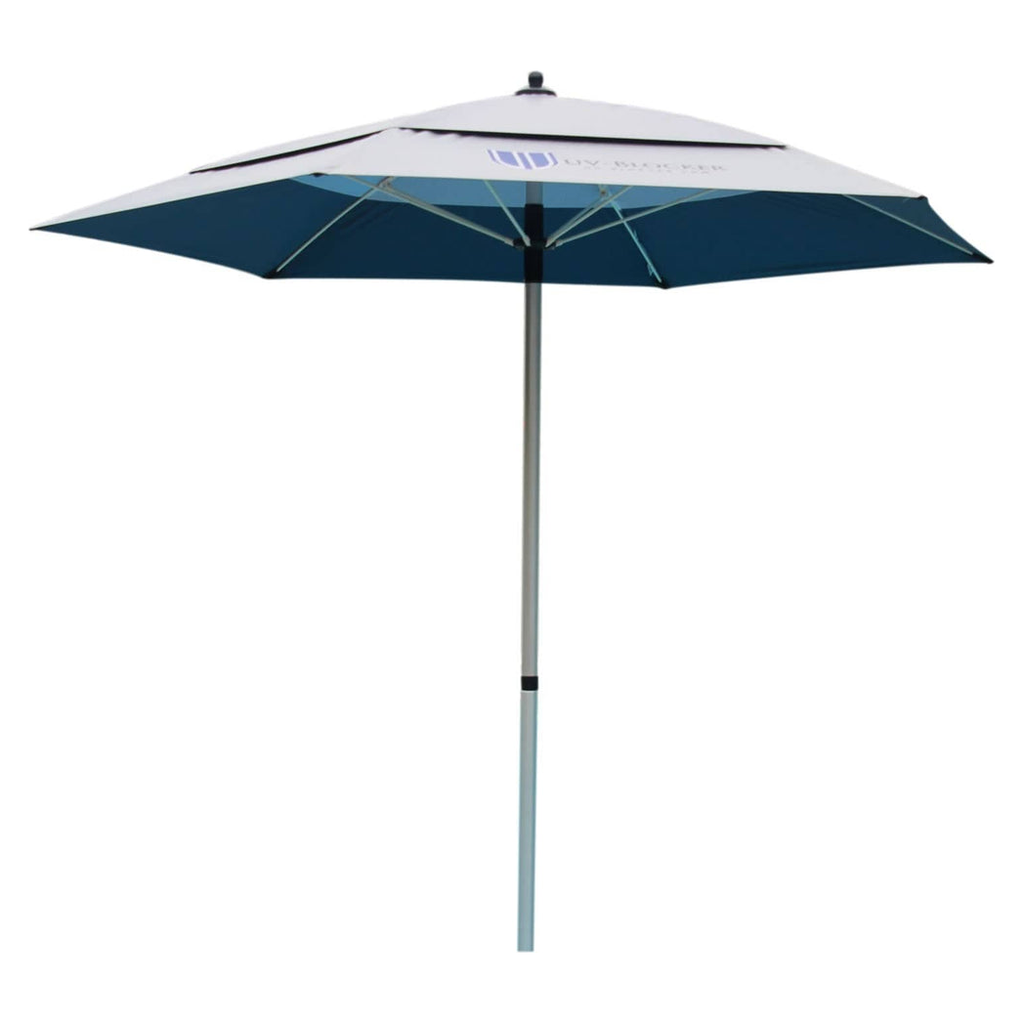
A parasol clamped to the pram handle sits above the hood, so it casts shade without wrapping the pram. The breeze still moves through the sides and you can see your baby at a glance. This works as a stroller sun shade or pram shade whatever your pram's brand, as long as the handle fits the clamp.
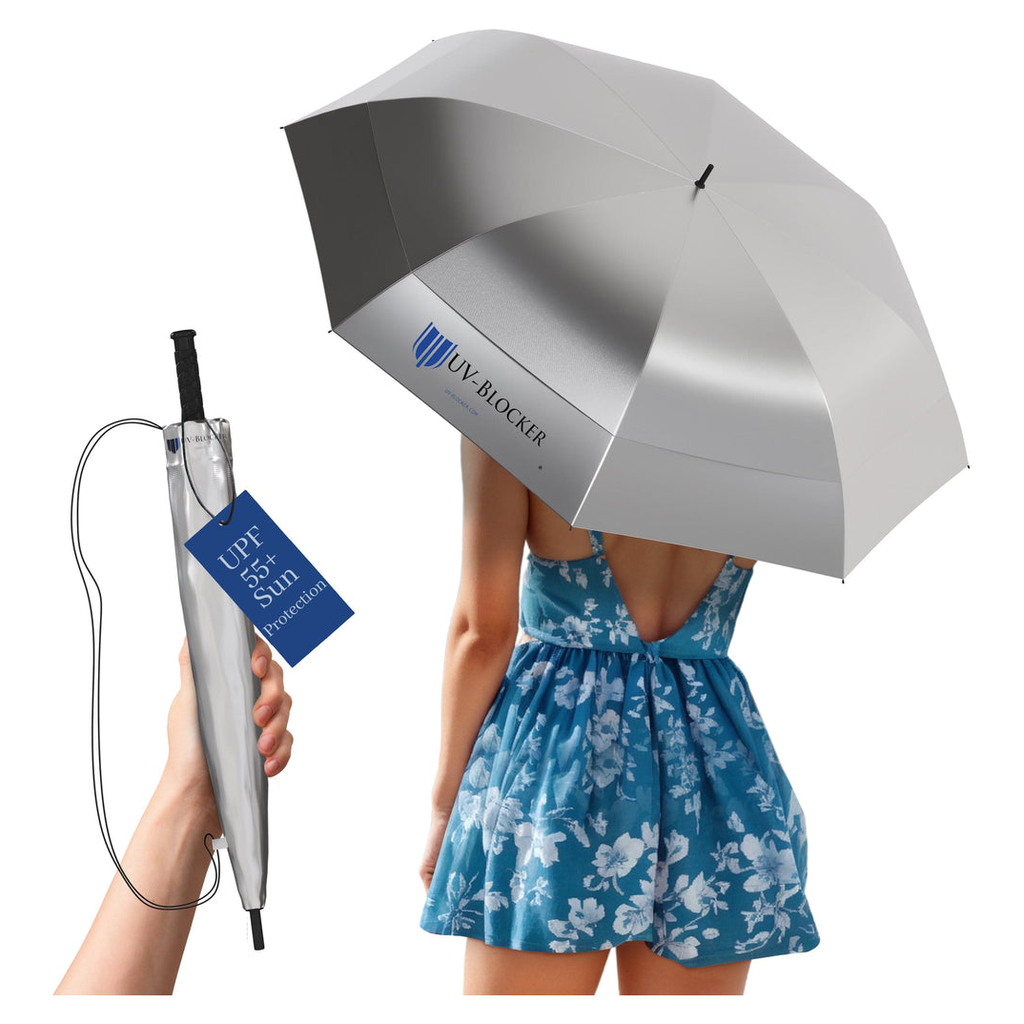
The canopy fabric matters. UV-Blocker's Solarteck® fabric is lab tested to AATCC TM183-2020 to block 100% of UVB and 99.97% of UVA, and it was independently tested by SGS to the Australian and New Zealand standard AS/NZS 4399:2020, rated UPF 50+, Excellent protection. That rating covers the fabric itself.

Pram shade options compared
| Option | UV protection | Airflow | What to check | Best for |
|---|---|---|---|---|
| Pram hood alone | Shades from one angle | Open | Does it adjust far enough forward? | Short walks, low sun behind you |
| Dry muslin or blanket | Unrated | Blocked: up to 3.7°C hotter | Not recommended | Never for sun protection |
| Damp muslin + clip-on fan | Unrated | Cooled 4.7°C below outside air in testing | Re-wet every 20 minutes | Cooling on hot days |
| Mesh pram cover | Varies by product | Good, if the mesh is open | UPF 3.3 or higher on the label | Full-coverage shade with airflow |
| Full-wrap sun cover | Varies by product | Reduced | UPF rating and air permeability | Short stops, closely watched |
| UPF 50+ parasol on a holder | Overhead shade, UPF 50+ fabric | Sides stay open | Handle fits the clamp; angle as the sun moves | Walks and the school run |
Overhead shade solves the UV problem. Heat is the other half of a summer walk.
How Do You Keep a Pram Cool on Hot Days?
Skip dry covers, walk outside the hottest hours, keep the pram in shade, use a damp muslin with a clip-on fan if needed, and check your baby often for overheating.
Practical ways to keep a pram cool
If you are wondering how to keep a pram cool through an Australian summer, the University of Sydney researchers' advice is straightforward:
- Avoid covering the pram with dry materials.
- If you drape a cloth for cooling, make it damp and re-wet it every 20 minutes.
- Add a clip-on fan for extra cooling.
- Check your baby regularly for signs of heat stress.
Red Nose lists the signs to watch for: unusual fussiness, listlessness or irritability; pale, clammy skin that becomes hot and flushed; and heavy sweating at first, followed by reduced sweating as the baby overheats. Babies heat up faster than adults and sweat less.
Small habits that help
- Park in the shade. Don't leave the pram sitting in direct sun while you stop.
- Dress for the heat. Cancer Council recommends cool, loose-fitting clothes and wraps in densely woven fabrics, ideally UPF 50.
- Move sleeping babies. Red Nose notes prams aren't designed for unsupervised or prolonged sleep, so move a sleeping baby to a cot when you get home.
A reflective silver parasol helps the person walking, too. UV-Blocker's silver Solarteck® canopy keeps you up to 8°C cooler than standing in direct sun, because it reflects heat as well as UV.
Which Pram Parasol Clips On and Still Works on the School Run?
A light parasol in a holder clamped to the pram handle. It shades your baby hands-free, adjusts with one hand and lifts out when you don't need it.
Why hands-free matters at 3 pm
A typical school pick-up leaves no spare hands: one on the pram, one holding a small child's hand, a school bag over a shoulder. A holder keeps the parasol in place for you.
UV-Blocker's pram umbrella holder clamps to pram handles 13 to 32 mm thick, round or oval, with two U-bolt sizes in the box. There's no drilling, the hardware is rubber-capped so it won't scratch the frame, and set-up takes under two minutes. A 38 mm ball joint and thumbscrew let you change the angle with one hand as the sun moves. It is AUD 136 on the Australian store, umbrella sold separately.
The parasol to pair with it
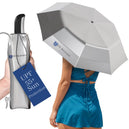
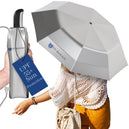
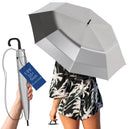
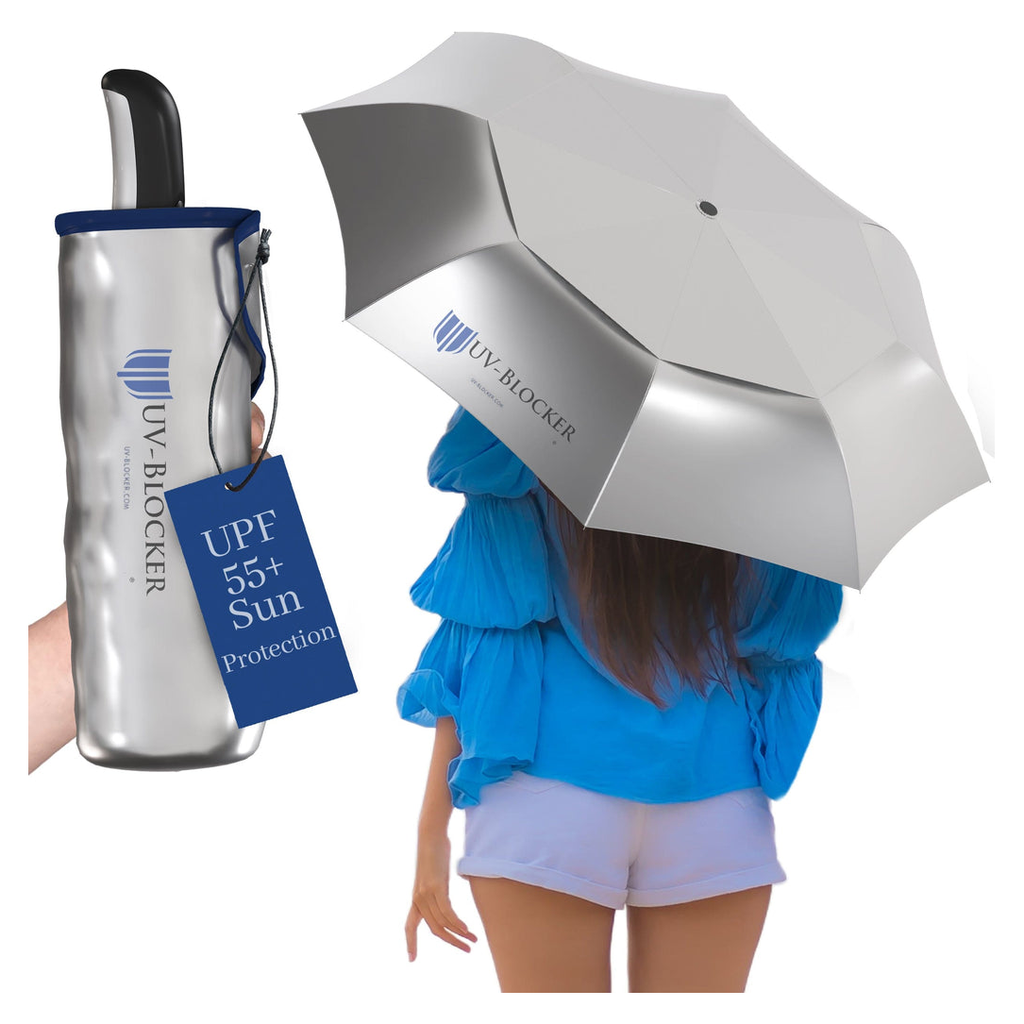
The Compact UV Parasol is UV-Blocker's lightest at 425 g, and it folds to 29 cm, small enough for a nappy bag. Its 99 cm canopy has the silver Solarteck® top and navy underside, which absorbs UV bouncing up off footpaths. Wind passes between its two vented canopy layers, so it copes better with gusts, and it works in the rain too. It is AUD 131 on the Australian store.
Pram parasol tips
- Check your handle first. Measure it: the clamp fits handles 13 to 32 mm thick.
- Angle it over the hood, not down onto your baby, and leave the sides open.
- Take it down in strong wind and keep the thumbscrew tight.
On the walk home, the parasol lifts straight out of the holder and works by hand. If carrying one still feels unusual, read is it weird to use an umbrella in the sun. For other sizes, compare the compact and travel UV parasols. The full range of umbrella holders also covers beach chairs and golf trolleys.
What Else Does Baby Sun Protection Need Beyond Pram Shade?
Shade is one layer. Cancer Council advises keeping babies under 12 months out of direct sun when the UV Index is 3 or above, with covering clothes and a hat.
Good baby sun protection comes in layers:
- Clothing: loose, cool clothes and wraps that cover as much skin as possible.
- A soft hat: SunSmart suggests a soft bucket hat that crumples easily when your baby puts their head down.
- Shade that follows the sun: move the pram as the shade moves, and remember UV reflects off concrete and sand.
- The UV Index: check the daily sun protection times in the SunSmart app before you head out.
Frequently Asked Questions About Pram Sun Shades
Can babies under 6 months wear sunscreen?
Cancer Council says widespread sunscreen use isn't generally recommended for babies under six months, because their skin is very sensitive. Shade, clothing and hats come first.
For more detail, see our guide to sun protection for babies under six months.
Is a parasol on a pram safe in the wind?
In light breezes, yes, with the clamp tight and the canopy angled low over the hood. In strong gusts, take the parasol down and rely on the hood.
Does a pram hood give enough sun protection on its own?
Often not. When the sun is low or the pram turns, the hood stops shading your baby, which is why SunSmart suggests an adjustable hood or an umbrella attachment.
Is a damp muslin safe over a pram?
Safer than a dry one, says Red Nose, if you check it every 20 minutes and re-wet it. Its summer advice goes further: don't cover the pram at all.
Do toddlers still need sunscreen under a parasol?
Yes, from six months. A parasol blocks overhead sun, but UV reflects off footpaths and sand into the shade, so use SPF 30 or higher on exposed skin.
Will the umbrella holder fit my pram?
It fits if your pram handle is 13 to 32 mm thick, round or oval. Measure the handle before you buy, since frame shapes vary between prams.
Key Takeaways
The safest pram sun shade comes from above and leaves the air moving.
- Never a dry cover: a dry muslin or blanket over the pram can make it up to 3.7°C hotter inside.
- Shade from above, sides open: an adjustable hood, a UPF-rated mesh cover or a UPF 50+ parasol on a holder.
- Shade is one layer: add loose clothing, a soft hat and, from six months, sunscreen.
Before tomorrow's school run, check the sun protection times in the SunSmart app. Then pair a Compact UV Parasol with the pram umbrella holder for hands-free shade that keeps the breeze flowing.