

Construction electricians carry 1.14 times the melanoma risk of the general population. Yet not a single major safety resource addresses the UV hazards specific to the electrical trade.
The reason is hiding in plain sight. Rooftop solar installations, transformer yards, and aerial lift work put electricians in high-UV environments where white TPO membranes reflect up to 80% of solar radiation back at workers. At the same time, the arc-rated flame-resistant clothing that protects against electrical hazards traps heat and prevents the lightweight UV-protective layers other outdoor trades rely on.
This creates a PPE conflict that no competitor safety guide addresses: the gear that keeps electricians safe from arc flash makes them more vulnerable to UV damage. Protecting electricians from UV means finding strategies that play nice with FR requirements instead of fighting them.
Below: the occupational UV data every electrician and safety manager should know, the FR gear heat conflict nobody's talking about, what OSHA's 2026 enforcement update changes, and five practical strategies that actually work on an electrical job site.
Why Do Electricians Face Higher UV Risk Than Most Outdoor Workers?
Electricians work on rooftops, in aerial lifts, and in open transformer yards where reflected UV from white membranes and metal surfaces amplifies exposure beyond ground-level outdoor work.
Most outdoor workers deal with two sources of ultraviolet radiation: direct sunlight from above and diffuse UV scattered through the atmosphere. Electricians on commercial rooftops face a third source. White TPO membranes, the standard surface on commercial flat roofs, reflect up to 80% of incoming solar radiation. That reflected UV bounces back upward, hitting workers from below while direct sun hits from above.
The result is a UV environment significantly more intense than ground-level work. A landscaper working on grass receives UV primarily from one direction. An electrician on a white TPO roof receives it from multiple angles simultaneously.
Aerial and Elevated Work Compounds the Problem
Bucket truck work and aerial lift operations add another dimension. At 30 feet up in a boom lift, there's no building shadow, no tree canopy, and no structure overhead. The body receives full-circumference sun exposure for the duration of the task. Overhead line work on utility poles creates the same exposure profile.
Transformer yards and substations present a similar challenge at ground level. These facilities are typically open gravel or concrete pads with no vegetation, no shade structures, and high ambient heat reflected from surrounding surfaces.
Cumulative Career Risk
Licensed electricians typically work 30- to 40-year careers. Research published in the Journal of Occupational Medicine and Toxicology documents a two-fold increase in basal cell carcinoma (BCC) risk among workers with high cumulative occupational UV exposure. The WHO and ILO report that outdoor workers face a 60% increased risk of developing nonmelanoma skin cancer, and that working under the sun causes one in three deaths from NMSC globally.
The longer the career, the higher the cumulative dose. For outdoor workers in any trade, that exposure compounds. For electricians specifically, the rooftop-and-aerial combination accelerates it.
How Does FR Gear Create a Sun Protection Conflict for Electricians?
Arc-rated flame-resistant clothing is mandatory for electrical workers but traps heat, restricts airflow, and prevents the lightweight UV-protective layers other outdoor trades use.
NFPA 70E requires arc-rated FR clothing for any work near energized electrical equipment. Arc flash incidents release intense thermal energy that can cause severe burns in fractions of a second. FR gear is engineered to self-extinguish and resist ignition, and it is non-negotiable on electrical job sites.
The problem is that FR fabrics are typically dark, dense, and heat-retaining. They are the opposite of what a worker needs in a high-UV, high-heat environment. A construction worker in a general trade has options: swap to a light-colored UPF-rated shirt, add a cooling neck gaiter, or roll up sleeves. An electrician does not have these choices.

The Layering Gap
Standard sun protection advice tells outdoor workers to "wear protective clothing." Electricians are already wearing protective clothing. The issue is that their mandatory protective clothing serves arc flash safety, not UV safety, and it actively works against thermal comfort.
| Factor | Electrician (FR Gear) | General Outdoor Worker |
|---|---|---|
| Base clothing | Arc-rated FR shirt + pants (required) | Light UPF shirt (optional) |
| Additional UV layers | Not feasible (heat + mobility) | UPF hat, arm sleeves, neck gaiter |
| Body coverage | Full torso/legs (FR mandate) | Variable (worker's choice) |
| Heat retention | High (dark, dense fabric) | Low (light, breathable) |
| Shade dependency | Critical (only external option) | Supplementary (one of many layers) |
When the worker's clothing cannot be modified for UV protection, the environment must be modified instead. That makes portable shade infrastructure the critical missing layer in electrician sun protection, not an optional add-on.
What Does OSHA's 2026 Heat Program Mean for Electrical Contractors?
OSHA relaunched its Heat National Emphasis Program in April 2026 with a new five-year enforcement term requiring employers to provide cool water, shaded rest areas, and acclimatization plans.
This isn't a suggestion. OSHA backed it up with roughly 7,000 heat-related inspections and 60 General Duty Clause citations between April 2022 and December 2024. The 2026 version dropped the old regional inspection quotas. Now, inspections kick in automatically when heat conditions hit certain thresholds in covered industries, as detailed in OSHA's Heat Illness Prevention guidance.
Electrical construction made OSHA's updated list of 55 target industries. Picture this: an inspector shows up to a commercial rooftop solar job mid-July and asks where workers cool off. If there's no shade anywhere on that roof, the contractor's looking at a citation.
The Acclimatization Problem
A CDC review of 2012-2013 heat-related workplace fatalities found that 9 of 13 deaths occurred within the first three days on the job. Four of those deaths happened on the worker's first day. The failure to support acclimatization was identified as the most common deficiency and the factor most clearly associated with death.
For electrical contractors bringing new apprentices onto summer rooftop projects, this data is actionable. OSHA recommends the Rule of 20 Percent: a new worker should be exposed to hot conditions for only 20% of their shift on day one, increasing by 20% each day until fully acclimated.
The question every electrical contractor should ask: where is the shade on the last rooftop job site? Commercial rooftops have zero natural shade. Meeting OSHA's shaded rest area requirement demands portable solutions.
What Are 5 Sun Protection Strategies Built for Electrical Job Sites?
Effective sun protection for electricians combines SPF 50+ sunscreen on exposed skin, UV-aware scheduling, strategic hydration, portable shade deployment, and crew-level acclimatization protocols.
These strategies are designed to work within the constraints of FR gear requirements and electrical safety rules, not against them.
Strategy 1: Sunscreen on Exposed Skin
FR gear covers the torso and legs. Sunscreen protects the gaps: face, neck, ears, and back of hands. Apply SPF 50+ broad-spectrum sunscreen to all exposed areas and reapply every two hours, or more frequently when sweating heavily under FR layers. Mineral (zinc oxide) formulas work well because they do not break down in heat as quickly as chemical formulas.
Strategy 2: Schedule Around Peak UV
Anyone who's pulled conduit on a white TPO roof at noon in July knows the burn hits fast. If the project schedule allows it, front-load rooftop conduit runs, solar panel wiring, and aerial tasks to early morning or push them past 4 p.m. Realistically, tight commercial deadlines don't always cooperate. But even shifting one high-exposure task out of the 10-to-4 UV peak cuts the day's cumulative dose.
Strategy 3: Hydration Protocol for FR Gear Wearers
FR gear increases core body temperature faster than standard work clothing. OSHA's guideline: one cup of water (8 oz.) every 15 to 20 minutes in hot conditions. Workers in FR gear should treat this as a minimum, not a target. Pre-hydrating before shift start and avoiding caffeine during peak heat hours supports thermoregulation.
Strategy 4: Hard Hat Brims and Neck Shades
A wide-brim hard hat attachment or an FR-rated neck drape adds face and neck coverage without piling more heat onto the torso. One caveat worth noting: some sites restrict loose fabric near energized equipment. Check the site-specific arc flash boundary before clipping on a neck shade inside the limited approach distance.
Strategy 5: Portable Shade Deployment
When FR gear prevents UV-protective layering, shade is the only external protection that works without adding heat load.
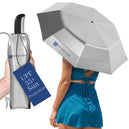
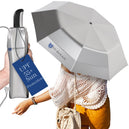
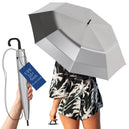
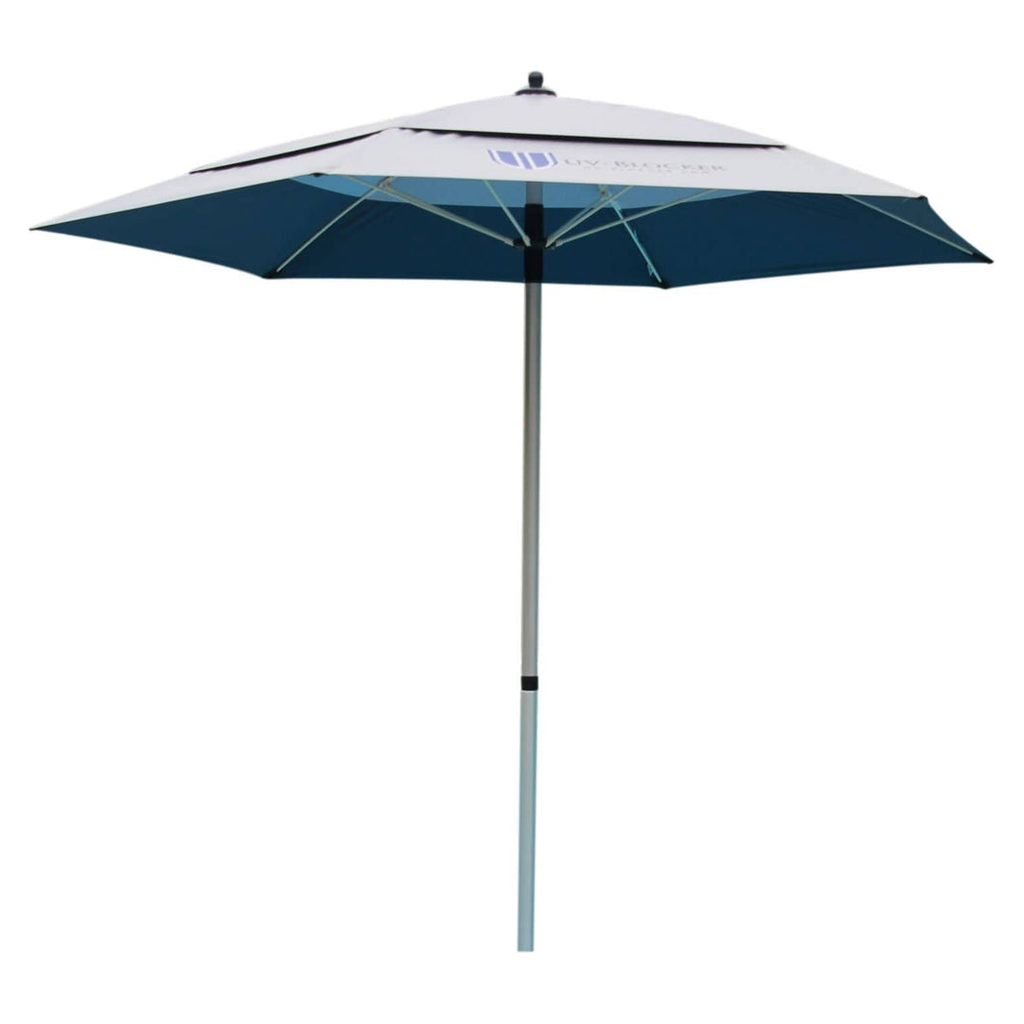
The UV-Blocker ServiceShield ($329.95) is a 7.5-foot pole-mounted shade umbrella with a magnetic base that attaches to steel RTU housings and structural elements on commercial rooftops. It sets up in under 60 seconds by a single person and provides UPF 50+ coverage (99% UV block, AATCC TM183-2020 certified) over a stationary work position. For HVAC technicians and roofers doing similar rooftop work, it's the same solution.
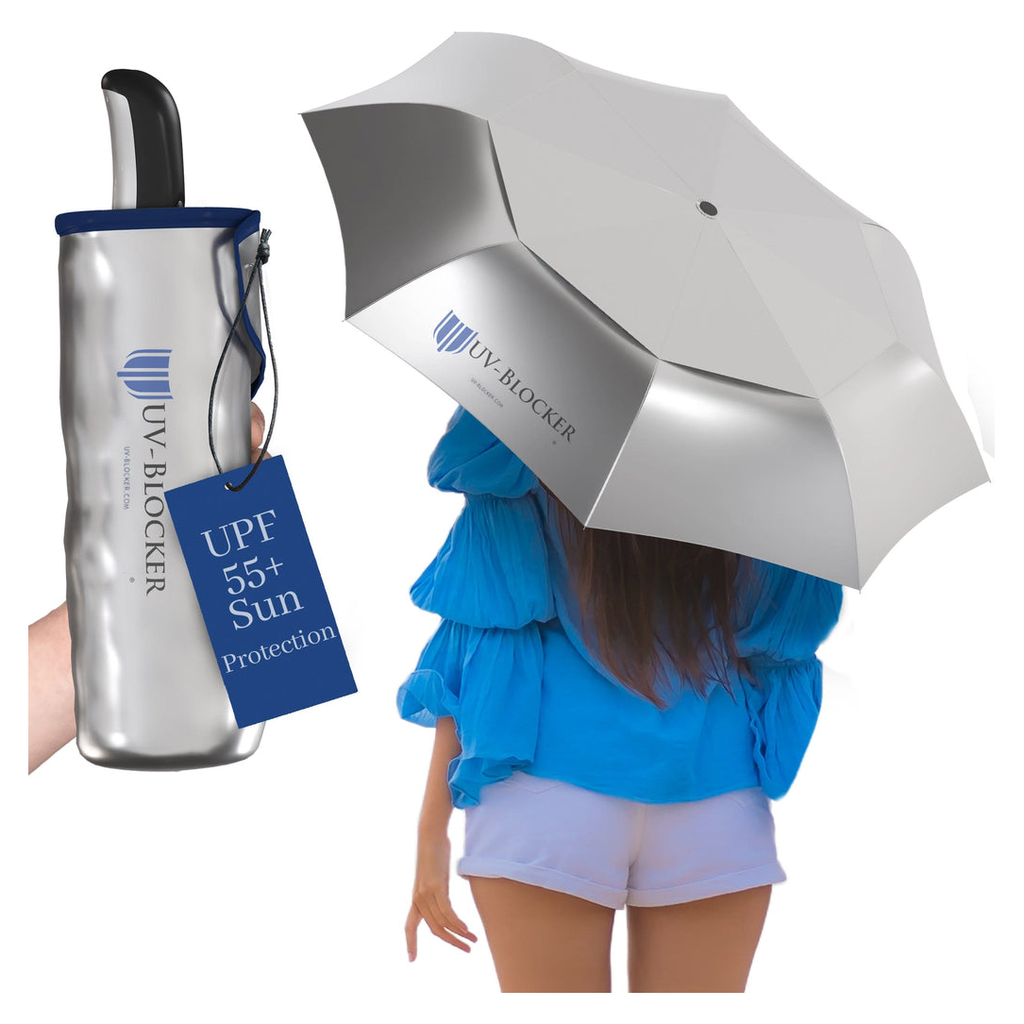
The UV-Blocker Compact ($59.95) fits in a tool bag and provides personal UPF 50+ shade during break periods. The Chair Umbrella Holder ($29.95) enables hands-free shade at equipment staging areas and break stations.
Portable shade is the layer that works alongside FR gear instead of competing with it. No additional clothing required. No heat added. Just UV-blocking coverage over the work position.
How Do You Build a Sun Safety Program Your Electrical Crew Will Follow?
An effective electrical crew sun safety program combines a written UV exposure policy, weekly toolbox talks, acclimatization tracking for new workers, and documented shade provisions for OSHA compliance.
One person wearing sunscreen doesn't fix a crew-wide problem. Lasting protection takes a documented program that safety managers can point to during an audit. UV exposure belongs on the Job Hazard Analysis right next to arc flash and fall protection. Sticking it in a "wellness" bucket signals that it's optional, and the skin cancer statistics say otherwise.
Written UV Exposure Policy
Include sun protection requirements in the site-specific safety plan. Spell out where sunscreen lives on site, where shade's set up, how often crews take breaks, and where the water coolers are. The health data supports treating UV the same way you'd treat fall protection or lockout/tagout: as a real hazard, not a comfort perk.
Toolbox Talk Framework
Run a five-minute UV safety briefing as part of the weekly safety meeting. Cover the day's UV index, shade locations, hydration reminders, and sunscreen reapplication timing. Tying UV talks to the daily hot work permit process adds them to an existing checkpoint rather than creating a separate one.
Acclimatization Tracking
Follow OSHA's Rule of 20 Percent for new hires and returning workers. On day one, limit heat exposure to 20% of the shift. Increase by 20% each subsequent day until fully acclimated. Track this formally. The CDC data showing 9 of 13 heat deaths in the first three days makes acclimatization tracking a life-safety measure, not paperwork.
Compliance Documentation
Log shade provisions, water availability, rest break frequency, and training dates. If OSHA inspects the job site, documented compliance reduces citation risk. If an inspector asks where workers take shaded rest breaks on a commercial rooftop, a documented answer is far better than a guess.
Frequently Asked Questions About Sun Protection for Electricians
Electricians, crew leads, and safety managers keep asking the same questions. Here are the answers that matter most on the job site.
Does FR Clothing Provide UV Protection?
Most FR fabrics block some UV radiation, but coverage gaps at the face, neck, ears, and hands still leave significant skin exposed to cumulative UV damage over a career.
Here's the catch: FR gear protects everything from the collarbone down, but it doesn't cover the face, ears, neck, or the backs of the hands. Those exposed spots take the brunt of two or three decades of rooftop sun. SPF 50+ sunscreen on those areas, paired with a portable shade setup at the work station, fills the gap without adding another layer of heat.
What OSHA Shade Requirements Apply to Electrical Contractors?
OSHA's 2026 Heat National Emphasis Program requires employers to provide shaded rest areas, cool water, and acclimatization plans for workers exposed to heat hazards.
There's no standalone federal "shade law" on the books yet. What OSHA does instead is cite employers under the General Duty Clause when heat protections, shade included, aren't in place. OSHA ran roughly 7,000 heat-related inspections between 2022 and 2024, so the enforcement is real. Any electrical contractor running rooftop jobs needs a documented shade plan on file. For a detailed compliance framework, see OSHA Heat Illness Prevention Plan for HVAC and Roofing.
Can Electricians Use a UV Umbrella Near Live Electrical Equipment?
Yes, but placement matters. A portable shade structure belongs at the rest area or staging zone, outside the arc flash boundary, never inside the limited approach distance to energized gear.
The UV-Blocker ServiceShield is designed for stationary work positions. It mounts to RTU housings or clamps to structural elements at a safe distance from energized equipment. Before placing anything near panels or switchgear, run it past the site-specific arc flash risk assessment first.
How Do Electricians Protect Themselves on Rooftop Solar Installations?
Rooftop solar work requires portable shade at rest stations, SPF 50+ on exposed skin, enforced hydration breaks every 15 to 20 minutes, and scheduling high-exposure tasks outside peak UV hours.
White TPO membranes on commercial roofs reflect up to 80% of solar radiation, creating UV exposure from both above and below. The ServiceShield's magnetic base can mount to metal roof structures to create a shaded rest station directly on the work surface. For more on rooftop-specific heat and UV management, see Rooftop Heat Safety for HVAC.
Sun Safety in Australia
Australia has some of the highest UV radiation levels in the world, with the UV Index regularly reaching extreme levels (11 or above) in cities such as Sydney, Melbourne, Brisbane, Perth, and Adelaide for much of the year — including on overcast days. The Cancer Council Australia reports that approximately two in three Australians will be diagnosed with some form of skin cancer by age 70, making sun protection a national health priority.
Key resources and guidelines for Australian sun safety:
- SunSmart Program (Cancer Council Australia): The SunSmart UV Alert is broadcast daily and recommends sun protection whenever the UV Index reaches 3 or above. In most Australian cities, this threshold is met every day of the year, including winter months in northern regions.
- ARPANSA (Australian Radiation Protection and Nuclear Safety Agency): Provides real-time UV monitoring at stations across all states and territories. Australians can access current UV levels at arpansa.gov.au.
- Safe Work Australia — UV Radiation as an Occupational Hazard: Australian workplace health and safety legislation requires employers to assess and manage UV radiation exposure for outdoor workers. Physical shade, including umbrellas rated UPF 50+, is recognised as a primary engineering control under these regulations.
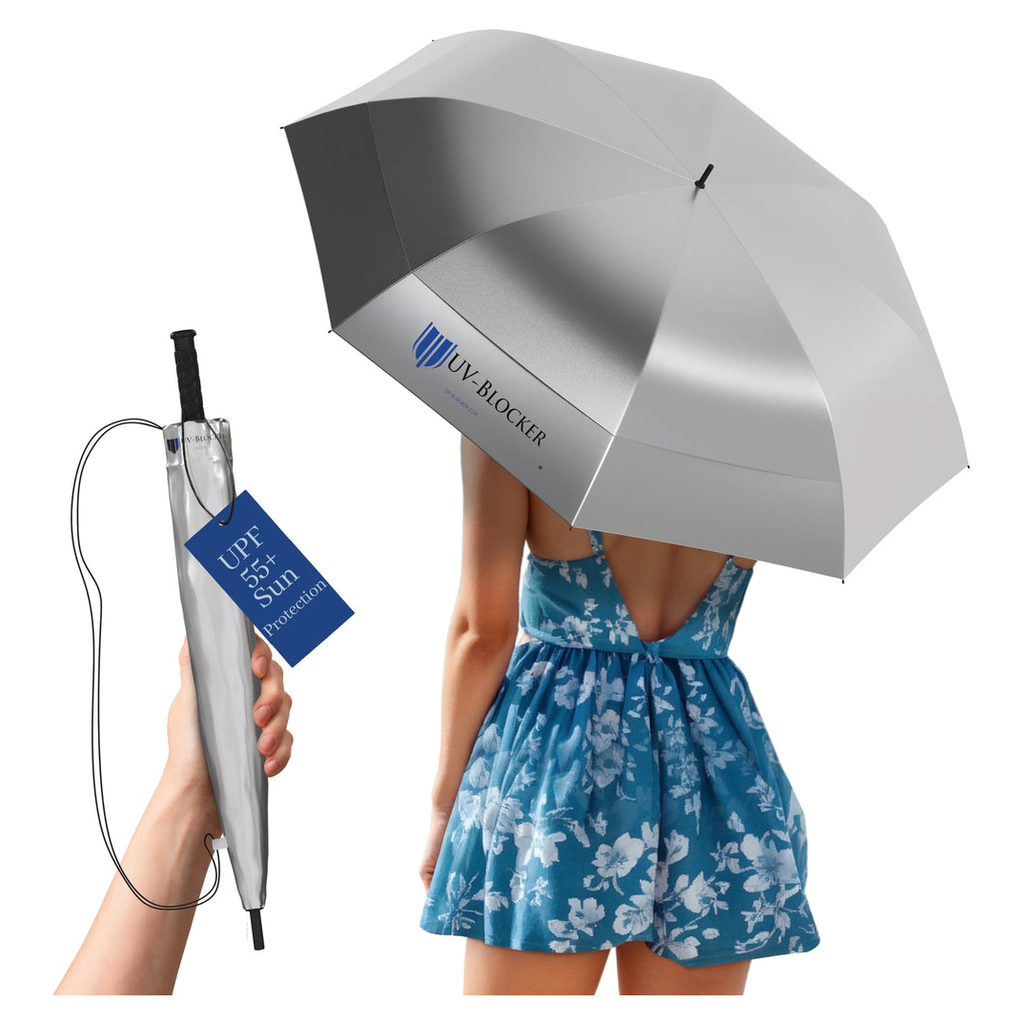
A UPF 50+ UV-blocking umbrella provides the consistent, continuous shade protection that is essential under Australia's intense sun. The UV-Blocker umbrella, with its patented Solarteck® reflective coating, blocks 99% of UV rays and reduces perceived temperature by up to 15°F — a meaningful advantage for outdoor activities in Australia's climate. It is the only umbrella of its kind approved by the Melanoma International Foundation.
Frequently Asked Questions
What are the specific UV risks for Sun Protection for Electricians?
Outdoor workers like Sun Protection for Electricians typically accumulate 2–3× more UV exposure than indoor office workers. Chronic UV exposure increases melanoma and non-melanoma skin cancer risk significantly. OSHA recognizes UV radiation as a workplace hazard, and workers' compensation claims related to occupational UV exposure are rising. Proper sun protection is both a health and occupational safety requirement.
Does OSHA require sun protection for outdoor workers?
OSHA's General Duty Clause requires employers to protect workers from recognized hazards, including UV radiation. While no specific UV standard exists for most industries, OSHA guidance on heat illness prevention overlaps with UV protection. Several states have stronger outdoor worker heat and UV protection regulations. Employers should provide shade, schedule breaks, and supply sun protection equipment.
What sun protection equipment works best for active outdoor work?
For workers who need freedom of movement, the most effective combination is: (1) UPF 50+ work shirts and pants, (2) wide-brim hard hat or sun-protective hat, (3) SPF 50 water-resistant sunscreen on exposed skin, and (4) a portable clamp or magnetic-base UV umbrella that creates shade at a fixed workstation. UV-Blocker's ServiceShield umbrella was specifically designed for rooftop and outdoor workstation use.
How often should outdoor workers apply sunscreen during a shift?
Sunscreen should be reapplied every 2 hours, and immediately after heavy sweating or toweling off. Most outdoor workers underapply — dermatologists recommend 1 oz (shot glass amount) for full body coverage. Water-resistant SPF 50+ formulas last longer during sweating. Physical (mineral) sunscreens tend to be more stable under direct sun than chemical formulas.
What long-term skin damage should outdoor workers watch for?
Watch for actinic keratoses (rough, scaly patches), unusual moles or growths that change in size, shape, or color, and persistent sores that don't heal. Annual skin cancer screenings with a dermatologist are strongly recommended for outdoor workers with 10+ years of occupational sun exposure. Early detection dramatically improves outcomes.
Professional Sun Safety Protocol for Sun Protection for Electricians
- Schedule intensive UV work (roof work, outdoor inspections) before 10am or after 4pm when UV index is lowest
- Use UV-blocking umbrella attachments at fixed workstations — they eliminate ambient UV exposure during breaks
- Establish a buddy system: coworkers check each other for missed sunscreen areas and early sunburn signs
- Keep sunscreen in the work vehicle or tool bag — accessibility increases compliance
- Document sun protection training in safety briefings — it creates legal compliance records and reinforces habits
- Consider UV-protective safety eyewear — eyes are often neglected in outdoor worker sun protection protocols
Frequently Asked Questions
What are the specific UV risks for Sun Protection for Electricians?
Outdoor workers like Sun Protection for Electricians typically accumulate 2–3× more UV exposure than indoor office workers. Chronic UV exposure increases melanoma and non-melanoma skin cancer risk significantly. OSHA recognizes UV radiation as a workplace hazard, and workers' compensation claims related to occupational UV exposure are rising. Proper sun protection is both a health and occupational safety requirement.
Does OSHA require sun protection for outdoor workers?
OSHA's General Duty Clause requires employers to protect workers from recognized hazards, including UV radiation. While no specific UV standard exists for most industries, OSHA guidance on heat illness prevention overlaps with UV protection. Several states have stronger outdoor worker heat and UV protection regulations. Employers should provide shade, schedule breaks, and supply sun protection equipment.
What sun protection equipment works best for active outdoor work?
For workers who need freedom of movement, the most effective combination is: (1) UPF 50+ work shirts and pants, (2) wide-brim hard hat or sun-protective hat, (3) SPF 50 water-resistant sunscreen on exposed skin, and (4) a portable clamp or magnetic-base UV umbrella that creates shade at a fixed workstation. UV-Blocker's ServiceShield umbrella was specifically designed for rooftop and outdoor workstation use.
How often should outdoor workers apply sunscreen during a shift?
Sunscreen should be reapplied every 2 hours, and immediately after heavy sweating or toweling off. Most outdoor workers underapply — dermatologists recommend 1 oz (shot glass amount) for full body coverage. Water-resistant SPF 50+ formulas last longer during sweating. Physical (mineral) sunscreens tend to be more stable under direct sun than chemical formulas.
What long-term skin damage should outdoor workers watch for?
Watch for actinic keratoses (rough, scaly patches), unusual moles or growths that change in size, shape, or color, and persistent sores that don't heal. Annual skin cancer screenings with a dermatologist are strongly recommended for outdoor workers with 10+ years of occupational sun exposure. Early detection dramatically improves outcomes.
Professional Sun Safety Protocol for Sun Protection for Electricians
- Schedule intensive UV work (roof work, outdoor inspections) before 10am or after 4pm when UV index is lowest
- Use UV-blocking umbrella attachments at fixed workstations — they eliminate ambient UV exposure during breaks
- Establish a buddy system: coworkers check each other for missed sunscreen areas and early sunburn signs
- Keep sunscreen in the work vehicle or tool bag — accessibility increases compliance
- Document sun protection training in safety briefings — it creates legal compliance records and reinforces habits
- Consider UV-protective safety eyewear — eyes are often neglected in outdoor worker sun protection protocols