

The wall a house painter is coating might be reflecting UV radiation right back at them. White-painted surfaces can bounce over 20% of ultraviolet radiation upward, straight toward the face, neck, and underarms of anyone standing nearby on a ladder. Most painters never think about this.
Exterior painters face one of the highest cumulative UV exposures of any trade. The WHO and ILO estimate that outdoor workers have a 60% higher risk of nonmelanoma skin cancer compared to indoor workers, and roughly 1.6 billion workers globally are exposed to occupational solar UV radiation. Yet no sun safety guide exists specifically for the painting profession. Standard advice about sunscreen and hats falls apart when grip safety on ladders and wet paint surfaces enter the picture.
What follows is a breakdown of the UV risks specific to painting, the reasons generic sun advice doesn't hold up on a job site, and a protection protocol built around how painting crews actually get through the day.
TLDR:
- White-painted surfaces reflect up to 22% of UV radiation upward, increasing exposure for painters on ladders and scaffolding
- Exterior painters face 6 to 8 hours of continuous UV without shade rotation, and arms-overhead work exposes typically covered skin
- Certain paint solvents are photosensitizers that compound UV damage, and 32% of painters already have contact dermatitis
- Sunscreen on hands creates ladder grip hazards, making standard sun safety advice impractical for the trade
- Shadow-side scheduling, portable shade at staging areas, and UV sleeves reduce painter UV exposure without disrupting workflow
Why Are Painters at Higher Risk for Sun Damage Than Other Outdoor Workers?
Painters face reflected UV from work surfaces, elevated platform work above natural shade, and arms-overhead postures that expose normally protected skin.
Reflected UV from Work Surfaces
Fresh white primer and paint act as a UV mirror. A systematic review of UV albedo values found that white paint on metal oxide surfaces reflects up to 22% of UV radiation. That reflected UV travels upward toward the painter's face, chin, neck, and inner arms. For comparison, typical ground surfaces like grass or asphalt reflect only 2% to 5% of UV.
A roofer gets direct overhead UV. A painter gets that same overhead dose plus reflected UV bouncing off the wall they are standing next to. The cumulative effect is measurable.
Elevated Platforms Remove Natural Shade
Painters working on ladders and scaffolding operate above fence lines, vehicle canopies, and tree cover that normally provide partial shade at ground level. At 10 or 15 feet up, there is nothing between the skin and the sun except the atmosphere.
Arms-Overhead Posture
Painting ceilings, soffits, fascia boards, and upper walls means hours with arms raised above the head. That opens up the inner arms, the sides of the torso, and the soft skin under the chin to direct UV. Those spots almost never see sun under normal conditions, so they burn faster and more severely when they finally do.
Continuous Exposure Without Task Rotation
An electrician might wire an outlet inside for an hour, then run conduit outside, then head back in. A plumber does the same kind of rotation. Exterior painters don't get that break. Someone coating siding, trim, or stucco is planted outside for 6 to 8 hours straight during peak painting season. That season runs May through September, which lines up almost perfectly with the highest UV months across North America.

Can Paint Chemicals Make Sun Damage Worse?
Paint solvents contain photosensitizers that increase UV damage risk. When combined with compromised skin barriers, the effect compounds significantly.
Coal tar derivatives, specific pigment compounds, and some organic solvents used in primers and coatings can increase the skin's photosensitivity. When a painter with solvent residue on their forearms or hands steps back into full sun, the chemical exposure and UV exposure compound each other.
The skin barrier issue makes this worse. According to DermNet NZ, 32% of painters have contact dermatitis. A compromised skin barrier allows UV to penetrate more effectively, creating a cycle where chemical irritation and UV damage reinforce each other.
IARC Classification Adds Context
The International Agency for Research on Cancer classifies "occupational exposure as a painter" as a Group 1 carcinogen, the highest classification. That designation is based on elevated risks of bladder cancer, lung cancer, and mesothelioma from chronic exposure to solvents, pigments, and chemical dust in the painting trade.
The IARC classification covers chemical carcinogen exposure. UV radiation is a separate carcinogen. Exterior house painters face both simultaneously. No other common trade combines chemical photosensitizers on the skin surface with prolonged outdoor UV exposure to the same degree.
Why Does Standard Sun Safety Advice Fail Painters?
Standard sun safety fails painters because sunscreen creates ladder grip hazards, protective clothing catches wet paint, hard hats block UV hat brims, and reapplication requires climbing down from height.
Sunscreen and Grip Safety
This is the central compliance problem for painters. Sunscreen on the hands and forearms creates a slippery film on ladder rungs and scaffold rails. For a worker 15 feet above a concrete driveway, a lost grip is not a sunburn risk. It is a fall-injury risk. Most painters know they should apply sunscreen. They also know they cannot afford to lose their grip.
Clothing Conflicts
Long-sleeved sun shirts, the standard recommendation for outdoor UV protection, catch on wet paint surfaces. A painter brushing past freshly coated trim in a UPF shirt ends up with paint stains and fabric snags. The shirt becomes a liability, not a protection layer.
Headgear Limitations
Wide-brim sun hats do not fit under hard hats required on scaffolding and multi-story job sites. A painter can wear a sun hat or a hard hat, but rarely both at the same time.
The Reapplication Problem
Dermatologists recommend sunscreen reapplication every two hours. For a painter 20 feet up on an extension ladder, that means climbing down, applying sunscreen, waiting for it to absorb so grip is not compromised, and climbing back up. On a crew of four painters working an exterior job, hourly reapplication breaks would cost significant productivity. Few painting contractors mandate it. Fewer painters do it voluntarily.
The result: painters understand the sun risk but cannot follow generic protection advice without creating new hazards. The gap is in the advice, not the workers.
What Does an Effective Sun Protection Protocol for Painting Crews Look Like?
An effective protocol combines shadow-side scheduling, portable shade at prep and break stations, targeted UV gear that avoids paint contact, and timed shade breaks during peak UV hours.
Schedule Around the Building's Shadow
The single most effective and cost-free strategy for reducing painter UV exposure is wall-rotation scheduling. Paint the north and east walls in the afternoon. Paint the south and west walls in the morning. The crew always works on the shaded side of the building.
A foreman who plans the daily rotation around sun position can cut cumulative crew UV exposure substantially without purchasing any equipment. This one change outperforms every other intervention on this list.
Set Up Shade at Prep and Break Areas
Paint mixing, tool cleaning, lunch breaks, and material staging all happen at ground level. These areas can be shaded with portable solutions.
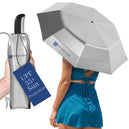
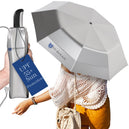
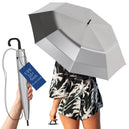
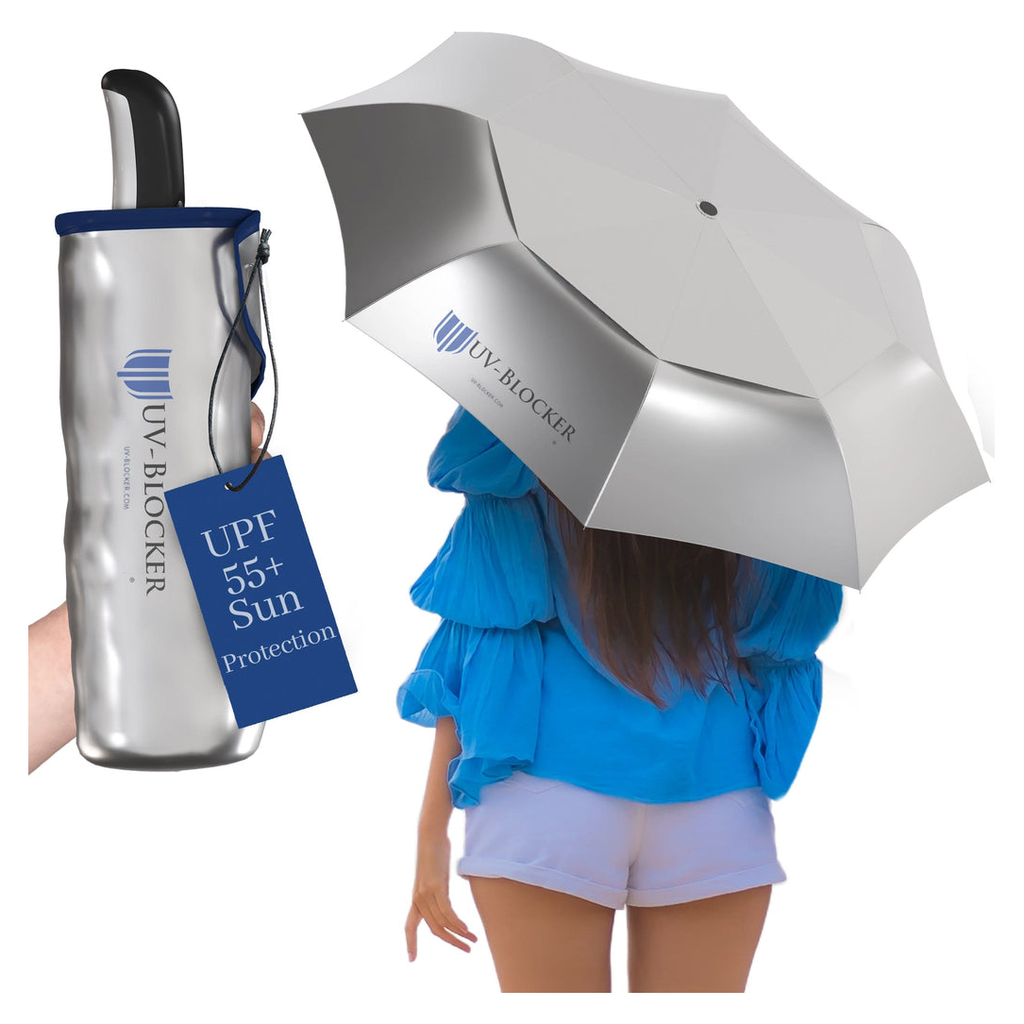
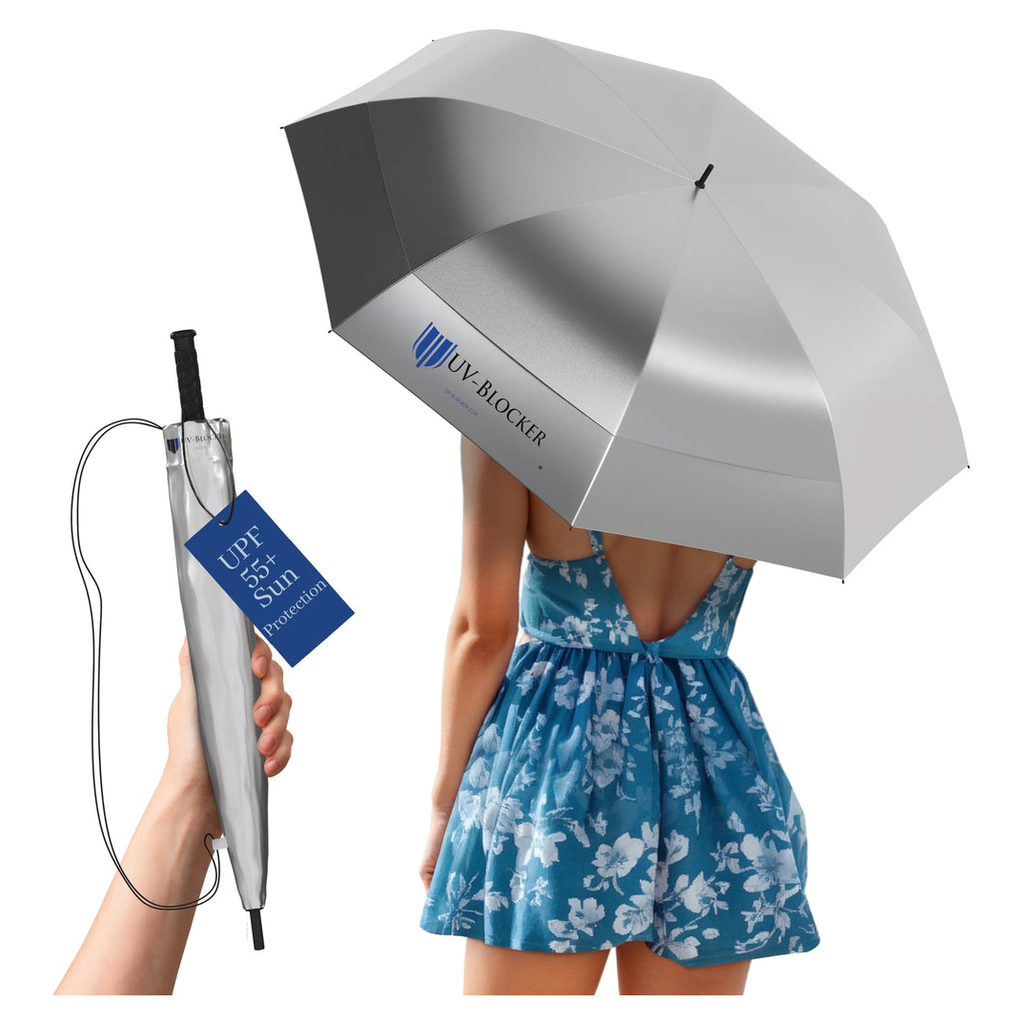
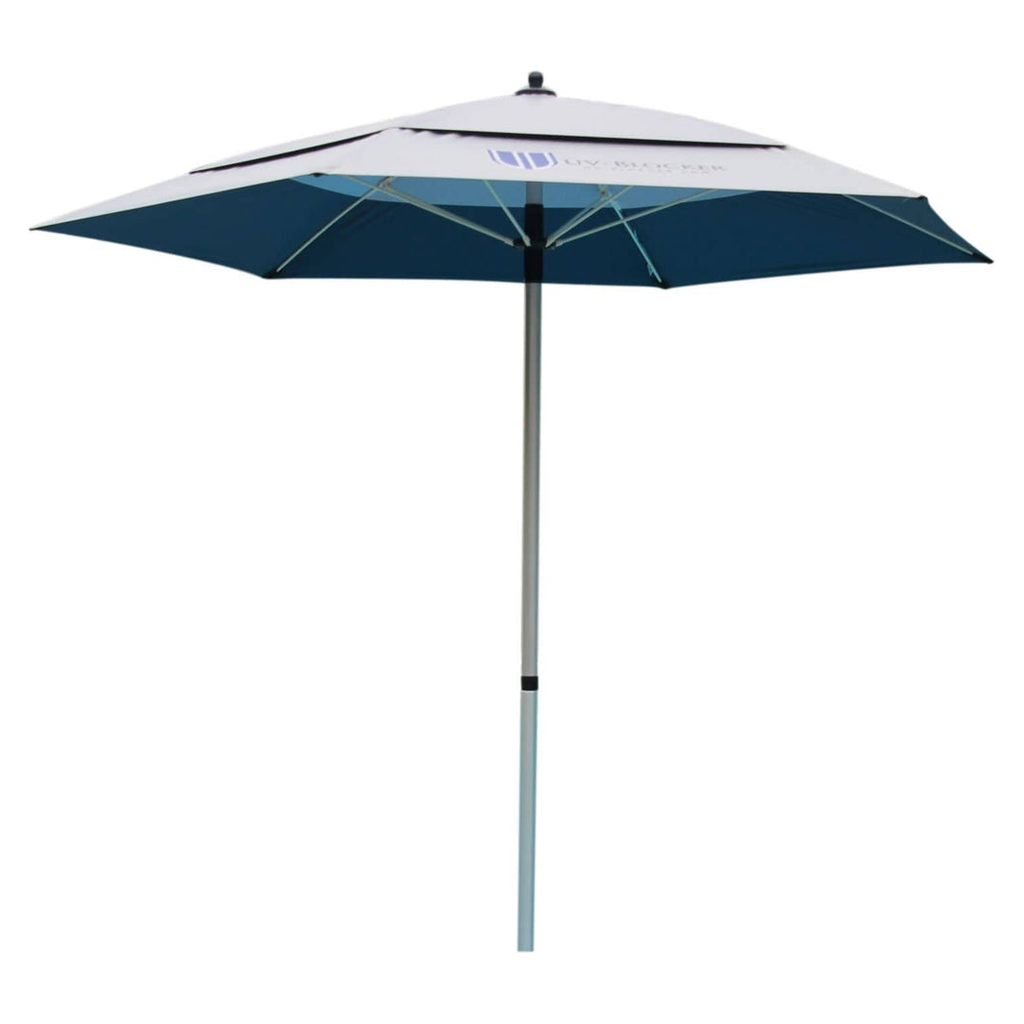
Pop-up canopies, vehicle awnings, or a portable UV-Blocker ServiceShield with its magnetic or clamp base can provide a UV-free zone at the staging area. For solo painters, a Compact UV Umbrella paired with a chair umbrella holder creates a shaded break spot that packs into the truck. The point is not to paint under shade. It is to ensure that every minute not spent actively painting is spent out of the sun.
Gear That Works with the Trade
- Forearm UV sleeves (compression-fit, not full-length shirts) stay tight against skin and do not catch on wet surfaces. They protect the most exposed area for overhead painters without the snag risk of loose sleeves.
- Neck gaiters provide cervical UV protection with less bulk than collared sun shirts. Pull them down around the neck when they're not needed.
- Bucket hats that fit under hard hats are available from several brands built specifically for construction trades. The brim runs shorter than a traditional sun hat, but it still covers the ears and the back of the neck where burns hit hardest.
- Mineral sunscreen on face and ears only solves the grip problem by keeping hands and forearms completely clean. Zinc oxide sits on top of the skin instead of soaking in, which means less chance of it reacting with whatever solvent or primer residue is already on the skin.
Timing and Shade Breaks
Once the UV index hits 6 or above (which happens most days between 10 AM and 4 PM from May through September), a 5-minute shade break every hour makes a real difference. The crew walks around to the building's shaded side or heads to the staging area. That's about 40 extra minutes of breaks across a full day. When it's positioned as a safety policy rather than downtime, contractors tend to accept it without much pushback.
| Risk Factor | Painters | General Outdoor Workers |
|---|---|---|
| Direct UV exposure | 6 to 8 hours continuous | Varies by task rotation |
| Reflected UV from work surface | Up to 22% amplification from white-painted walls | Minimal (ground-level 2 to 5%) |
| Chemical photosensitizers | Present in solvents, primers | Rare in most trades |
| Arms-overhead posture | Frequent (ceilings, soffits, fascia) | Occasional |
| Sunscreen compatibility | Grip hazard on ladders | Generally compatible |
| Shade access on elevated platforms | Above shade lines on ladders and scaffolding | Varies |
Frequently Asked Questions About Sun Protection for Painters
These are the most common questions painters, contractors, and safety managers ask about UV exposure on paint jobs.
Is painting outdoors bad for your skin?
Exterior painting carries significant skin cancer risk from 6 to 8 hours of continuous UV exposure, reflected UV from painted surfaces, and chemical photosensitizers in common coatings.
Outdoor workers face a 60% higher risk of nonmelanoma skin cancer compared to indoor workers. A meta-analysis published in PMC puts the number at a 2-fold increase in keratinocyte carcinoma risk for outdoor workers, with squamous cell carcinoma showing the strongest link to cumulative UV hours. Painters face additional compounding risk from reflected UV and photosensitizing chemicals that other outdoor workers do not encounter.
Do white walls really reflect UV radiation?
White and light-colored surfaces can reflect over 20% of UV radiation upward, increasing exposure to the face, neck, and underarms of painters working nearby.
Research published in the Journal of Photochemistry and Photobiology documents UV albedo values for common building materials. White paint on a metal surface bounces back up to 22% of UV. Darker materials like asphalt? Only 2% to 5%. Fresh white primer creates a surface with high UV albedo directly adjacent to where a painter stands on a ladder.
What SPF should painters use?
Painters should use SPF 30 to 50 mineral sunscreen on the face and ears only, keeping hands and forearms clean for ladder grip safety.
Zinc oxide (mineral) sunscreen stays on the skin's surface instead of soaking in, so there's less chance of it interacting with whatever paint solvent is already on the skin. Applying sunscreen only above the neckline keeps grip surfaces clean. Reapply during scheduled shade breaks rather than making separate trips down the ladder.
Can paint chemicals make sunburns worse?
Certain solvents and additives in paints are photosensitizers that increase skin reactivity to UV, making sunburns more likely and potentially more severe for painters with chemical residue on exposed skin.
Coal tar derivatives and some organic solvents increase photosensitivity. Combined with the 32% contact dermatitis rate among painters documented by DermNet NZ, the compromised skin barrier allows UV to penetrate more effectively. Wearing chemical-resistant UV sleeves during solvent-heavy tasks provides a dual-purpose barrier.
How can painting contractors protect their crews from UV?
Contractors should implement shadow-side scheduling, provide portable shade at staging areas, supply UV sleeves and bucket hats, and build hourly shade breaks into the daily plan during high UV months.
The most effective first step costs nothing: rotate crew assignments so painters always work on the shaded side of the building. Portable shade at prep and break stations, such as a ServiceShield or pop-up canopy, ensures rest time happens out of direct UV. See the full occupational series: sun protection for construction workers, sun protection for landscapers, and the outdoor workers hub.
Conclusion
Three key interventions dramatically reduce painter UV exposure and skin cancer risk over a career.
Three interventions change the equation:
- Shadow-side scheduling keeps crews on the shaded face of the building throughout the day. This is free and immediately actionable.
- Portable shade at staging and break areas means that every minute not spent actively painting happens out of the sun.
- Trade-specific gear like compression UV sleeves, bucket hats under hard hats, and face-only mineral sunscreen protects skin without creating new job-site hazards.
The most important step a painting contractor can take this week: look at tomorrow's job and plan the wall rotation around the building's shadow. That one decision costs nothing and reduces cumulative crew UV exposure from the first hour of the day.
Painting contractors looking for portable shade that moves from job to job can check out the UV-Blocker ServiceShield for crew staging areas, or the Compact UV Umbrella for solo painters who want a quick shade setup on break.
Ready for Real UV Protection?
UV-Blocker umbrellas block 99%+ of UV rays, keep you up to 15°F cooler, and carry the only Melanoma International Foundation approval of any umbrella. Dermatologist-recommended. Loved by melanoma survivors, outdoor workers, and sun-sensitive individuals worldwide.
Shop UV-Blocker Umbrellas →Sun Safety in Australia
Australia has some of the highest UV radiation levels in the world, with the UV Index regularly reaching extreme levels (11 or above) in cities such as Sydney, Melbourne, Brisbane, Perth, and Adelaide for much of the year — including on overcast days. The Cancer Council Australia reports that approximately two in three Australians will be diagnosed with some form of skin cancer by age 70, making sun protection a national health priority.
Key resources and guidelines for Australian sun safety:
- SunSmart Program (Cancer Council Australia): The SunSmart UV Alert is broadcast daily and recommends sun protection whenever the UV Index reaches 3 or above. In most Australian cities, this threshold is met every day of the year, including winter months in northern regions.
- ARPANSA (Australian Radiation Protection and Nuclear Safety Agency): Provides real-time UV monitoring at stations across all states and territories. Australians can access current UV levels at arpansa.gov.au.
- Safe Work Australia — UV Radiation as an Occupational Hazard: Australian workplace health and safety legislation requires employers to assess and manage UV radiation exposure for outdoor workers. Physical shade, including umbrellas rated UPF 50+, is recognised as a primary engineering control under these regulations.
A UPF 50+ UV-blocking umbrella provides the consistent, continuous shade protection that is essential under Australia's intense sun. The UV-Blocker umbrella, with its patented Solarteck® reflective coating, blocks 99% of UV rays and reduces perceived temperature by up to 15°F — a meaningful advantage for outdoor activities in Australia's climate. It is the only umbrella of its kind approved by the Melanoma International Foundation.
Frequently Asked Questions
What are the specific UV risks for Sun Protection for Painters?
Outdoor workers like Sun Protection for Painters typically accumulate 2–3× more UV exposure than indoor office workers. Chronic UV exposure increases melanoma and non-melanoma skin cancer risk significantly. OSHA recognizes UV radiation as a workplace hazard, and workers' compensation claims related to occupational UV exposure are rising. Proper sun protection is both a health and occupational safety requirement.
Does OSHA require sun protection for outdoor workers?
OSHA's General Duty Clause requires employers to protect workers from recognized hazards, including UV radiation. While no specific UV standard exists for most industries, OSHA guidance on heat illness prevention overlaps with UV protection. Several states have stronger outdoor worker heat and UV protection regulations. Employers should provide shade, schedule breaks, and supply sun protection equipment.
What sun protection equipment works best for active outdoor work?
For workers who need freedom of movement, the most effective combination is: (1) UPF 50+ work shirts and pants, (2) wide-brim hard hat or sun-protective hat, (3) SPF 50 water-resistant sunscreen on exposed skin, and (4) a portable clamp or magnetic-base UV umbrella that creates shade at a fixed workstation. UV-Blocker's ServiceShield umbrella was specifically designed for rooftop and outdoor workstation use.
How often should outdoor workers apply sunscreen during a shift?
Sunscreen should be reapplied every 2 hours, and immediately after heavy sweating or toweling off. Most outdoor workers underapply — dermatologists recommend 1 oz (shot glass amount) for full body coverage. Water-resistant SPF 50+ formulas last longer during sweating. Physical (mineral) sunscreens tend to be more stable under direct sun than chemical formulas.
What long-term skin damage should outdoor workers watch for?
Watch for actinic keratoses (rough, scaly patches), unusual moles or growths that change in size, shape, or color, and persistent sores that don't heal. Annual skin cancer screenings with a dermatologist are strongly recommended for outdoor workers with 10+ years of occupational sun exposure. Early detection dramatically improves outcomes.
Professional Sun Safety Protocol for Sun Protection for Painters
- Schedule intensive UV work (roof work, outdoor inspections) before 10am or after 4pm when UV index is lowest
- Use UV-blocking umbrella attachments at fixed workstations — they eliminate ambient UV exposure during breaks
- Establish a buddy system: coworkers check each other for missed sunscreen areas and early sunburn signs
- Keep sunscreen in the work vehicle or tool bag — accessibility increases compliance
- Document sun protection training in safety briefings — it creates legal compliance records and reinforces habits
- Consider UV-protective safety eyewear — eyes are often neglected in outdoor worker sun protection protocols
Frequently Asked Questions
What are the specific UV risks for Sun Protection for Painters?
Outdoor workers like Sun Protection for Painters typically accumulate 2–3× more UV exposure than indoor office workers. Chronic UV exposure increases melanoma and non-melanoma skin cancer risk significantly. OSHA recognizes UV radiation as a workplace hazard, and workers' compensation claims related to occupational UV exposure are rising. Proper sun protection is both a health and occupational safety requirement.
Does OSHA require sun protection for outdoor workers?
OSHA's General Duty Clause requires employers to protect workers from recognized hazards, including UV radiation. While no specific UV standard exists for most industries, OSHA guidance on heat illness prevention overlaps with UV protection. Several states have stronger outdoor worker heat and UV protection regulations. Employers should provide shade, schedule breaks, and supply sun protection equipment.
What sun protection equipment works best for active outdoor work?
For workers who need freedom of movement, the most effective combination is: (1) UPF 50+ work shirts and pants, (2) wide-brim hard hat or sun-protective hat, (3) SPF 50 water-resistant sunscreen on exposed skin, and (4) a portable clamp or magnetic-base UV umbrella that creates shade at a fixed workstation. UV-Blocker's ServiceShield umbrella was specifically designed for rooftop and outdoor workstation use.
How often should outdoor workers apply sunscreen during a shift?
Sunscreen should be reapplied every 2 hours, and immediately after heavy sweating or toweling off. Most outdoor workers underapply — dermatologists recommend 1 oz (shot glass amount) for full body coverage. Water-resistant SPF 50+ formulas last longer during sweating. Physical (mineral) sunscreens tend to be more stable under direct sun than chemical formulas.
What long-term skin damage should outdoor workers watch for?
Watch for actinic keratoses (rough, scaly patches), unusual moles or growths that change in size, shape, or color, and persistent sores that don't heal. Annual skin cancer screenings with a dermatologist are strongly recommended for outdoor workers with 10+ years of occupational sun exposure. Early detection dramatically improves outcomes.
Professional Sun Safety Protocol for Sun Protection for Painters
- Schedule intensive UV work (roof work, outdoor inspections) before 10am or after 4pm when UV index is lowest
- Use UV-blocking umbrella attachments at fixed workstations — they eliminate ambient UV exposure during breaks
- Establish a buddy system: coworkers check each other for missed sunscreen areas and early sunburn signs
- Keep sunscreen in the work vehicle or tool bag — accessibility increases compliance
- Document sun protection training in safety briefings — it creates legal compliance records and reinforces habits
- Consider UV-protective safety eyewear — eyes are often neglected in outdoor worker sun protection protocols