

If you're dealing with squamous cell carcinoma — whether you've just been diagnosed, had one removed, or you're managing high-risk skin — the question isn't whether sun protection matters. You already know it does.
The real question is what actually works. Because the standard advice of "wear sunscreen every day" has gaps that most people don't hear about until after a second diagnosis.
This guide covers what the research says, where sunscreen falls short, and how to build protection that holds up in real life — not just in theory.
What is squamous cell carcinoma?
SCC forms in the flat squamous cells near the skin's surface. It shows up most often on areas that get daily sun — your face, ears, hands, and forearms.
It's the second most common skin cancer in the U.S., with roughly 1.8 million diagnoses per year. The Skin Cancer Foundation reports incidence has climbed 263% since the early 1980s, driven by increased outdoor time and longer lifespans.
Here's what makes SCC different from basal cell carcinoma: it carries genuine metastatic potential. Between 2 and 5 percent of cases spread to lymph nodes or distant organs — which is exactly why dermatologists treat it more aggressively and push harder on daily prevention. The Cleveland Clinic specifically warns about this potential for internal spread.
How SCC differs from melanoma and BCC
Melanoma tends to follow severe childhood sunburns — the Skin Cancer Foundation details these distinct development patterns. Squamous cell carcinoma works differently — it's driven by cumulative UV exposure over decades.

Every unprotected hour adds to your total. Not just beach days — driving, walking the dog, running to the store. Chronic, low-dose UV causes specific mutations in the p53 tumor suppressor gene, and that damage accumulates silently over years. Research confirms this compounding mechanism damages cellular repair functions permanently.
This distinction changes how you need to protect yourself:
- Melanoma prevention focuses on avoiding intense burns
- SCC prevention requires consistent, daily protection — even on days you wouldn't think to apply sunscreen
| Factor | SCC | BCC | Melanoma |
|---|---|---|---|
| UV Pattern | Cumulative chronic | Both cumulative and intermittent | Intermittent intense burns |
| Common Sites | Face, hands, ears | Face, neck, trunk | Trunk, legs, back |
| Metastasis Risk | 2–5% | Very rare (<0.5%) | Higher (stage-dependent) |
| U.S. Incidence | ~1.8M/year | ~3.6M/year | ~100K/year |
| Key Risk Factor | Lifetime cumulative UV hours | UV + genetics | Blistering sunburns before age 20 |
Who's at highest risk for squamous cell carcinoma?
UV radiation accounts for roughly 90% of all SCC cases, according to the Skin Cancer Foundation. But certain groups carry significantly elevated risk:
- Outdoor workers — construction, agriculture, postal carriers, landscaping. Thousands of cumulative hours of unfiltered exposure over a career. The CDC details these occupational hazards.
- Immunosuppressed patients — organ transplant recipients face 65 to 250 times the general population's SCC risk because immunosuppressive medications weaken the body's ability to catch and destroy mutated cells early. The American Academy of Dermatology documents this elevated risk.
- Fair-skinned individuals — Fitzpatrick skin types I and II
- Age 50+, particularly men
- Anyone with actinic keratosis — those rough, scaly patches aren't just cosmetic. They can progress directly into SCC if left untreated.
If your dermatologist has flagged actinic keratoses, that's a clinical warning sign worth taking seriously — not something to monitor passively. This biological progression makes actinic keratosis sun protection a vital early intervention strategy.
Why sunscreen alone doesn't prevent Squamous Cell Carcinoma?
A Cochrane systematic review — the gold standard for medical evidence — found insufficient evidence that sunscreen alone prevents squamous cell carcinoma.
That doesn't mean sunscreen is useless. It means relying on it as your only defense has real limitations.
The compliance problem is the core issue. The Nambour Skin Cancer Prevention Trial found participants applied a median of just 1.5 grams daily — less than half what's needed for the labeled SPF to actually work. Greasy textures, reapplication fatigue, sweating it off — over months and years, adherence drops significantly.
There's also a research gap. No randomized controlled trials exist for physical UV barriers (clothing, hats, umbrellas) and SCC prevention. Not because they don't work — they're inherently difficult to study in a blinded trial. You can't give someone a placebo hat.
The practical takeaway: sunscreen is one layer of protection, not the whole strategy. A closer look at UV umbrellas vs sunscreen shows how physical shade fills these compliance gaps.
How physical UV barriers strengthen Squamous Cell Carcinoma Sun Protection?
Physical UV barriers — UPF-rated clothing, hats, umbrellas — block UV radiation without any of the compliance issues that weaken sunscreen-only approaches.

UPF 50+ means 2% or less UV transmission reaches your skin. That's the threshold defined by AATCC TM183-2020 testing standards. It doesn't degrade in the sun, sweat off at hour two, or depend on whether you remembered to reapply after lunch. A wardrobe of sun protection clothing serves as a logical first line of defense.
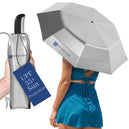
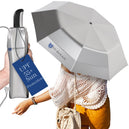
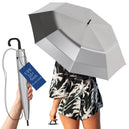
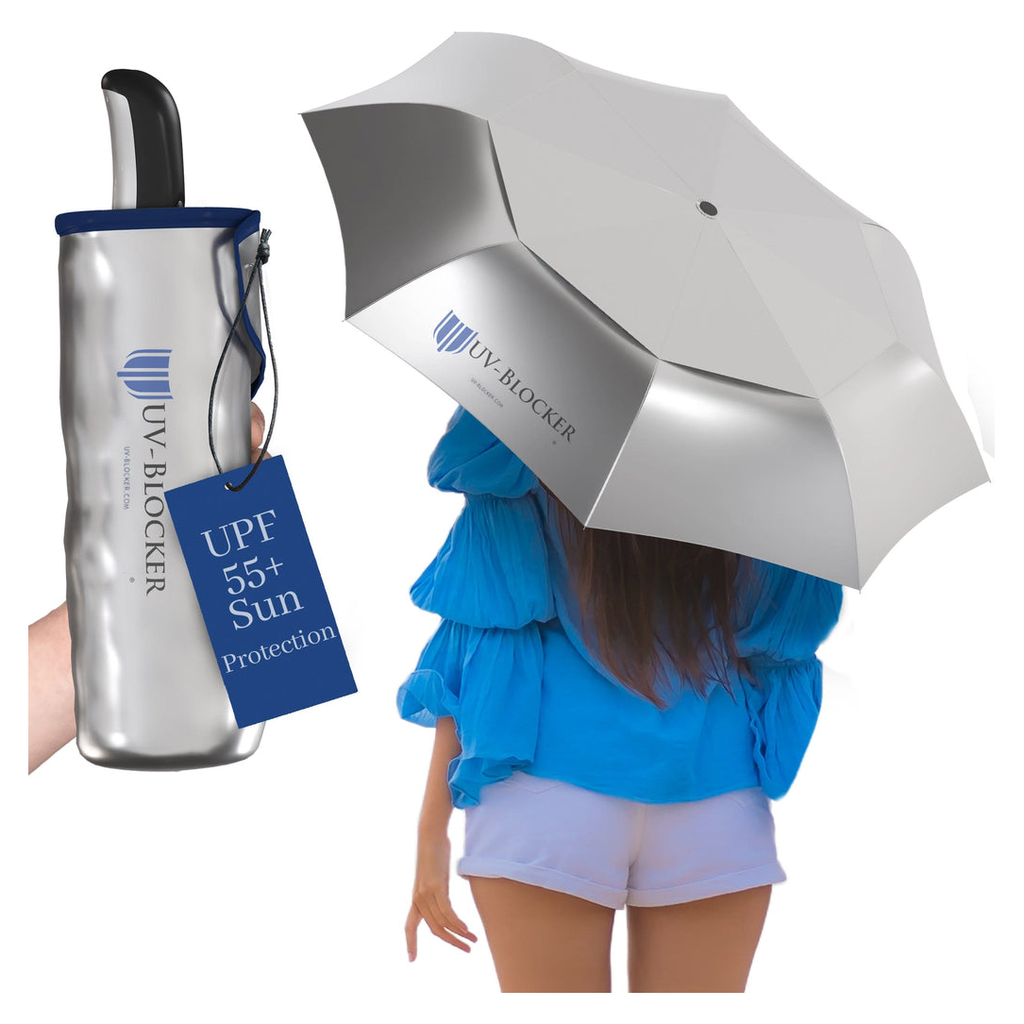
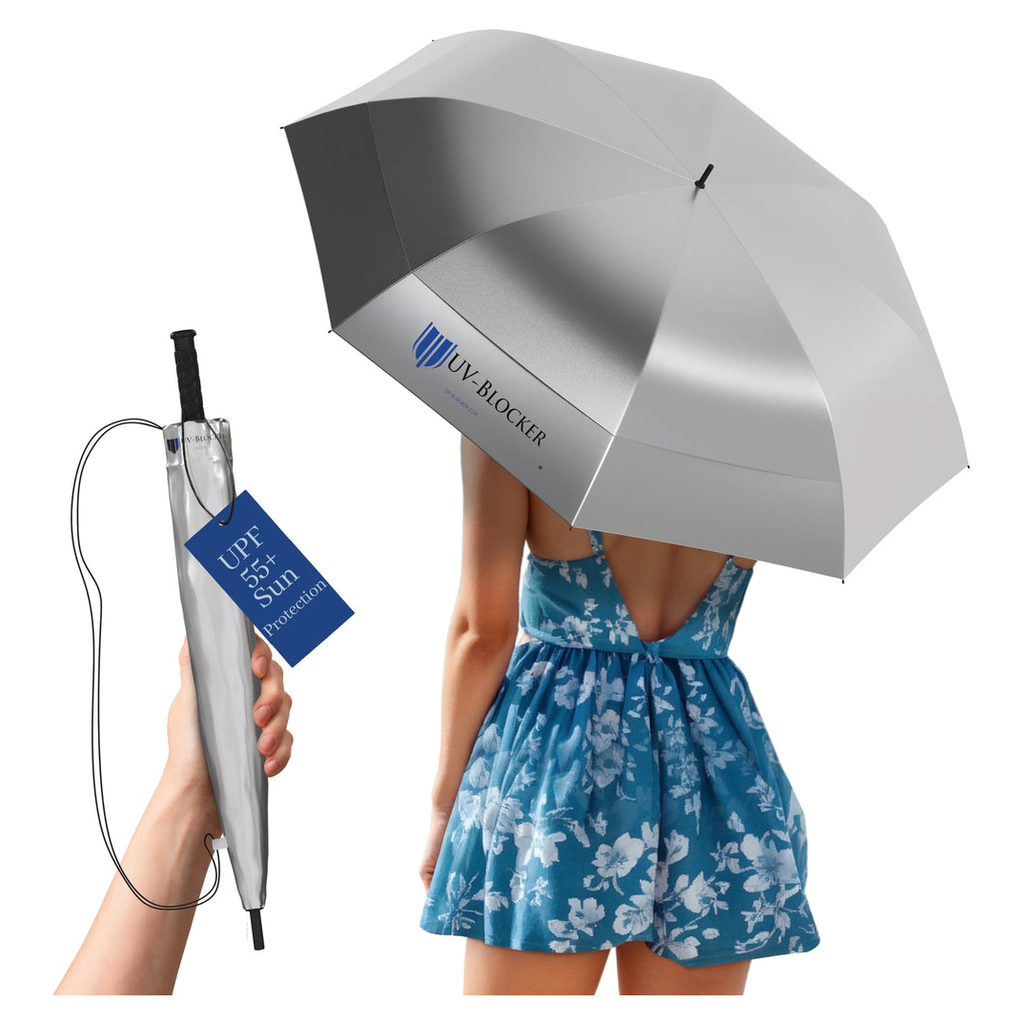
UV-Blocker umbrellas test at 100% UV-B blockage and 99.97% UV-A blockage under that same AATCC protocol — the kind of result your dermatologist would want to see before calling something medical-grade. The UV Protection Compact Umbrella provides dense, consistent shade on the go. The Solarteck® reflective coating also drops the temperature underneath by about 15°F, which matters more than it sounds. Comfort drives consistency, and an umbrella you actually bring every day outperforms sunscreen you apply perfectly once a week.
For squamous cell carcinoma — where protection needs to be daily and lifelong — removing the compliance variable is the single most impactful change most people can make. The Melanoma International Foundation provides a recognized MIF certification that helps high-risk patients identify clinically verified gear.
How Can SCC Survivors Prevent Recurrence After Diagnosis?
If you've had SCC removed, the highest-risk window for recurrence is the first two years. That's when your dermatologist schedules full-body checks every 3 to 6 months, and it's when daily protection matters most.
Standard-risk squamous cell carcinoma has local recurrence rates of 3 to 8 percent. High-risk tumors — larger than 2 centimeters, perineural invasion, immunosuppressed patients — recur more frequently. The NCCN Guidelines detail these precise clinical parameters, and the American Academy of Dermatology established the standard surveillance timeline.
Between those dermatologist visits, consistent daily protection is the single biggest variable you control. Here's the protocol most dermatologists recommend, in priority order:
- Wear UPF clothing first — long sleeves, broad-brim hat. No reapplication, no compliance gap.
- Add physical shade for outdoor time — UV-Blocker's UPF 50+ umbrellas maintain their rated protection indefinitely while open, unlike sunscreen that degrades with time and sweat.
- Apply broad-spectrum SPF 30+ on remaining exposed skin — back of neck, hands, face if not covered.
- Reduce direct exposure during peak hours — 9 a.m. to 4 p.m., when UV intensity is highest.
Physical barriers lead this protocol for a reason: they don't depend on your behavior being perfect every single day. This approach mirrors sun protection after Mohs surgery guidelines and sun protection after melanoma routines.
How Should Outdoor Workers Protect Against SCC on the Job?
If your job keeps you outside, squamous cell carcinoma risk isn't abstract — it's occupational. Construction, agriculture, postal delivery, landscaping, and military service all carry significantly elevated UV exposure.
OSHA tracks UV as a preventable workplace hazard, but most employers don't provide structured protection programs. That puts the responsibility on you.
A practical hierarchy for on-the-job protection:
- UPF broad-brim hat — covers face, ears, and neck in one step
- Lightweight UPF long-sleeve shirt — arm protection without overheating
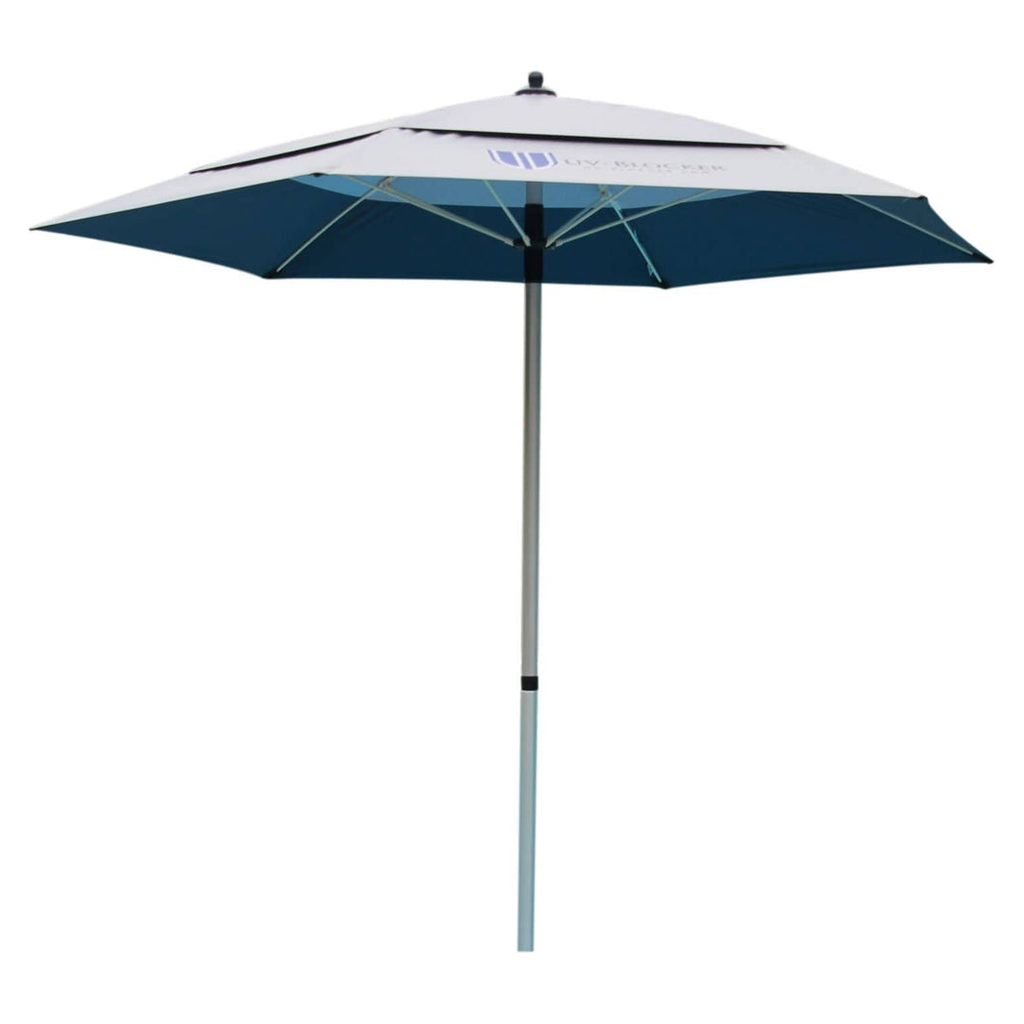
- UV umbrella for stationary tasks — break areas, equipment stations, supervision points
- SPF 30+ on remaining exposed skin — back of neck, hands, any remaining gaps
UV umbrellas solve a specific problem for outdoor work: scenarios where heavy clothing creates heat hazards. The 15°F cooling effect under a UV-Blocker umbrella makes the difference between protection gear that stays in your truck and gear you actually deploy at every break. This creates a functional sun protection for outdoor workers strategy that survives real-world conditions.
Frequently asked questions aboutSquamous Cell Carcinoma Sun Protection
Does sunscreen prevent squamous cell carcinoma?
Current evidence is inconclusive. A Cochrane systematic review found insufficient proof that sunscreen alone prevents SCC. It works best as one layer within a multi-barrier approach — not as standalone prevention.
What is the recurrence rate for squamous cell carcinoma?
Three to 8 percent for standard-risk cases. Higher for large tumors, immunosuppressed patients, or cases with perineural invasion. Most recurrences happen within the first two years after treatment — which is why that window demands the most rigorous protection.
Can you develop squamous cell carcinoma without sun exposure?
Yes, though it's uncommon. Non-UV causes include chronic wounds, radiation therapy sites, immunosuppression, and HPV infection. Roughly 90% of cases are UV-related.
Is squamous cell carcinoma more dangerous than basal cell carcinoma?
SCC carries higher metastatic risk. While BCC rarely spreads beyond the original site, 2 to 5 percent of SCC cases can reach lymph nodes or distant organs. That difference is why daily prevention carries more weight with squamous cell carcinoma.
What SPF level prevents squamous cell carcinoma?
No specific SPF has been proven to prevent SCC outright. SPF 30+ blocks 97% of UVB rays, but consistent daily application matters more than the number on the bottle. Pairing SPF 30+ with physical barriers like UPF 50+ clothing and umbrellas addresses the real-world compliance gap that undermines sunscreen alone.
How should outdoor workers prevent squamous cell carcinoma?
Use a layered approach: UPF hat, UPF clothing, UV umbrella for stationary work, and SPF 30+ on remaining exposed skin. Employers should provide shaded break areas and treat UV protection as standard PPE — not a personal responsibility.
The bottom line
Squamous cell carcinoma is a cumulative disease. Every unprotected hour counts, and no single product eliminates your risk entirely.
The most impactful first step: identify the biggest unprotected UV window in your typical week. The commute with sun hitting your arm. Weekend yard work. The daily walk. Add a physical barrier there first.
UV-Blocker's UPF 50+ umbrellas — MIF-approved, dermatologist recommended, tested to block 100% UV-B and 99.97% UV-A — were built by someone who faced this exact situation. Stage 1 melanoma, a decision to stay active outdoors, and the realization that daily protection has to be simple enough to actually use.
That's the principle worth building your protection around: it works because you'll actually use it, every day, without thinking about it. Browse the full range of UPF 50+ UV-Blocker umbrellas to find the right fit for your daily routine.
Sun Safety in Canada
Canada experiences meaningful UV exposure throughout the year, with UV Index levels regularly reaching 8–10 or higher during summer months in cities such as Vancouver, Calgary, Toronto, and Ottawa. Health Canada and Environment and Climate Change Canada publish daily UV Index forecasts and recommend protective measures whenever the index exceeds 3 — a threshold reached on most clear days between May and August across the country.
Key resources for Canadian sun safety:
- Health Canada UV Index: Published daily via the Environment and Climate Change Canada weather portal (weather.gc.ca). Canadians can track UV levels by city and receive alerts when protection is recommended.
- Canadian Cancer Society: Recommends UPF 50+ clothing, hats, sunscreen, and shade-seeking as primary sun protection strategies. Physical UV barriers — such as UPF 50+ umbrellas — are emphasized for prolonged outdoor exposure.
- Canadian Dermatology Association: Endorses broad-spectrum sun protection strategies, including shade structures and UV-blocking accessories, especially for individuals with fair skin or a personal or family history of skin cancer.
For Canadians spending extended time outdoors — whether working, playing sports, or enjoying recreational activities — a UV-blocking umbrella rated UPF 50+ provides continuous, reapplication-free protection. The UV-Blocker umbrella, independently tested and approved by the Melanoma International Foundation, blocks 99% of UV rays and keeps users up to 15°F cooler — making it a practical and reliable companion for Canadian summers.
Frequently Asked Questions
How does this skin condition interact with UV exposure?
Many skin conditions are directly triggered or worsened by ultraviolet radiation. UV light causes DNA damage in skin cells, triggers inflammatory cascades, and can activate dormant conditions. For immune-mediated conditions, UV exposure can disrupt immune regulation and cause flares. Understanding your specific UV sensitivity is critical for effective condition management.
What level of sun protection do dermatologists recommend for this condition?
Dermatologists typically recommend broad-spectrum SPF 50+ sunscreen for patients with UV-sensitive skin conditions, combined with physical sun protection: UPF 50+ clothing, wide-brim hats, and shade during peak UV hours (10am–4pm). For conditions like xeroderma pigmentosum or porphyria, near-total sun avoidance is required.
Are certain UV wavelengths more problematic than others for this condition?
Yes. UVB (290–320nm) is primarily responsible for sunburn and direct DNA damage. UVA (320–400nm) penetrates deeper, causing photoaging and activating certain photosensitive conditions. Most photosensitive skin disorders respond to specific wavelength ranges. A phototest by a dermatologist can identify your exact sensitivity spectrum.
Can a UV-blocking umbrella replace sunscreen for sensitive skin conditions?
No — a UV-blocking umbrella complements but doesn't replace sunscreen. Umbrellas block direct overhead UV but not reflected UV from surfaces (sand, water, concrete). The combination of SPF 50+ sunscreen + UPF 50+ umbrella reduces UV exposure by over 99% and is recommended for high-sensitivity patients. UV-Blocker umbrellas are dermatologist-recommended.
How do I find a dermatologist experienced with photosensitive conditions?
Look for board-certified dermatologists with a subspecialty in photodermatology or pigmented skin disorders. The American Academy of Dermatology (AAD) has a physician finder at aad.org. For rare conditions like porphyria, seek specialists at academic medical centers. Some conditions require coordination between dermatology, hematology, or rheumatology.
Expert Dermatology Recommendations for Sun-Sensitive Skin
- Use a UV index app daily and plan outdoor activities around low UV periods — typically before 10am and after 4pm
- Test new sunscreen formulations on a small patch first — some ingredients trigger reactions in sensitive skin
- Invest in UV-protective windows and car film — indoor UV exposure through glass is underestimated
- Carry a UV-blocking umbrella for everyday use — it's the easiest way to create personal shade on demand
- Photograph any skin changes and keep a symptom log to share with your dermatologist
- Wear sun-protective clothing rated UPF 50+ — regular clothing often provides only UPF 6–15