

TLDR:
- Wheelchair users face triple UV risk: impaired cooling, inability to seek shade, and reduced sensation that masks sunburn
- Sunscreen alone fails due to limited reach, 2-hour reapplication burden, and friction at pressure points
- A shade-first strategy with a mounted UPF 50+ umbrella eliminates the biggest barriers and keeps temperatures 15F cooler
- Layer shade + UPF clothing + targeted sunscreen for complete, independent protection
Sun protection wheelchair users need looks nothing like what most guides recommend. About 3.3 million people in the United States use wheelchairs, and most deal with UV risks that typical advice doesn't even mention. Can't sweat properly. Can't just walk to a shady spot. Can't always feel when skin is burning.
That's a triple threat, and it demands a different approach. Here's what actually works: the physiological risks specific to wheelchair users, where sunscreen falls short, and a shade-first strategy that makes outdoor time safer and longer.
Why Do Wheelchair Users Face Higher UV Risk?
Wheelchair users face amplified UV risk because spinal cord injuries impair sweating, static positioning prevents shade-seeking, and reduced sensation masks sunburn.
Sun protection wheelchair users need must account for these physiological realities — not just the usual "apply sunscreen" advice.
Thermoregulation Breakdown
When a spinal cord injury occurs above T6, it cuts off the autonomic nervous system's ability to cool the body down. Sweating stops below the lesion level. That one change eliminates the body's main cooling defense. Spend an hour in direct sun without sweating, and heat illness moves from uncomfortable to dangerous fast.
No Option to Seek Shade
Most people don't think about it, but they naturally drift toward shade when the sun gets intense. Wheelchair users often can't do that. Uneven park terrain, crowded festival grounds, curbs without ramps. These environmental barriers mean staying locked in the same sun angle for hours. It's an access problem, not a personal one.
Silent Sunburns
Here's the insidious part: if you can't feel the sting of a developing sunburn, you won't instinctively cover up or move indoors. Burns keep building. They can reach second-degree severity before anyone notices.
Scorching Surfaces
Then there's the chair itself. Metal footplates, push rims, and armrests regularly hit 140 to 190 degrees Fahrenheit in direct sun. Dark vinyl seats soak up even more. One wheelchair user described a footplate burn that happened before they even realized metal was touching bare skin.
| Risk Factor | Physiological Mechanism | Practical Consequence |
|---|---|---|
| Thermoregulation Impairment | Disrupted autonomic nervous system limits sweating below lesion | Rapid onset of heat illness in direct sun |
| Reduced Sensation | Neurological damage mutes pain and temperature signals | Severe sunburns or contact burns before detection |
| Static Positioning | Physical barrier to independent movement | Prolonged exposure to identical sun angles |
| Surface Heat Absorption | Dark vinyl and metal components absorb solar radiation | Skin contact with 140-190F surfaces |
These physiological risks compound when the most common protection method has its own accessibility barriers.
Why Does Sunscreen Alone Fail Wheelchair Users?
Sunscreen fails wheelchair users because limited reach prevents full coverage, reapplication creates caregiver dependency, and friction wipes protection away.
Despite being the default sun protection wheelchair users are told to rely on, lotion alone can't solve the physical barriers this population faces.
Think about the physical motion required to apply sunscreen to your own back, posterior shoulders, or lower legs. It takes torso rotation and arm reach that many wheelchair users simply don't have. Those vulnerable areas stay bare.
Then comes the 2-hour reapplication clock. What starts as a park visit becomes a scheduled medical routine. Without a caregiver on hand, coverage gaps are guaranteed.
And even where sunscreen goes on properly, the wheelchair fights it. Backrests, seat cushions, armrests. They all create friction zones that rub lotion off within minutes. Ironically, the skin pressing hardest against the chair is the same skin suddenly exposed during transfers.
There's another layer most guides miss: many conditions that cause wheelchair use also require medications that cause sun sensitivity. Antibiotics, anti-spasmodics, NSAIDs. These drugs crank up UV sensitivity. Combine that with sunscreen's friction gaps, and exposure gets dangerous quickly.
So if sunscreen can't reliably cover this population, the smarter move is reducing how much skin needs chemical protection in the first place.
What Is a Shade-First Sun Protection Strategy?
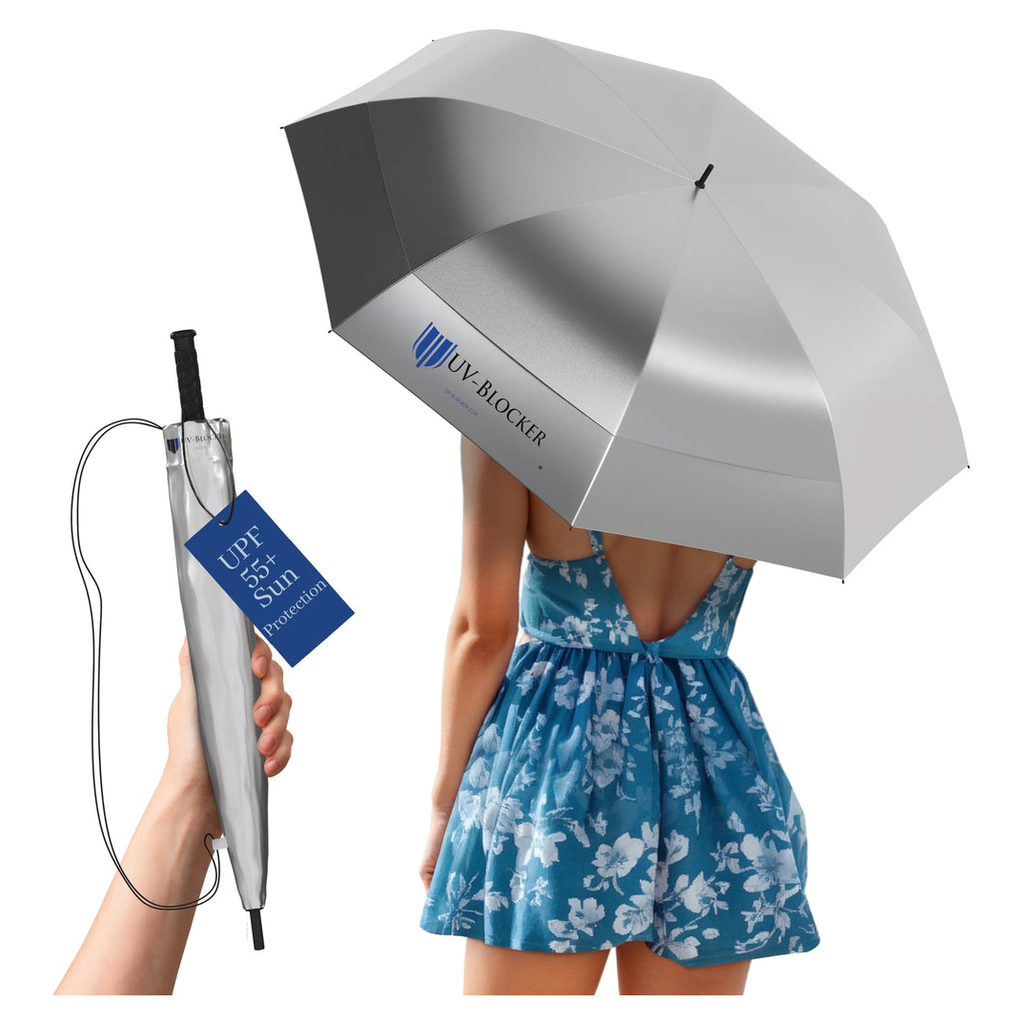
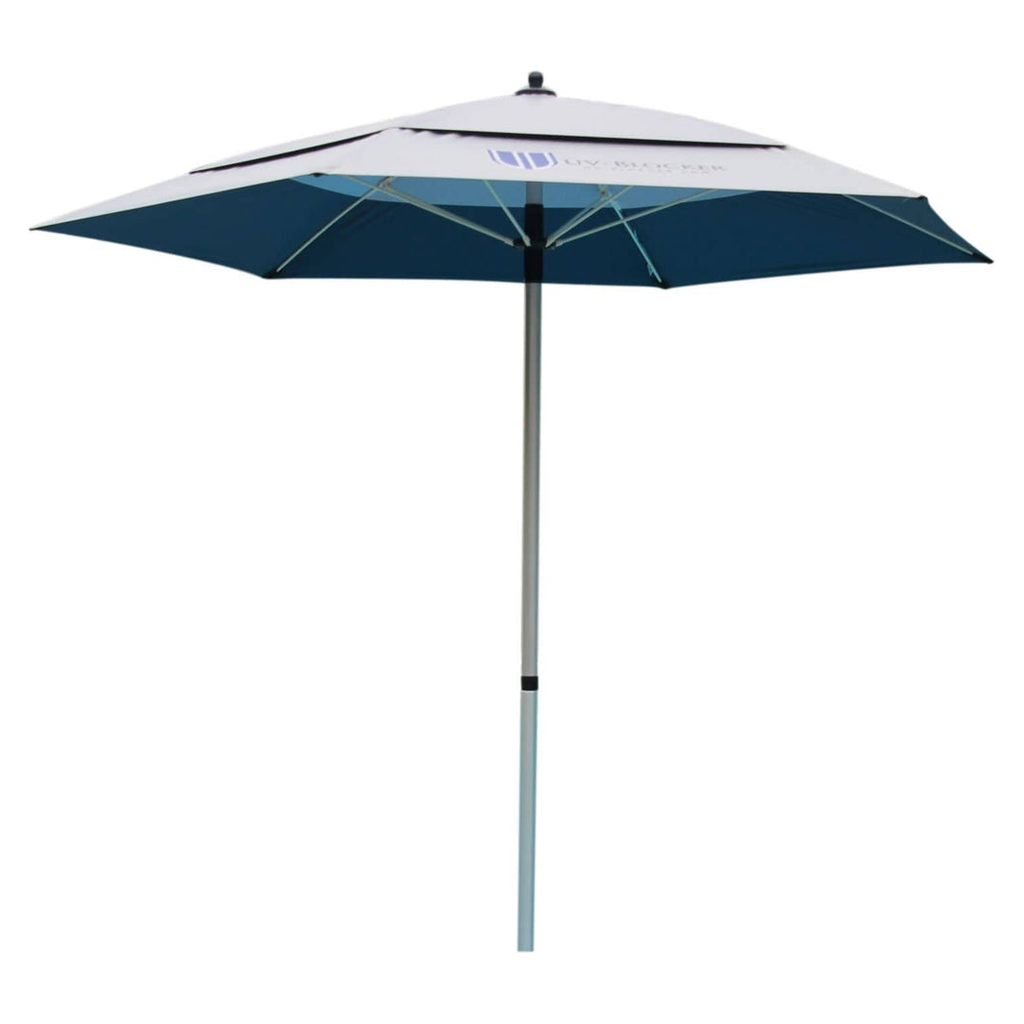
A shade-first strategy uses a mounted UPF 50+ umbrella as the primary UV barrier, reducing exposed skin by 80% and eliminating reapplication.
This is the sun protection wheelchair users benefit from most: continuous, hands-free coverage that doesn't depend on reach or a caregiver's schedule.
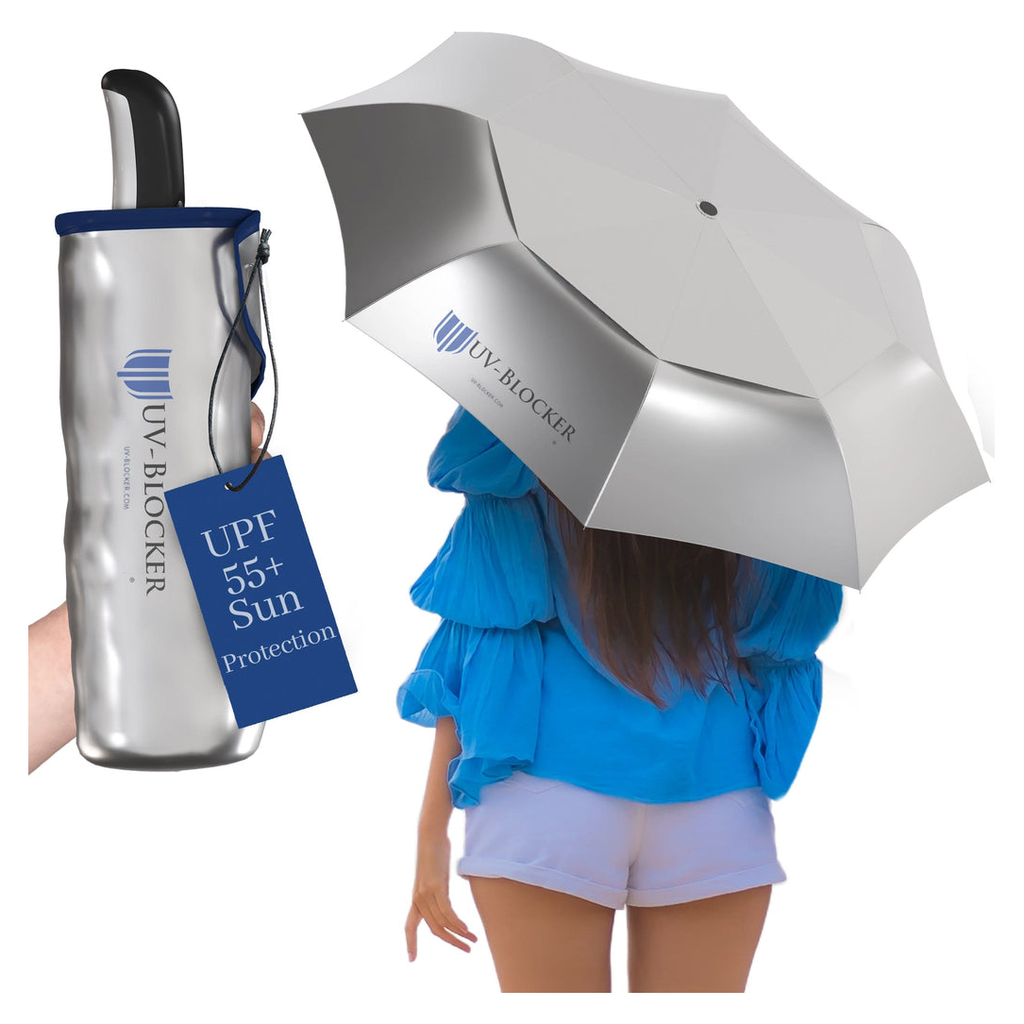
A UPF 50+ umbrella blocks 99% of UV radiation the entire time it's open. No reapplication. No asking someone else to apply lotion to your back every two hours. Fabrics tested against the AATCC TM183-2020 standard deliver protection that's measured in a lab, not estimated on a label.
The Cooling Factor
Reflective-coated umbrellas cut the temperature underneath by up to 15 degrees Fahrenheit versus direct sun. For someone who can't sweat below their injury level, that 15-degree drop isn't comfort — it's the gap between a safe afternoon and a heat emergency.
Smaller Sunscreen Target
With the canopy covering head, shoulders, back, and torso, sunscreen application shrinks to hands, forearms, and face. That's an 80% reduction in application area — and those remaining spots happen to be the ones most wheelchair users can reach on their own.
Put UV block and active cooling together, and outdoor time stretches from "let's head in" to "let's keep going." Parks, events, travel. Hours instead of minutes.
Of course, shade-first only works if the shade actually stays positioned above you. That brings up the question of how to mount it.
How Do You Choose the Right Wheelchair Sun Shade?
The best wheelchair sun shade depends on chair type and daily use. Clamp-mount umbrella holders offer the most stable, adjustable coverage for both manual and power wheelchairs.
For sun protection wheelchair users can set up once and forget, clamp mounts lead the field.

Clamp-mount holders grip the tubular metal frame of the wheelchair and lock the umbrella in place. Hands stay free for pushing wheels or operating a joystick. The angle adjusts as the sun tracks across the sky. The Chair Umbrella Holder uses a universal clamp design that fits standard chair frames, and it pairs with a Compact UV Umbrella for UPF 50+ coverage right where it counts.
Chest-Worn Holders
Products like the RehaDesign Brella Buddy strap to the torso instead. Hands stay free, which is a plus. The tradeoff? The umbrella tilts whenever you lean forward or turn. These holders were built for rain, and most don't publish any UPF data for UV blockage.
Canopy Attachments
Full canopies cover the upper body under a rigid roof — maximum shade. But they add bulk, weight, and several inches of width. Getting through a standard doorway can become a challenge, and pulling the canopy off for every indoor stop gets old quickly.
Umbrella Hats
Essentially a small umbrella strapped to your head. They shade the scalp and forehead but leave shoulders, torso, and lap exposed. Fine for a quick garden check, not for an afternoon outdoors.
| Solution | UV Verified | Coverage Area | Hands-Free | Fits Doorways | Works With Power Chairs |
|---|---|---|---|---|---|
| Clamp-mount holder + UPF umbrella | Yes (UPF 50+) | Head, shoulders, torso, lap | Yes | Yes (removable) | Yes |
| Chest-worn holder | No UPF data | Head, shoulders | Yes | Yes | Yes |
| Wheelchair canopy | Varies | Full upper body | Yes | Often no | Varies |
| Umbrella hat | No UPF data | Head only | Yes | Yes | Yes |
Once you've selected a mounting approach, correct positioning determines how much protection you actually get.
How Do You Mount a UV Umbrella on a Wheelchair?
Mount a UV umbrella by clamping the holder to the wheelchair frame tubing, inserting the umbrella handle, and angling the canopy to block the sun's current direction.
Manual Wheelchairs
Look for the push handle tube or rear frame upright — that's the sweet spot. The clamp jaw should grip tubing between 0.5 and 1.5 inches in diameter. Once it's snug, do a quick check: Does it interfere with the wheel locks? Rub against tires? Block the fold? If all three are clear, you're set.
Power Wheelchairs
Power chairs give you more options. The seat frame base and armrest support tubing both work well. Just steer clear of the joystick, display panels, and anywhere near the tilt or recline motors. You don't want hardware binding up mid-adjustment.
Positioning for Maximum Shade
Point the canopy toward the sun, not straight up. A common mistake is angling it like a rain umbrella, which leaves shoulders and lap exposed to low-angle rays. The shadow should fall over head, shoulders, and lap. Give it a nudge whenever you change direction or the sun drops lower in the afternoon.
One-Handed Setup
If hand function is limited, look for holders with large thumb-screws instead of fiddly wing-nuts. A caregiver can lock the Chair Umbrella Holder into place once before heading out, and the base stays on the frame all day. More setup details are in the Chair Umbrella Guide.
A mounted umbrella is the foundation, but full protection uses a layered approach.
Complete Sun Protection Protocol for Wheelchair Users
Layer three defenses: a mounted UPF 50+ umbrella for shade, UPF clothing on the torso, and sunscreen only on exposed skin like hands and face.
This complete sun protection wheelchair users can maintain independently covers every angle without relying on constant reapplication or caregiver help.

Layer 1: Mounted Umbrella (Primary)
Clamp a UPF 50+ umbrella to the frame and open it. Done. Continuous shade over head, shoulders, and torso with no reapplication needed. The reflective coating also drops temperatures by up to 15 degrees — a real difference for anyone whose body can't regulate heat on its own. This single layer replaces over 80% of the sun protection burden.
Layer 2: UPF Clothing (Secondary)
Long-sleeve UPF shirts and lightweight pants cover whatever the umbrella's shadow misses. The big advantage over sunscreen? Sun protection clothing doesn't rub off against a seatback. No friction problem. No reapplication. It just works.
Layer 3: Sunscreen (Targeted)
Now sunscreen only needs to go on the face, ears, neck, and hands. That's a manageable job for most people, with or without a caregiver. Broad-spectrum SPF 30+ works here as a targeted supplement, not the whole strategy. Dermatologist-recommended formulas tend to be gentler on sensitive skin.
Caregiver Checklist
For users with reduced sensation, caregivers should watch for these signs:
- Skin redness on exposed forearms or lower legs
- Elevated skin temperature when touching exposed areas
- Confusion or irritability, which signal early heat illness
- Hot wheelchair surfaces before assisting with transfers (always touch metal parts first)
Frequently Asked Questions About Sun Protection Wheelchair Users Ask
These are the most common questions wheelchair users and caregivers ask about UV protection and outdoor safety.
Can you get sunburn in a wheelchair?
Yes. Wheelchair users are more vulnerable to sunburn because reduced sensation can mask the pain that normally prompts people to seek shade or reapply sunscreen.
With SCI-related sensation loss, a sunburn can build to second-degree blistering before anyone spots it. Meanwhile, bare skin resting against a hot footplate or push rim can sustain contact burns at the same time.
What is the best wheelchair sun shade?
A clamp-mount umbrella holder paired with a UPF 50+ umbrella provides the most effective, adjustable, and verified sun protection for wheelchairs.
Clamp mounts grip the frame and keep both hands free for mobility. The key detail to check: does the umbrella have a UPF rating tested to a real standard like AATCC TM183-2020? If the listing doesn't mention a test method, the UPF claim is just marketing.
Do wheelchair users need sunscreen?
Yes, but a shade-first strategy reduces sunscreen application to face, hands, and ears only, eliminating the reach and reapplication barriers wheelchair users face.
Sunscreen should serve as the third layer after mounted overhead shade and UPF clothing.
How hot do wheelchairs get in the sun?
Metal wheelchair components like footplates and push rims can reach 140-190F in direct sunlight, hot enough to cause burns on contact with skin that lacks sensation.
Dark vinyl seats and backrests soak up even more heat. A light-colored towel draped over the seat before sitting helps, but a mounted umbrella shading the whole chair prevents the buildup in the first place.
What umbrella fits on a wheelchair?
Any standard umbrella fits a clamp-mount holder, but choosing a UPF 50+ umbrella with a compact folding design provides verified UV protection with the easiest storage.
The Compact UV Umbrella (42-inch arc) fits standard chair holders and folds down to 11.5 inches for storage. It's a hands-free, UPF 50+ tested setup that doesn't add bulk to the daily routine.
Conclusion
Sun protection wheelchair users deserve isn't another article telling them to wear sunscreen. It's a strategy designed around the access barriers and body mechanics that generic guides pretend don't exist.
- Wheelchair users face triple UV risk: impaired cooling, inability to seek shade, and reduced sensation that masks damage
- Sunscreen alone fails due to reach limitations, reapplication burden, and pressure-point friction
- A shade-first strategy with a mounted UPF 50+ umbrella eliminates the biggest barriers and provides active cooling
- Layering shade, UPF clothing, and targeted sunscreen provides complete, independent protection
The first step? Mount a UPF 50+ umbrella on the wheelchair frame before the next outdoor trip. One clamp, one umbrella, and the hardest part of sun protection is handled. The Chair Umbrella Holder paired with a Compact UV Umbrella is a solid place to start — verified protection, hands-free operation, and more time outside.