


Cephalexin does not cause sun sensitivity. The FDA label for Keflex contains no sun warning of any kind, and no photosensitivity reaction appears in its prescribing information.
That answer covers the pharmacology. It does not cover the question most people are actually asking, because cephalexin is frequently prescribed for skin infections. Someone treating cellulitis on a forearm or a healing wound on a leg wants to know whether that specific patch of skin should stay covered outdoors.
Those are two different questions with two different answers. This guide separates them.
TLDR:
- Cephalexin is not a photosensitizer. The Keflex FDA label contains zero mentions of sun, sunlight, ultraviolet, UV, photosensitivity, or phototoxicity.
- All six of the label's Warnings and Precautions concern other risks. None relate to sun exposure.
- Two cephalosporins are linked to photosensitivity, ceftazidime and cefotaxime, but both are injectable hospital drugs rather than oral capsules.
- The widely repeated claim that cephalexin photosensitivity affects "women aged 45 to 60" traces to an uncited 2017 forum comment with no primary source.
- No medication-specific sun precautions are required while taking cephalexin.
- Healing or inflamed skin is genuinely more vulnerable to UV, so shading a treated infection site is still worthwhile.
Is Cephalexin Sun Sensitivity a Real Risk?
No. Cephalexin sun sensitivity is not a documented reaction. Cephalexin is not a photosensitizing drug, and its FDA prescribing information contains no sun-related warning. Photosensitivity is not listed among cephalexin's adverse reactions.
This is not a matter of interpretation. The full Structured Product Label for cephalexin was searched for every standard photosensitivity term, and each one returned zero occurrences across the entire document.
The National Library of Medicine's MedlinePlus page for cephalexin reaches the same conclusion by omission. Its precautions section covers allergies, kidney and liver disease, gastrointestinal conditions, pregnancy, and reduced effectiveness of hormonal contraceptives. Sun exposure is not mentioned anywhere on the page.
For anyone who was prescribed cephalexin and wants to know whether they can go outside this weekend, the pharmacological answer is yes.
What Does the Keflex Label Actually Say About Sun Exposure?
The Keflex label says nothing about sun exposure. Six standard photosensitivity search terms each return zero occurrences across the entire FDA prescribing information.
Most articles on this topic never quote the label. A direct search of the DailyMed prescribing information for cephalexin returns the following.
| Search term | Occurrences in the Keflex label |
|---|---|
| photosensitivity | 0 |
| sun | 0 |
| sunlight | 0 |
| ultraviolet | 0 |
| UV | 0 |
| phototoxic | 0 |
The absence is equally clear in the label's warnings. Section 5 lists exactly six Warnings and Precautions:
- 5.1 Hypersensitivity Reactions
- 5.2 Clostridium difficile-Associated Diarrhea
- 5.3 Direct Coombs' Test Seroconversion
- 5.4 Seizure Potential
- 5.5 Prolonged Prothrombin Time
- 5.6 Development of Drug-Resistant Bacteria
Not one concerns light, sun, or UV. When a drug genuinely carries photosensitivity risk, the FDA requires that warning to appear in this section. For doxycycline and ciprofloxacin it does appear. For cephalexin there is nothing to find.
Are Any Cephalosporins Linked to Sun Sensitivity?
Yes, two are. Ceftazidime and cefotaxime have documented photosensitivity associations. Both are injectable hospital antibiotics, not the oral capsule dispensed at a retail pharmacy.
This is where most coverage fails. Drug charts tend to list "cephalosporins" as a single undifferentiated class, turning a specific finding about two injectable drugs into a vague warning about the whole family.
The most comprehensive review of drug photosensitivity in the literature, published by Kowalska and colleagues in Pharmaceuticals in 2021, is precise on this point. It states that the beta-lactams connected with photosensitivity are ceftazidime and cefotaxime, noting that ceftazidime increases susceptibility to sunburn while cefotaxime causes photodistributed telangiectasia.
Cephalexin is not among the cephalosporins that review names. Neither spelling of the drug appears anywhere in it.
| Drug | Route | Photosensitivity association |
|---|---|---|
| Cephalexin (Keflex) | Oral capsule, tablet, or suspension | None documented |
| Ceftazidime | Injectable (IV or IM) | Documented, increased sunburn susceptibility |
| Cefotaxime | Injectable (IV or IM) | Documented, photodistributed telangiectasia |
The practical takeaway is straightforward. Neither photosensitizing cephalosporin exists in oral form, so neither is the medication in a patient's hand at home.
Why Do Some People Report Sunburn While Taking Cephalexin?
Three factors explain most reports: the treated skin is often already inflamed, other photosensitizing drugs are frequently taken alongside it, and an unsourced online claim has circulated for years.
The skin being treated is often already inflamed
Skin and skin structure infections are one of the five FDA-labeled indications for cephalexin, alongside respiratory tract, ear, bone, and genitourinary infections. Cellulitis, impetigo, infected wounds, and abscesses are common reasons for a prescription.
Inflamed and healing skin does not respond to sunlight the way intact skin does. A patient whose forearm is red, warm, and healing may read increased redness after an afternoon outdoors as a drug reaction, when the skin was already compromised before the sun touched it.
Other medications taken at the same time
Genuine photosensitizers are common. Doxycycline, ciprofloxacin, sulfamethoxazole/trimethoprim, thiazide diuretics, and several NSAIDs all carry documented risk. Someone starting cephalexin while continuing a regular prescription may blame the newest drug rather than the responsible one.
An unsourced claim that spread online
Several websites repeat that cephalexin photosensitivity reports are "most common in females between 45 and 60." That figure has no primary source. It traces back to an uncited comment posted by a community user on a Drugs.com answers thread in August 2017.
No study, label, or pharmacovigilance database supports it. It has been copied between pages often enough to look authoritative, which is how medical misinformation persists.
One genuine exception deserves naming. A 2025 case report by Castillo-Pinto and colleagues in Photodermatology, Photoimmunology & Photomedicine documented photodistributed Stevens-Johnson syndrome and toxic epidermal necrolysis in a 67-year-old patient after starting cephalexin, with lesions concentrated on sun-exposed areas.
That is a severe hypersensitivity reaction, not ordinary phototoxicity, and both conditions are already named in Section 5.1 of the label. A single case report does not make cephalexin a photosensitizer or change the guidance for routine sun exposure.
Which Antibiotics Actually Cause Sun Sensitivity?
Three classes carry documented photosensitivity risk: tetracyclines such as doxycycline, fluoroquinolones such as ciprofloxacin, and sulfonamides such as Bactrim.
Tetracyclines carry the highest risk among commonly prescribed antibiotics, with doxycycline the most frequently implicated and reactions driven mainly by UVA. The doxycycline sun sensitivity guide covers the specifics.
Fluoroquinolones including ciprofloxacin and levofloxacin produce phototoxic reactions through a separate mechanism, and ciprofloxacin's label carries a dedicated photosensitivity warning. See the cipro sun sensitivity guide.
Sulfonamides such as sulfamethoxazole/trimethoprim are triggered largely by UVB rather than UVA, as covered in the bactrim sun sensitivity guide.
Penicillins, like cephalosporins, are largely absent from this group. The companion amoxicillin sun sensitivity article documents the same pattern of a myth outliving the evidence. For a full class-by-class breakdown, see the antibiotics sun sensitivity hub or the wider medications that cause sun sensitivity guide.
Do You Need Extra Sun Protection on Cephalexin?
No medication-specific precaution is needed. But if cephalexin was prescribed for a skin infection, shading that healing skin is still worth doing while it recovers.

The drug itself changes nothing about UV risk. Baseline guidance from the American Academy of Dermatology applies exactly as it would otherwise: seek shade between 10 a.m. and 4 p.m., wear sun-protective clothing, and use broad-spectrum SPF 30 or higher on exposed skin.
The healing skin question is different. Skin recovering from cellulitis, an infected wound, or a drained abscess has a compromised barrier and active inflammation. UV exposure on inflamed skin is associated with post-inflammatory hyperpigmentation, the lasting brown or grey discoloration that can outlive the infection by months.
Shading that area while it heals is a reasonable precaution. It is not treatment and will not speed recovery, but it removes an avoidable stressor from skin already repairing itself.
Sunscreen is awkward here. Applying it to broken, weeping, or freshly healed skin is often uncomfortable and sometimes inadvisable, and a dressing rules it out entirely. Physical shade avoids the problem, because nothing touches the skin at all.
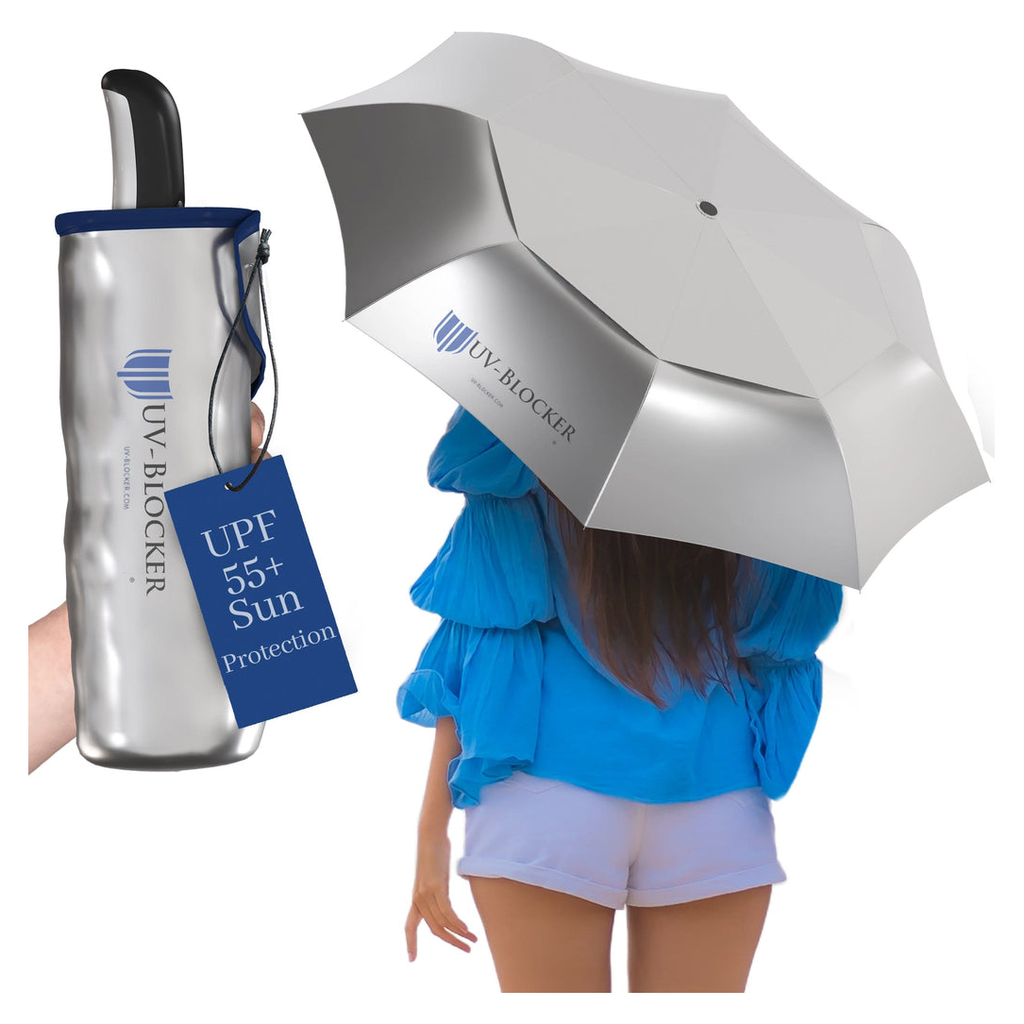
That is where a UPF 50+ umbrella is genuinely practical rather than a bolted-on recommendation. The UV-Blocker Compact Umbrella ($59.95) blocks 100% of UV-B and 99.97% of UV-A under independent AATCC TM183-2020 testing, using a Solarteck® reflective canopy that also runs around 15°F cooler underneath. It shades a healing forearm or leg on a walk to the pharmacy without anything applied to the site.
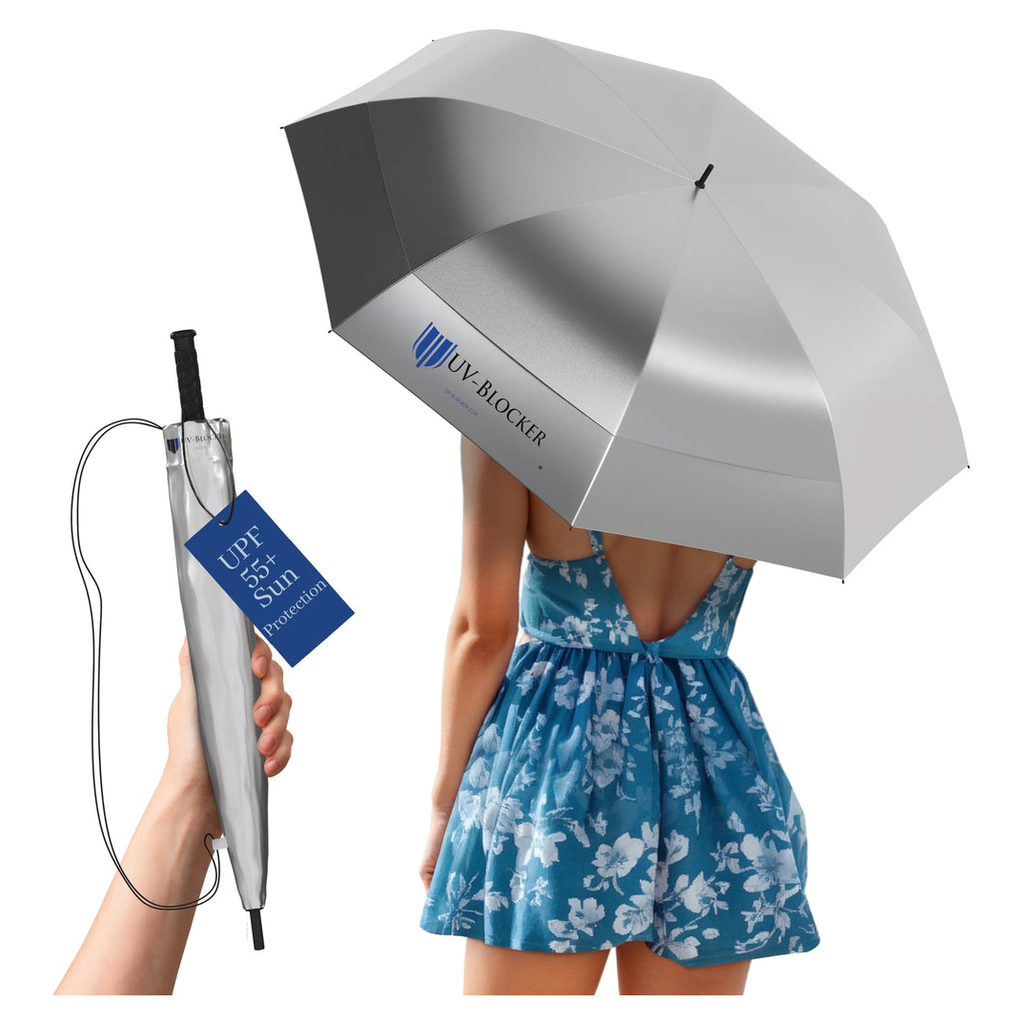
The full UPF 50+ umbrella collection covers larger sizes for longer exposure. Research comparing UV umbrellas and sunscreen explains why physical shade sidesteps the application gaps that limit sunscreen in practice.
When Should You Call a Doctor About a Rash on Cephalexin?
Contact the prescribing clinician immediately if a rash blisters or peels, involves the mouth or eyes, spreads rapidly, or arrives with fever or facial swelling.
Section 5.1 of the label names the reactions that matter, including rash, urticaria, angioedema, anaphylaxis, erythema multiforme, Stevens-Johnson syndrome, and toxic epidermal necrolysis. These red flags warrant urgent attention:
- Blistering or peeling skin. A possible sign of Stevens-Johnson syndrome or toxic epidermal necrolysis.
- Mouth, eye, or genital involvement. Mucosal sores alongside a rash suggest a systemic reaction.
- Fever with the rash. Points to something more serious than a simple drug eruption.
- Facial or throat swelling. May indicate anaphylaxis and needs emergency care.
- Rapid spread over hours. A rash advancing that quickly is not behaving typically.
Worth noting: worsening redness, warmth, and swelling at an infection site can also mean the infection itself is not responding to treatment. That warrants a call too, and it is not something to attribute to the sun.
No antibiotic should be stopped without speaking to the prescriber first, since incomplete courses contribute to resistance. The label's own Section 5.6 addresses that risk directly.
Frequently Asked Questions About Cephalexin and Sun Exposure
Common questions about cephalexin sun sensitivity and sun exposure, answered from the FDA prescribing information and verified medical sources.
Can you be in the sun on cephalexin?
Yes. Cephalexin does not cause photosensitivity, and its FDA label carries no sun-related warning. Normal sun safety is sufficient. If the prescription is treating a skin infection, keeping that specific area shaded while it heals is still sensible.
Does Keflex make you more sensitive to the sun?
No. Keflex is a brand name for cephalexin, and its prescribing information contains zero references to sun, sunlight, ultraviolet, UV, or photosensitivity. A sunburn during a course of Keflex is a coincidence rather than a drug effect.
Can you go tanning while taking cephalexin?
Cephalexin adds no specific tanning restriction. However, dermatologists advise against indoor tanning generally because of skin cancer risk, and tanning over healing or infected skin is inadvisable regardless of medication.
Is cephalexin photosensitivity real?
Cephalexin photosensitivity is not an established reaction. One 2025 case report described photodistributed Stevens-Johnson syndrome after cephalexin, but that is a rare, severe hypersensitivity reaction already covered by the label, not ordinary phototoxicity.
Should I cover my skin infection in the sun?
Shading a healing infection site is reasonable. Inflamed and recovering skin is more vulnerable to UV and prone to post-inflammatory hyperpigmentation. Shade, loose clothing over a dressing, or an umbrella all work without applying anything to the site.
What antibiotics should I avoid in the sun?
Tetracyclines such as doxycycline and minocycline, fluoroquinolones such as ciprofloxacin and levofloxacin, and sulfonamides such as sulfamethoxazole/trimethoprim carry documented photosensitivity risk. Cephalexin is not in any of these classes.
Compare UV-Blocker Umbrellas
Every model uses the same Solarteck® fabric and the same AATCC TM183-2020 test result. Coverage and packed size are what differ.
| Model | Coverage diameter | Weight | Opening | Best for | Price |
|---|---|---|---|---|---|
| Compact 42" | 38" | 15 oz | Auto open and close | Daily carry, appointments | $59.95 |
| Travel 44" | 39" | 1 lb 5 oz | Auto open | Packing, trips | $59.95 |
| Large Folding 58" | 48" | 1 lb 11 oz | Auto open | Two people, longer exposure | $64.95 |
All three are UPF 50+, block 100% of UV-B and 99.97% of UV-A, and sit roughly 15°F cooler underneath. For a healing arm or leg during a 7 to 14 day course of cephalexin, the Compact is usually the practical choice.
This article is for general education and is not medical advice. Any questions about a specific prescription, rash, or infection should go to the prescribing clinician.
Key Takeaways
- Yes.
- Dermatologists generally recommend SPF 30+ broad-spectrum sunscreen for patients on photosensitizing medications, with reapplication every 2 hours.
- Absolutely.
- Photosensitivity typically resolves within days to weeks after discontinuing the medication, depending on the drug's half-life and your individual ...
Frequently Asked Questions
Does Cephalexin really make skin more sensitive to sunlight?
Yes. Cephalexin belongs to a class of medications that can trigger photosensitivity reactions in a subset of patients. This can cause sunburn-like reactions with minimal UV exposure, or trigger phototoxic skin rashes. The reaction severity varies by individual, dosage, and UV intensity. Always review your medication guide and consult your prescribing physician if you notice unusual skin reactions in sunlight.
What SPF should I use if I take this medication?
Dermatologists generally recommend SPF 30+ broad-spectrum sunscreen for patients on photosensitizing medications, with reapplication every 2 hours. However, sunscreen alone isn't sufficient for high UV exposure. Combining sunscreen with physical barriers — UPF 50+ clothing, wide-brim hats, and UV-blocking umbrellas — provides the most reliable protection. UV-Blocker's UPF 50+ umbrellas block 99% of UVA and UVB rays.
Can I still go outdoors while taking this medication?
Absolutely. Most patients can continue outdoor activities with appropriate precautions: avoid peak UV hours (10am–4pm), wear protective clothing, use SPF 30+ sunscreen, and use shade whenever possible. A portable UV-blocking umbrella offers hands-free shade wherever you go, making it a practical solution for patients who need consistent sun avoidance.
How long after stopping the medication until sun sensitivity resolves?
Photosensitivity typically resolves within days to weeks after discontinuing the medication, depending on the drug's half-life and your individual metabolism. Some medications with long half-lives may cause sensitivity for weeks. Continue sun protection until your doctor confirms it's safe to reduce precautions.
What are the signs of a phototoxic reaction vs. a photoallergic reaction?
Phototoxic reactions look like severe, rapid sunburn — they appear within hours of UV exposure and are dose-dependent. Photoallergic reactions involve an immune response, can spread beyond sun-exposed areas, and may appear days later. Both require prompt sun avoidance. See your dermatologist for diagnosis and management.
Sun Safety Essentials for Patients on Photosensitizing Medications
- Keep a UV index app on your phone and avoid going outdoors when the index exceeds 6 without full protection
- Wear UPF 50+ sun-protective clothing on arms and legs, not just sunscreen
- Carry a portable UV-blocking umbrella for shade on demand — especially effective during outdoor commutes, sporting events, or waiting outdoors
- Apply sunscreen to the back of hands and tops of feet — commonly missed areas that receive direct UV
- Inform your pharmacist about all medications you take so they can flag photosensitizing combinations
- Request a window film UV assessment if you drive frequently — car windows block UVB but not all UVA
Key Takeaways
- Yes.
- Dermatologists generally recommend SPF 30+ broad-spectrum sunscreen for patients on photosensitizing medications, with reapplication every 2 hours.
- Absolutely.
- Photosensitivity typically resolves within days to weeks after discontinuing the medication, depending on the drug's half-life and your individual ...
Frequently Asked Questions
Does Cephalexin really make skin more sensitive to sunlight?
Yes. Cephalexin belongs to a class of medications that can trigger photosensitivity reactions in a subset of patients. This can cause sunburn-like reactions with minimal UV exposure, or trigger phototoxic skin rashes. The reaction severity varies by individual, dosage, and UV intensity. Always review your medication guide and consult your prescribing physician if you notice unusual skin reactions in sunlight.
What SPF should I use if I take this medication?
Dermatologists generally recommend SPF 30+ broad-spectrum sunscreen for patients on photosensitizing medications, with reapplication every 2 hours. However, sunscreen alone isn't sufficient for high UV exposure. Combining sunscreen with physical barriers — UPF 50+ clothing, wide-brim hats, and UV-blocking umbrellas — provides the most reliable protection. UV-Blocker's UPF 50+ umbrellas block 99% of UVA and UVB rays.
Can I still go outdoors while taking this medication?
Absolutely. Most patients can continue outdoor activities with appropriate precautions: avoid peak UV hours (10am–4pm), wear protective clothing, use SPF 30+ sunscreen, and use shade whenever possible. A portable UV-blocking umbrella offers hands-free shade wherever you go, making it a practical solution for patients who need consistent sun avoidance.
How long after stopping the medication until sun sensitivity resolves?
Photosensitivity typically resolves within days to weeks after discontinuing the medication, depending on the drug's half-life and your individual metabolism. Some medications with long half-lives may cause sensitivity for weeks. Continue sun protection until your doctor confirms it's safe to reduce precautions.
What are the signs of a phototoxic reaction vs. a photoallergic reaction?
Phototoxic reactions look like severe, rapid sunburn — they appear within hours of UV exposure and are dose-dependent. Photoallergic reactions involve an immune response, can spread beyond sun-exposed areas, and may appear days later. Both require prompt sun avoidance. See your dermatologist for diagnosis and management.
Sun Safety Essentials for Patients on Photosensitizing Medications
- Keep a UV index app on your phone and avoid going outdoors when the index exceeds 6 without full protection
- Wear UPF 50+ sun-protective clothing on arms and legs, not just sunscreen
- Carry a portable UV-blocking umbrella for shade on demand — especially effective during outdoor commutes, sporting events, or waiting outdoors
- Apply sunscreen to the back of hands and tops of feet — commonly missed areas that receive direct UV
- Inform your pharmacist about all medications you take so they can flag photosensitizing combinations
- Request a window film UV assessment if you drive frequently — car windows block UVB but not all UVA
Key Takeaways
- Yes.
- Dermatologists generally recommend SPF 30+ broad-spectrum sunscreen for patients on photosensitizing medications, with reapplication every 2 hours.
- Absolutely.
- Photosensitivity typically resolves within days to weeks after discontinuing the medication, depending on the drug's half-life and your individual ...
Frequently Asked Questions
Does Cephalexin really make skin more sensitive to sunlight?
Yes. Cephalexin belongs to a class of medications that can trigger photosensitivity reactions in a subset of patients. This can cause sunburn-like reactions with minimal UV exposure, or trigger phototoxic skin rashes. The reaction severity varies by individual, dosage, and UV intensity. Always review your medication guide and consult your prescribing physician if you notice unusual skin reactions in sunlight.
What SPF should I use if I take this medication?
Dermatologists generally recommend SPF 30+ broad-spectrum sunscreen for patients on photosensitizing medications, with reapplication every 2 hours. However, sunscreen alone isn't sufficient for high UV exposure. Combining sunscreen with physical barriers — UPF 50+ clothing, wide-brim hats, and UV-blocking umbrellas — provides the most reliable protection. UV-Blocker's UPF 50+ umbrellas block 99% of UVA and UVB rays.
Can I still go outdoors while taking this medication?
Absolutely. Most patients can continue outdoor activities with appropriate precautions: avoid peak UV hours (10am–4pm), wear protective clothing, use SPF 30+ sunscreen, and use shade whenever possible. A portable UV-blocking umbrella offers hands-free shade wherever you go, making it a practical solution for patients who need consistent sun avoidance.
How long after stopping the medication until sun sensitivity resolves?
Photosensitivity typically resolves within days to weeks after discontinuing the medication, depending on the drug's half-life and your individual metabolism. Some medications with long half-lives may cause sensitivity for weeks. Continue sun protection until your doctor confirms it's safe to reduce precautions.
What are the signs of a phototoxic reaction vs. a photoallergic reaction?
Phototoxic reactions look like severe, rapid sunburn — they appear within hours of UV exposure and are dose-dependent. Photoallergic reactions involve an immune response, can spread beyond sun-exposed areas, and may appear days later. Both require prompt sun avoidance. See your dermatologist for diagnosis and management.
Sun Safety Essentials for Patients on Photosensitizing Medications
- Keep a UV index app on your phone and avoid going outdoors when the index exceeds 6 without full protection
- Wear UPF 50+ sun-protective clothing on arms and legs, not just sunscreen
- Carry a portable UV-blocking umbrella for shade on demand — especially effective during outdoor commutes, sporting events, or waiting outdoors
- Apply sunscreen to the back of hands and tops of feet — commonly missed areas that receive direct UV
- Inform your pharmacist about all medications you take so they can flag photosensitizing combinations
- Request a window film UV assessment if you drive frequently — car windows block UVB but not all UVA