

More than 88 million American adults get sunburned every year, according to the CDC. But not every burn is just a burn.
Some of those 88 million experience something worse: sun poisoning. The tricky part? The early symptoms look almost identical. Redness, heat, tenderness. It's what happens next that separates a bad weekend from a trip to the emergency room.
This guide breaks down the exact differences between sunburn and sun poisoning, provides clear thresholds for when to seek medical care, and covers prevention strategies that go beyond the standard "wear sunscreen" advice.
What Is the Difference Between Sunburn and Sun Poisoning?
Sunburn is surface-level UV damage. Sun poisoning is a systemic reaction with blistering, fever, nausea, and dizziness.
First, a clarification. Despite the name, there's no actual poison involved. "Sun poisoning" is just an informal medical term for a severe inflammatory or allergic UV response, as the Cleveland Clinic explains. Both conditions start with UV exposure. But the body handles each one very differently.
Here's a side-by-side breakdown:
| Feature | Sunburn | Sun Poisoning |
|---|---|---|
| Skin symptoms | Redness, warmth, tenderness | Severe redness, swelling, rash |
| Systemic symptoms | None or mild discomfort | Nausea, headache, fever, chills, dizziness |
| Blistering | Rare (moderate burns only) | Common, sometimes covering large areas |
| Onset | 2-6 hours after exposure | 2-6 hours (skin); 6-12 hours (systemic) |
| Duration | 3-7 days | 7-14 days |
| Pain level | Mild to moderate | Moderate to severe |
| When to see a doctor | Usually self-treatable | Medical evaluation recommended |
| Treatment setting | Home care (aloe, ibuprofen) | May require prescription meds or IV fluids |
That's the quick version. Sunburn stays on the skin. Sun poisoning? It hits the whole body.
What Does Sunburn Look Like and How Long Does It Last?
Red, warm, tender skin shows up within 2 to 6 hours of UV exposure. Most sunburns heal within 3 to 7 days.
Think of a regular sunburn as first-degree UV damage. Skin goes pink or red. It's warm and tender when touched. Maybe some swelling. Nothing pleasant, but nothing alarming. The American Academy of Dermatology notes that redness tends to peak somewhere around 24 to 48 hours post-exposure, then it slowly fades.
Typical Sunburn Timeline
A mild case clears up in 3 to 5 days. If peeling kicks in, expect closer to 7 to 10 days. That annoying itch during healing? Totally normal. Peeling is just the body dumping dead skin cells.
Skin Type Matters
Burn rate depends a lot on genetics. Fitzpatrick Type I and II skin (very fair, light eyes, freckles) goes red with surprisingly little UV. That said, no skin tone is immune. Darker complexions burn less often, sure, but the underlying damage still happens.
So when does a sunburn cross the line into something worse?
What Are the Symptoms of Sun Poisoning?
Watch for severe blistering, facial swelling, nausea, headache, fever, chills, or dizziness. Those aren't normal sunburn symptoms. They signal something deeper.
Here's the clearest way to tell the difference: if the burn comes with nausea, a splitting headache, or a fever, the body isn't just fixing damaged skin cells. It's fighting a full-blown inflammatory response. The Cleveland Clinic's sun poisoning guide calls these whole-body symptoms the defining line between sunburn and sun poisoning.
Two Clinical Types
There are actually two distinct forms, and they work differently:
- Photodermatitis happens when UV light reacts with something photosensitizing on or in the skin. Could be a medication. Could be a fragrance. Even squeezing limes outdoors has triggered it (wild parsnip too). It's an allergic-type reaction, and it blindsides people who've never had sun problems before.
- Polymorphous light eruption (PMLE) is surprisingly common. The Mayo Clinic estimates it affects 10 to 20 percent of Americans. It looks like itchy red bumps, patches, or small blisters, usually on the chest, arms, and legs. PMLE shows up most in spring and early summer, right when pale winter skin gets its first real dose of UV.
What a Sun Poisoning Rash Looks Like
Unlike the flat, even redness of a standard sunburn, a sun poisoning rash tends to look bumpy or blotchy. Raised welts, hive-like patches, clusters of small blisters. If that matches what's showing up on the skin, the sun allergy treatment guide covers PMLE-specific symptoms in more depth.
Expect sun poisoning to stick around for 7 to 14 days, and some cases won't fully clear without medical help.
Who Is Most at Risk for Sun Poisoning?
Fair-skinned individuals, anyone on photosensitizing medications, and people exposed to high-altitude or reflected UV sit at the top of the risk list.
Some of these risk factors are written into DNA. Others? They're sitting in a medicine cabinet right now.
Fair Skin
Less melanin means less natural UV defense. Fitzpatrick Type I and II complexions (the "burn before they tan" crowd) have the lowest threshold for UV-triggered inflammatory responses. A couple hours without shade can be enough.
Photosensitizing Medications
This one catches people completely off guard. Plenty of everyday prescriptions slash the UV dose it takes to set off a bad reaction. Doxycycline and ciprofloxacin are notorious for it. Accutane (isotretinoin) thins the skin barrier so much that UV sensitivity can linger for months after stopping. And yes, even that nightly retinol serum nudges burn risk higher.
The list of photosensitizing drugs is longer than most pharmacists would guess. UV-Blocker's breakdown of antibiotics and sun sensitivity spells out which classes cause it (and which are fine). For a broader view, the full medication photosensitivity guide covers every major drug category.
Environmental Amplifiers
Altitude matters more than people think. The WHO puts the number at roughly 10% more UV for every 1,000 meters of elevation. On top of that, water, sand, and snow bounce UV right back onto exposed skin, nearly doubling what actually hits. That beach afternoon or mountain trail delivers way more radiation than the forecast's UV index might suggest.
Previous Sun Poisoning Episodes
One episode makes the next one more likely, not less. The body doesn't toughen up against sun poisoning. In many cases, the trigger threshold actually gets lower over time.
When Should You See a Doctor for Sun Poisoning?
If blisters spread across a large area, fever climbs past 102 degrees Fahrenheit, dehydration sets in, or confusion develops, get medical help. Don't wait.
Most sunburns heal fine at home. But sun poisoning sits on a severity spectrum, and placing symptoms on that spectrum correctly is what separates "grab the aloe" from "go to the ER."

Self-Treat at Home
No blisters, no fever, pain that's annoying but manageable? Handle it at home:
- Cool compresses on the worst areas (skip the ice, it can damage burned skin further)
- Aloe vera gel for that tight, hot feeling
- Ibuprofen for swelling and pain
- Plenty of water, because burned skin loses moisture faster than normal
- Loose, soft clothing so nothing rubs against tender spots
Call a Doctor
Contact a physician if symptoms include:
- Blisters on a limited area
- Low-grade fever (100 to 102 degrees Fahrenheit)
- Persistent headache that doesn't respond to OTC pain relief
- Nausea that improves with rest but returns
Go to the Emergency Room
The ER is the right call for these symptoms, per the Cleveland Clinic:
- Blisters covering a large body area
- Fever above 102 degrees Fahrenheit
- Confusion or disorientation
- Rapid heartbeat
- Inability to keep fluids down
- Signs of severe dehydration (no urination for many hours, extreme dizziness, dry mouth)
In the ER or urgent care, expect IV fluids if dehydration is an issue, prescription corticosteroids to knock down the inflammation, and topical antibiotics if any blisters look infected.
How Do You Prevent Sunburn and Sun Poisoning?
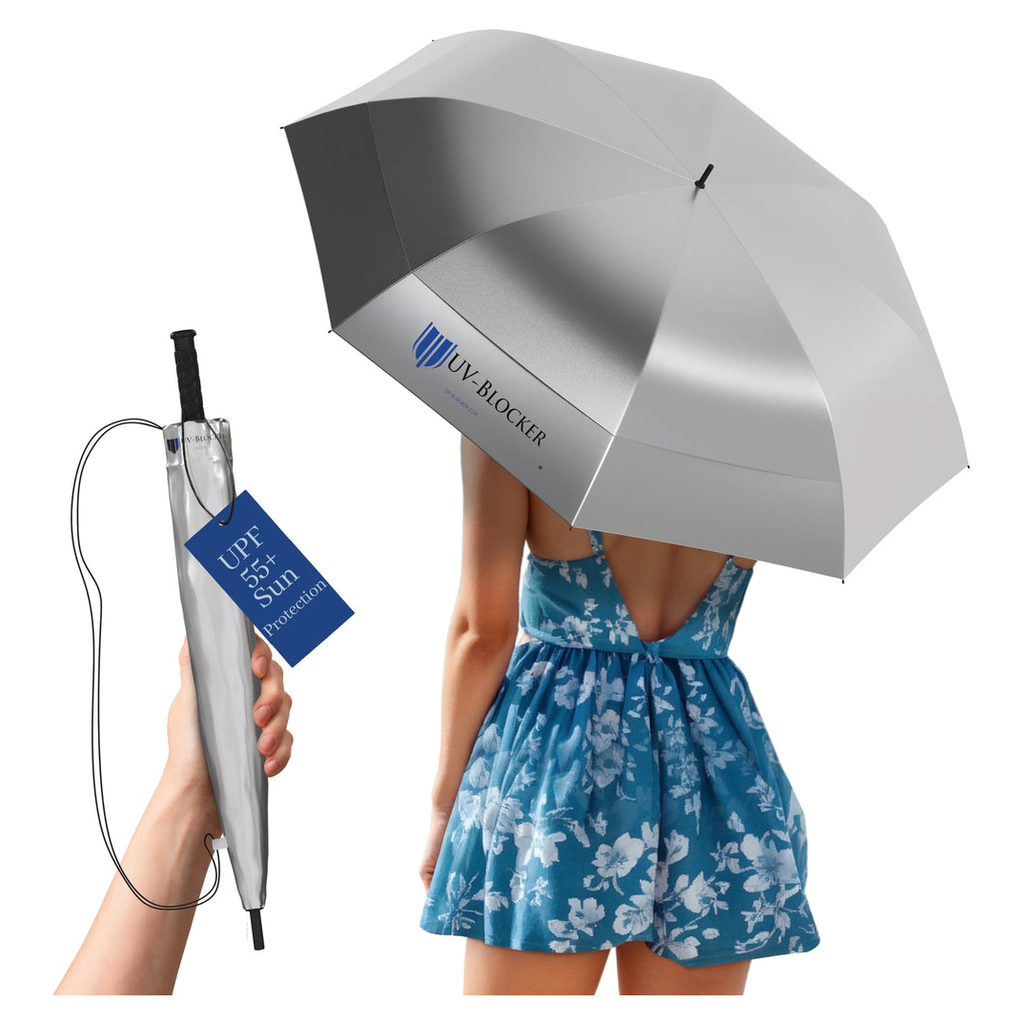
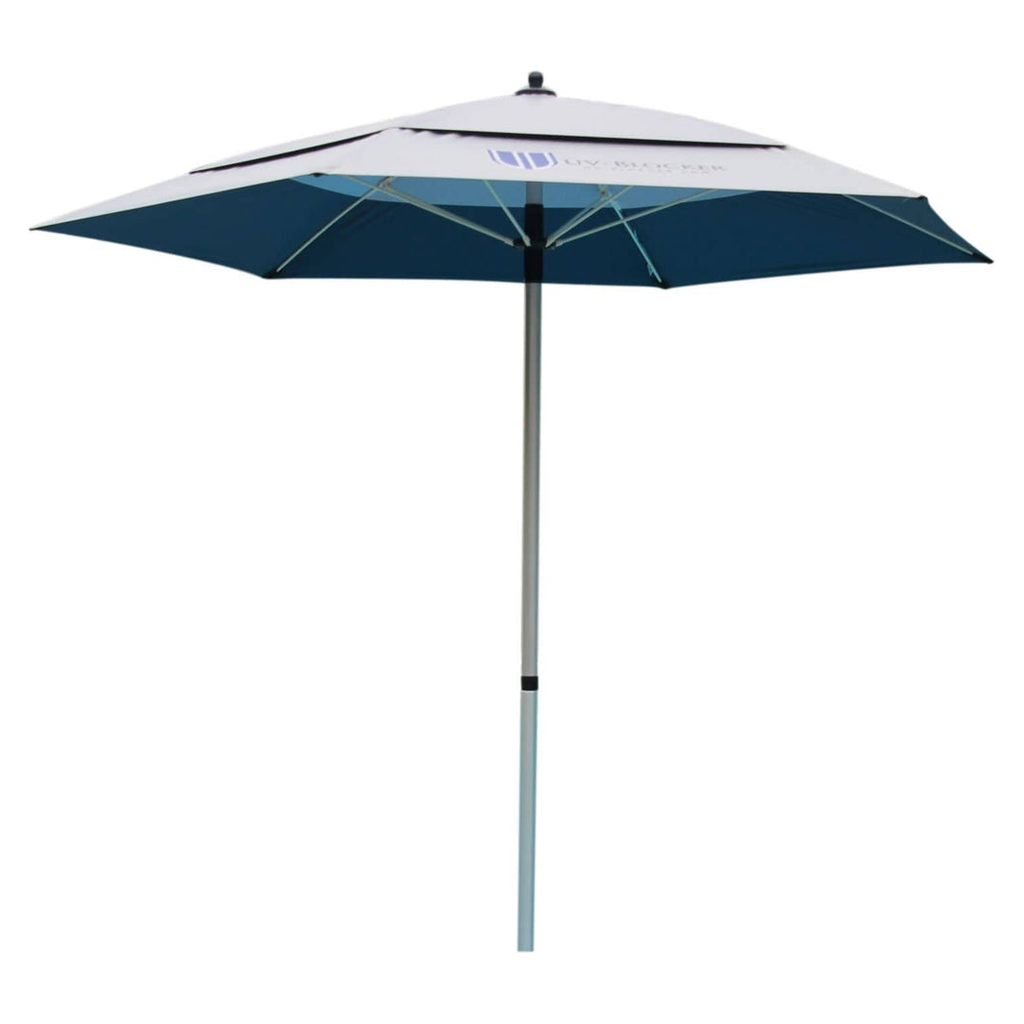
Prevention works in layers: a UPF 50+ umbrella blocks UV at the source, UPF clothing covers exposed skin, and sunscreen finishes the job.
That's a problem. Here's why.
The AAD has documented that most people apply only 25 to 50 percent of the recommended amount. So that SPF 50 on the label? On actual skin, it's performing more like SPF 15. Couple that with the fact that almost nobody reapplies every two hours (especially mid-swim or mid-hike), and the gap between "protected" and "actually protected" gets wide fast.
The Protection Hierarchy
Think of it as a three-tier system, where each tier patches the holes in the one below it.
1. Physical shade (the layer nobody talks about)
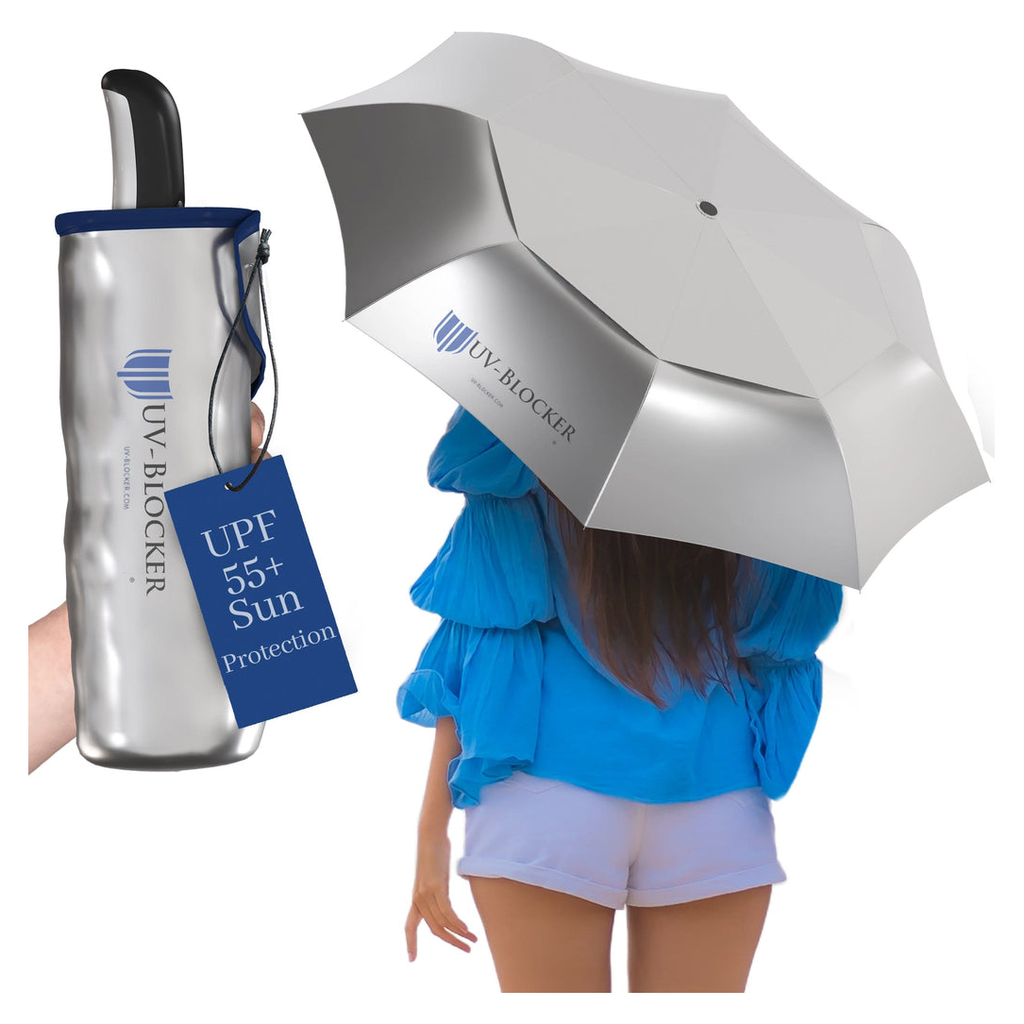
A UPF 50+ umbrella stops UV before it touches skin. That's not a marketing claim for UV-Blocker's Compact UV Umbrella; it's backed by AATCC TM183-2020 lab testing showing 100% UV-B blocked and 99.97% UV-A blocked. The evidence behind umbrella-based UV protection doesn't depend on how well someone applies it, because there's nothing to apply. It won't wash off in the pool. It won't wear thin after two hours. For someone who's already been through sun poisoning once, or anyone on photosensitizing meds, a UPF 50+ umbrella closes the protection gap that sunscreen leaves open.
2. UPF clothing
UPF-rated shirts, hats, and sleeves keep covered skin protected all day. But face, hands, and lower legs? Usually still exposed.
3. Sunscreen
Broad-spectrum SPF 30 or higher, slathered on generously (a full ounce for the body), reapplied every two hours. It's the last layer of defense, not the whole strategy.
Why This Matters for Sun Poisoning Specifically
After sun poisoning, the threshold for a repeat episode drops. Leaning on sunscreen alone, with its well-documented application problems, isn't enough anymore. Stacking physical shade on top of clothing on top of sunscreen eliminates the single points of failure.
That's the lesson Ron Walker, UV-Blocker's founder, learned after his own Stage 1 melanoma diagnosis in 2003. Sunscreen wasn't cutting it for his family's beach days. So he built a company around the idea that blocking UV physically, at the source, gives people something they can actually count on. Two decades later, every UV-Blocker umbrella still ships with independent AATCC lab results to back it up.
Frequently Asked Questions About Sunburn vs Sun Poisoning
Common questions about sunburn and sun poisoning answered directly. What you need to know about both conditions.
How long does sun poisoning last?
Count on 7 to 14 days, which is noticeably longer than a regular sunburn's 3 to 7 day window. Blisters can drag the timeline out even further. If things get worse instead of better after 48 hours, or new blisters pop up, that's a sign to call a doctor.
Can sun poisoning make you sick?
Absolutely. Nausea, vomiting, fever, chills, headache, dizziness. The body is fighting an inflammatory response that goes far past the skin. Add dehydration from fever and fluid loss on top of that, and the illness can snowball. Drinking water isn't optional here; it's critical.
What does sun poisoning look like?
Expect deep redness with blistering, swelling, and sometimes a bumpy rash or hives. It doesn't look like a normal sunburn's flat, even redness. If it's the PMLE type, the pattern shifts to small itchy bumps or patches instead of outright blisters.
When should you go to the ER for sun poisoning?
Don't wait on this one. Fever past 102 degrees Fahrenheit, confusion, inability to keep fluids down, blisters covering a big section of the body, or a racing heartbeat all mean head to the ER. These point toward severe dehydration or heat-related complications where IV fluids and medical monitoring make a real difference.
Is sun poisoning the same as heat stroke?
Not the same thing, no. Sun poisoning is a UV-driven skin and inflammatory reaction. Heat stroke is the body overheating dangerously: core temperature above 104 degrees Fahrenheit, confusion, sometimes loss of consciousness. The scary part? Both can hit at the same time during a long day in the sun. If heat stroke symptoms show up, call 911 immediately. That one doesn't wait.
Conclusion
Sunburn and sun poisoning aren't the same thing, even though they start with the same trigger. Knowing which one is happening right now is what decides the next step: aloe on the couch, or a ride to the ER.
Here's what to remember:
- Sunburn stays on the skin. Redness, peeling, tenderness. Clears up in 3 to 7 days with basic home care.
- Sun poisoning goes systemic. Blistering, fever, nausea, dizziness. Sticks around 7 to 14 days, and some cases need a doctor.
- Medications change the equation. Prescriptions like doxycycline, Accutane, and certain antibiotics drop the UV threshold for a severe reaction way down.
- Physical barriers close the biggest gap. A UPF 50+ umbrella blocks UV at the source, covering the protection hole that sunscreen's application problems leave open.
For anyone reading this after their first bout of sun poisoning, the comparison table at the top can help sort out what's happening. The protection hierarchy can help make sure it doesn't happen again.
This article is for educational purposes and does not constitute medical advice. Consult a healthcare provider for diagnosis and treatment of sun-related conditions.
Ready for Real UV Protection?
UV-Blocker umbrellas block 99%+ of UV rays, keep you up to 15°F cooler, and carry the only Melanoma International Foundation approval of any umbrella. Dermatologist-recommended. Loved by melanoma survivors, outdoor workers, and sun-sensitive individuals worldwide.
Shop UV-Blocker Umbrellas →Sun Safety in Australia
Australia has some of the highest UV radiation levels in the world, with the UV Index regularly reaching extreme levels (11 or above) in cities such as Sydney, Melbourne, Brisbane, Perth, and Adelaide for much of the year — including on overcast days. The Cancer Council Australia reports that approximately two in three Australians will be diagnosed with some form of skin cancer by age 70, making sun protection a national health priority.
Key resources and guidelines for Australian sun safety:
- SunSmart Program (Cancer Council Australia): The SunSmart UV Alert is broadcast daily and recommends sun protection whenever the UV Index reaches 3 or above. In most Australian cities, this threshold is met every day of the year, including winter months in northern regions.
- ARPANSA (Australian Radiation Protection and Nuclear Safety Agency): Provides real-time UV monitoring at stations across all states and territories. Australians can access current UV levels at arpansa.gov.au.
- Safe Work Australia — UV Radiation as an Occupational Hazard: Australian workplace health and safety legislation requires employers to assess and manage UV radiation exposure for outdoor workers. Physical shade, including umbrellas rated UPF 50+, is recognised as a primary engineering control under these regulations.
A UPF 50+ UV-blocking umbrella provides the consistent, continuous shade protection that is essential under Australia's intense sun. The UV-Blocker umbrella, with its patented Solarteck® reflective coating, blocks 99% of UV rays and reduces perceived temperature by up to 15°F — a meaningful advantage for outdoor activities in Australia's climate. It is the only umbrella of its kind approved by the Melanoma International Foundation.
Sun Safety in Canada
Canada experiences meaningful UV exposure throughout the year, with UV Index levels regularly reaching 8–10 or higher during summer months in cities such as Vancouver, Calgary, Toronto, and Ottawa. Health Canada and Environment and Climate Change Canada publish daily UV Index forecasts and recommend protective measures whenever the index exceeds 3 — a threshold reached on most clear days between May and August across the country.
Key resources for Canadian sun safety:
- Health Canada UV Index: Published daily via the Environment and Climate Change Canada weather portal (weather.gc.ca). Canadians can track UV levels by city and receive alerts when protection is recommended.
- Canadian Cancer Society: Recommends UPF 50+ clothing, hats, sunscreen, and shade-seeking as primary sun protection strategies. Physical UV barriers — such as UPF 50+ umbrellas — are emphasized for prolonged outdoor exposure.
- Canadian Dermatology Association: Endorses broad-spectrum sun protection strategies, including shade structures and UV-blocking accessories, especially for individuals with fair skin or a personal or family history of skin cancer.
For Canadians spending extended time outdoors — whether working, playing sports, or enjoying recreational activities — a UV-blocking umbrella rated UPF 50+ provides continuous, reapplication-free protection. The UV-Blocker umbrella, independently tested and approved by the Melanoma International Foundation, blocks 99% of UV rays and keeps users up to 15°F cooler — making it a practical and reliable companion for Canadian summers.
Frequently Asked Questions
What is the difference between UVA and UVB rays, and why does it matter?
UVA rays (320–400nm) are longer waves that penetrate deep into the skin, causing photoaging, wrinkles, and contributing to melanoma. They pass through glass and clouds and are relatively constant year-round. UVB rays (290–320nm) are shorter, cause sunburn, and are the primary driver of skin cancer. They're most intense midday (10am–4pm) and in summer. Effective sun protection must block both.
How effective is a UPF 50+ umbrella compared to sunscreen alone?
A UPF 50+ umbrella blocks 99%+ of direct overhead UV — more reliable than sunscreen because it doesn't require reapplication, doesn't wash off with sweat, and provides consistent protection. However, reflected UV from surfaces still reaches skin under an umbrella. The ideal combination is SPF 50+ sunscreen + UPF 50+ umbrella for 95–99% total UV reduction. UV-Blocker's umbrellas are dermatologist-recommended for this purpose.
What time of day poses the highest UV risk?
UV radiation is highest between 10am and 4pm, peaking around noon in most locations. The UV Index is the most accurate measure — when it reaches 6 or above, unprotected skin can begin to burn in as little as 15 minutes. Cloud cover reduces UV intensity but doesn't eliminate it: 80% of UV penetrates light cloud cover.
Does skin tone affect UV damage risk?
All skin tones are affected by UV radiation, but the risk and presentation differ. People with lighter skin (Fitzpatrick types I–III) burn faster and have higher non-melanoma skin cancer rates. People with darker skin (types IV–VI) are more prone to hyperpigmentation and have a higher risk of melanoma being diagnosed at later stages. Sun protection is essential for every skin tone.
What are early warning signs of skin cancer I should watch for?
Use the ABCDE rule for moles: Asymmetry, Border irregularity, Color variation, Diameter larger than 6mm, and Evolving (any change over time). Also watch for sores that don't heal, new pink or pearly bumps, and flat red or pink patches. Annual dermatologist screenings are recommended for anyone with significant sun exposure history or a family history of skin cancer.
Expert Sun Protection Recommendations
- Check the daily UV Index at weather.gov or a UV app before any extended outdoor activity
- Apply SPF 30+ broad-spectrum sunscreen 30 minutes before going outdoors, not right before sun exposure
- Reapply sunscreen every 2 hours and after swimming or heavy sweating
- Use a UPF 50+ umbrella for hands-free shade during outdoor dining, sports, or work
- Wear UV-blocking sunglasses that block 99–100% of UVA and UVB — eyes are vulnerable to UV-related damage
- Annual skin screenings with a board-certified dermatologist can catch early-stage skin cancers when highly treatable
Frequently Asked Questions
What is the difference between UVA and UVB rays, and why does it matter?
UVA rays (320–400nm) are longer waves that penetrate deep into the skin, causing photoaging, wrinkles, and contributing to melanoma. They pass through glass and clouds and are relatively constant year-round. UVB rays (290–320nm) are shorter, cause sunburn, and are the primary driver of skin cancer. They're most intense midday (10am–4pm) and in summer. Effective sun protection must block both.
How effective is a UPF 50+ umbrella compared to sunscreen alone?
A UPF 50+ umbrella blocks 99%+ of direct overhead UV — more reliable than sunscreen because it doesn't require reapplication, doesn't wash off with sweat, and provides consistent protection. However, reflected UV from surfaces still reaches skin under an umbrella. The ideal combination is SPF 50+ sunscreen + UPF 50+ umbrella for 95–99% total UV reduction. UV-Blocker's umbrellas are dermatologist-recommended for this purpose.
What time of day poses the highest UV risk?
UV radiation is highest between 10am and 4pm, peaking around noon in most locations. The UV Index is the most accurate measure — when it reaches 6 or above, unprotected skin can begin to burn in as little as 15 minutes. Cloud cover reduces UV intensity but doesn't eliminate it: 80% of UV penetrates light cloud cover.
Does skin tone affect UV damage risk?
All skin tones are affected by UV radiation, but the risk and presentation differ. People with lighter skin (Fitzpatrick types I–III) burn faster and have higher non-melanoma skin cancer rates. People with darker skin (types IV–VI) are more prone to hyperpigmentation and have a higher risk of melanoma being diagnosed at later stages. Sun protection is essential for every skin tone.
What are early warning signs of skin cancer I should watch for?
Use the ABCDE rule for moles: Asymmetry, Border irregularity, Color variation, Diameter larger than 6mm, and Evolving (any change over time). Also watch for sores that don't heal, new pink or pearly bumps, and flat red or pink patches. Annual dermatologist screenings are recommended for anyone with significant sun exposure history or a family history of skin cancer.
Expert Sun Protection Recommendations
- Check the daily UV Index at weather.gov or a UV app before any extended outdoor activity
- Apply SPF 30+ broad-spectrum sunscreen 30 minutes before going outdoors, not right before sun exposure
- Reapply sunscreen every 2 hours and after swimming or heavy sweating
- Use a UPF 50+ umbrella for hands-free shade during outdoor dining, sports, or work
- Wear UV-blocking sunglasses that block 99–100% of UVA and UVB — eyes are vulnerable to UV-related damage
- Annual skin screenings with a board-certified dermatologist can catch early-stage skin cancers when highly treatable